REVIEW · LUXOR
Private Tour to the West Bank of Luxor
Book on Viator →Operated by Luxor and Aswan Travel · Bookable on Viator
The West Bank hits you with drama fast, then rewards patience. This private Luxor day trip pairs Valley of the Kings tombs with Hatshepsut’s Temple at Deir el Bahari, plus a stop at the Colossi of Memnon. You’ll go with your own Egyptologist-style guide who can translate what you’re seeing, not just point at it.
What I like most is the focus on the big monuments and the stories behind them. Second, you get practical comfort: hotel pickup/return, an English-speaking guide, and even a bottle of mineral water per person. My only caution is timing—some tombs are open on a rotating restoration schedule, so you may not see every single one you hoped for.
In This Review
- Quick hits before you go
- West Bank vs East Bank: why this day feels like a different Egypt
- Valley of the Kings: past the sun-blasted gorge and into the painted rules of power
- What your guide should help you notice
- Practical watch-outs
- Hatshepsut’s Temple at Deir el Bahari: the view that explains the pharaoh
- What you’re likely to feel here
- Colossi of Memnon: giant statues, sunrise sound, and an ancient temple entrance
- Who the statues really represent
- Price and logistics: what the $80 buys you (and what it doesn’t)
- Timing, heat, and comfort on a 4–5 hour West Bank circuit
- A few comfort tips that actually help
- Who should book this private Luxor West Bank tour
- Should you book it? My honest take
- FAQ
- How long is the private West Bank tour?
- What sites does the tour include?
- Is pickup from your hotel included in the price?
- Are admission tickets included?
- Is the guide English speaking?
- Do I need to bring cash for tips?
- Is there free cancellation?
- Are service animals allowed?
Quick hits before you go
- Private guide, private pace: You control the flow as a group, not a cattle-call schedule.
- Tomb access depends on rotation: The valley has nearly 70 royal tombs, but what’s open can change for restoration.
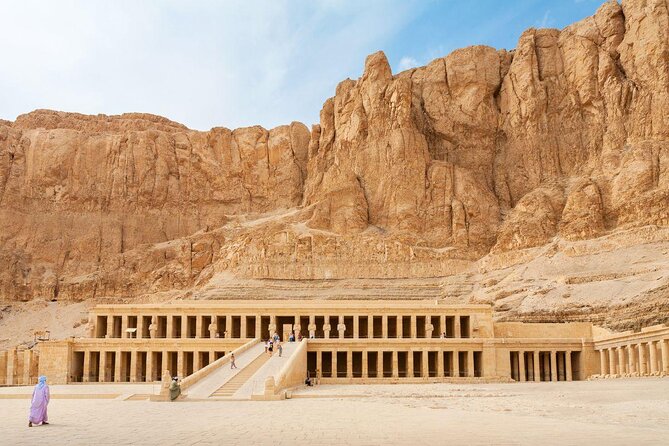
- Hatshepsut’s temple is the architecture lesson: Multi-tiered design mirrors the rise, rule, and legacy of one unusual pharaoh.
- Colossi of Memnon is myth with a scientist’s footnote: Sunrise sound folklore meets a modern theory about pores in the stone.
- Good value for $80: Admission tickets, service charges, taxes, pickup, and a water bottle are included; tips are the main extra.
West Bank vs East Bank: why this day feels like a different Egypt
Luxor is often presented as two halves: the busy East Bank with its major temples, and the quieter West Bank tied to death, ceremony, and memory. This tour leans hard into the West Bank side—mountain-cut tombs, a mortuary temple shaped for a ruler’s afterlife, and giant statues that once announced a whole temple world.
You’ll also feel the mood shift. The Valley of the Kings starts with plain-looking rock and then goes underground. Deir el Bahari is all dramatic geometry and limestone cliffs. And the Colossi of Memnon gives you that cinematic scale you can see from across the Nile.
You can also read our reviews of more private tours in Luxor
Valley of the Kings: past the sun-blasted gorge and into the painted rules of power
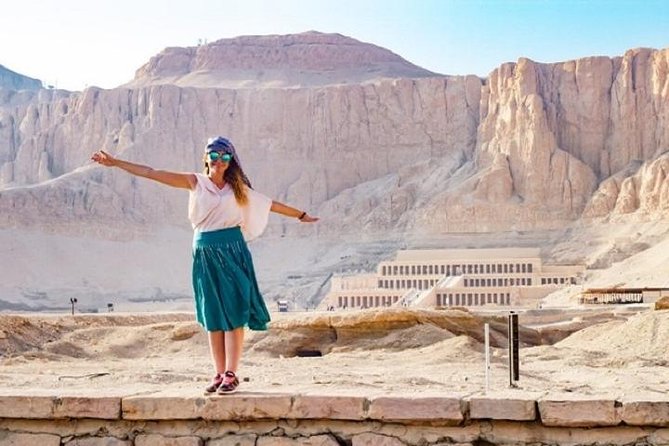
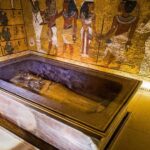
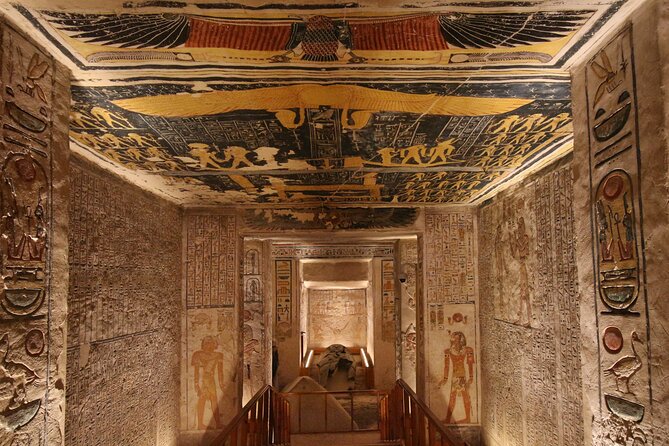
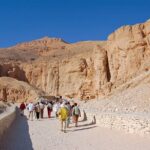
The Valley of the Kings can look unimpressive at first. It’s basically a sun-blasted gorge of red rock. Then you remember what’s under your feet: tombs of nearly 70 pharaohs.
This is where the modern myth of Egypt kicked off. The discovery of Tutankhamun’s tomb in 1922 by Howard Carter didn’t just produce treasures—it turned Egypt into a global obsession overnight. Standing in the valley, you get why that mattered. The tombs weren’t random graves. They were carefully designed messages in stone: who ruled, how they wanted the afterlife to work, and what the gods were supposed to do for them.
What your guide should help you notice
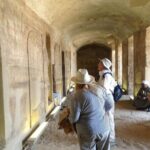
The best part of the Valley of the Kings is not one tomb. It’s the pattern—how hieroglyphs, scenes, and layout all reinforce royal identity. With a solid guide, the drawings stop being decoration and start becoming instructions.
Here’s the key detail to keep in mind: not every tomb is open all the time. Many are available on a rotating schedule because restorations are ongoing. That means your route through the valley may differ depending on what’s currently open.
Practical watch-outs
- Expect walking on uneven ground and stairs.
- Go in mentally ready to choose. Even in a private setup, time is time.
- Heat is real. Even with the right pace, you’ll appreciate shade when you can find it. Bring a hat and go slow early.
Hatshepsut’s Temple at Deir el Bahari: the view that explains the pharaoh
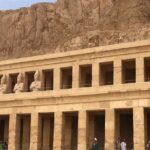
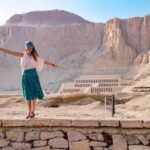
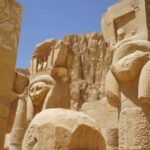
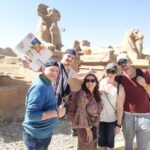
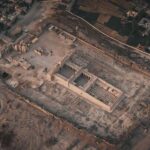
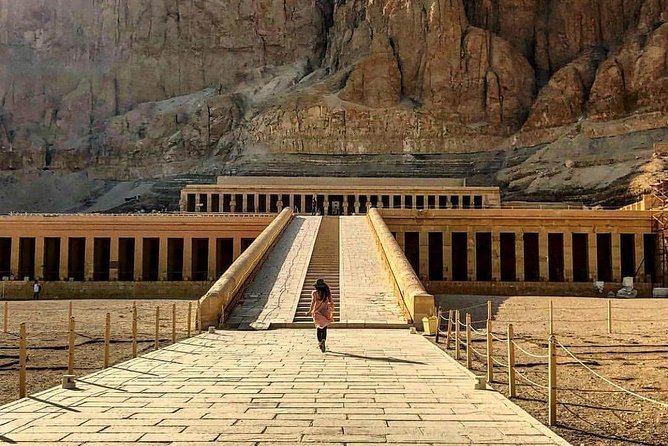
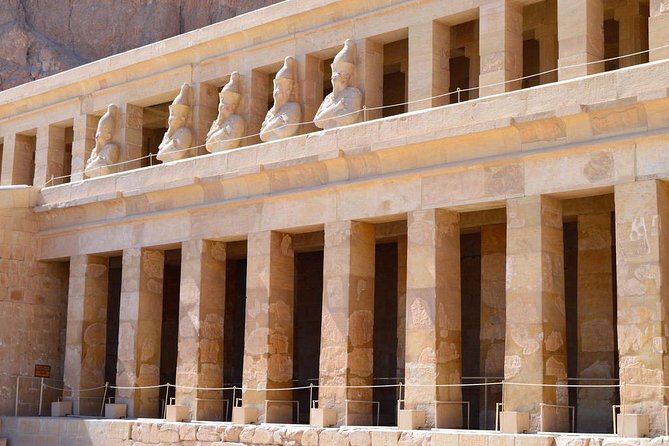
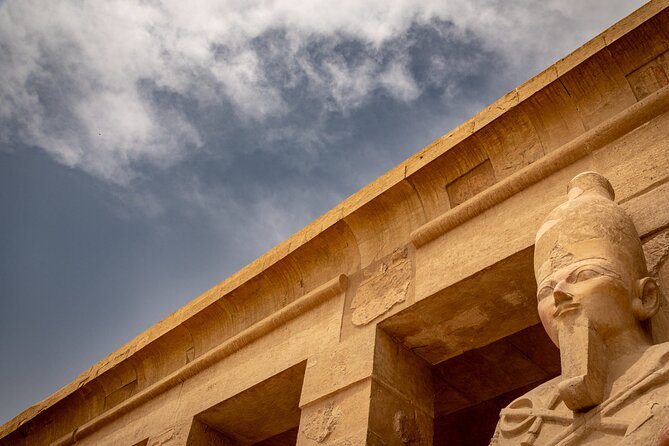
If you’ve only seen photos of Egypt’s temples, Hatshepsut’s complex at Deir el Bahari may be the one that makes you rethink how bold ancient builders could be. From a distance, the multi-tiered structure seems to climb the limestone cliffs like it belongs to the cliff itself.
Up close, it becomes a lesson in ambition. The temple is tied to Hatshepsut, the only female pharaoh in Egypt’s recorded history. She came to power in the New Kingdom after her father, Tuthmose I, and then through a complicated succession with her half-brother/husband, Tuthmose II. She originally served as queen-regent for Tuthmose III, but she seized the throne and held onto power until her death.
That’s the story, but the temple is the proof. The unique layout fits the unusual path of her rule—part display, part control, part long-term branding for the afterlife. Your guide’s job here is to connect the architecture to the biography you’re hearing, so the temple doesn’t feel like just another impressive stop.

What you’re likely to feel here
This is the “pause for photos” moment, but it’s also the “pause to listen” moment. If your guide is good—people have mentioned strong English and clear explanations from guides like Abdulla, Hassan, Ahmed, and Shimaa—this is where the whole day clicks into place.
Colossi of Memnon: giant statues, sunrise sound, and an ancient temple entrance
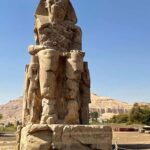
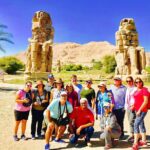
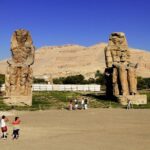
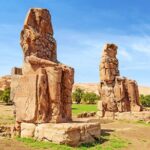
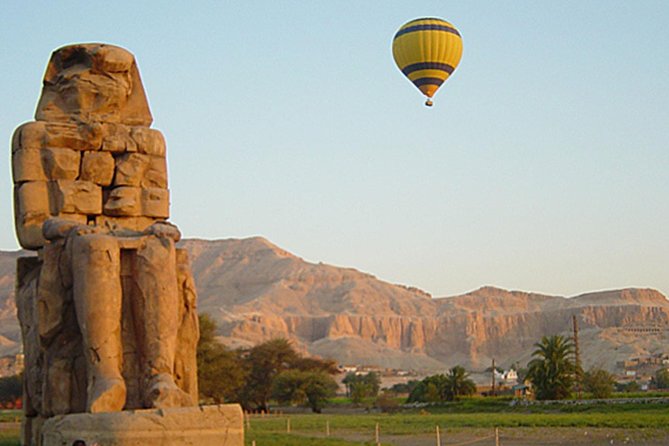
At some point in your West Bank day, the scale gets bigger. The Colossi of Memnon are two colossal statues, each about 59 feet tall. They greet you first if you’re coming by ferry from the East Bank, which is a fun detail because it frames the statues as a boundary crossing.
In antiquity, there was a legend that each sunrise one of the statues made a mysterious sound. Greeks linked the sound to Memnon, the immortal figure in their stories. Today, we can’t confirm why the sound happened, because it stopped centuries ago.
Modern scientists have a theory: the sound may have come from air passing through pores in the stone as it warmed up in the morning sun. Even if you treat it as a fascinating hypothesis rather than certainty, the myth adds energy to what you’re looking at.
Who the statues really represent
These aren’t Memnon. They’re of Amenhotep III and his wife, Tiye. They once guarded the entrance to a major temple complex that some believe could have rivaled Karnak in size. So when you see the statues, you’re also seeing what’s left of a much bigger world—an entryway to a complex that doesn’t fully exist anymore, at least not in the same shape.
Price and logistics: what the $80 buys you (and what it doesn’t)
At $80 per person, this private West Bank tour can be a solid deal because it bundles the stuff that usually costs you extra. You’re paying for:
- Hotel pickup and return in Luxor
- An English-speaking guide
- Admission tickets for the key stops
- All service charges and taxes
- A bottle of mineral water per person
- A private setup, so it’s only your group
What’s not included is tipping for the guide and driver. That’s normal for Egypt tours, but it’s worth planning for so you don’t get caught short at the end.
Also, this tour tends to sell ahead of time—on average, it’s booked about 16 days in advance. If you’re traveling during a busy season or you want a specific guide style, you’ll save stress by booking early.
Timing, heat, and comfort on a 4–5 hour West Bank circuit
The day runs about five hours on the ground, with time allocated for the Valley of the Kings and Hatshepsut’s temple. Expect the Valley stop to take the longest chunk of your attention—often around three hours—because there’s more to see and because tomb access can shape where you go.
Deir el Bahari takes roughly two hours. That’s about right: it gives you time to understand the layout, not just take a quick lap and move on.
Then there’s the Colossi of Memnon stop. It’s usually more of a scale moment plus photos, rather than a long museum-style visit. Think of it as a punctuation mark at the end of the day.
A few comfort tips that actually help
- Wear shoes you trust on rough ground and steps inside tombs.
- Plan for sun exposure. Even when you’re indoors or partially shaded, you’ll still feel heat during transitions.
- Hydrate. You’ll get water during the tour, but it’s smart to bring your own refill option if you’re prone to getting overheated.
Who should book this private Luxor West Bank tour
This is a strong fit if you want:
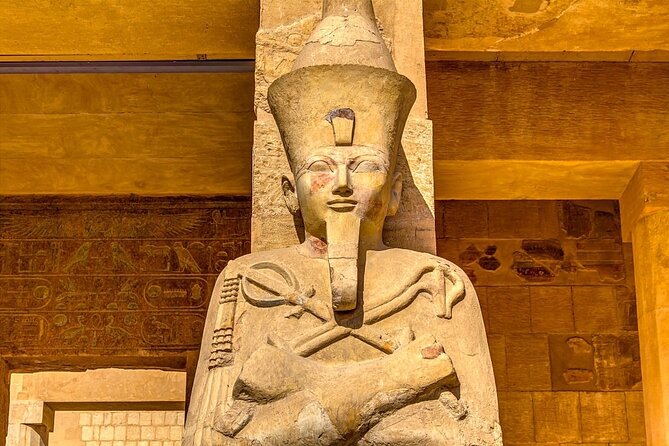
- A private guide who can explain hieroglyphs, architecture, and the rules of royal afterlife thinking
- A tight West Bank experience without juggling different tour providers
- A day that balances underground tomb history with a major temple complex
It can also be a good choice if you’re traveling with older members in your group. Guides have been able to recommend which tombs to prioritize, which matters when everyone wants meaning but not everyone wants maximum stairs.
If you’re the kind of traveler who likes to see everything no matter what, this tour won’t feel like an all-day marathon. But if you want the essentials done thoughtfully, it lands in the sweet spot.
Should you book it? My honest take
Book this tour if you care about understanding what you’re looking at. The combination of Valley of the Kings tombs, Hatshepsut’s temple design, and the Colossi of Memnon scale gives you a balanced West Bank day. At $80, the value improves a lot because admission tickets, pickup/return, guide service, taxes, and a water bottle are included.
Skip it only if you’re hoping for a flexible itinerary that guarantees specific tombs no matter what. Because tomb access depends on what’s currently open for restoration, you’ll need to accept some variability. If you can do that, you’ll get a rewarding, well-paced introduction to one of Egypt’s most powerful historical zones.
FAQ
How long is the private West Bank tour?
It’s listed at about 5 hours (approx.). The core Valley of the Kings time is about 3 hours, and the Hatshepsut temple visit is about 2 hours.
What sites does the tour include?
You visit the Valley of the Kings, the Temple of Hatshepsut at Deir el Bahari, and stop to see the Colossi of Memnon.
Is pickup from your hotel included in the price?
Yes. Pickup from your hotel in Luxor is included, and you’re also returned back to your hotel.
Are admission tickets included?
Yes. Admission tickets are included for the Valley of the Kings and the Temple of Hatshepsut.
Is the guide English speaking?
Yes, the tour includes an English-speaking guide.
Do I need to bring cash for tips?
Tipping for the guide and driver is not included.
Is there free cancellation?
Yes, you can cancel up to 24 hours in advance for a full refund. If you cancel less than 24 hours before the experience starts, you won’t receive a refund.
Are service animals allowed?
Yes, service animals are allowed.