REVIEW · LUXOR
Private Tour to Luxor and Karnak Temples
Book on Viator →Operated by Bastet Travel · Bookable on Viator
A three-and-a-half hour time machine. This private Luxor East Bank visit lets you pair two of Egypt’s most famous temple sites—Karnak and Luxor—under the direction of your own Egyptologist guide. You’ll ride in a minivan, get entry fees included, and walk major highlights like the Hypostyle Hall and the Avenue of the Sphinxes while the story of the pharaohs stays clear and human.
I really like two things here: first, you’re not stuck sharing space. It’s only your group, so your guide can slow down when you want and speed up when you don’t. Second, the guide does the heavy lifting—explaining what you’re seeing, including how Luxor Temple was embellished by Tutankhamun and also Alexander the Great.
One consideration: both temples are active outdoor sites, so plan for walking and sun. In a tight 3 to 4 hour window, you’ll feel it if you’re not used to heat and uneven stone paths, even though the pacing feels fair.
In This Review
- Quick takeaways for your Luxor East Bank day
- Why this private East Bank format works in Luxor
- Luxor Temple: Amunhotep III, Ramses II, and the later touch of Tutankhamun and Alexander
- Karnak Temple: sanctuaries, pylons, and the awe of the Hypostyle Hall
- The pacing: a half-day plan that isn’t frantic
- Price and value: what $75 per person really includes
- What it feels like with an Egyptologist guide (and what you’ll get from it)
- Comfort and practical tips for an East Bank temple day
- Who should book this private Luxor Temple tour?
- Should you book this private Karnak and Luxor Temple tour?
- FAQ
- How long is the private tour?
- Which temples are included?
- Is hotel pickup and drop-off included?
- Is this tour private?
- Are entry fees included?
- Do I get bottled water?
- Is the tour guided?
- Is a mobile ticket provided?
- Are tips required?
- What’s the cancellation window for a full refund?
Quick takeaways for your Luxor East Bank day
- Private group time means less waiting and more control of the pace
- Egyptologist guide with specific stories (Tutankhamun and Alexander at Luxor Temple)
- Hypostyle Hall: giant columns you have to see in person
- Karnak as a complex, not a single temple with sanctuaries and pylons to explore
- Hotel pickup/drop-off plus bottled water helps keep the day smooth
- Entry fees included so your “real cost” is easier to calculate
Why this private East Bank format works in Luxor
Luxor can feel simple on paper: get to the East Bank, see Karnak, see Luxor Temple, go back. The difference is what happens in between. With a private setup, you spend less time coordinating and more time looking closely at details that most people miss when they’re swept along with a crowd.
What I like for you: you’re getting the core temples in about half a day, without feeling like you’re racing. The tour is built around a practical route by minivan, and it includes the key stuff you’d otherwise have to figure out yourself—hotel pickup/drop-off, professional Egyptologist guidance, bottled water, and entry fees.
If you’re visiting for the first time, this is a smart way to get your bearings fast: the guide’s explanations connect what you see at Karnak (massive scale and religious layout) to what you see at Luxor Temple (royal imagery and later additions).
You can also read our reviews of more private tours in Luxor


Luxor Temple: Amunhotep III, Ramses II, and the later touch of Tutankhamun and Alexander

Luxor Temple is the more “human-scale” counterpoint to Karnak’s huge sprawl. You arrive ready for a show, but it turns into a story the moment you understand who built what and why it matters.
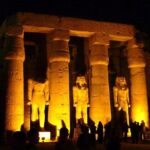
Here’s the key background your guide will give you: the Temple of Luxor was built by Amunhotep III during the 18th Dynasty and completed by Ramses II in the 19th Dynasty. That matters because it changes how you read the architecture. Instead of just admiring columns and statues, you start spotting the marks of different reigns and how they shaped the temple’s look and message.
And Luxor Temple has extra layers. You’ll hear how it was embellished by Tutankhamun, and also how Alexander the Great played a role in shaping what the site represented later on. That blend of periods is one of the most satisfying parts of the visit, because it reminds you that these temples weren’t locked in time. They kept getting used, updated, and reinterpreted.
Time-wise, the visit is set at about 1 hour 30 minutes. That’s enough to see the main courts and columns without the “quick photo and run” vibe. You’ll still want to keep moving, but you won’t feel trapped in a sprint.
What to watch for as you walk: the way courts open and frame statues, and how the temple layout guides your eye. If you’re the type who likes to connect details to meaning, Luxor Temple rewards you fast.
Karnak Temple: sanctuaries, pylons, and the awe of the Hypostyle Hall
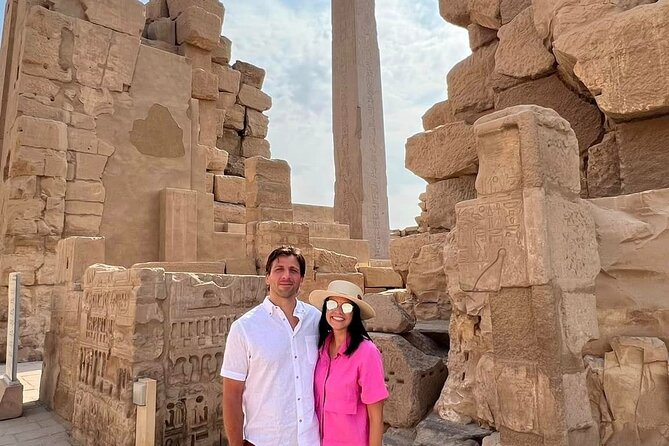
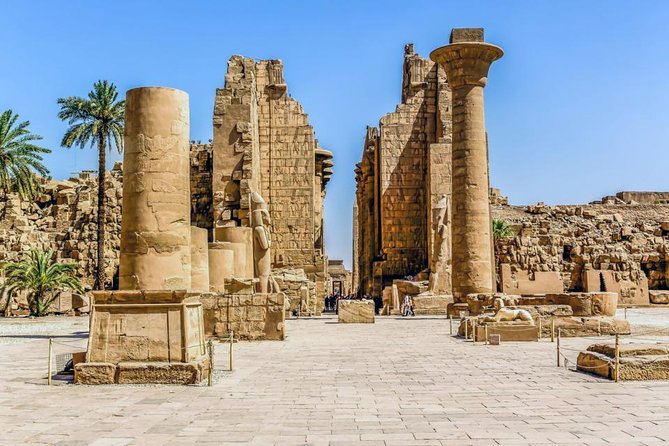
Karnak is not one temple. It’s a whole universe of temples and halls—an enormous complex dedicated to the Theban gods. The name alone can sound like a single stop, but your guide will treat it like a system, so it actually makes sense while you’re inside.
Expect a longer visit here—about 2 hours—and that time is important. Karnak’s main attraction isn’t just a single landmark. It’s the scale: giant pylons, branching areas, and sanctuaries that feel like they go on forever.
The highlights you should expect to focus on:
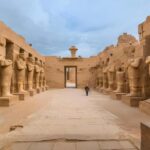
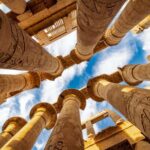
- Hypostyle Hall with its massive rows of columns. This is the moment when “wow” turns into “how did anyone build this?”
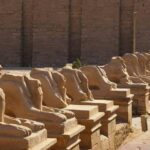
- Avenue of the Sphinxes, which helps you feel the site as a connected processional space, not just scattered ruins
- Additional halls and temple sections your guide will explain in plain language, so you’re not lost in stone
The Hypostyle Hall is the obvious headline, but don’t skip the in-between parts. Karnak’s power is in repetition and pattern: lines of columns, layered entrances, and the feeling that the complex was designed to move you through religious meaning step by step.
One practical advantage: Karnak also gives you the biggest visual contrast with Luxor Temple. If Luxor feels like a royal statement, Karnak feels like an entire belief system built in stone over centuries.
The pacing: a half-day plan that isn’t frantic
This tour runs roughly 3 to 4 hours, and it’s structured so you see both temples without burning your whole day. That duration matters in Luxor, because heat and sun can turn even a short walk into a long one.
What you should expect:
- Minivan transportation between the sites on the East Bank
- Bottled water during the tour
- A guide-led flow that aims to keep you moving but not rushed
Some people love these kinds of visits for the “quick yet immersive” balance. In my view, the sweet spot is exactly what this tour targets: enough time at Karnak to appreciate its scale, enough time at Luxor Temple to understand the major historical layers, and then you’re done before you feel wiped out.
If you’re someone who hates feeling herded, this format helps. A private group means you’re not dealing with the constant stop-start that happens when everyone has different walking speeds.
Still, keep your expectations realistic. You’re seeing outdoor monuments, and there’s walking on uneven ground. Wear comfortable shoes and plan for the sun.
Price and value: what $75 per person really includes

At $75 per person, the price feels reasonable mainly because of what’s bundled. The tour includes:
- Hotel pickup and drop-off
- Private transportation
- Professional Egyptologist guide
- Entry fees
- Bottled water
That last point matters more than you might think. In tourist-heavy areas, it’s easy to underestimate the extras you’ll pay once you’re on the ground. Here, you already have the guide and the tickets covered, so your budget stays steady.
What’s not included is also clear: personal expenses and gratuities for the guide and driver. Tipping is listed as not mandatory, which is helpful if you’re trying to travel with a strict plan.
There’s also mention of group discounts, so if you’re traveling with more people (or coordinating with a small travel party), you may be able to lower your per-person cost.
One more practical angle: private tours are often “worth it” when you care about interpretation. If you’re the type who wants to know what you’re looking at—why Amunhotep III matters, why Ramses II completed it, why later rulers left their fingerprints—this price is easier to defend.




What it feels like with an Egyptologist guide (and what you’ll get from it)
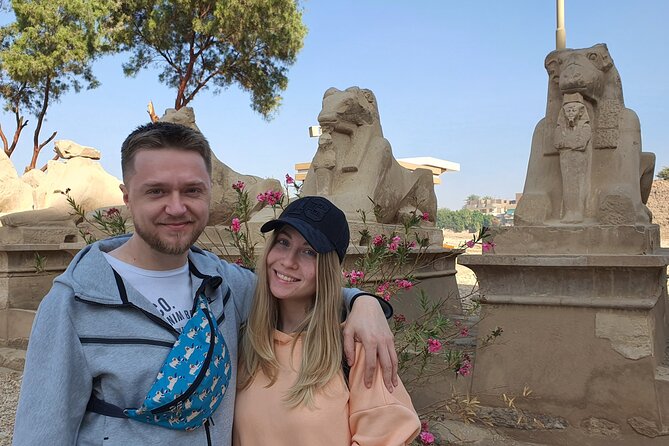
A good guide changes temples from scenery into a map.
At Luxor Temple, you’ll get the lineage of builders (Amunhotep III and Ramses II) and the later add-ons linked to Tutankhamun and Alexander the Great. That turns the visit into more than a list of famous names.
At Karnak, your guide helps you understand why the complex is dedicated to the Theban gods and how the layout supports that purpose. You’ll learn what you’re seeing in Hypostyle Hall without needing to guess your way through inscriptions.
This kind of guidance is also where the private format shines. You can ask quick questions and get answers immediately instead of waiting for the next group pause.
In the reviews, one guide name that comes up is Emad, and that’s the kind of detail that matters when you care about a real person leading the day.
Comfort and practical tips for an East Bank temple day
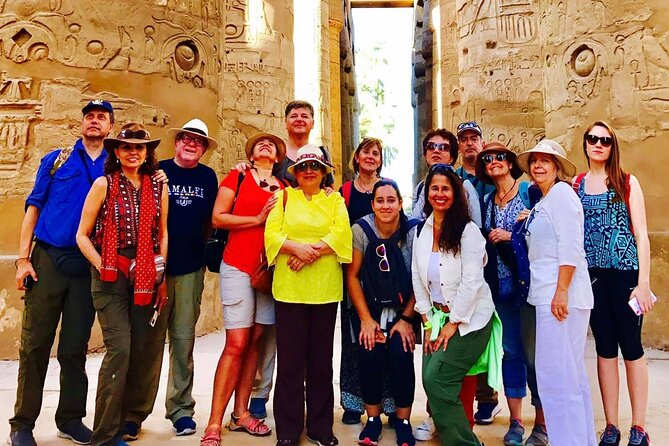
You’ll be outside for most of this trip, so keep it simple and comfortable.
- Wear supportive shoes: stone can be worn, and you’ll be standing and walking.
- Plan for sun: even if the day is bright, the temple experience is still walking time.
- Bring a small water-ready habit: bottled water is included, but it’s smart to pace yourself.
For photography, treat Hypostyle Hall as your main indoor-style moment and Luxor Temple as your open-courtyard exploration. You’ll get better results when you slow down and watch the light shift—your guide can also point out spots where the layout frames the columns and statues.
Who should book this private Luxor Temple tour?
This one is a good fit if you:
- Want Karnak and Luxor Temple in a single half-day
- Prefer a private group over larger tours
- Like historical context tied directly to what you’re standing in front of
- Value entry fees and guide time already handled
It’s also stated that most travelers can participate, which helps if you’re trying to avoid overly specialized tours. If you’re short on time in Luxor but don’t want to reduce both temples to a rushed checklist, this is exactly the right structure.
If you dislike walking or you’re very sensitive to heat, you might consider going with a slower pace or pairing it with a rest block after. The tour includes water, but it’s still two major sites.
Should you book this private Karnak and Luxor Temple tour?
I’d book it if your priority is interpretation, not just checking off names. The combination of entry fees included, hotel pickup/drop-off, and a private Egyptologist-led route makes it easier to enjoy the temples instead of managing logistics.
Skip it only if you’re trying to do everything on your own for maximum flexibility, or if you already know exactly what you want to see and don’t need guidance. Otherwise, for first-timers and history-lovers alike, this is a solid way to get the East Bank right—Karnak’s jaw-dropping scale and Luxor Temple’s royal story, both in one efficient visit.
FAQ
How long is the private tour?
It runs about 3 to 4 hours.
Which temples are included?
You’ll visit Luxor Temple and the Temple of Karnak on Luxor’s East Bank.
Is hotel pickup and drop-off included?
Yes. Hotel pickup and drop-off are included, and pickup can also be arranged from Luxor airport.
Is this tour private?
Yes. It’s a private tour/activity, and only your group participates.
Are entry fees included?
Yes. Admission tickets / entry fees are included for both sites.
Do I get bottled water?
Yes. Bottled water is provided during the tour.
Is the tour guided?
Yes. You’ll have a professional Egyptologist guide.
Is a mobile ticket provided?
Yes. A mobile ticket is included.
Are tips required?
No. Gratuities for the guide and driver are not mandatory (but you may choose to tip).
What’s the cancellation window for a full refund?
Free cancellation is available up to 24 hours in advance for a full refund.