REVIEW · LUXOR
Luxor:West & East Bank Day Tour Private
Book on Viator →Operated by More Egypt Tours · Bookable on Viator
Luxor in one day hits hard. This private West & East Bank tour strings together Karnak, the Valley of the Kings, Hatshepsut, Luxor Temple, and the Colossi of Memnon with door-to-door transfers, so you spend less time figuring out logistics and more time looking closely. I especially like the qualified Egyptologist guide angle and the fact that you can set your own pace within the schedule. One thing to watch: admission fees are listed as not included at multiple stops, and what’s covered depends on the option you choose.
You also get flexibility in how you build the day. The core package includes comfortable transport and bottled water, and you’re not stuck with a huge group vibe since it’s set up for just your party.
Finally, the value is strong for the sights you cover—priced at $20 per person—but double-check what your booking includes (entrance fees and lunch show up as option-based). That quick check can save you money and head off surprise expenses.
In This Review
- Key highlights worth planning around
- Why This West & East Bank Tour Works in One Long Day
- Pickup and Transfers: Door-to-Door Is the Real Upgrade
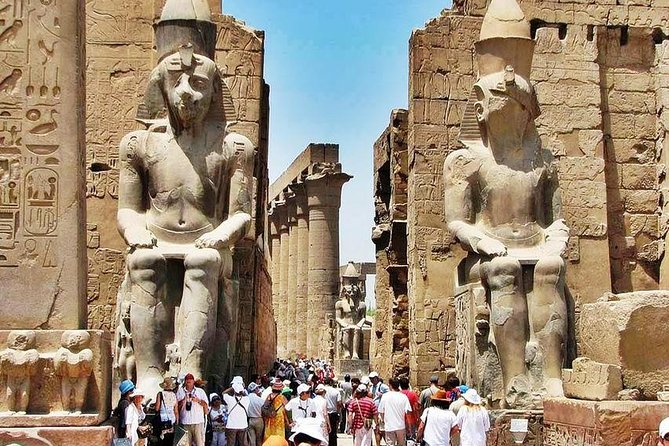
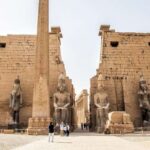
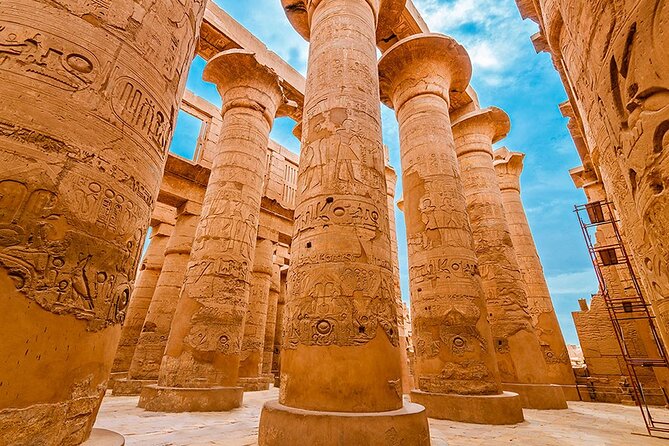
- Karnak Temple: Amun’s Empire in Stone
- Crossing the Nile: Switching From Afterlife to Daily Life
- Valley of the Kings and the Tutankhamun Stop: Time-Smart Tomb Visits
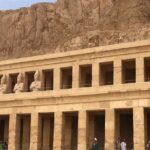
- Temple of Hatshepsut at Deir el-Bahari: Power, Precision, and a Rare Story
- Luxor Temple: New Kingdom Worship Meets Later Completion
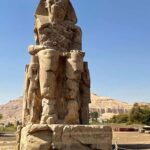
- Colossi of Memnon: Quick, Famous, and Worth the Photo Stop
- Price and Entry Fees: The Part You Must Confirm
- Guides and Drivers: The Difference Between Seeing and Understanding
- Practical Tips to Make This a Smooth Luxor Day
- Who This Tour Suits Best (and Who Might Want a Different Plan)
- Should You Book This Private Luxor West & East Bank Day Tour?
- FAQ
- Is this tour private?
- How long is the Luxor West & East Bank day tour?
- Do I get hotel pickup and drop-off?
- What’s included in the tour besides the guide?
- Are the temple and tomb admission tickets included?
- Does the tour include lunch?
- Is tipping included?
- If I arrive the same day at Luxor Airport, is pickup extra?
- Are service animals allowed?
Key highlights worth planning around
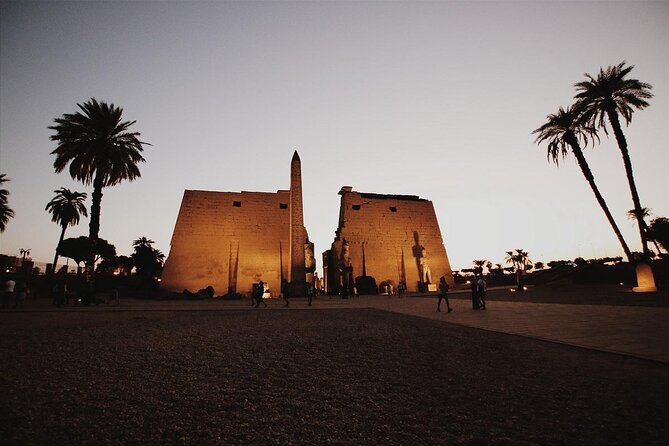
- A West & East Bank hit list in one long day: Karnak plus Luxor Temple on the East Bank, and Valley of the Kings plus Hatshepsut and Memnon on the West Bank
- Hotel or cruise pickup and drop-off: less hassle, especially in Luxor where traffic and heat can slow you down
- Time at the Valley of the Kings with a short Tut stop: you get main-tomb access without turning the day into a marathon
- Hatshepsut at Deir el-Bahari is a standout architectural stop: designed for power and ceremony, not just sightseeing
- Karnak’s scale is hard to absorb quickly: plan to let your guide explain what you’re seeing
- The schedule is flexible, but it still moves: wear comfortable shoes and expect a full 8½-hour day
Why This West & East Bank Tour Works in One Long Day
Luxor is one of those places where spacing out sites across several days can be ideal. But if you only have time for a single day, this tour makes practical sense: it connects the West Bank’s mortuary world (Valley of the Kings, Hatshepsut, Colossi of Memnon) with the East Bank’s living temple traditions (Karnak and Luxor Temple). You also cross the Nile in the plan, so you’re not bouncing back and forth with extra DIY transport.
The big win for me is pacing you can manage. Instead of a checklist where you barely read the labels, you get structured time at each site—Karnak for about two hours, Deir el-Bahari around an hour to two, Luxor Temple about 1.5 hours, and shorter time at Memnon. That’s enough for photos and real understanding if your guide is doing their job.
Still, it’s a full day. You’ll want to treat it like one focused outing, not a “quick hit” between other plans. If you’re arriving exhausted from a flight, you may feel it in the last hour or two.
You can also read our reviews of more private tours in Luxor
Pickup and Transfers: Door-to-Door Is the Real Upgrade
This is set up as a private tour with hotel pickup and drop-off. That matters in Luxor because time evaporates fast when you have to coordinate taxis, find meeting points, or negotiate your way to the West Bank roads. With transfers arranged, you start sooner and stay calmer.
You’ll also get bottled water included. It’s a small detail, but in Luxor’s sun it’s the difference between feeling fine and feeling cranky.
One note for your planning: if you’re arriving the same day at Luxor Airport, there’s an extra $10 for an airport pick-up or drop-off. If you can, give yourself a buffer so you’re not rushing to match the tour start.
Karnak Temple: Amun’s Empire in Stone
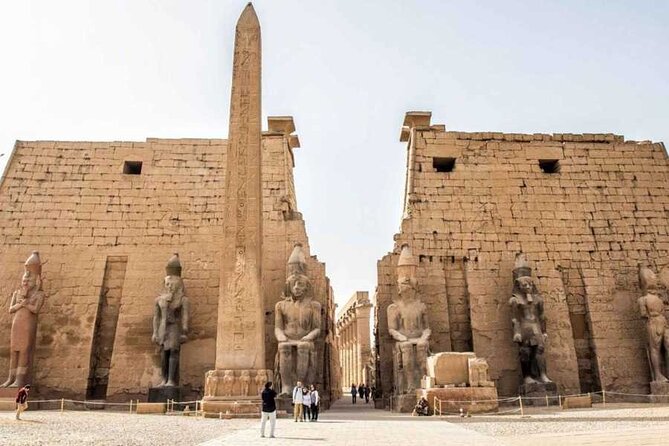
Karnak Temple is the opening “wow” stop for a reason. It’s dedicated to Amon and his family—Mut and Khonsu—so it isn’t just a pile of ruins. Your guide should help you see the religious logic behind the size and layout: these weren’t casual gatherings. They were meant for big ceremonies and long-running worship.
Your visit is scheduled for about two hours. That’s enough time to walk the main areas without feeling like you’re being herded. Admission is listed as not included in the itinerary section, so what you actually pay can depend on the option you selected for entrances.
If you want the most out of Karnak, don’t try to “finish” it like a museum. Let your guide connect the dots—why Amun mattered, how the temple’s parts relate, and what the architecture is trying to communicate.
Crossing the Nile: Switching From Afterlife to Daily Life
The tour plan includes crossing the Nile so you get both halves of Luxor’s story. That change of scenery is more than scenic—it helps you understand the shift in what each bank represents.
On the West Bank side, you’re in the realm of kings and burial temples. On the East Bank side, temples are tied to daily religious rhythms and ongoing public worship. When you move between them in one day, it’s easier to remember what you learned rather than forgetting it between separate tours.
If you enjoy structure in your travel days, this routing helps. It gives you a mental framework: West Bank first (kings and monuments), then East Bank (temple life).
Valley of the Kings and the Tutankhamun Stop: Time-Smart Tomb Visits
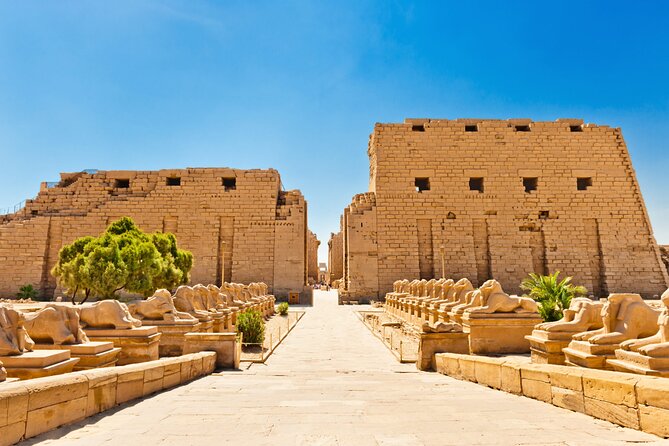
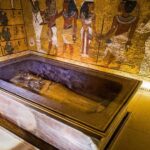
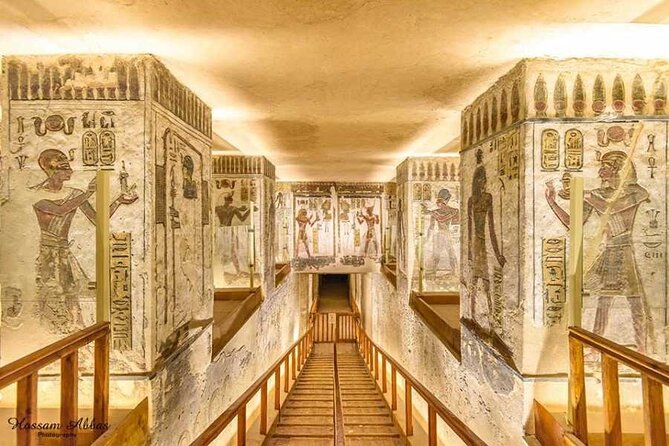
This is the heart of the West Bank experience. The Valley of the Kings is where multiple royal burials were placed in splendid chambers—kings like Tutmosis I, Tutmosis III, Ramssess VI, Mrenptah, and Amonhotep II are specifically named in the tour description. And yes, the famous Tutankhamun (Tut) tomb visit is built into the plan.
Here’s how the timing shakes out in the itinerary:
- Valley of the Kings visit time is shown as about 2 hours, but the tour description also talks about spending about three hours there.
- Tutankhamun tomb stop is listed as 30 minutes, and admission tickets are not included.
That means you should go in with the right expectations. You won’t have unlimited time in every tomb. You’ll likely choose a few key interiors and prioritize what you came to see. If Tut is your main goal, treat that 30 minutes as the center of gravity and don’t waste it deciding later.
A practical tip: an early start is a big advantage. One set of feedback highlighted arriving around 6 am to keep things cooler and with fewer crowds. If your schedule allows, ask for the earliest possible departure.




Temple of Hatshepsut at Deir el-Bahari: Power, Precision, and a Rare Story
Then you head to Deir el-Bahari for the Temple of Queen Hatshepsut, also known as El Dir El Bahari. This stop is special because it’s not just about stonework. It connects to a person with an unusually clear historical identity: Hatshepsut is described as the sole female pharaoh of ancient Egypt.
Your scheduled time at this temple is listed in different ways, ranging from about one hour exploring to two hours in the itinerary block. Either way, you’re looking at an architectural feat commissioned by Hatshepsut during the 18th Dynasty, described as roughly 1490–1469 B.C. The temple’s terraces and central axis are made to impress from multiple viewing angles, so give yourself time to slow down and look.
One drawback to consider: because this is an iconic site, you’ll want your guide to help with interpretation. Without context, it can feel like “pretty walls and columns.” With context, you understand why the design supports her legitimacy and authority.
Luxor Temple: New Kingdom Worship Meets Later Completion
After the West Bank, the tour brings you to Luxor Temple. This one is tied to the gods and the New Kingdom story: it was constructed by Amunhotep III in the 18th Dynasty and later completed by Ramses II in the 19th Dynasty. It’s described as dedicated to Amun-Ra, along with Mut and Khonsu—basically, the family that shows up again and again across Karnak.
You’ll have around 1.5 to 2 hours here (listed as 1 hour 30 minutes in the itinerary). That’s enough to enjoy both the scale and the finer details, and also to understand how the temple evolved over time.
If you like when your guide connects dates to what you’re seeing, this is a strong stop. Luxor Temple is a place where “ancient Egypt changed, but the worship kept going.” You feel that in the construction story.
Colossi of Memnon: Quick, Famous, and Worth the Photo Stop
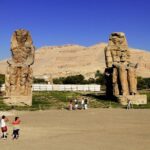
The Colossi of Memnon are the kind of sight that you think you already know until you see them in person. These are described as the imposing remnants of the mortuary temple of Amenhotep III—two huge statues that have stood through centuries.
Your visit time is about 30 minutes, and admission is listed as free in the itinerary notes. In a day this full, that short stop can be a blessing. You get the iconic moment without it eating half the itinerary.
Treat this stop like a reset. Get your photos early, then use the time for quick interpretation—why these statues mattered, and what they represent once you understand the king behind them.
Price and Entry Fees: The Part You Must Confirm
At $20 per person, this tour can be a bargain for the amount of ground it covers. But Luxor tours often get messy around admissions, so don’t trust only the headline price.
Here’s what the provided details say to watch:
- The itinerary blocks list Admission Ticket Not Included for Karnak, Valley of the Kings, Hatshepsut, and Luxor Temple.
- The “Included” section says entry/admission is included only if you chose option Car+Guide+entrance fees+Lunch.
- Colossi of Memnon is listed as Admission Ticket Free.
So your best move is simple: before you go, check exactly which option you purchased. If your option includes entrances and lunch, great—you’ll know the major costs are handled. If not, you’ll need to budget for tickets at the sites.
Tipping is not included. That’s common, but it’s still worth mentally planning for if you want to reward your guide and driver for doing the work.
Guides and Drivers: The Difference Between Seeing and Understanding
The tour includes a qualified Egyptologist guide. That’s the part you can’t easily DIY. Temples and tombs are more rewarding when someone explains what you’re looking at and why it mattered to people thousands of years ago.
In feedback tied to this company’s team, you’ll see names like Mahmoud, Mohamed, and Machmut associated with the guiding role, and Ahmed (plus other driver names) for transport. Even if your guide is different, the key point is that you’re paying for interpretation, not just transportation.
I also like that the experience is private for your group. You can ask questions as you go instead of saving them for the end. That makes a big difference at sites like Karnak, where context turns the scale from confusing into meaningful.
Practical Tips to Make This a Smooth Luxor Day
This is a long day at multiple archaeological sites, so the best tips are the boring ones that work:
- Start early if you can. Cooler temps and fewer crowds make a real difference, especially for the Valley of the Kings.
- Bring comfortable shoes. You’ll be walking uneven surfaces and using stairs at temple sites.
- Use your guide’s time well. If you have limited time in the Valley, decide what you want most before you arrive.
- Expect admission fees to be option-dependent. Confirm whether your booking includes entrance fees and lunch so you’re not scrambling at each stop.
- Plan for a short Memnon photo moment. The Colossi stop is brief, so make sure you’re ready to shoot.
If you’re the kind of traveler who likes facts tied to what you see—names, dynasties, and what each temple was for—this route rewards you.
Who This Tour Suits Best (and Who Might Want a Different Plan)
This is a good match if you:
- Want both the West Bank and East Bank highlights in one day
- Like a private guide and hotel-to-site transfers
- Are comfortable with an 8.5-hour schedule that doesn’t leave much slack
It may be less ideal if you:
- Hate long travel days and prefer a slower pace at one bank only
- Want deep time in every single tomb (this plan is time-smart, not endless)
- Don’t want to think about entrance-fee options before you arrive
For most people, it’s a strong “time-efficient Luxor” choice—especially if your trip schedule is tight.
Should You Book This Private Luxor West & East Bank Day Tour?
I’d book it if your priority is seeing the big hits without wrestling transport. The door-to-door pickup, Egyptologist guidance, and the way the day connects Karnak with the West Bank heavyweights (Valley of the Kings, Hatshepsut, and Memnon) make it a practical way to get real meaning from Luxor in a single day.
Just do one homework step: confirm your booking option and whether entrance fees and lunch are actually included for your specific price. If you get that straight, you’ll show up with fewer surprises and a smoother day.
If your schedule allows an early start, even better. Luxor gets hot, and the Valley of the Kings feels best when you can move through it calmly.
FAQ
Is this tour private?
Yes. It’s listed as a private tour/activity, and only your group participates.
How long is the Luxor West & East Bank day tour?
The duration is approximately 8 hours 30 minutes.
Do I get hotel pickup and drop-off?
Yes. Hotel pickup and drop-off are included.
What’s included in the tour besides the guide?
Bottled water, a qualified Egyptologist guide, taxes and charges, and transport are included based on the package option you select.
Are the temple and tomb admission tickets included?
The itinerary notes admission tickets are not included for multiple stops. The included section also says entry fees apply only if you chose the option that includes entrance fees (and lunch).
Does the tour include lunch?
Lunch is mentioned as part of an option (Car+Guide+entrance fees+Lunch). It’s not stated as included in the base package.
Is tipping included?
No. Tipping is listed as not included.
If I arrive the same day at Luxor Airport, is pickup extra?
Yes. If you arrive in the same day at Luxor airport, there is an extra $10 for an airport pick up or drop off.
Are service animals allowed?
Yes. Service animals are allowed.