REVIEW · LUXOR
Luxor Full Day Private Tour: West Bank & East Bank – Temples & Tombs
Book on Viator →Operated by EgBride Travel · Bookable on Viator
Luxor feels personal on a full private day. This West Bank to East Bank tour is interesting because you move through the main Theban sites in one efficient loop, with private transport and plenty of time at each stop. I love starting in the Valley of the Kings, where you can actually go inside three royal tombs.
I also like the way the experience is set up for real explanations, not just photos. In the feedback I’m seeing Egyptologist-style guides called out by name, including Smiley and Ramez, for clear context and for answering questions so monuments make sense as you see them.
The main consideration is the extra ticket costs. Tomb and temple admissions are not included, and some highlights have special add-ons (for example, Tutankhamen and Seti I need separate tickets, and Karnak has areas that require additional entrance).
In This Review
- Key highlights to look for
- Why this West Bank-to-East Bank route works so well
- Valley of the Kings: going inside the Theban necropolis
- Queen Hatshepsut at Deir el-Bahari: murals you can actually study
- Colossi of Memnon: a photo stop with a story attached
- Lunch on your timeline: refuel before Karnak
- Karnak Temple complex: Amun Re, Mut, and Monsu plus extra areas
- Luxor Temple: Opet Festival vibes and a Nile-side crown ritual
- Price and value: what you get at $99 and what you should plan to pay
- How to work with your guide for the best experience
- Who this tour suits best (and who might want something else)
- Should you book this Luxor Full Day Private Tour?
- FAQ
- What is included in the $99 per person price?
- Are tomb and temple entrance tickets included?
- How many tombs will I visit in the Valley of the Kings?
- How long is the full tour, and what sites are covered?
- Is pickup included?
- Is free cancellation available?
Key highlights to look for
- Three Royal Tombs at the Valley of the Kings once you have the Valley ticket you buy separately
- Deir el-Bahari with Queen Hatshepsut’s temple plus time to wander and spot the best murals
- Colossi of Memnon photo stop with the famous earthquake-and-whistling story at the back of your mind
- Karnak Temple complex including Amun Re, Mut, and Monsu areas, with time to explore between major halls
- Luxor Temple on the Nile tied to the Opet Festival and the idea of the rejuvenation of kingship
- Private pace, A/C ride, lunch, and bottled water, with guides praised for explanations and smooth organization
Why this West Bank-to-East Bank route works so well
Luxor can feel like information overload if you hop around without a plan. This tour is built as a single day that connects the West Bank’s tomb world with the East Bank’s temple world, so the story of ancient Thebes lands in your brain faster.
You’ll be in a private, air-conditioned vehicle, which matters more in Luxor than many people expect. You’ll also get lunch at a local restaurant and a bottle of water each, which helps you stay out of the heat spiral mid-day.
The best part for me is the balance between guided stops and breathing room. You’re guided enough to understand what you’re looking at, then you’re given time to slow down and walk around.
You can also read our reviews of more private tours in Luxor
Valley of the Kings: going inside the Theban necropolis
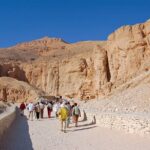
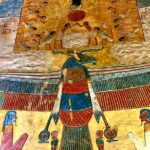
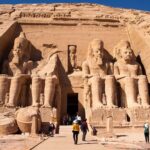
Your day begins in the West Bank necropolis in the Theban Mountains at the Valley of the Kings. This is the big stage where many tombs were carved, and the numbers alone make it feel serious: up to 63 tombs have been found, from small chamber crypts like KV54 to much larger complexes such as KV5 with 120 chambers.
You’ll have time to visit three tombs using the Valley of the Kings entrance ticket. That’s a smart sweet spot: enough variety to compare styles and layouts, without trying to sprint through everything and missing details.
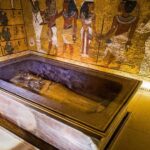
One practical note: the tombs of Tutankhamen and Seti I require separate tickets and are not included. If you know these are must-sees for you, plan your budget and get those specific tickets in advance so you don’t lose time deciding at the gate.
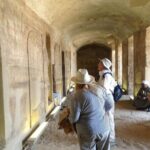
Also, tomb interiors reward patience. Keep an eye on wall scenes and writing placement rather than only chasing the most famous name—your guide’s job is to help you connect the imagery to the purpose of each burial space.
Queen Hatshepsut at Deir el-Bahari: murals you can actually study
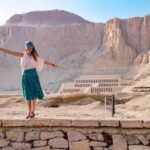
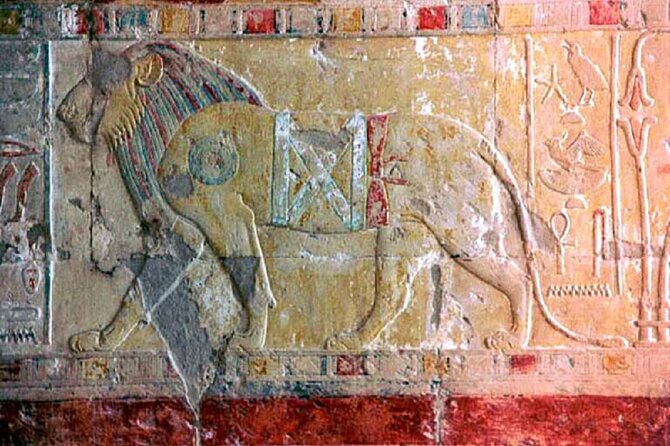
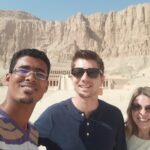
Next comes the rock-hewn mortuary temple of Queen Hatshepsut at Deir el-Bahari. This stop is a big deal because it’s not just a pretty viewpoint—it’s where Hatshepsut’s power is carved into stone and still readable through the murals.
Hatshepsut rose after the death of Thutmose II and held the reign either as co-regent with Thutmose III or as a self-proclaimed Pharaoh. The point your guide will connect for you is that she wasn’t just a figurehead—she’s described as a strong ruler who helped re-establish trade routes, and the temple is the place where her achievements were memorialized.
What you’ll like most here is the mix of guidance and freedom. You’ll be pointed out some of the best murals, and you’ll have time to wander around yourself. That self-walking time matters because you can choose where you want to spend your energy—wide terrace views, close-up wall details, or just the quiet of a place built to last.
A small realism check: the ground can be uneven and you’ll be moving between areas. Comfortable shoes are worth it here, especially if you’re visiting during warmer parts of the day.
Colossi of Memnon: a photo stop with a story attached
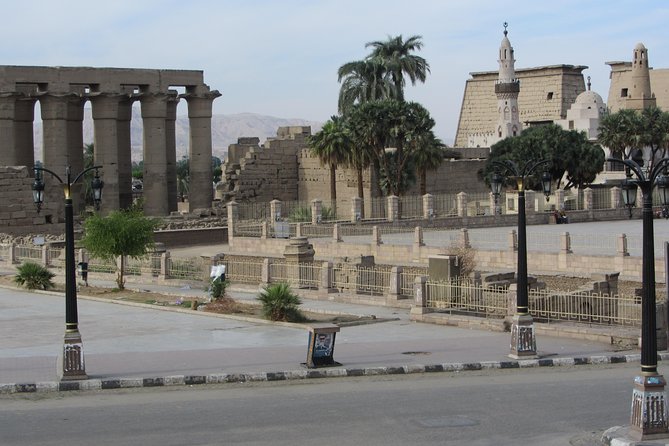
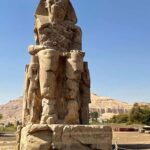
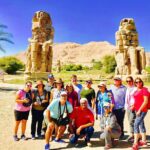
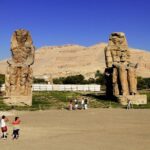
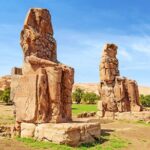
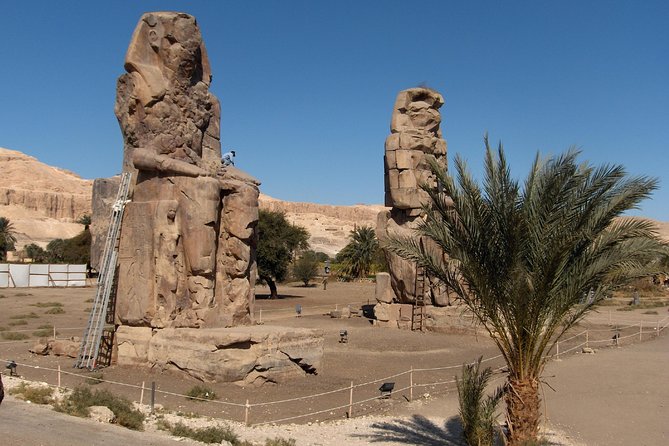
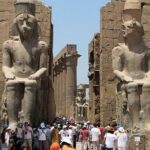
Then you’ll make a quick stop at the Colossi of Memnon, two huge statues that still guard the ongoing excavation of Amenophis III’s palace area. The statues are likenesses of Pharaoh Amenophis III, and that connection helps the site feel grounded instead of random.
This stop is short—about 30 minutes—but it’s not wasted time if you lean into the story. There’s a famous legend tied to one statue being damaged by an earthquake in 27 BC, and later being said to whistle or sing at dawn.
For planning, treat this as a reset button. Stretch your legs, take your photos, and let the guide’s explanation give you a frame for what you’re seeing before you head to Karnak.
Lunch on your timeline: refuel before Karnak
After the West Bank temples and tombs, you’ll have lunch at a good local restaurant. Only the lunch meal is included, and drinks are not, so you’ll want to budget for what you order.
I like lunch breaks built into long temple days because your brain needs a pause. If you go in hungry, every stop turns into a blur; if you eat well, you’re more patient in the tight corridors and big halls that follow.
When you sit down, use the time to ask your guide one or two questions. You’ll often get better answers in a calmer setting than while you’re standing in a busy walkway.
Also, you’ll have bottled water each person included, which helps you avoid turning the afternoon into a dehydration problem.
A few more Luxor tours and experiences worth a look

Karnak Temple complex: Amun Re, Mut, and Monsu plus extra areas
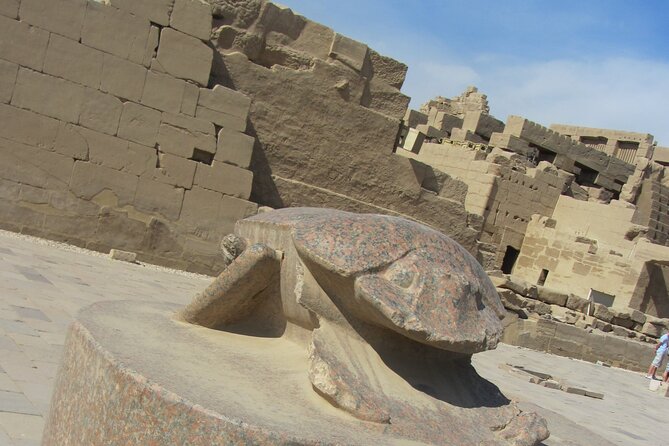
On the East Bank, Karnak Temple is the centerpiece. It’s described as the second largest religious temple in the world after Angkor Wat, and construction is said to have started about 3,500 years ago before stopping in the Ptolemaic era.
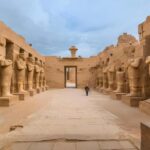
Karnak is also a complex of precincts, not one single building. You’ll visit areas connected to Amun Re, Mut, and Monsu, and you can expect holy lakes, hypostyle halls, obelisks, pylons, shrines, and a maze-like feel as you move between zones.
The tour approach here is practical: your guide leads you through the highlights and you get time to wander between the ancient walls. That wandering time matters because Karnak rewards slow looking. If you rush, it turns into columns and shadows; if you slow down, details start to click.
Here’s the other ticket reality check. There’s an open-air museum within the complex that requires an additional entrance ticket, and the Mut precinct also needs an extra ticket. If you want those areas, be ready to pay more so you don’t feel surprised.
If you’re trying to understand Egyptian religious power, Karnak is where it becomes visible. It’s not only massive—it’s organized into a system, and you’ll get help seeing that structure rather than treating every wall as isolated decoration.
Luxor Temple: Opet Festival vibes and a Nile-side crown ritual
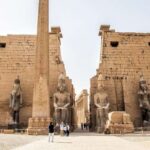
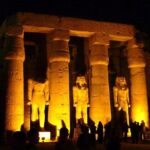
Your last big temple stop is Luxor Temple, on the banks of the Nile. Unlike some temples tied to a specific deity or Pharaoh, Luxor Temple is tied to the rejuvenation of kingship and the center of the Opet Festival.
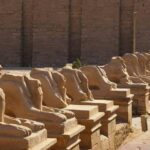
This is where your guide’s explanations can make a lot of sense of the site. In ancient times, Karnak and Luxor Temples were connected by a sphinx-lined avenue, and the connection is still being excavated. Even if you can’t see the whole avenue today, knowing it existed helps you understand Luxor as part of a ritual route, not just two separate monuments.
Luxor Temple is also associated with coronation ideas. Many pharaohs were crowned here, either in reality or in symbolic terms, and Alexander the Great is mentioned as someone who claimed a link to a Thebes coronation even if he likely didn’t visit the ancient capital.
Inside the temple compound, you’ll notice layers of later eras too. A Roman chapel exists within the walls, and later it was transformed into a church. Above the temple rests the Abu Haggag mosque.
That mix of old and newer religious use makes Luxor Temple feel alive in a different way than tombs do. It’s still sacred space, just not frozen in time.
Price and value: what you get at $99 and what you should plan to pay
At $99 per person for an about 8-hour private day, the value is strongest when you consider what’s included versus what’s not. You get air-conditioned transport, private transportation, and all fees and taxes for the tour service itself.
Lunch is included (but only the meal), plus one bottled water each person. There’s also time built in for souvenirs shopping, which is helpful if you’re coming home with something small and practical.
The “not included” list is where you need to do your homework. Sightseeing admissions are not included, tips and drinks are not included, and extra activities not mentioned are not included. The Valley of the Kings and the temple complexes need separate ticket budgeting on your end, with specific add-ons like Tutankhamen and Seti I tickets.
If you’re comparing this tour to a cheaper option, look for the hidden costs. Skipping a good guide often means you pay in confusion time—standing in huge sites without the connections that make the carvings meaningful. Here, you’re buying time plus context.
How to work with your guide for the best experience
This tour is private, which means your guide can move at your pace and answer your questions. In the feedback, names like Smiley and Ramez show up as standouts for explaining complicated Egyptian connections clearly, and for handling questions instead of rushing you along.
Another practical win: a guide can help you handle the outside world around monuments. One clear theme in the feedback is that having a guide reduces the nuisance of people trying to pull you in different directions while you’re trying to see the sites.
So when you book, think about your own style. If you like asking questions, choose the option that includes a private English-speaking professional Egyptologist guide. If you prefer a less academic vibe, you can still benefit from the guide’s explanations, just ask for less detail when you’re tired.
Tip-worthy behavior: listen for what your guide says about what you’re looking at in the next 10 minutes. If you know the purpose of a wall scene, you’ll spot patterns faster once you’re standing in front of it.
Who this tour suits best (and who might want something else)
This is a great fit if you want the key Luxor monuments on a single day with less stress. You’ll cover both banks, and you won’t need to stitch together multiple tours to get Valley of the Kings plus Karnak plus Luxor Temple.
It’s also a good choice if you’re the type who likes context. The stops are arranged so you can connect royal burials on the West Bank to the ritual and kingship themes on the East Bank.
You’ll want moderate physical fitness. Tombs and temple sites involve walking, steps, and uneven surfaces. If you have mobility limits, it’s worth asking your operator about practical movement before you go.
Families can often enjoy it too, but do consider the heat and the amount of walking. A private guide helps with pacing and explanations, which makes it easier to keep kids engaged without turning it into a lecture.
Should you book this Luxor Full Day Private Tour?
I’d book it if you want a structured, private Luxor day that hits the big monuments without feeling frantic. The mix of tomb time at the Valley of the Kings, mural time at Deir el-Bahari, and temple time at Karnak and Luxor Temple gives you the full Theban picture.
I’d hesitate only if you hate ticket budgeting. Admissions are not included, and some areas cost extra once you’re on-site. If you’re the type who wants absolutely one fixed price and nothing else to think about, this might frustrate you.
If you book, do two things that make a real difference: decide ahead of time whether you want Tutankhamen or Seti I tickets, and wear shoes that work well on uneven ground. With that, you’ll get a day that feels organized, not chaotic—and you’ll leave with monuments that actually connect in your mind.
FAQ
What is included in the $99 per person price?
The tour price includes air-conditioned private transportation, all fees and taxes for the tour service, lunch meal only (beverages not included), one bottled water per person, and time for souvenirs shopping. A private English-speaking professional Egyptologist guide is included if you select that option.
Are tomb and temple entrance tickets included?
No. Sightseeing admissions are not included. You’ll need tickets for the tombs and temples, and some additional areas require extra entrance fees once you’re at the sites.
How many tombs will I visit in the Valley of the Kings?
You can visit three tombs with the Valley of the Kings entrance ticket. The tombs of Tutankhamen and Seti I require separate tickets.
How long is the full tour, and what sites are covered?
The tour runs about 8 hours. You’ll visit the Valley of the Kings, the temple of Hatshepsut at Deir el-Bahari, the Colossi of Memnon photo stop, then Karnak Temple and Luxor Temple on the East Bank.
Is pickup included?
Pickup is offered. If you need pickup from Luxor Airport, it’s available as an extra supplement paid in cash.
Is free cancellation available?
Yes. You can cancel up to 24 hours in advance for a full refund, and the experience requires good weather. If it’s canceled due to poor weather, you’ll be offered a different date or a full refund.