REVIEW · LUXOR
Private Tour in Valley of the Kings, Queen Hatshepsut, Luxor, and Karnak Temple
Book on Viator →Operated by Egypt Direct Tours · Bookable on Viator
Luxor in one day can feel unreal. This private, full-day plan is interesting because it strings together the big-name sights on both banks, with an Egyptologist guide guiding your stops and saving you time with private transport. I especially like the easy pickup and drop-off setup (hotel, train, or airport), and I like how the day mixes tomb storytelling with monumental temples. One possible drawback: it’s still a long, hot 8-hour push, and the Valley of the Kings entry ticket is listed as not included, so you may need extra cash/planning.
You’ll start at Luxor Temple, then move to Deir el-Bahari for Queen Hatshepsut, head to the west bank’s Valley of the Kings, and finish at the temple powerhouse of Karnak plus the Colossi of Memnon. Lunch and bottled water are included, and the tour is structured so you’re not constantly waiting on buses or sorting tickets. For value, this is strongest if you want the highlights in one go and you care about context—not just photos—because the guide time is the real luxury.
In This Review
- Key highlights worth planning for
- How the 8-hour Luxor schedule fits (and stretches) your day
- Pickup and private transfers that actually save time
- Luxor Temple: Nubian sandstone and the feel of a working monument
- Deir el-Bahari and Queen Hatshepsut’s Djeser-Djeseru
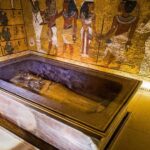
- Valley of the Kings: tomb choice, ticket timing, and what to expect underground
- Karnak Temple complex: the big open-air world of Amun-Ra
- Colossi of Memnon: two giants of Amenhotep III
- Lunch and water: the included break you should actually use
- What the guide adds (and why it changes the value)
- Price and value for one-day Luxor
- Who should book this private Luxor day tour?
- Should you book this private Luxor day tour?
- FAQ
- FAQ
- How long is the tour?
- What time does the tour start?
- Is hotel or airport pickup included?
- Is this a private tour?
- Is lunch included?
- Are admission tickets included for all the stops?
- Do I need a mobile ticket?
- Will there be an Egyptologist guide?
- What health and safety rules should I expect?
Key highlights worth planning for
- Private, full-day route across the Nile to cover Luxor Temple, Hatshepsut, Valley of the Kings, Karnak, and Colossi of Memnon
- Egyptologist-guided explanations that make the monuments easier to connect (and some guides like Ahmad El-Sisi are known for clear, passionate storytelling)
- Entry fees included for multiple temples with bottled water and lunch set for you
- Valley of the Kings ticket not included in the details, so budget for that stop
- Heat-smart tip from real pacing: bring a wet towel to cool down during tomb time
How the 8-hour Luxor schedule fits (and stretches) your day
This tour runs about 8 hours and typically starts at 9:00am. That timing matters in Luxor: mornings tend to be more workable for walking, and afternoons get hotter faster than you expect. The itinerary is built around minimizing travel friction, using private transportation so you don’t burn your day hopping between pickups and crowded stops.
The day is also “choose-your-pace” friendly in a practical way. Because it’s private, you’re not locked into a rigid group rhythm. Still, the structure is tight enough that if you want to linger for a long time in every chamber and colonnade, you may need to ask for small adjustments—especially around the Valley of the Kings and Karnak, where you’ll naturally want more time.
You can also read our reviews of more private tours in Luxor
Pickup and private transfers that actually save time
The big win here is convenience: pickup and drop-off are included, and the tour lists airport pickup and airport transfer as part of the package too. If you’re arriving by flight and only have a single day, that can turn a stressful logistics day into a normal sightseeing day.
You also get a mobile ticket, which helps reduce time spent at ticket windows. It’s a small thing, but in Egypt, saved time adds up—especially when tomb entrances and temple entry lines can be unpredictable.
On the health and safety side, the tour notes that cars are sterilized periodically, drivers and guides wear masks, and hand sanitizer is available in the car. Each customer is expected to wear a mask starting from leaving the meeting place. You don’t need to love the process, but you should plan to follow it and not assume things will be like pre-pandemic days.
Luxor Temple: Nubian sandstone and the feel of a working monument
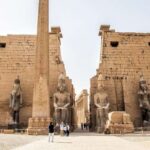
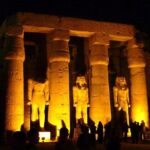
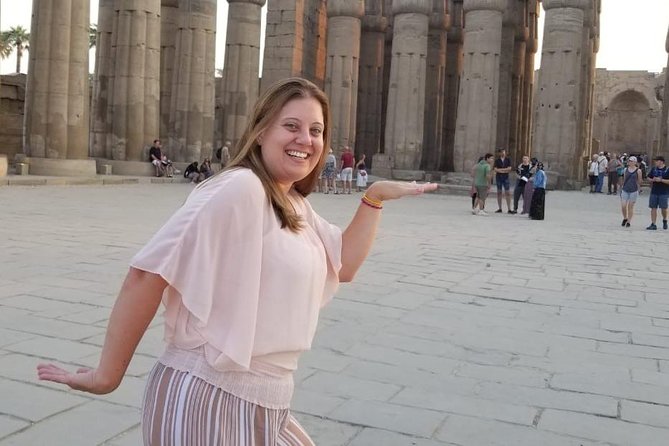
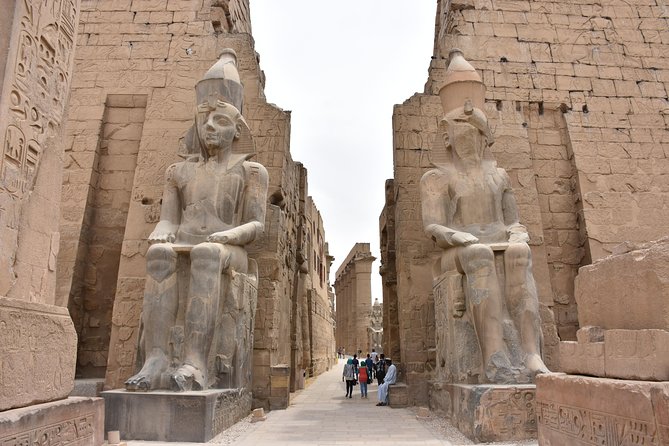
Luxor Temple is a strong opening stop because it sets the tone for the day. It’s built using sandstone from the Gebel el-Silsila area in South-Western Egypt, sometimes referred to as Nubian Sandstone. Even if you’ve never heard that term before, the point is simple: the material choices are part of how these sites were constructed and restored over time.
Expect about an hour here, which is just enough time to walk, orient yourself, and understand what you’re looking at before you move into the more overwhelming scale of Karnak later. Luxor Temple also works as a warm-up for the story your guide is building across the sites.
Practical tip: if you’re prone to dehydration or heat stress, drink water at Luxor Temple before you head west. The west bank can be slower walking, and shade can be patchy.
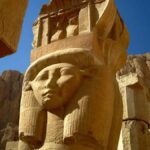
Deir el-Bahari and Queen Hatshepsut’s Djeser-Djeseru
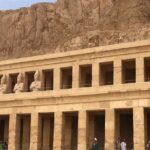
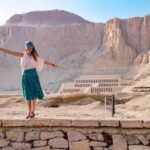
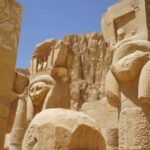
The Temple of Hatshepsut at Deir el-Bahari is one of the most photogenic spots in Luxor—and it earns that reputation for a reason. The tour frames it with its old name, Djeser-Djeseru, meaning Holy of Holies. That ancient label matters because it tells you the temple wasn’t just a pretty monument; it was meant to feel like a sacred place.
Historically, Queen Hatshepsut was a New Kingdom pharaoh, and the temple is tied to that powerful identity shift. You’ll also see the temple’s link to Thutmosis in the description, which is a clue you can follow while your guide connects rulers, worship, and the politics of monument building.
This stop is scheduled for about an hour. Some people love it instantly; others feel the time crunch compared to Karnak and the tombs. The balancing act is to let Hatshepsut be your architecture and ideology stop, then save your lingering energy for Karnak, where the scale is almost hard to process.
Consideration: if you’re feeling time-stressed or heat-stressed, don’t try to do everything at once. Use the hour to get the layout, the “why it looks like this,” and the big visual landmarks. Then move on while your legs still have some fuel.
Valley of the Kings: tomb choice, ticket timing, and what to expect underground
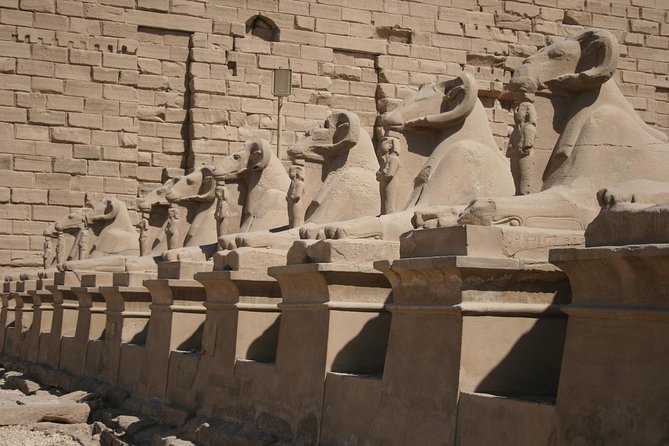
The Valley of the Kings sits on the west bank of the Nile, across from modern Luxor, in the Theban Necropolis. A useful mental model is that the area is split into two valleys: the East Valley (where many royal tombs are) and the West Valley.
This is scheduled for about an hour, but it’s the stop where your experience can vary the most. The tour details clearly say the Valley of the Kings entrance fee is not included, so plan on paying for entry there unless your provider tells you otherwise at confirmation.
Also, tomb visits typically mean a mix of walking, stairs, and then going inside. Interiors can be cooler than the sun outside, but the whole sequence still feels intense. One practical tip that comes up in real-world advice: bring a wet towel. It helps you cool down fast when you step back out into heat.
What you should aim to get from this stop:
- A sense of how the tombs relate to the west bank as a place of royal memory
- Enough context to understand why the paintings and layout matter
- A realistic pace, so you don’t feel rushed in the chambers
How to decide your tomb focus: if you’re tomb-obsessed, prioritize the tombs you’re most curious about and keep the temple “side quests” short. If you’re more overall-themes curious, treat the valley as the “end of the day’s story” and focus on understanding the why, not just the wow-factor.
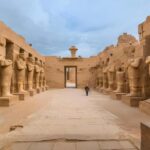

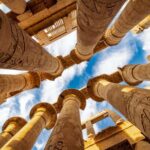

Karnak Temple complex: the big open-air world of Amun-Ra
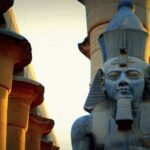
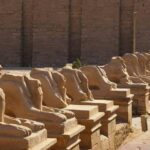
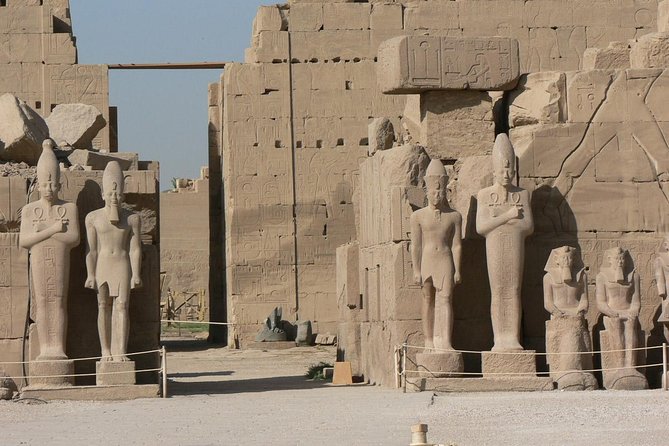
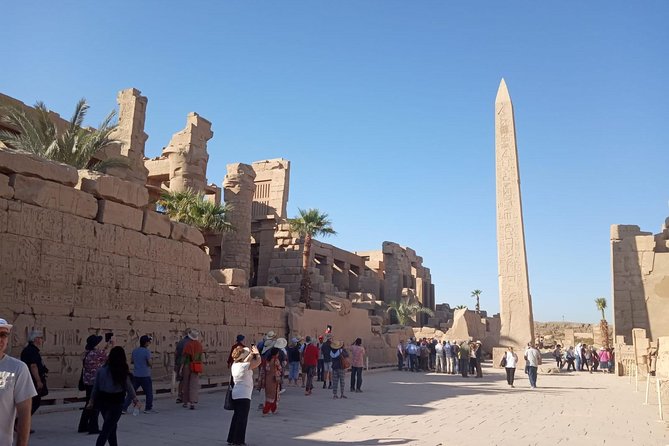
Karnak is where Luxor becomes “how did they even build this” territory. The complex is an open site and includes an open-air museum. It’s also described as one of the most visited historical sites in Egypt, with only the Giza Pyramids typically drawing more attention.
The tour description points out a key fact that helps you avoid getting lost: Karnak is often shorthand for the Precinct of Amun-Ra, even though there are multiple main parts to the larger complex. In other words, if you focus only on what’s easiest to see, you might miss how big the whole idea is.
You’ll get about an hour here. That’s enough time to grasp the scale, identify major zones, and understand the logic of temples as places of worship and state power—not just decorative ruins.
Best way to use your time at Karnak: pick a few “anchor points” you want to see well, not everything equally. Let your guide explain the names, roles, and symbolism, and use your walking route to match the guide’s story. If you try to sprint from landmark to landmark, you’ll end up collecting impressions instead of meaning.
Colossi of Memnon: two giants of Amenhotep III
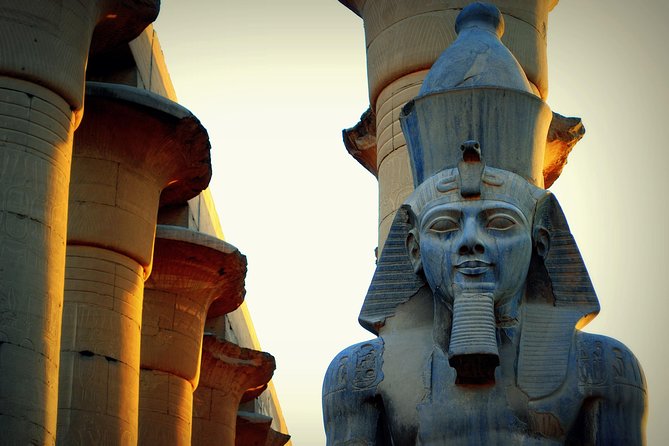
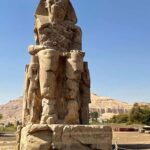
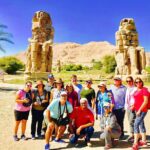
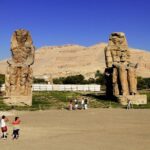
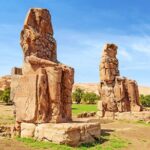
After Karnak, you’ll head to the Colossi of Memnon. These are two massive stone statues of Pharaoh Amenhotep III, linked to the Eighteenth Dynasty. Since about 1350 BCE, the statues have stood in the Theban Necropolis, making them one of the enduring “touchstones” for how long these sites have watched the Nile.
The tour schedules this for about an hour, which is useful because it gives you time not only to see the statues but also to get context from your guide about why they mattered and how they fit into the larger royal landscape.
Photo tip: don’t only shoot straight on. Walk around and catch angles that show scale. These statues can look like props if you don’t give your eyes a reference point.
Lunch and water: the included break you should actually use
Lunch and bottled water are included, and that matters more than it sounds when you’re stacking major sites. A lot of tours include food, but here the timing is built into a full day that otherwise risks running on sun, stairs, and quick stops.
If you have dietary needs, the tour notes a vegetarian option is available—just advise in advance. That’s a simple but important detail because it prevents last-minute scrambling when everyone else is making do with whatever is nearby.
Heat management: schedule your water like medicine. Drink before you feel thirsty, not after. And if you’re using the wet towel tip, keep it for the hottest stretch rather than the early, cooler hours.
What the guide adds (and why it changes the value)
This tour leans on the idea that you’ll learn as you go, not just check boxes. It includes a qualified Egyptologist guide and emphasizes Egypt’s history and ancient sights through guided explanations.
Some guide experiences you might hear about from previous participants include Ahmad El-Sisi, described as knowledgeable and passionate, with explanations that make the Egyptian story easier to understand. That’s exactly what you want in Luxor: the monuments can look similar if you don’t know what you’re seeing.
That said, pace can matter. One caution from real feedback is that some guides can run a bit efficiently, aiming to keep the day moving. Because this is private, you can fix that: ask your guide to slow down at Karnak or at the tomb stop if you want more time with fewer interruptions.
Price and value for one-day Luxor
At $102.57 per person, the headline value isn’t the sticker price. It’s what you’re getting bundled: private tour, Egyptologist guide, bottled water, lunch, hotel pickup and drop-off, and airport pickup/transfer. For a destination where logistics can eat your day, that packaging can be a money-saver in time and stress.
Entry fees are mostly handled too: the details say Luxor Temple, Hatshepsut, and Karnak include admission tickets in the schedule. The Valley of the Kings is the one tricky item because the stop details list its admission ticket as not included. So your true “all-in” cost depends on how that gets handled at confirmation.
If you only have one day and you want to hit Luxor’s strongest highlights without bouncing between taxis and ticket desks all morning, this is a solid value approach. If you’re the type who prefers slower, deeper visits to fewer sites, you may feel the day is packed.
Who should book this private Luxor day tour?
I’d book it if:
- You have one day in Luxor and want the major sights stitched together
- You care about explanations from an Egyptologist, not just wandering
- You want a private setup with pickup/drop-off so you’re not managing transport
I’d think twice if:
- You dislike long days in the heat and want a slower pace
- You’re only interested in Valley of the Kings tombs and would rather spend more time there, less time at temples
- You’re strict about budgeting for entrance fees and hate the idea of paying separately for one major attraction
Should you book this private Luxor day tour?
If your goal is to see Luxor’s biggest names in a single, guided day, this is an easy yes—especially with lunch, water, and private transfers built in. The main decision point is the Valley of the Kings admission ticket being listed as not included, so I’d treat that as a planned extra rather than a surprise.
Go in with the right mindset: you’re doing a highlight circuit, not a slow archaeological study day. Bring a wet towel, keep up with water, and ask your guide where you should spend your time if you want a little more breathing room at Karnak.
FAQ
FAQ
How long is the tour?
The tour is listed as approximately 8 hours.
What time does the tour start?
The start time is 9:00am.
Is hotel or airport pickup included?
Yes. The tour includes hotel pickup and drop-off, and it also lists airport pickup and airport transfer.
Is this a private tour?
Yes, it’s described as a private tour/activity, with only your group participating.
Is lunch included?
Yes. Lunch is included, and a vegetarian option is available if you advise in advance.
Are admission tickets included for all the stops?
Temple entry tickets are included for Luxor Temple, Hatshepsut, and Karnak in the stop details. The Valley of the Kings entrance fee is listed as not included.
Do I need a mobile ticket?
The tour notes that a mobile ticket is included.
Will there be an Egyptologist guide?
Yes. A qualified Egyptologist guide is included, and the tour may operate with a multi-lingual guide.
What health and safety rules should I expect?
The details say cars are sterilized periodically, drivers and guides wear masks, hand sanitizer is available, and each customer must wear a mask starting from when they exit the meeting place.