REVIEW · LUXOR
Luxor Private Tour to The East and West Banks of the Nile
Book on Viator →Operated by Egypt Tours Travel · Bookable on Viator
A day here feels like stepping into layers of time. This private Luxor tour slows things down so you actually absorb what you’re seeing on both the East Bank and West Bank, instead of sprinting between sites. I like that you get a qualified Egyptology guide who connects the monuments to real stories and symbols you can spot with your own eyes.
What I really liked is how practical it is for your schedule. You get pickup and return by private A/C vehicle, plus snacks and water, and the pace is built around guided visits like Karnak Temple and Luxor Temple on Day 1, with the West Bank necropolis on Day 2.
One thing to consider: entrance fees and certain major tomb experiences aren’t included. If you want to go inside the tomb of Tutankhamun, that’s listed as not included, and tickets for other sites also may be on you.
In This Review
- Key highlights you’ll feel in the moment
- East Bank focus: Karnak Temple’s 134-column wow factor
- Luxor Temple: Ramses statues and the Theban triad
- Valley of the Kings: choosing what you want from 63 tombs
- Deir el Bahari and Hatshepsut: where power meets trade
- Colossi of Memnon: two statues, one big message
- Price and logistics: what $78 per person really buys you
- Private guide impact: why names like Mahmoud and Marwan show up often
- Timing reality: early starts, hot walking, and ticket choices
- Who should book this Luxor East and West Banks tour
- Should you book Egypt Tours Travel for this Luxor East/West private tour?
- FAQ
- Is pickup included for this Luxor East and West Banks private tour?
- How much does the tour cost?
- Does the tour include entry into the tomb of King Tutankhamun?
- What’s included in the tour price?
- Are entrance tickets included for Karnak, Luxor Temple, and the Valley of the Kings?
- Is lunch included?
- What is the cancellation policy?
Key highlights you’ll feel in the moment
- Karnak’s Hypostyle Hall with 134 columns, plus obelisks and sacred lake details that make the place click
- A proper West Bank sequence: Valley of the Kings, Deir el Bahari, then the Colossi of Memnon
- Private setup so your guide can tailor questions and timing to your group
- A/C transfers and pickup/return that cut down on logistical stress in Luxor
- All fees and taxes included in the tour price, with snacks and water provided
- Strong guide reputation, with names like Mahmoud and Marwan showing up in standout service accounts
East Bank focus: Karnak Temple’s 134-column wow factor
If you only visit one East Bank site in Luxor, make it Karnak Temple. This is not a single building; it’s a huge complex made across different reigns. That matters, because with a guide you start seeing changes in style and purpose instead of treating everything like “big ruins in the sand.”
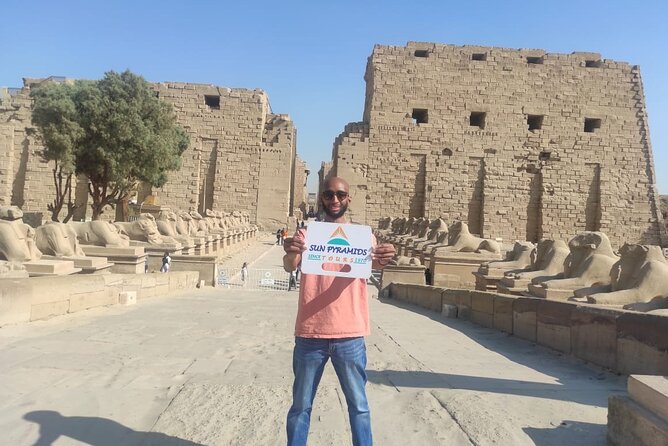
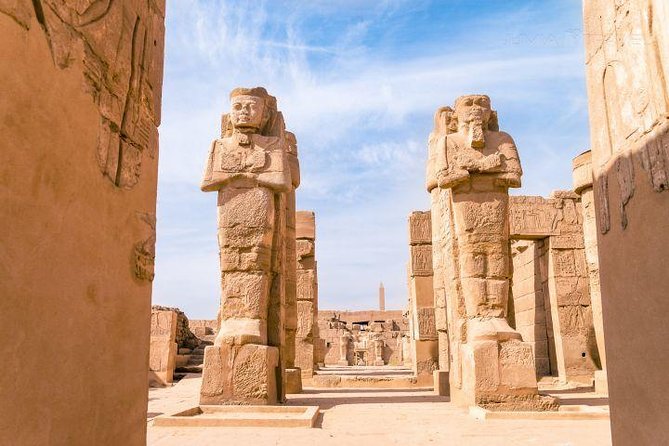
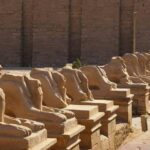
You’ll begin along the monumental approach, including the Avenue of Sphinxes. Then comes the star attraction: the Hypostyle Hall, famous for its 134 colossal columns. Standing there, the scale is the point. With a knowledgeable guide, you’re not just staring upward—you’re learning what the hall was designed to communicate through size, alignment, and the way light hits surfaces.
Karnak also gives you several quick hits of symbolism you can spot even if you’re new to Egyptian art. For example, you’ll see obelisks associated with Queen Hatshepsut and Tutomosis I, and you’ll likely hear how these monuments were used to project authority. The temple area also includes decorated elements like lotus and papyrus motifs connected to Amun worship, which helps you understand why Egyptian religious art looks less like decoration and more like visual theology.
A detail I love for first-timers: the complex includes the Sacred Lake and other specific features tied to ritual life. It turns Karnak from a “photogenic stop” into a place with daily sacred function, at least as the ancient builders intended.
Practical note: admission ticket costs aren’t included for entry into Karnak itself, so plan for that at the gate or through your guide’s instructions.
You can also read our reviews of more private tours in Luxor
Luxor Temple: Ramses statues and the Theban triad
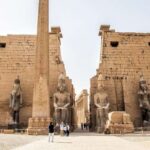
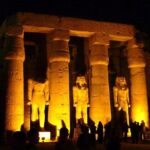
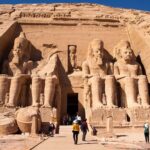
After Karnak, Luxor Temple feels more concentrated. It’s still grand, but it’s easier to read. It’s dedicated to the Theben triad: Amun-Ra, Mut, and Khonsu. If you’ve ever wondered why Egyptian temples so often show repeated divine pairings or triads, this is where those ideas become visible.
This temple’s timeline is a useful story in itself. It was built by Amenhotep III in the 18th Dynasty, then completed by Ramses II in the 19th Dynasty. So when you look at the space, you’re watching a kind of architectural conversation across generations.
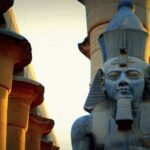
One highlight you should not miss is the presence of granite statues of Ramses the Great. These are the kinds of artifacts that help you link the monument to real political messaging: power, continuity, and legitimacy. It’s a reminder that Egypt wasn’t just about temples as spiritual spaces. It was also about rulers using art to send signals that lasted centuries.
As with Karnak, plan on paying the separate admission ticket if you want to step inside. Your guide can help you manage time so you don’t lose momentum after the larger Karnak walk.
Valley of the Kings: choosing what you want from 63 tombs
Day 2 shifts you to the West Bank, where the mood changes fast. The Valley of the Kings is the big name, and for good reason. It contains 63 tombs, and it’s the kind of place where a guide makes a huge difference.
If you walk in with just a general awareness, you might see “lots of entrances.” With a guide, you start noticing what these tombs were meant to do. Royal burial spaces in this valley were decorated with scenes tied to Egyptian mythology and beliefs about the afterlife. That’s why the art inside matters so much. Even if you don’t go into every tomb, you’ll understand what you’re looking at.
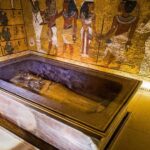
You’ll also get context on the most famous royal name: Tutankhamun. But here’s the key consideration: entry inside the tomb of Tutankhamun is not included. If your top priority is seeing that specific interior, you’ll need to budget for the ticket and plan your timing accordingly.
Even if you skip inside on the first pass, you’ll learn about other notable tombs and kings connected to the valley, including Tutmosis I, Tutmosis III, Tut-Ankh-Amon, Ramsess VI, Merenptah, and Amenhotep II. That list is more than trivia. It helps you map the valley into a timeline instead of treating it like a random collection.
Why the guided format is worth it here: the valley can be confusing if you’re trying to navigate everything on your own. A guide helps you decide what matters most to your group and avoids wasting time.
Valley visits also come with a reality check: you’re walking in a site designed around burial access, not tourist comfort. Wear shoes you trust. Bring water. And if you’re doing hot-weather travel, take it slow and pace yourself.
Deir el Bahari and Hatshepsut: where power meets trade
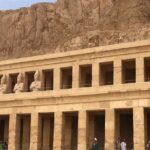
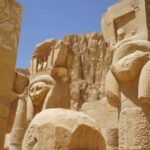
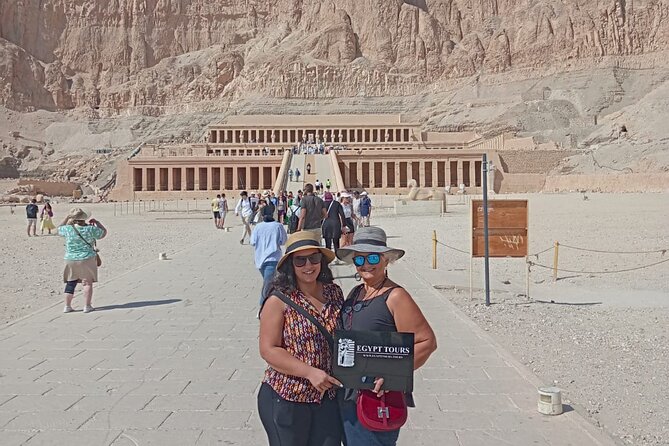
Next up is Temple of Hatshepsut at Deir el Bahari—often described as El Dir El Bahari. This is the kind of place that feels dramatic even before you start reading the details, because the setting and massing are built for impact.
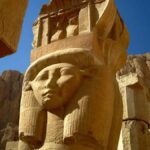
The key story here is Hatshepsut herself. She’s known as the only pharaonic woman who reigned ancient Egypt, and she ruled for about 20 years in the 18th Dynasty (around 1490–1469 B.C). A good guide will help you understand why her temple isn’t just a religious monument. It’s also a statement of legitimacy.
One of the most interesting elements you’ll hear tied to her reign is that she’s associated with starting or strengthening trading routes. That connects temple building to economic and political strategy. In other words: this isn’t just a monument to worship. It’s a monument to rule.
The visit is typically about an hour, which is a decent amount of time to grasp the architecture without turning it into a homework assignment. You’ll want to look closely at how the temple structure sits in relation to the terrain. Even without advanced knowledge, you’ll feel the intentional “stair-step” approach and the way the design frames the temple as a statement you can see from a distance.
Admission fees may apply, since entry inside isn’t included as part of the base package.
Colossi of Memnon: two statues, one big message
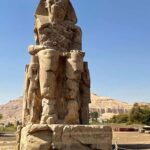
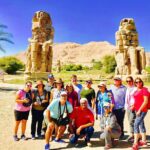
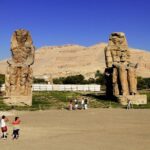
Your final stop on Day 2 is the Colossi of Memnon. These are two massive stone statues of Amenhotep III standing in front of the ruined Mortuary Temple of Amenhotep III, described as the largest temple in the Theban Necropolis.
What’s great here is how the stop works for different travel styles. If you love photos, it’s dramatic. If you love history, it’s symbolic. If you just want a breath between major sites, it’s short and focused—plan about 30 minutes.
One thing to know: the Colossi of Memnon entry is free, so you’re not juggling extra ticket costs at the end of a long day. And because the statues are the main event, you won’t feel like you’re chasing side rooms or hidden corners. It’s a straightforward payoff.
The name you’ll hear around the site—Memnon—also gives your guide a chance to share how later audiences interpreted the figures. That kind of layering is common in Egypt, and it’s one reason the West Bank feels like it’s still talking to visitors, not just to ancient Egyptians.

Price and logistics: what $78 per person really buys you
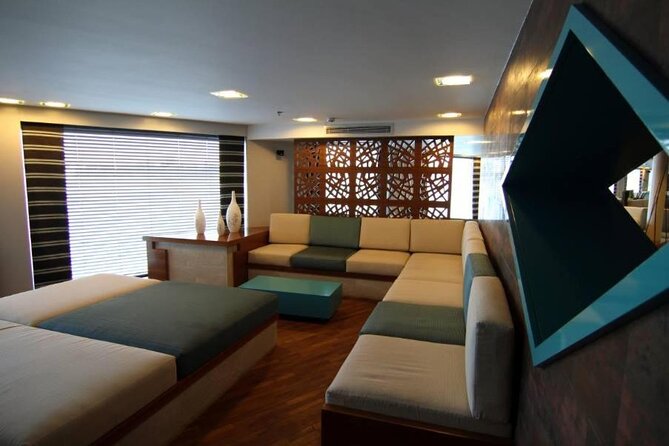
At $78 per person, this tour sits in a category that’s usually either “tight and rushed group sightseeing” or “full private experience with added costs.” Here, the approach is mostly practical: you’re paying for a private qualified Egyptology guide, private A/C vehicle transfers, pickup and return, and snacks and water—plus all fees and taxes listed as included.
That matters because Egypt tours can quietly add up. Even when the headline price looks low, entrance tickets and transport upgrades can jump the total fast. Knowing that taxes and all fees are included lets you budget more calmly.
Still, don’t assume you’re paying zero extra. The data clearly says entrance tickets aren’t included for the main sights, and tomb entry inside Tutankhamun is not included. So the real question is: do you plan to add interior tomb tickets? If yes, you’ll pay those on top. If no, this can be good value because the guide time is the core product.
Also worth noting: this is booked with decent lead time—around 25 days in advance on average. Luxor is busy. Book early if your dates are fixed, especially if you want a specific start time or guide assignment style.
Private guide impact: why names like Mahmoud and Marwan show up often
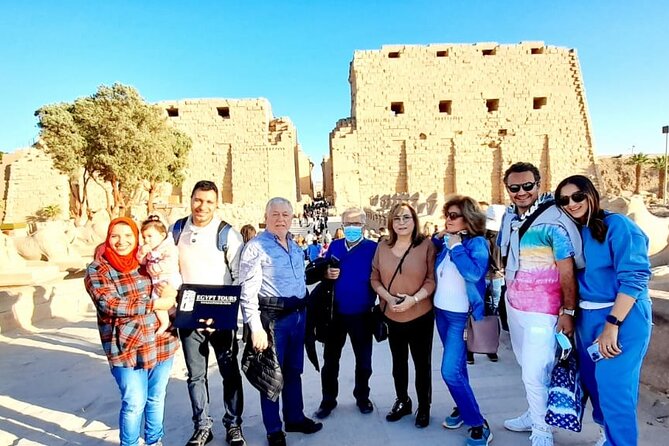
The difference between seeing temples and understanding temples is usually the person in front of you. Here, the tour includes a private qualified Egyptology guide, and the service accounts tie strong experiences to guides and organizers such as Mahmoud and Marwan.
When Mahmoud is mentioned, it’s often with praise for being organized and safe in crowded traffic situations, plus making each stop make sense. When Marwan is mentioned, it’s typically in the context of smooth planning and communication—especially helpful if it’s your first Luxor trip or your schedule is tight.
That “smooth planning” piece is not just comfort. In Egypt, small delays compound quickly. A guide who keeps things moving helps you avoid losing daylight when it matters for photos, walking comfort, and staying sane.
That said, one report points to some issues with tour guides in a broader Nile cruise context. Translation for you: if guide quality is your top priority, confirm your plan details clearly before travel. Ask how you’ll meet your guide and what language you can expect, so the experience matches your needs.
Timing reality: early starts, hot walking, and ticket choices
Two-day tours sound short, but Luxor sites are not built for late-morning leisure. Even in the best scenario, many stops are early. That’s why having snacks and water included is genuinely useful. It keeps you from making rushed convenience-store choices that derail your day.
Also, plan for weather impacts. The tour info notes that the experience requires good weather. If weather is poor, the operator may offer a different date or a full refund. It’s a reminder to check conditions close to travel.
And one small environmental heads-up from experience accounts: at some points near the river, air can be smoky. You can’t control that, but you can prepare—bring sunglasses, consider a light face mask if you’re sensitive, and pick shaded breaks when available.
Finally, make one deliberate decision about the West Bank: do you want inside tomb time? If yes, budget those specific entrance costs and build your order of visits around them.
Who should book this Luxor East and West Banks tour
You’ll be happiest with this tour if you want a focused private experience that covers the major Luxor hits in a smart order. It’s especially good for:
- First-time Luxor visitors who want the East Bank highlights without guessing your way through
- People who care about context, not just photos
- Couples and small groups who like a private rhythm over big-group crowd energy
- Travelers who want an A/C pickup and clear transfers so the logistics don’t eat your vacation
It’s less ideal if you’re trying to do a ultra-budget trip where you want everything free and included. Entrance fees and some tomb experiences are not part of the base.
Should you book Egypt Tours Travel for this Luxor East/West private tour?
If your priorities are guided monuments, private transfers, and a route that hits Karnak, Luxor Temple, the Valley of the Kings, Hatshepsut’s temple, and the Colossi of Memnon without chaos, I think it’s a strong choice. The value works best when you’re okay paying the separate entrance tickets for the sites you want to enter—and especially if you want your guide to help you choose what’s worth your time on the West Bank.
My advice: budget for entrance fees, and decide in advance whether Tutankhamun tomb entry is on your must-do list. Then you’ll get the kind of Luxor day that feels clear, not rushed, and you’ll leave knowing what you saw and why it mattered.
FAQ
Is pickup included for this Luxor East and West Banks private tour?
Yes. The tour includes pickup from your starting point and return, using private A/C vehicles with a qualified driver.
How much does the tour cost?
The price listed is $78.00 per person.
Does the tour include entry into the tomb of King Tutankhamun?
No. Entry inside the tomb of King Tutankhamoun is specifically listed as not included.
What’s included in the tour price?
The tour includes a private qualified Egyptology guide, private A/C transfers, pickup and return, snacks and water, assistance with portage when needed, and all fees and taxes.
Are entrance tickets included for Karnak, Luxor Temple, and the Valley of the Kings?
Admission tickets are not included. The tour lists admission ticket requirements for multiple stops, so you should plan to pay entrance fees separately.
Is lunch included?
Lunch is not included. It’s listed as optional.
What is the cancellation policy?
You can cancel for free up to 24 hours in advance for a full refund, based on the experience’s local time.