REVIEW · LUXOR
Luxor private tour to East and West bank
Book on Viator →Operated by Opet Tour · Bookable on Viator
Luxor hits different when your day is private and timed well. This East and West Bank tour strings together the big names you came for—Valley of the Kings, Hatshepsut at Deir el Bahari, Karnak, and Luxor Temple—without you wrestling taxis or tickets all day. I especially like the door-to-door transfers from your hotel or cruise ship and the way you can add a licensed guide when you want deeper meaning.
The core package also stays simple: private air-conditioned transport plus bottled water, and a smooth, mostly guided-by-location flow through the sites. One thing to plan for: the advertised base price is very often paired with entrance fees not included, so your final total depends on which upgrade you choose (especially if you want entry tickets and lunch bundled).
If you’re trying to see more than just the “postcard version” of Luxor, this setup works well—especially when the tour leadership and guide style are strong (names like Ahmed and Ali come up in past group feedback). Bottom line: it’s built for people who want control, comfort, and the main monuments in one long, satisfying day.
In This Review
- Key highlights to expect on this Luxor private day
- Luxor East and West Bank: Why this private format makes sense
- Valley of the Kings: Tomb time with the right kind of focus
- Temple of Hatshepsut at Deir el Bahari: The West Bank’s most photogenic power
- Colossi of Memnon: A short stop that’s surprisingly rewarding
- Karnak Temple: Where Amun’s world feels endless
- Luxor Temple: A tighter feeling temple that connects to two rulers
- Guide upgrades: How to choose the right level of help
- Price and value: What $30 actually buys you in Luxor
- Who should book this Luxor private East and West Bank tour
- Should you book this tour?
- FAQ
- What does the base tour include for $30 per person?
- How long is the Luxor East and West Bank private tour?
- Will I be picked up from my hotel or cruise ship?
- What sights are on the West Bank portion of the day?
- What sights are on the East Bank portion of the day?
- Are entrance tickets included? Is any site free?
- Can I add a licensed guide and entry fees, and is lunch available?
- How much extra is it for different guide languages?
- Is free cancellation available?
Key highlights to expect on this Luxor private day
- Private 2-way hotel or cruise ship transfers to cut down on transit stress in Luxor
- A full East-and-West Bank circuit with Valley of the Kings, Hatshepsut, Karnak, and Luxor Temple
- Optional upgrades for a licensed Egyptologist guide, prepaid entry fees, and lunch
- Good value pacing with time set aside for major stops, not just quick photo stops
- Colossi of Memnon as a free add-on (entry is free at that stop)
Luxor East and West Bank: Why this private format makes sense
Luxor is one of those places where you can burn hours if you’re not careful. Sites are spread out, tickets and lines add friction, and it gets hot fast once the sun climbs. This private setup solves the biggest headache: you get an organized day with an air-conditioned vehicle and a driver who keeps things moving.
You also get a real choice about how much you want to be guided. The base tour includes transportation and bottled water, but you can add a licensed guide (and even bundle entry fees and lunch) if you want less guesswork and more context. I like that this tour doesn’t force you into one style of sightseeing.
And because it’s private, it’s just your group in the car. That usually means fewer awkward waiting moments and more flexibility if your pace is slower (or faster). If you’re traveling with family, a couple, or a small group that wants a shared plan, this format tends to feel efficient.
You can also read our reviews of more private tours in Luxor
Valley of the Kings: Tomb time with the right kind of focus
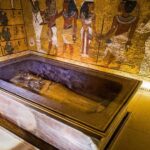
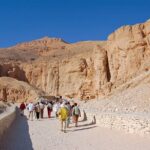
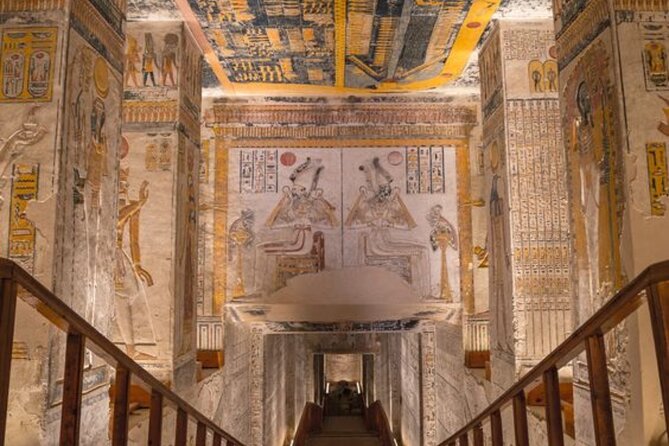
The day typically starts on the West Bank with the Valley of the Kings, where the rock-cut tombs were built for royal burials. This is one of the most famous cemetery landscapes on Earth, and it rewards you for slowing down just enough to notice how the tomb architecture fits the terrain.
What I like about giving Valley of the Kings dedicated time is that you’re not rushed through the valley like a drive-by. The stop is allotted around two hours, which is long enough to absorb the idea that these were not “one tomb” attractions—they were a royal burial district with many kings over different periods.
A key practical note: admission tickets are not included in the base package. So if you’re budgeting, make entrance fees part of your math from day one. If you upgrade to include entry fees, you’ll generally avoid the last-minute scramble that can happen when you’re standing at ticket counters with no plan.
Also, bring a realistic expectation: Valley of the Kings is about structure, carving, and historical layers. If you’re the type who likes facts and symbolism—kings, afterlife beliefs, and how the ancients shaped sacred space—you’ll get a lot out of it, especially with a licensed guide.
Temple of Hatshepsut at Deir el Bahari: The West Bank’s most photogenic power
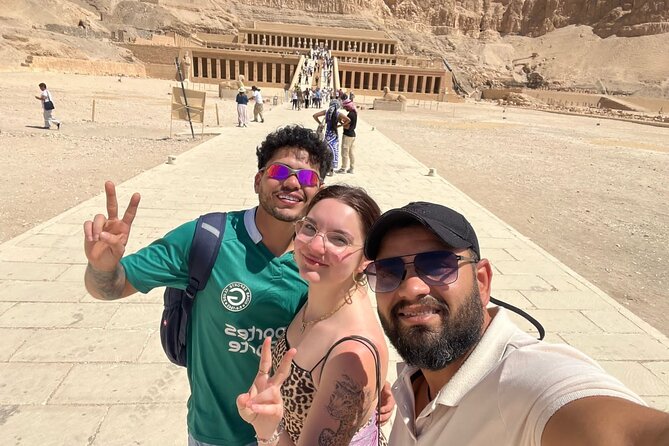
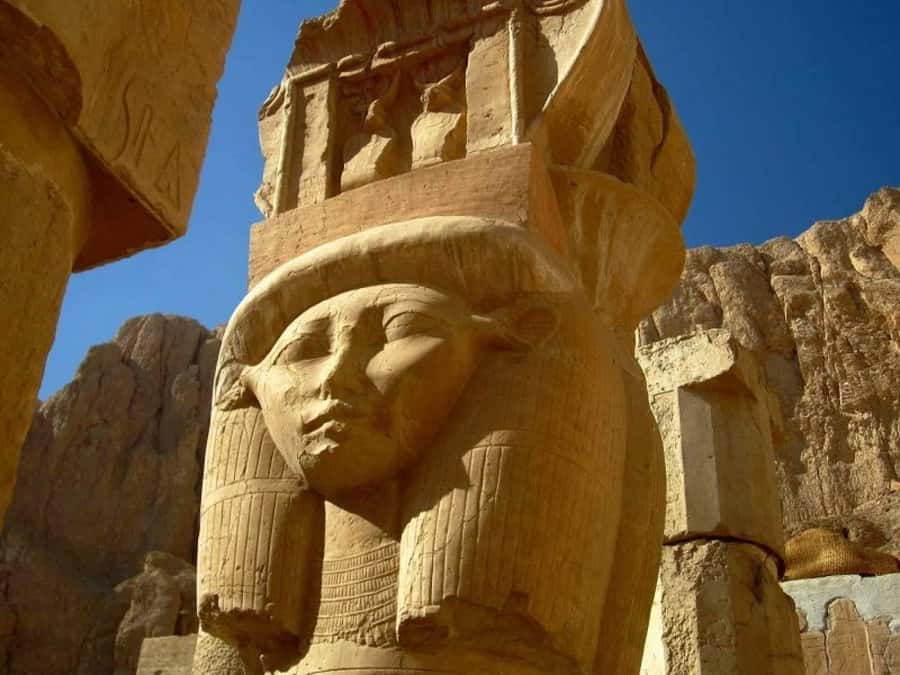
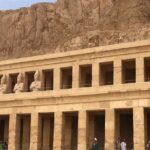
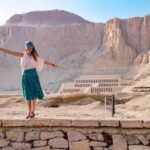
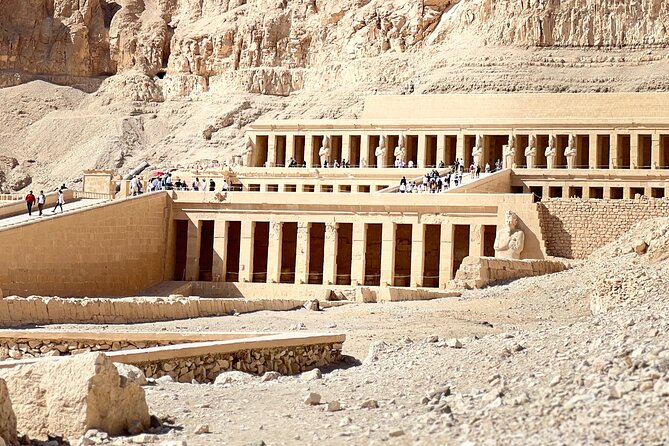
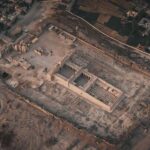
Next comes Temple of Hatshepsut at Deir el Bahari, and yes, it lives up to the attention it gets. This is the temple tied to Queen Hatshepsut and the work supervised by Senenmut, the royal architect and her top official. The story matters here because the architecture feels like propaganda meant to last.
You get about one hour at this stop, which is a sweet spot. Enough time to walk the terraces, take in the symmetry, and understand why the site is considered one of the West Bank’s best-known religious complexes. It also helps that the temple sits dramatically in the landscape, so your photos don’t feel like random snapshots.
The biggest drawback is the usual one: admission is not included. Plan for additional ticket costs unless you choose the option that bundles entry fees. If you’re going without a guide, you’ll still see the beauty, but you might miss some of the meaning that turns this from pretty to unforgettable.
If you care about women in ancient power, architecture as political messaging, or how Egyptians made monumental statements, Hatshepsut is the kind of stop that can change how you view the rest of the day.
Colossi of Memnon: A short stop that’s surprisingly rewarding
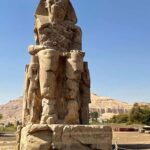
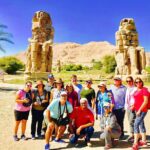
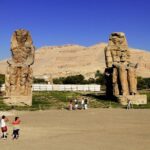
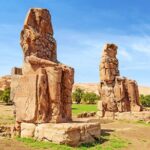
After Hatshepsut, the schedule includes a lighter moment at the Colossi of Memnon. This stop is only about 30 minutes, but don’t underestimate it—these two giant seated statues are packed with detail.
They depict Amenhotep III, and you can spot elements that make the sculpture feel intentional rather than just massive. The hands rest on the knees, and the gaze faces toward the river direction (described with modern bearings as roughly east-southeast). There are also shorter carved figures at the throne: Tiye (wife) and Mutemwiya (mother). Side panels depict the Nile, tying the monument to the lifeline of the civilization.
The practical win here: admission is free at this stop. So even if you keep your base package simple, Colossi of Memnon can still feel like a bonus rather than another ticket line.
I see this stop as a good reset between the West Bank monuments and the heavier temple experience waiting on the East Bank.
Karnak Temple: Where Amun’s world feels endless
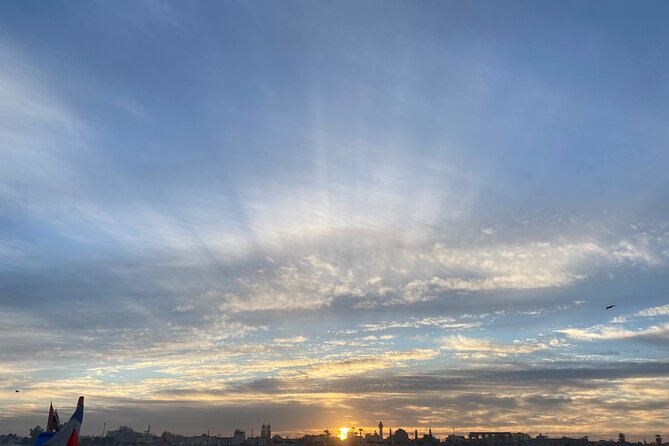
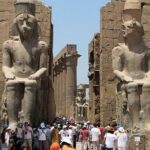
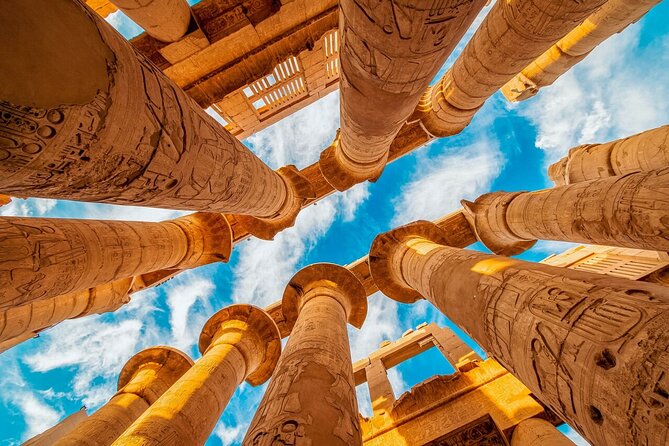
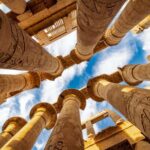
Then you cross to the East Bank for Karnak Temple, and this is where Luxor earns its “temple capital” reputation. Karnak is dedicated to Amun, along with Mut and Khonsu as part of the Theban triad. When you have even a basic explanation, the place stops being a pile of ruins and becomes a system of worship.
Karnak is given around two hours, which makes sense because it’s enormous. The best part is not speed-walking it; it’s slowing down just enough to recognize that the temple complex is built layer by layer, with different rulers adding their mark.
Like Valley of the Kings and Hatshepsut, admission tickets are not included in the base tour price. If you don’t want to think about ticket timing, the upgrade that includes entry fees can reduce stress. That upgrade often also lines up better if you’re pairing this with other Luxor stops on the same trip.
A good guide can be the difference between feeling lost and feeling oriented. You’ll learn what the spaces meant and how the gods fit into the layout—Amun’s household, essentially. If you love symbolism, this is the stop where that kind of attention pays off.

Luxor Temple: A tighter feeling temple that connects to two rulers
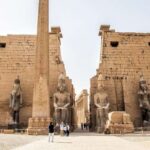
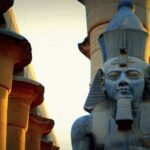
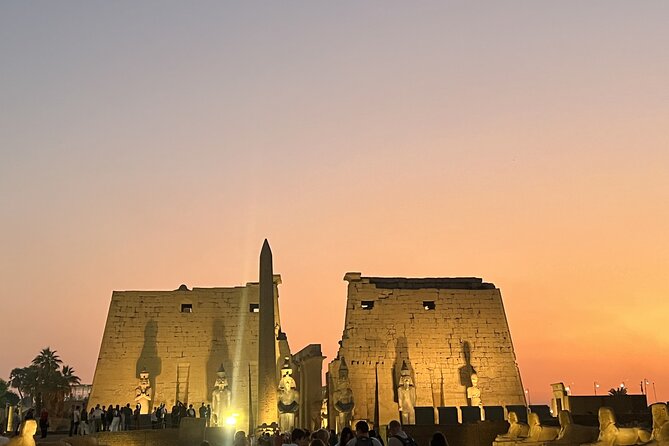
The final main stop is Luxor Temple, built by Amenhotep III in the 18th Dynasty and later completed by Ramses II. That timeline connection is a great way to think about Luxor Temple: it’s not just ancient stone, it’s a record of how successive rulers wanted their legitimacy to live on.
You get about one hour here. It’s long enough to see how Luxor Temple feels more “contained” than Karnak. The walls and halls make it easier to track your route and soak in the details without feeling like you’re wandering an entire city block of sanctuaries.
Admission is again not included in the base package. If you’re already paying for multiple sites, it’s smart to decide early whether you want the entry fees bundled. That decision affects not just cost, but also how much you’ll manage day-of.
At the end, you’re transferred back to your hotel. That matters more than you might think. After a long day of monuments, the last thing you want is to figure out transport with your feet aching and your phone battery dying.
Guide upgrades: How to choose the right level of help
This tour has a smart set of options, and the right choice depends on how you like to travel.
- If you want the basics and don’t mind reading signs or using your own research, the base tour can work since transportation is included.
- If you want the stories and context—the “why does this matter” layer—add the licensed Egyptologist guide.
There’s also an upgrade that includes a guide and entry fees, and another upgrade that adds lunch as well. If you’re traveling with a tight schedule and you’d rather not handle tickets site-by-site, bundling entry fees often feels worth it. And if you’re trying to avoid decision fatigue in the middle of the day, lunch included can be a relief.
Language matters too. A French/German/Italian/Spanish guide is an extra $15, and Chinese or Japanese is an extra $25. If you’re traveling with friends or family who prefer a specific language, this is one of the upgrades that can quietly improve the whole day.
Also, tipping is not included, so keep a bit set aside for your guide and driver.
If you end up with a guide known for strong storytelling and a fun tone, the day becomes less like museum checking and more like a guided conversation. Names like Ali and operational leadership like Ahmed come up in past experiences, which suggests the company takes coordination and guide energy seriously.
Price and value: What $30 actually buys you in Luxor
Let’s talk value in real terms. The tour lists at $30 per person, and it’s private. For that price, you’re getting private air-conditioned transportation, bottled water, and the convenience of pickup and drop-off.
The big catch is budget math: entrance fees aren’t included for the main sites listed (Valley of the Kings, Hatshepsut, Karnak, Luxor Temple). Colossi of Memnon is free, but the others generally drive the ticket costs. So the base price is often best for travelers who are comfortable paying site entry on the spot or who already know their likely total.
Where the money can become “worth it” is in upgrades:
- Paying for the licensed guide can be worth it because Karnak and Valley of the Kings are the places where context changes everything.
- Bundling entry fees and lunch can turn a stressful day into a smoother one, especially if you hate waiting around for transactions.
Duration is another part of value. This is about 7 to 8 hours, which is a full day. It can feel like a bargain compared with paying separately for transport and multiple half-tours. And since it’s private, you don’t sacrifice time waiting for strangers.
One schedule described in past experiences started around 10:00 am and finished about 6:30 pm. Even if your exact hours vary, you should assume you’ll be out most of the day.
Who should book this Luxor private East and West Bank tour
This tour fits best if you:
- Want big Luxor highlights without DIY logistics
- Travel in a group of your own size and like control over pacing
- Prefer a day plan that covers both banks rather than picking just one
- Like having the option to upgrade to a licensed guide for better context
You might not love it if:
- You’re trying to keep the day ultra-budget and want to avoid entrance fees and add-ons
- You don’t want to spend a long stretch away from downtime (it’s a full-day format)
- You prefer very slow, in-depth wandering with lots of breaks, since the schedule is built around set stops and durations
Still, for most first-time Luxor visitors, this is the kind of organized, monument-focused day that makes the time worth it.
Should you book this tour?
I’d book it if you want a private, well-paced Luxor East-and-West Bank day with transfers handled and a clear set of major sights covered. The flexibility to add a licensed guide, prepaid entry fees, and lunch makes it easier to match your comfort level and your budget.
If you do book, I’d decide ahead of time whether you want to travel “transport-only” or whether you’ll be happier with the upgrade that includes entry fees. With Luxor, that one choice often determines whether the day feels smooth and story-rich—or like you’re constantly switching gears.
FAQ
What does the base tour include for $30 per person?
The base tour includes private transportation in an air-conditioned vehicle and bottled water. Entrance fees and a private Egyptologist guide are not included, and tipping is not included.
How long is the Luxor East and West Bank private tour?
The duration is listed as 7 to 8 hours (approx.).
Will I be picked up from my hotel or cruise ship?
Yes. Pickup is offered, with transfers direct from your Luxor hotel or cruise ship.
What sights are on the West Bank portion of the day?
On the West Bank, the tour includes the Valley of the Kings, Temple of Hatshepsut at Deir el Bahari, and the Colossi of Memnon.
What sights are on the East Bank portion of the day?
On the East Bank, you’ll visit Karnak Temple and Luxor Temple.
Are entrance tickets included? Is any site free?
Entrance tickets to the mentioned sites are not included. The Colossi of Memnon stop is listed as admission ticket free.
Can I add a licensed guide and entry fees, and is lunch available?
Yes. A licensed guide is available as an optional add-on, and there are upgrades that include entry fees and lunch (specifically the upgrade that includes a guide, entry fees, and lunch).
How much extra is it for different guide languages?
The guide language add-ons are listed as $15 extra for French, German, Italian, or Spanish, and $25 extra for Chinese or Japanese.
Is free cancellation available?
Yes. The experience offers free cancellation if you cancel at least 24 hours in advance for a full refund.