REVIEW · LUXOR
Luxor Private Full Day Tour to East and West Banks
Book on Viator →Operated by Premium Egypt Tours · Bookable on Viator
Two banks, one long day. This private Luxor full-day tour strings together the Valley of the Kings and Karnak plus Luxor Temple, with an air-conditioned vehicle and an Egyptologist guide to make the symbols make sense. You also get hotel pickup, bottled water between stops, and a lunch stop that keeps the day moving instead of dragging in the heat.
What I really like is the pacing: you get real time at the big hits like Karnak Temple and the Temple of Hatshepsut, plus built-in chances to wander on your own. Another big win is the human side—an Egyptologist guide can connect the dots across centuries, and names that show up again and again in Luxor guide feedback include Mr Hassan, Ahmed ezz, Alaa Korany, and Aladdin.
One consideration: the tour price does not cover entrance fees (listed as $38 per person), and tipping isn’t included either. Also, Valley of the Kings tomb tickets can be extra if you want to go inside specific tombs, so it helps to budget before you go.
In This Review
- Key points before you go
- Why Luxor’s East and West Banks work best in one day
- 7:00 am start: what it means for heat, crowds, and timing
- Valley of the Kings: the burial valley that still feels huge
- Temple of Hatshepsut: an impressive story plus time to wander
- Colossi of Memnon: two statues, one big reminder
- Lunch on the East Bank: where you recharge for Karnak
- Karnak Temple: Avenue of Sphinx to the 134-column Hall
- Luxor Temple at the end: a calmer finish with a big building story
- Price and real costs: what $100 covers (and what it does not)
- Guide quality: why the right Egyptologist changes everything
- Who this private day fits best
- Should you book this Luxor East and West Banks tour?
- FAQ
- What time does the Luxor private tour start?
- Are hotel pickup and drop-off included?
- What’s included in the $100 price?
- How much are entrance fees, and are they included?
- How long is the tour?
- Is there free cancellation?
Key points before you go
- Private vehicle comfort with bottled water and hotel pickup to keep the day sane
- Egyptologist guide focus on monuments, symbols, and how the West Bank and East Bank connect
- Time at Karnak and Hatshepsut with free time to explore at your own pace
- Real East Bank break for lunch (drinks not included), so you do not run on snacks
- Budgeting matters: $38 per person entrance fees plus expected tipping on your radar
Why Luxor’s East and West Banks work best in one day
Luxor can be confusing on your own. The river splits the city into two different worlds: the West Bank for burial and funerary temples, and the East Bank for living-city temples and major worship sites. This tour strings those themes together in a logical route so you feel the story instead of just checking boxes.
The private format is a practical upgrade here. You avoid the herd-and-wait rhythm that can happen on shared tours, and you can ask questions as you walk instead of saving them for the end. It also helps that the day is built around air-conditioned transport between the longer walking sections.
The “value” angle is simple: for about $100 per person, you’re paying for a guide, transfers, lunch, and a full day that hits the strongest highlights. Entrance fees add another layer, but you’ll know what that total looks like up front.
You can also read our reviews of more private tours in Luxor
7:00 am start: what it means for heat, crowds, and timing
The tour begins at 7:00 am, and the total time is listed as 6 to 11 hours including travel time. That range mostly depends on traffic, how long you spend at each site, and whether you add tomb time inside the Valley of the Kings.
That early start is not just a scheduling trick. In Luxor, the sun gets serious, and you’ll want cooler morning hours for the outdoor walking. You also get short breaks in between stops thanks to the air-conditioned vehicle, which matters when your day includes multiple temple complexes.
Bring the usual sensible gear: a hat, sunscreen, and shoes you can walk in comfortably. Since bottled water is included, you’re already partway covered, but I still recommend planning to hydrate steadily instead of saving everything for later.
Valley of the Kings: the burial valley that still feels huge
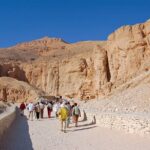
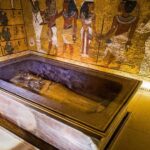
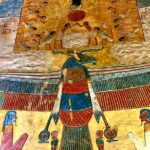
Your West Bank morning starts at the Valley of the Kings with about 2 hours on site. This valley is the famous resting place of many royal tombs, built for pharaohs in multiple reigns. The tour focuses on the scale and meaning of the architecture, not just staring at rocks.
The big upside of pairing this with a guide is context. The guide can point out how the tombs relate to each king’s era and what that says about power and belief. Even if you do not go inside every tomb (entry is not included), you’ll recognize why names like Tutmosis I, Tutmosis III, Tut-Ankh-Amon, Ramssess VI, Mrenptah, and Amonhotep II belong on the shortlist.
Here’s what to consider: Valley time can get expensive if you add tomb admissions. Entrance fees are separate from the tour cost, and the tour notes admission tickets aren’t included at this stop. If you have limited time or want to control costs, decide early whether you want inside viewing time or prefer to concentrate on the valley layout and key tomb areas.
Temple of Hatshepsut: an impressive story plus time to wander
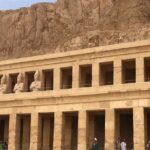
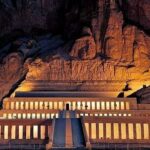
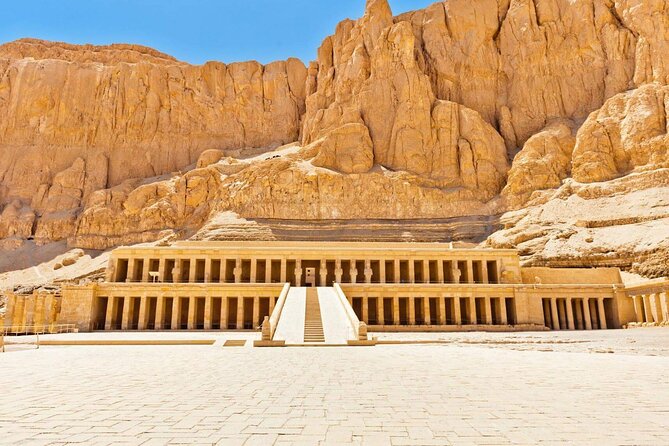
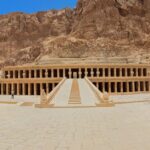
Next comes the Temple of Hatshepsut for about 1 hour, and this is one of the stops that people tend to remember long after the rest fades. The temple was built by Queen Hatshepsut, daughter of Thutmosis I, and she ruled for roughly 20 years in the 18th Dynasty. The tour also highlights her unusual path to power—historically, she was connected to throne legitimacy through male-coded presentation.
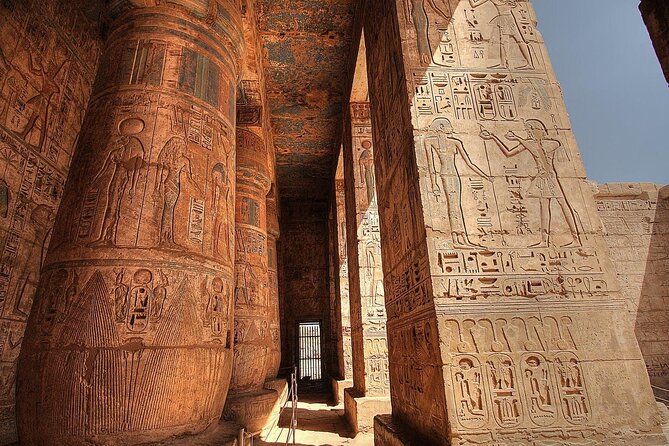
What makes this stop work is that you get both structure and freedom. Your guide explains the history and story, but the schedule also includes free time so you can wander the courtyards and take in the hieroglyphic details without a whistle behind you.
A practical tip: this is a place where photos can tempt you to move too fast. Instead, slow down at the carved scenes and let the guide’s explanations give you something to look for. If you do, the temple stops being a big exterior and turns into a readable monument.
Colossi of Memnon: two statues, one big reminder
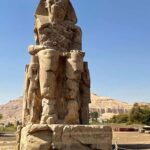
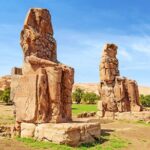
The tour then includes the Colossi of Memnon area, described as two giant statues that remain from the funerary temple of Amenhotep III. You may not spend long there, but the effect is strong because the statues are so unmistakable and so tied to ancient funerary space.
This stop also does a useful job in the itinerary: it marks the transition between the West Bank theme of burial and the East Bank theme of active worship and major temple complexes. It’s a visual anchor so the day does not feel like a random list of monuments.
One consideration: since the statues are only part of what remains, it helps to approach the visit with the right expectation. You’re looking at survivors from a larger complex. Without context, it can feel like you arrived at a view point. With the guide, it starts making sense as part of a bigger temple story.
A few more Luxor tours and experiences worth a look


Lunch on the East Bank: where you recharge for Karnak
After the West Bank sights, the route heads toward the East Bank and includes lunch at a local restaurant. The schedule notes that drinks are not included, so plan accordingly if you want tea, juice, or anything beyond water.
This is a smart break because the next stop is Karnak Temple, and Karnak demands stamina. By the time you reach lunch, you’ve already done the valley walking and the Hatshepsut courtyards, so a full meal helps you stay present instead of counting minutes.
If you want to make the lunch stop work smoothly, keep it simple. Eat something you can handle in the heat, and use the time to reset your water and sunscreen situation. Then you can focus on the next big temple complex without feeling overheated or distracted.
Karnak Temple: Avenue of Sphinx to the 134-column Hall
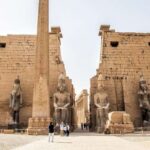
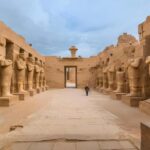
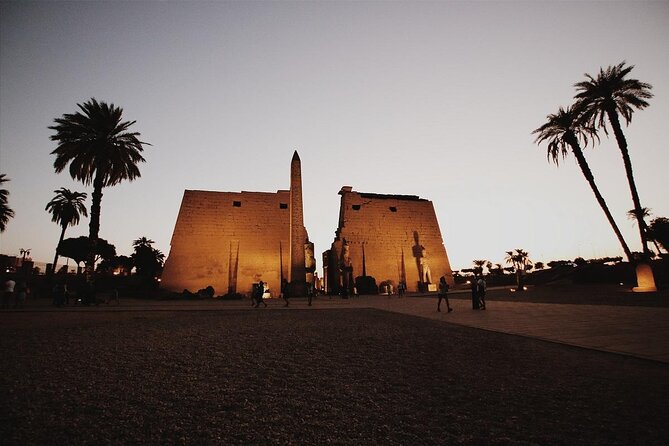
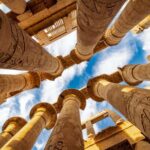
Karnak Temple is where the day hits its big scale moments. You enter the complex by walking along the Avenue of Sphinx, and your guide explains how the massive facade was constructed. Once inside, you see layered growth from different pharaohs as the complex expanded across centuries.
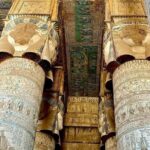
You’ll spend around 2 hours here, including time to walk the Great Court and through the Great Hypostyle Hall with 134 columns. It’s hard to forget what that feels like when you’re standing under such a dense forest of stone. This is not just size for size’s sake; it’s a visual statement about authority and worship architecture.
The tour also mentions the sacred lake at the rear of the complex, where offerings and purification practices were historically connected to pharaohs and their religious acts. You get guide-led explanation first, then extra free time to explore so you can revisit the parts that grabbed you.
What to watch for: Karnak is extensive, and walking adds up. If you know you like structure and explanations, stick close at first. If you like wandering, use the free time to slow down, but keep an eye on the clock so you still fit in Luxor Temple later.
Luxor Temple at the end: a calmer finish with a big building story
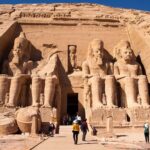
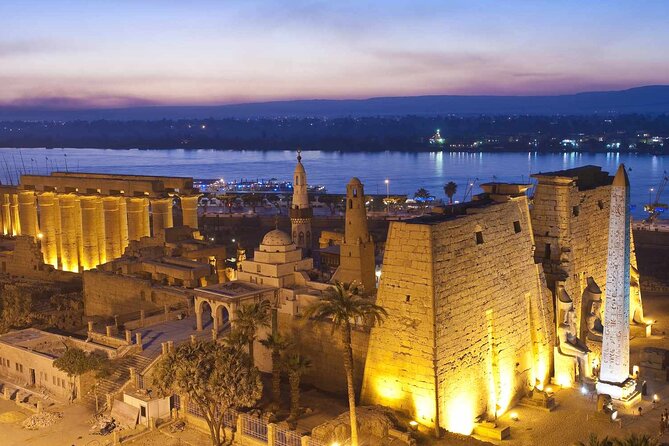
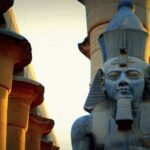
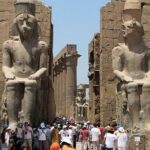
To wrap up, the tour visits Luxor Temple. It was built by Amunhotep III in the 18th Dynasty and completed by Ramses II during the 19th Dynasty, so you’re seeing a New Kingdom and later finishing chapter in one place.
The schedule lists the Luxor Temple time as 2 minutes, which may feel surprising on paper. In practice, expect that this segment is shorter than Karnak, likely acting as a final landmark before your drive back to your hotel. The exact on-the-ground time can vary depending on your pacing and how the day’s timing lands.
Still, Luxor Temple can be a satisfying close. After the broad scale of Karnak, Luxor Temple feels like a different kind of monument—less of a maze and more of a destination. If you want one last moment to absorb symbols before heading back, this is the stop for it.
Also worth noting: the tour says it can end at Luxor airport, not just your hotel. That can be helpful if you have an onward flight.
Price and real costs: what $100 covers (and what it does not)
Let’s do the money math plainly. The tour is $100 per person, and that includes hotel/airport pickup and drop-off, a qualified Egyptologist guide, transport in an air-conditioned vehicle, lunch, and bottled water.
Then there are the extras:
- Entrance fees are not included, listed as $38 per person total.
- Tipping is not included.
So a more realistic all-in planning number is $100 plus $38, before tipping. For a private day with a guide and air-conditioned transfers, that can be good value—especially if you’re traveling in a small group and want control over pacing.
If you’re price-sensitive, decide how you want to handle entrances. Since the tour highlights multiple major sites, it’s usually smarter to accept the entrance-fee total and focus your savings elsewhere (like not adding extra tomb entries beyond what you truly care about).
Guide quality: why the right Egyptologist changes everything
In Luxor, monuments can become confusing fast. A column might be decoration to one person, but to an Egyptologist it’s evidence of a particular era and a particular message. That’s why a private guide matters so much on this itinerary.
The names that tend to pop up in Luxor guide feedback include Mr Hassan, Ahmed ezz, Alaa Korany, and Aladdin. Across those names, the common theme is practical organization and strong English, plus explanations that help you see more than what’s in front of you.
Even if you have only a basic sense of Egyptian mythology, you’ll likely feel the difference when someone connects the dots. At Karnak, for example, it’s easy to get lost in the sheer number of elements. A good guide helps you notice what matters: axis lines, how the complex grew, and why certain spaces were treated as sacred.
My advice: ask questions early. Don’t wait until you’re tired. A quick question at the first site can shape what you look for during the rest of the day.
Who this private day fits best
This is ideal if you want a full Luxor day that hits both banks without the stress of logistics. You’ll probably enjoy it if you like structure and want someone else handling the routes and timing, while you spend your energy on the monuments.
It’s also a solid pick for solo travelers and couples because private transportation and hotel pickup can make the day feel effortless. For families, it can work too, especially because you have guidance and air-conditioned breaks, but you’ll want to keep an eye on walking comfort as the temples are big.
If you prefer to go slow and linger for hours at a single site, this may feel packed. Karnak plus Valley of the Kings plus two additional major temple stops can leave you wishing you had more time at one place. That said, the inclusion of free exploration time helps.
Should you book this Luxor East and West Banks tour?
Yes, I’d generally recommend it if you want the highlights and you appreciate an organized, guided day. The mix of Valley of the Kings, Hatshepsut, Karnak, and Luxor Temple is the kind of combination that gives you a real sense of how Luxor’s two banks relate.
Book it especially if you value:
- a private setup with pickup and air-conditioned comfort
- guided context so the carvings and layout feel meaningful
- a schedule that includes built-in free time instead of a constant march
Skip it or rethink if you:
- are mainly interested in one site and want to spend most of your day there
- are trying to travel ultra-budget and don’t want entrance fees and tipping on top
If you do book, plan for the entrance fees ($38 per person) and bring sun protection. Then let the guide do the heavy lifting—your job is to look closely and enjoy the ride between centuries.
FAQ
What time does the Luxor private tour start?
The tour start time is listed as 7:00 am.
Are hotel pickup and drop-off included?
Yes. Hotel/airport pickup and drop-off are included, and the tour can also end at Luxor airport.
What’s included in the $100 price?
The price includes a qualified Egyptologist guide, air-conditioned transport, lunch, and bottled water.
How much are entrance fees, and are they included?
Entrance fees are not included. The total entrance fees are listed as $38 per person.
How long is the tour?
The duration is listed as 6 to 11 hours (approx.), and that includes travel time.
Is there free cancellation?
Yes, free cancellation is available. You can cancel up to 24 hours in advance for a full refund.