REVIEW · LUXOR
Half Day Private Tour in Luxor
Book on Viator →Operated by Luxor Best Travel · Bookable on Viator
Six tombs make the morning fly.
This private 5.5-hour Luxor tour strings together the West Bank’s big hitters: the Valley of the Kings, the Valley of the Queens, Deir el Bahari, and the Colossi of Memnon, all with air-conditioned transport and hotel pickup. I like how the pacing is tight enough to feel full, but not so rushed that you’re just passing doorways.
Two standout wins for me are the Tomb of Queen Nefertari access and the chance to see the royal mummy in Tutankhamun’s tomb on-site. Those moments are the kind you remember later in your trip, when you’re no longer trying to “collect sights,” but actually connecting details to the people behind the art.
One thing to plan for: entrance fees aren’t included (around $40 per person for the sites), so your total cost is higher once you budget tickets and tipping.
In This Review
- Key highlights you’ll care about
- A tight 5.5-hour plan on Luxor’s West Bank
- Valley of the Kings: painted tombs and real afterlife context
- Tomb of Queen Nefertari in the Valley of the Queens
- Inside Tutankhamun’s tomb: seeing the mummy on-site
- Deir el Bahari and Hatshepsut’s Temple: power told through architecture
- Colossi of Memnon: a fast stop with big presence
- Price and tickets: what $23 really buys (and what it doesn’t)
- Why a private guide matters for tombs (and for your patience)
- Who this tour is best for
- Should you book this Luxor West Bank private tour?
- FAQ
- What’s included in the Half Day Private Tour in Luxor?
- How long is the tour?
- What stops are included?
- Are entrance fees included in the price?
- Is the Colossi of Memnon entrance fee required?
- Is this a private tour?
- Do I get a ticket on my phone?
- When will I receive confirmation after booking?
- Can I cancel for a full refund?
Key highlights you’ll care about
- Hotel pickup + air-conditioned vehicle keeps the West Bank timing manageable
- Valley of the Kings includes several tombs with painted scenes, not just one stop
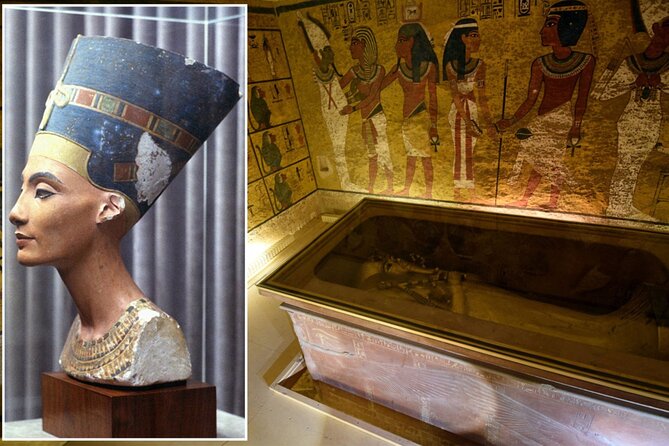
- Queen Nefertari’s tomb is a limited-access highlight in the Valley of the Queens
- Tutankhamun’s tomb includes on-site viewing of the royal mummy
- Deir el Bahari (Temple of Hatshepsut) gives you the Pharaoh perspective beyond the tombs
A tight 5.5-hour plan on Luxor’s West Bank
This is designed for people who want a big West Bank sweep without losing half a day to logistics. You get hotel pickup and drop-off, and the travel legs are handled by an air-conditioned vehicle, which matters in Luxor when the sun decides to show up early.
The schedule also helps your brain. You don’t just bounce between random monuments. You move from royal burial grounds (Valley of the Kings and Queens) to temple architecture (Deir el Bahari), then finish with a quick, satisfying look at the Colossi of Memnon. It’s the right order for understanding how ancient Egyptians mixed royal power, afterlife belief, and monumental building.
This is a private tour, meaning you and your group are the only participants. Practically, that usually means fewer waiting moments caused by coordinating with strangers—and it makes it easier to ask questions when your guide is with you.
You can also read our reviews of more private tours in Luxor
Valley of the Kings: painted tombs and real afterlife context
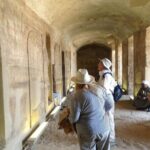
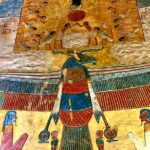
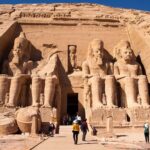
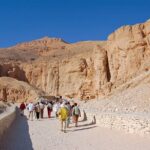
You’ll start at the Valley of the Kings, in Luxor’s Theban necropolis area, and you’ll have about 2 hours here. This is where the story gets layered fast: tomb corridors, wall paintings, and the names of rulers tied together by dynastic timing. If you’ve ever felt lost staring at tomb ceilings without knowing what you’re looking at, a guide changes everything.
You’ll also get time for three other Valley of the Kings tombs with artwork, not only the headline stop for Tutankhamun. That’s important because one tomb can feel like a single masterpiece. Multiple tombs give you pattern recognition: how themes repeat, what changes between reigns, and how the art supports the afterlife belief system.
A consideration: the tomb interiors require a different pace than the open-air sites. Expect short distances, dim lighting, and a “look carefully, then move on” feel. It’s not the time for a long wander; it’s the time for focused viewing with someone explaining what you’re seeing.
Tomb of Queen Nefertari in the Valley of the Queens
Next comes the Valley of the Queens and the Tomb of Queen Nefertari, with about 30 minutes on-site. Nefertari is strongly associated with Ramses the Great, and the tomb’s reputation comes from its exceptionally elaborate decoration—exactly the kind of artistry that makes you pause even when you’ve already seen a few tombs.
Why I think this stop is a big deal: most first-timers rush past the Valley of the Queens in favor of the better-known Valley of the Kings. Having Nefertari placed here, as a main scheduled moment, means you’re getting a fuller view of royal life and royal symbolism—not just the male line.
Drawback to keep in mind: 30 minutes goes quickly. The tomb is famous for detail, so if you’re the type who wants to read every label and trace every painted figure, you’ll have to choose your favorites. Still, that’s exactly what makes a guided 30-minute slot useful: you won’t miss the key visual themes.
Inside Tutankhamun’s tomb: seeing the mummy on-site
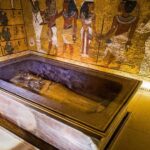
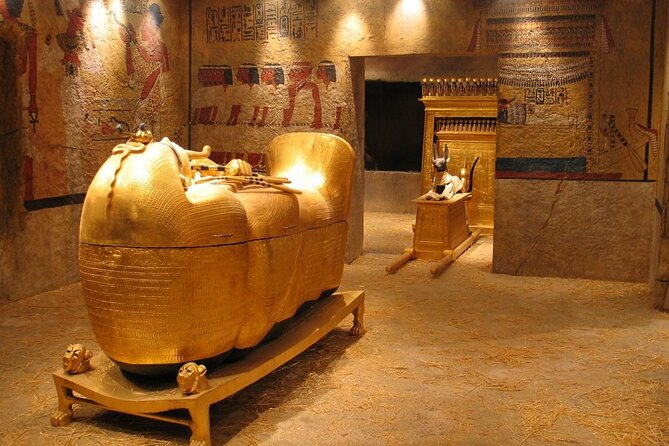
Then you’ll head into Tutankhamun’s tomb, again with about 30 minutes. The big reason people travel here is obvious—the tomb was discovered nearly intact in 1922 by Howard Carter. But the experience isn’t only about the discovery story.
You’ll get the rare, emotional impact of seeing the royal mummy here in Luxor. You won’t be relying only on famous images from elsewhere. And yes, you might know that the golden mask is displayed at the Egyptian Museum in Cairo, but seeing the mummy on-site is a different kind of connection. It’s closer to the physical reality of the person, not just the famous objects tied to the legend.
One practical note: time in tombs can feel compressed compared to outdoor spaces. That’s why the tour’s structure matters. A dedicated slot for Tut prevents it from turning into a rushed detour, and it fits neatly between the Queens and Hatshepsut’s temple experience.
Deir el Bahari and Hatshepsut’s Temple: power told through architecture
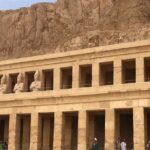
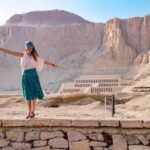
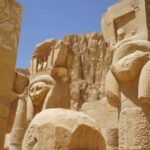
After the burial grounds, the tour shifts tone. You’ll visit the Temple of Hatshepsut at Deir el Bahari for about 2 hours. Hatshepsut was a woman who ruled Egypt as Pharaoh, and this temple is a major statement of legitimacy, ambition, and state power.
This is the stop where you start thinking beyond individual tomb decoration. You’ll see how monumental architecture is used to shape memory—how a ruler wants to be remembered, honored, and linked to the afterlife and divine order. If you’ve only focused on tomb scenes up to now, this temple is a helpful counterbalance.
What I like about having this after the Queens and Kings: it gives your eyes a breather. You’re not moving between corridors and low light. You’re absorbing structure and scale. That also helps you better understand why royal elites invested in both burial spaces and huge, visible temple projects.


Colossi of Memnon: a fast stop with big presence
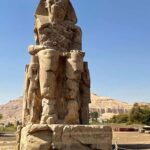
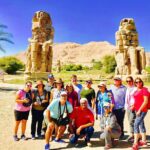
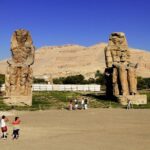
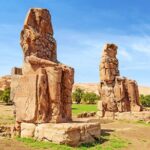
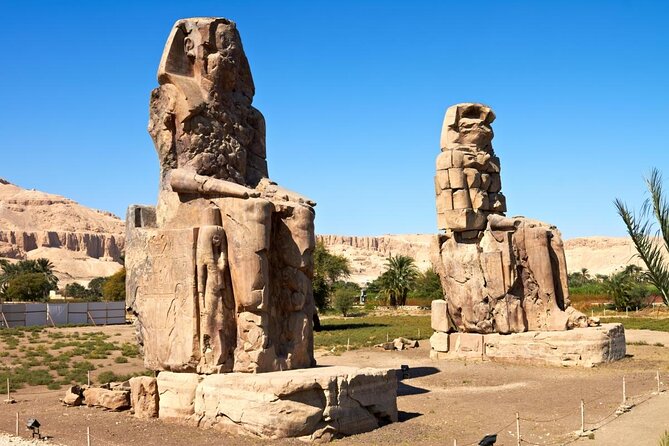
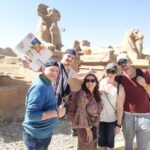
You’ll finish at the Colossi of Memnon, with around 30 minutes. These are two massive statues associated with Amenhotep III. They’re also tied into the family timeline you may already have heard about: Amenhotep III is the father of Akhenaten and the grandfather of Tutankhamun.
The reason this works as a wrap-up stop is simple. You go from interior tomb moments and temple context back out to an iconic outdoor landmark that gives you a final visual anchor. It’s also a moment where photos feel natural, because you’re not fighting indoor restrictions or time limits inside a tomb chamber.
Even though it’s relatively short, the statues are so large that you’ll likely feel satisfied without needing longer.
Price and tickets: what $23 really buys (and what it doesn’t)
The listed price is $23.00 per person, and the tour is often booked about 44 days in advance. On its face, that sounds like a bargain because it’s a private, guided West Bank route with hotel pickup and drop-off plus transport in an air-conditioned vehicle.
But here’s the budget reality: entrance fees are not included, and the total is around $40 per person for all the sites. Tipping isn’t included either. So your real planning number is closer to the “tour price + entrance fees” total.
Is it still good value? For me, yes—because you’re paying for someone to manage the sequence, keep the tomb time efficient, and translate what you’re seeing. In Luxor, that guided time can be the difference between looking at surfaces and understanding what those surfaces were designed to communicate.
Also, the Colossi of Memnon is free, which helps offset some of the paid ticket load elsewhere. You’ll feel that in the arithmetic.
Why a private guide matters for tombs (and for your patience)
A big part of the value here is the professional guide. In practice, a guide keeps the flow smooth: when to slow down, what to focus on, and how each tomb or temple connects to the bigger story.
One review detail that stuck with me is the mention of Adam, who took care of guests from pickup and kept things informative from start to finish. Even without assuming any other experiences, that kind of start matters. When your day begins with clear orientation and a friendly guide, you spend more mental energy on the sites and less energy on figuring things out.
Tombs also reward attention. With explanations, you’re more likely to notice recurring religious themes in art, and you’re less likely to feel overwhelmed by how much there is to see. That’s a comfort you can’t always buy by traveling alone.
Who this tour is best for
This tour is a strong fit if you:
- Want a first-time Luxor West Bank experience that hits the key sites in a logical order
- Care about the Valley of the Queens and don’t want it treated like an optional add-on
- Like guided interpretation so your tomb time feels meaningful, not just long hallways
- Prefer a private setup where you can ask questions without crowd-thrashing
It’s also a good choice if you’re the type who dislikes wasting daylight. The whole thing is timed to about 5 hours 30 minutes, with set stops that keep you from drifting.
For people who struggle with indoor walking in dim spaces or who strongly prefer unstructured time, you might want to think carefully. Most travelers can participate, but tomb visits generally require a steady pace and quick decision-making about where to focus your attention.
Should you book this Luxor West Bank private tour?
If you want a well-run West Bank morning/afternoon that combines royal tombs (including Nefertari and Tutankhamun) with Hatshepsut’s temple, this is an easy yes. The key is value: the $23 tour price isn’t the full cost, but the guided routing and time management help you get more out of the tickets you’ll pay for.
I’d book it if you like guided meaning, and you want the rare-feeling stops scheduled, not left to chance. I’d hesitate only if you dislike spending money on entrance fees or you prefer a slower, do-your-own-thing style where you aren’t timed to specific tomb slots.
FAQ
What’s included in the Half Day Private Tour in Luxor?
Transport by air-conditioned vehicle, hotel pickup and drop-off, a professional guide, and taxes and charges are included.
How long is the tour?
The tour lasts about 5 hours 30 minutes.
What stops are included?
You’ll visit the Valley of the Kings, the Tomb of Queen Nefertari in the Valley of the Queens, Tutankhamun’s tomb, Temple of Hatshepsut at Deir el Bahari, and the Colossi of Memnon.
Are entrance fees included in the price?
No. Entrance fees are not included and are listed as around $40 per person for all the sites. Tipping is also not included.
Is the Colossi of Memnon entrance fee required?
No. The Colossi of Memnon stop is listed as free.
Is this a private tour?
Yes. It’s a private tour/activity, and only your group participates.
Do I get a ticket on my phone?
Yes. A mobile ticket is included.
When will I receive confirmation after booking?
Confirmation is received at time of booking.
Can I cancel for a full refund?
Yes. You can cancel up to 24 hours in advance for a full refund. If you cancel less than 24 hours before the start time, the amount paid is not refunded.