REVIEW · LUXOR
Full Day Exploration in Luxor West Bank and Valley of the Queens
Book on Viator →Operated by Get Egypt Vacation · Bookable on Viator
Luxor’s West Bank has a way of slowing you down. This full-day tour strings together royal tomb power and Hatshepsut’s temple scale into one efficient, guided circuit. You get air-conditioned hotel pickup and expert interpretation so the sites make sense, not just look impressive.
What I like most is the balance: the tour gives you time in the big hitters without making it feel like a factory line. I also really appreciate that the day is built around the story of elite burials, including the often-overlooked royal women in the Valley of the Queens—guides like George, Tony, Ahmed, Amir, and Marina come up again and again for bringing those details to life. The one thing to consider is that this is a lot of site-hopping and walking on uneven stone, so if mobility is an issue, plan to discuss it early.
In This Review
- Key highlights worth planning around
- The West Bank route that makes ancient Egypt feel personal
- Valley of the Kings: the main burial site, and where to focus your attention
- Temple of Hatshepsut at Deir el Bahari: why this temple’s shape grabs you
- Valle Delle Regine (Valley of the Queens): the royal women’s counterpart
- Colossi of Memnon: the quick finish that still earns its place
- How the 7-hour day usually feels (and how to make it smoother)
- Price and logistics: what $19.99 really means for your time
- The guide quality factor: why names like George and Tony keep showing up
- Who should book this West Bank day, and who should ask more questions
- Should you book this Luxor West Bank tour?
- FAQ
- How long is the full-day West Bank exploration?
- What sites are included in the tour?
- Are admission tickets included?
- Do you get hotel pickup and transportation?
- Is the tour private?
- Is mineral water provided?
- Is tipping included in the price?
Key highlights worth planning around
- Door-to-door pickup in an air-conditioned vehicle keeps the day comfortable even when Luxor heats up.
- Tickets included at the Valley of the Kings, Temple of Hatshepsut, and the Valley of the Queens cuts down on hassle.
- A guide stays with you the whole way, and you’ll get the kind of context that makes hieroglyphs and tomb layouts click.
- Time allocation feels practical: longest stop is the Valley of the Kings, with two solid temple/valley blocks after.
- Colossi of Memnon is quick but high-impact, and it’s free to visit on the day.
- Private means just your group, so questions don’t get lost in the crowd.
The West Bank route that makes ancient Egypt feel personal
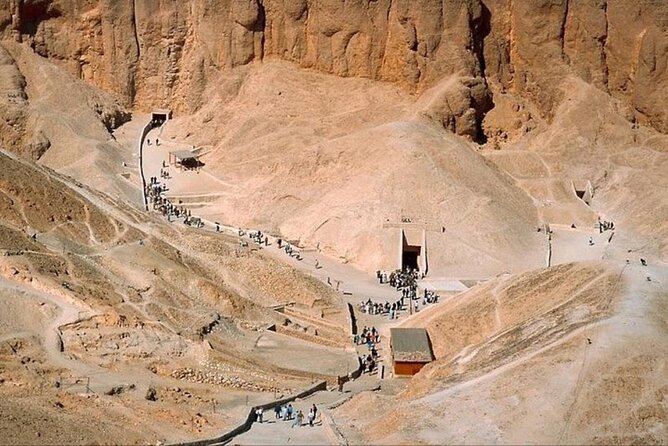
Luxor’s West Bank is where you go when you want the ancient world to stop being names on a page and start feeling human. The West Bank isn’t just pharaohs in marble—this day also brings in the women tied to royal power, especially through the Valley of the Queens. That’s a big part of why this tour works so well: it treats burial culture like a story with chapters.
I like that the schedule is simple and logical. You start in the Valley of the Kings, move to the temple at Deir el Bahari, then shift to royal consorts in the Valley of the Queens, and finish at the Colossi of Memnon. It’s not complicated. It’s the kind of order you can remember—useful when your brain is trying to sort out dozens of stone doorways and painted remnants.
And because it’s a private tour with round-trip transfers, you’re not stuck waiting on other people to get moving. That small thing matters more than you’d think on a day that’s about timing, heat, and staying focused.
A few more Luxor tours and experiences worth a look
Valley of the Kings: the main burial site, and where to focus your attention
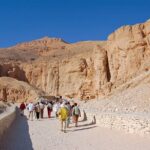
The Valley of the Kings is the anchor of the Theban Necropolis and the New Kingdom burial ground for pharaohs. This is a 3-hour stop with the admission ticket included, which is enough time to actually let the place sink in rather than just take photos and rush.
What makes the Valley of the Kings special is its design logic. You’re stepping into a system built for secrecy, protection, and permanence. A good guide helps you understand the tombs as more than holes in the rock. You’ll hear how they relate to royal authority and the afterlife mindset—especially when your guide walks you through what you’re looking at and why.
One practical tip: give yourself permission to slow down inside. Many tomb areas can feel similar at first glance, so you’ll enjoy it more if you concentrate on the features your guide points out—doorways, inscriptions, and the way each tomb is arranged. That’s where the “wow” turns into “I get it.”
Temple of Hatshepsut at Deir el Bahari: why this temple’s shape grabs you
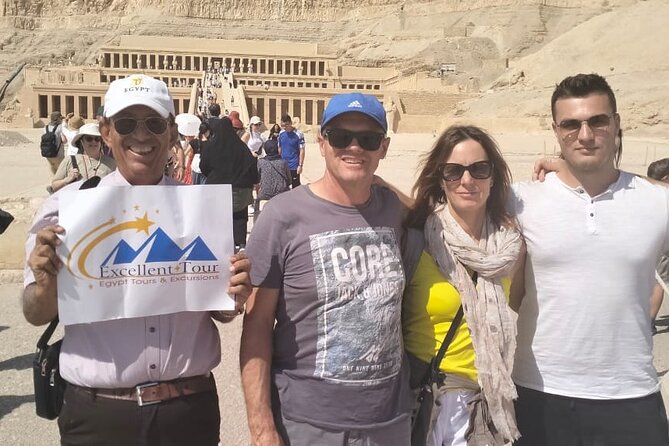
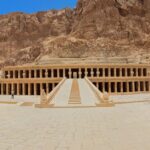
Then you head to Deir el Bahari, home to the Temple of Hatshepsut—an architectural stand-out for its terrace, sloping design. You’ll spend about 2 hours here, and the admission ticket is included.
The details that make this stop click are very visual. This temple is described as reaching around 97 feet (30 meters) and using a sloping, terrace-shaped mortuary structure. Even if you don’t know the names yet, you can feel the planning: it looks built to impress from a distance, and it invites you to move with intention as you explore different levels.
This is also where the day gets a little more human. Hatshepsut’s story (and the way Egyptian rulers used monumental architecture to project legitimacy) tends to land well in conversation with a guide. In the feedback I’ve seen, guides such as Tony, Marina, and Essam are often praised for explaining how these spaces connect to power—especially when talking about Hatshepsut’s place in royal identity and memory.
If you’re the type who likes “why did they build it this way,” this stop is a highlight. It’s not just about size. It’s about form serving function and messaging.
Valle Delle Regine (Valley of the Queens): the royal women’s counterpart
After Deir el Bahari, the tour shifts to the Valley of the Queens, historically linked to Ta-Set-Neferu, meaning place of beauty. The time here is about 1 hour 30 minutes, with the admission ticket included.
This stop is valuable because it broadens the entire West Bank story. The Valley of the Kings is pharaohs; the Valley of the Queens is the wives and consorts—the esteemed women of the royal household. That contrast helps you see that Egypt’s elite burial culture wasn’t one uniform model. It was a system with different roles, different expectations, and different memorial messages.
You’ll likely get help comparing what you see here to what you saw earlier. A good guide connects themes: status, devotion, and the afterlife purpose behind how these sites were prepared. And because the Valley of the Queens is often quieter than the Valley of the Kings experience, it can feel more reflective—like you’re listening carefully rather than rushing through spectacle.
If you’re the kind of traveler who loves the “smaller stories,” don’t skip your time here. This is exactly the sort of stop that makes the day feel more complete.
Colossi of Memnon: the quick finish that still earns its place
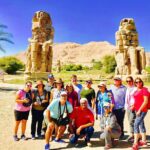
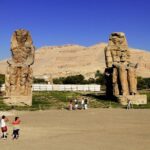
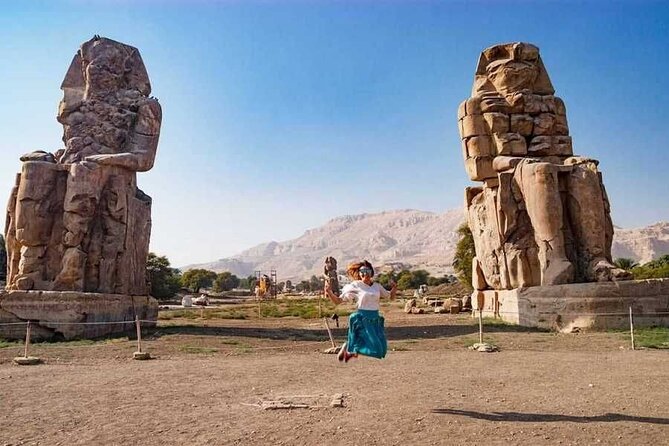
You’ll end with the Colossi of Memnon, two colossal stone statues associated with Pharaoh Amenhotep III. This is a shorter stop—about 30 minutes—and it’s free.
On paper, 30 minutes sounds brief. In practice, these statues do the heavy lifting. They’re monumental, they anchor the approach to the mortuary temple area, and they make for strong photos even if you’re tired. One practical advantage: this final stop lets you wrap up without exhausting you.
A guide can also help you understand what the statues were doing there—guarding the entrance to the mortuary temple of Amenhotep III, described as the largest temple within the Theban Necropolis. Even if you don’t linger long, you’ll come away with context that turns two giant figures into a meaningful ending.


How the 7-hour day usually feels (and how to make it smoother)
This is an approximately 7-hour full-day tour, built around:
- 3 hours at the Valley of the Kings
- 2 hours at Hatshepsut’s temple
- 1.5 hours in the Valley of the Queens
- 0.5 hour at the Colossi of Memnon
That pacing is pretty reasonable for a private day. It gives you enough time for real viewing, but it doesn’t pretend you can do everything slowly in the sun and still return refreshed. Expect a fair amount of moving between sites and some time spent walking through uneven areas.
Here’s how I’d make the experience more comfortable: start the day with a clear head. If you arrive already tired, these sites can blur together. If you arrive ready to focus, the guide’s explanations will turn each stop into something memorable instead of just a series of stone rooms.
Also, you get 1 bottle of mineral water per day, which is helpful for staying steady. (Still, if you’re sensitive to heat or you know you run through water quickly, you might consider bringing a little extra.)
Price and logistics: what $19.99 really means for your time
At $19.99 per person, this tour is priced like a serious value play. Part of what makes it feel like good value is what’s included. You’re not just paying for someone to drive you. The package includes:
- An expert guide at the historical sites
- Round-trip transfers in an air-conditioned vehicle
- Hotel pickup and return
- 1 mineral water bottle
- Tickets included at the main paid sites (with Memnon free)
And since it’s a private tour where only your group participates, the guide time doesn’t get diluted by a long line of strangers.
One thing to consider: tipping isn’t included. That’s normal for guided experiences, but it’s good to remember so you don’t feel caught off guard at the end of a great day.
If you want to stretch your Luxor budget without skipping the big West Bank essentials, this setup is the kind that makes sense—especially for couples or small groups who can actually use the private experience.
The guide quality factor: why names like George and Tony keep showing up
A big theme in the feedback is consistency in how guides handle the day. People repeatedly mention that the pickup is smooth and the day feels organized, with guides who explain things clearly and drivers who know the route.
Some guide and driver names that come up include George (driver), Ereene (guide), Tony, Amir, Mina, Ahmed, Marina, Essam, Ali, and Mesho. The common thread isn’t just friendliness—it’s that the explanation helps you process what you’re seeing. That’s the difference between visiting tombs and understanding why they were built the way they were.
I also saw an example of extra care with timing. One account mentioned a reduced waiting experience and a route suggestion that keeps the order efficient—Valley of the Kings first, then Deir el Bahari, then the Valley of the Queens, and finishing with Memnon. It’s a small detail, but it’s exactly how you make a day like this feel easy rather than rushed.
And yes, some schedules may include an extra cultural stop along the way—one person noted an alabaster workshop/museum visit connected to sculpture and vase fabrication. If that matters to you, ask when you book what’s included in the final schedule.
Who should book this West Bank day, and who should ask more questions
This tour is a strong fit if you want your West Bank day to feel structured and meaningful. You’ll probably love it if:
- You enjoy history when someone connects it to what you’re looking at
- You want both pharaonic tombs and royal women’s burials in one day
- You value a guided pace rather than self-guiding in a big archaeological zone
It may be worth asking extra questions if:
- You have mobility limitations. The tour description says most travelers can participate, and at least one person completed the West Bank day with mobility concerns in the group. Still, the sites involve walking and uneven stone, so it’s smart to discuss how long you’ll be moving and what options exist for easier routes.
Also, because it’s private, it’s ideal when you want flexibility and conversation—without the pressure of a group schedule.
Should you book this Luxor West Bank tour?
Yes—if your priority is a high-value, guided introduction to the West Bank’s most important stories, this is an easy recommendation. The combination of Valley of the Kings + Hatshepsut + the Valley of the Queens hits the major notes of Luxor’s royal afterlife culture in one coherent day. The included tickets and air-conditioned pickup make it feel less complicated than many low-cost tours.
I’d personally book it if you’re on a first trip to Luxor or if you want one “all-in” West Bank day that doesn’t leave you wondering what you missed. Just go in with realistic expectations: it’s a long day with a lot of stone-walking, so wear shoes you trust and treat it like a guided museum day, not a casual stroll.
FAQ
How long is the full-day West Bank exploration?
The tour runs for approximately 7 hours.
What sites are included in the tour?
You’ll visit the Valley of the Kings, the Temple of Hatshepsut at Deir el Bahari, the Valley of the Queens, and the Colossi of Memnon.
Are admission tickets included?
Yes. Admission tickets are included for the Valley of the Kings, the Temple of Hatshepsut at Deir el Bahari, and the Valley of the Queens. The Colossi of Memnon stop is free.
Do you get hotel pickup and transportation?
Yes. Pickup is offered from your hotel, and you’ll have round-trip transfer by air-conditioned vehicles with qualified drivers.
Is the tour private?
Yes. This is a private tour/activity, and only your group will participate.
Is mineral water provided?
Yes. You receive 1 bottle of mineral water per day tour.
Is tipping included in the price?
No. Tipping is not included.