REVIEW · HURGHADA
From luxor : Private Day Tour West and East Bank
Book on Viator →Operated by Excellent Tour · Bookable on Viator
Luxor in one long, organized day. This private day tour packs the East and West Banks into a single plan with an Egyptologist guide, so you’re not just looking at stone—you’re getting the why behind it. I also like that you hit the big names (Hatshepsut, Karnak, Luxor Temple, and the Valley of the Kings) without juggling tickets or chasing directions.
My favorite part is the human touch: guides such as Amira, Demi, Maria, and Nervien are repeatedly praised for clear English and for making the sites make sense. And the staff around the operation (including drivers like Engy/Enjy and the steady, quiet approach associated with Ramez) gets credit for smooth timing and polite, attentive service.
One consideration: this is a full 9-hour day with multiple stops, and entrance fees are not included, so you’ll want to budget for tickets and tipping on top of the tour price.
In This Review
- Key Things I’d Watch Before You Go
- Why This Luxor East-and-West Day Works So Well
- Meeting Point and Getting Oriented With Your Egyptologist
- Deir el-Bahari and the Temple of Hatshepsut: Terraces, Power, and Detail
- Colossi of Memnon: Two Giants and a Lot of Stories
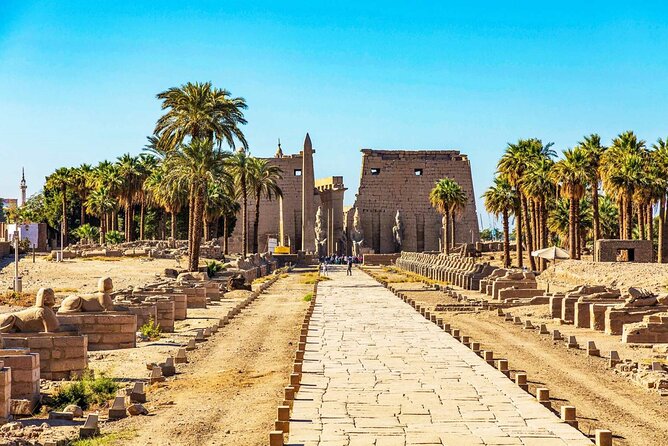
- Karnak Temple: When Scale Becomes the Main Character
- Luxor Temple: A Smooth Close on the East Bank Side
- Valley of the Kings: The West Bank’s Royal Burials
- Logistics: Pickup, Ride Comfort, and Pacing
- What the Price Really Buys: $33 Value Breakdown
- Who Should Book This Tour (and Who Should Skip It)
- The Overall Quality Signal: What Stays Consistently Praised
- Should You Book This West and East Bank Day Tour?
- FAQ
- What’s included in the tour price?
- Are entrance tickets included?
- How long is the tour?
- Is the tour private?
- Does the tour include a lunch?
- Do I need to arrange transportation to the sites?
- What language is the guide?
- Is tipping included?
- How does cancellation work?
- Will I receive a ticket on my phone?
Key Things I’d Watch Before You Go
- Private group, shared pace: Only your group participates, which usually means fewer awkward stops and smoother movement.
- Two big halves of Luxor: East Bank temples plus West Bank tombs in one go—efficient for first-timers.
- Egyptologist-led context: Guides help connect symbols, dynasties, and meaning to what you’re seeing.
- Lunch and bottled water included: Fewer worries during a long day.
- Most major sights included: Hatshepsut, Karnak, Luxor Temple, and the Valley of the Kings are all on the route.
Why This Luxor East-and-West Day Works So Well
If you’re short on time, this kind of “both banks” day is a smart way to get your bearings fast. The East Bank gives you the temple world—religion, power, and architecture. The West Bank shifts the tone to the royal afterlife, where the buildings are quieter but the symbolism feels louder.
A big part of the value here is the structure. The day isn’t a random grab-bag of monuments. It’s sequenced to give you variety: terraced cliffs at Deir el-Bahari, massive statuary at Memnon, massive temple space at Karnak, and then the tomb-focused West Bank experience at the Valley of the Kings. When you see these in a single day, Luxor starts to feel like a single story instead of four separate photo stops.
You’ll also benefit from the “low admin” setup: pickup and drop-off are included, bottled water is provided, and lunch is part of the day. That matters in a place where midday heat and waiting lines can quietly steal hours.
You can also read our reviews of more private tours in Hurghada



Meeting Point and Getting Oriented With Your Egyptologist
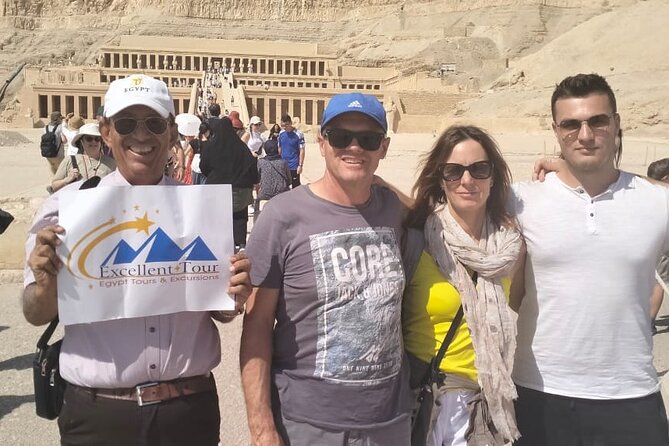
This tour is led by a qualified Egyptologist guide, and the difference shows up fast once you’re in motion. At Karnak and the Valley of the Kings especially, it’s easy to get lost in scale or overwhelmed by details. A good guide helps you focus on what matters—without turning the day into a lecture marathon.
The feedback I’m drawing from repeatedly mentions guides speaking solid English and explaining what you’re looking at in a way that’s practical. Names that come up include Amira, Demi, Maria, and Nervien. You’ll also see praise for the agency’s communication, including fast responses on WhatsApp when questions come up.
If you like tours that feel organized but not stiff, this one tends to fit. The sites are famous, but you still get the human layer: why a temple was built, what a royal tomb design implies, and how each ruler fits into the bigger timeline.
Deir el-Bahari and the Temple of Hatshepsut: Terraces, Power, and Detail
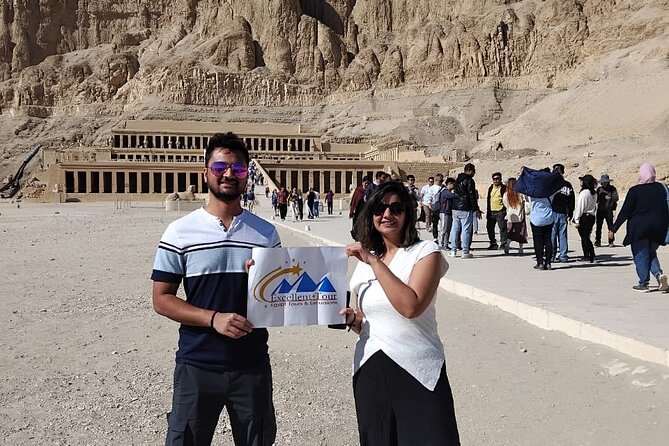
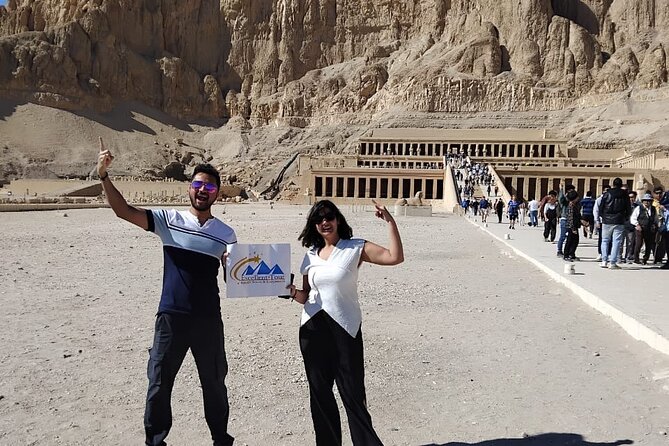
You start at the Temple of Queen Hatshepsut at Deir el-Bahari, one of Luxor’s most dramatic “wow” entrances. The setting alone does half the work: terraces cut into the cliffside, with reliefs and architecture designed to impress.
Hatshepsut ruled during Egypt’s 18th Dynasty (about 1490–1469 BCE) and is remembered as a rare female pharaoh. The temple is closely tied to that story, so your guide’s context becomes extra important here. With the explanation, you’re not just admiring pretty carvings—you’re understanding how this ruler used monumental design to claim authority.
Practical note: the visit includes about 2 hours, and admission tickets are not included in the tour price. Plan to wear sun protection and move at a comfortable pace. If you’re the type who likes to linger for photos, this is one place you’ll likely want a bit more time, but 2 hours is still a solid “best highlights” window.
Colossi of Memnon: Two Giants and a Lot of Stories
Next up are the Colossi of Memnon: two towering stone statues tied to Amenhotep III. These statues are famous partly because they survived when much of the mortuary complex didn’t. That “what’s missing” element is where a guide can really help—what you see is only part of what once existed.
This stop is shorter—about 1 hour—so it’s best thought of as a break that’s still meaningful. You can get good photos, and your guide should help connect the statues to their temple role rather than leaving it as just an iconic viewpoint.
Admission tickets are not included here either. Even without going deep on tomb interiors (more on that later), Colossi gives you a strong sense of scale—big enough to make your brain recalibrate.
Karnak Temple: When Scale Becomes the Main Character
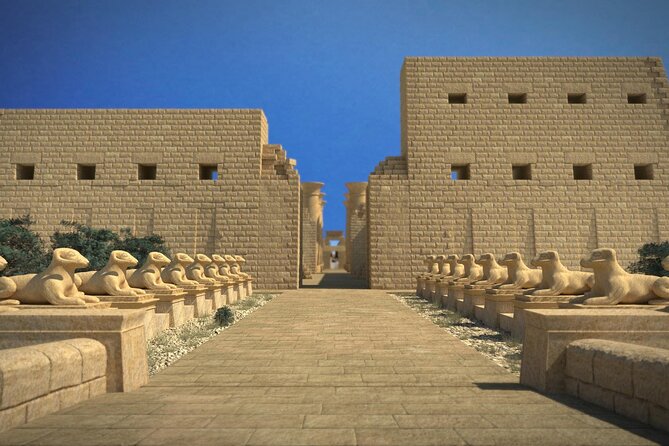
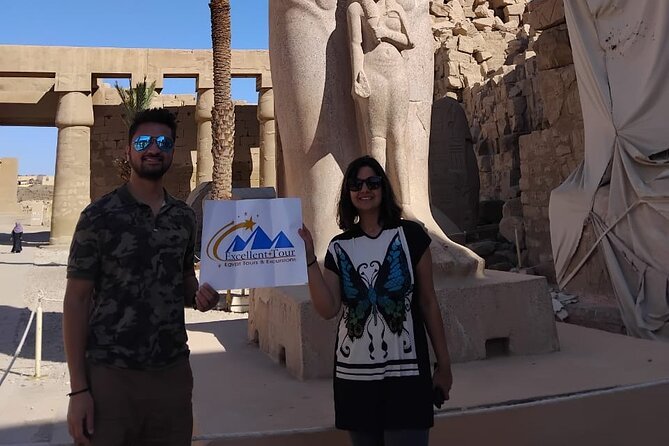
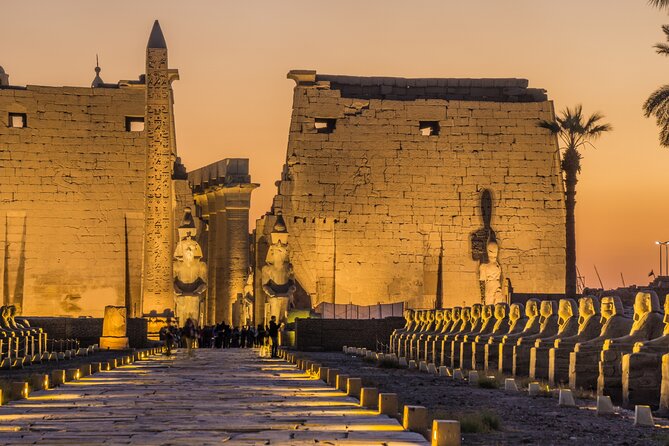
Karnak Temple is where Luxor’s East Bank flexes its muscles. The Karnak Temples complex is dedicated to the Theban Triad—Amun, Mut, and Khonsu—and it shows in the design and symbolism. Expect towering columns, carved hieroglyphs, and sacred spaces that feel built to last for eternity.
You’ll spend about 2 hours here, with a guide helping you make sense of the sprawling layout. The main challenge with Karnak is simple: it’s huge. If you arrive without context, it can turn into “more columns, more walls.” With guidance, the time becomes usable—you know what you’re looking at and why certain areas matter more than others.
Lunch happens after this East Bank block, which is a smart placement. Once you’re done exploring, you’re ready for food and a small reset.





Luxor Temple: A Smooth Close on the East Bank Side

After lunch, you end the East Bank with Luxor Temple. This is another major New Kingdom site, originally built by Amenhotep III and later expanded by Ramesses II. It’s visually rich: statues, colonnades, and carvings tied to religious ceremonies and devotion.
You’ll have about 1 hour here, which works well as a closing chapter for the East Bank. If you prefer a slower pace or want to focus on fewer structures with more time, Karnak is usually the bigger “time sink,” so the shorter Luxor Temple slot often feels more comfortable.
Again, admission tickets aren’t included. But the time you’re given is enough to see the major features and get the overall impression—especially with a guide translating the symbolism into something you can actually picture.
Valley of the Kings: The West Bank’s Royal Burials
Then you shift to the West Bank and the Valley of the Kings, where royal tombs line up like a timeline in stone. This part of the day is your heavier-history stop, with about 3 hours on site.
The tour route highlights several famous tombs connected to pharaohs such as Tutmosis I, Tutmosis III, Tutankhamun, Ramesses VI, Merenptah, and Amenhotep II. Even if you don’t tour every interior tomb, the guide’s explanation helps you understand what burial practices meant in context—how kingship, religion, and the afterlife were tied together.
Admission tickets are not included, and tomb access can affect what you personally see inside. That’s one reason a guide matters: you’ll get help making sense of tomb choices and what you can realistically cover in the time you have.
Practical reality: this is the part of the day where heat and walking can wear you down. Bring water (you’ll have bottled water from the tour), wear breathable clothing, and plan to slow down for photos, not just for speed.
Logistics: Pickup, Ride Comfort, and Pacing
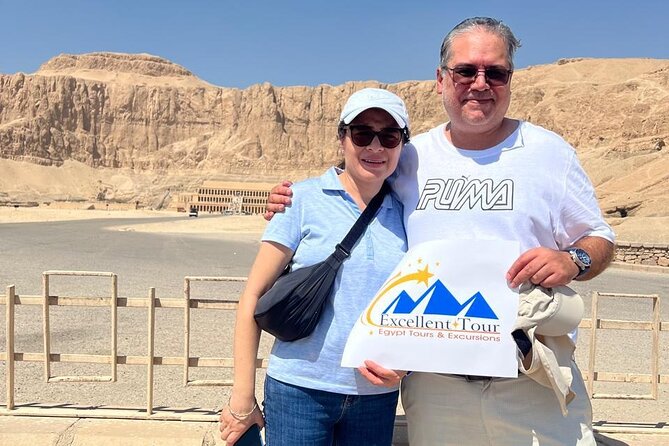
The tour includes hotel pickup and drop-off, and you’ll travel in a comfortable, air-conditioned vehicle. That’s not a luxury detail here—it’s part of how you survive a long day. Luxor can feel like it’s running on heat, and the ride keeps you from arriving drained.
From the feedback, a big theme is punctuality and coordination. People mention the van picking them up from the hotel and dropping them off at each location, with staff staying friendly and on time. Clean vehicles also come up in the comments, which I appreciate because nothing adds stress like uncomfortable transport during a sightseeing-heavy day.
The pacing is generally built for “see the highlights with context.” You’ll have multiple stops with dedicated guide time at each one, rather than a constant sprint between monuments.
If you’re someone who hates tight schedules, you might still find this day full. But the stops are spaced with purpose, and your guide can keep the day moving while making sure you still understand what you’re seeing.
What the Price Really Buys: $33 Value Breakdown
At $33.00 per person, you’re paying for a very specific combination:
- English tour guide (Egyptologist level)
- Hotel pickup and drop-off
- Bottled water
- Lunch
- A private setup for your group
That’s why the price feels reasonable. You’re not just buying entry into temples—you’re buying time and interpretation. In Luxor, interpretation is often what turns a “pretty place” into a “I finally get it” place.
What’s not included:
- Entrance tickets
- Tipping
So you should budget a bit more than the headline price. Also keep in mind that entrance fees can vary depending on which tombs you access and what’s available on the day.
If you’re comparing options, don’t just match the cheapest price—compare what you get: a guide that actually explains, plus a day plan that hits both banks without leaving you to figure it out.
Who Should Book This Tour (and Who Should Skip It)
This tour is ideal if:
- You’re visiting Luxor for the first time and want both East and West Bank highlights.
- You prefer a structured day with an Egyptologist guide who connects symbols and rulers to the buildings.
- You like the convenience of pickup/drop-off plus lunch included.
You might want to consider something else if:
- You’re the type who wants to spend half a day inside multiple tomb interiors without rushing.
- You hate paying extra for entrance tickets and would rather have a fully bundled price.
- You have limited stamina for a long day with several stops.
The Overall Quality Signal: What Stays Consistently Praised
The strongest repeat themes in the feedback are practical: fast and responsive communication, good English from the guide, and friendly staff who keep the day running. Specific guide names that come up again and again include Amira, Maria, Demi, and Nervien, while drivers such as Engy/Enjy and the composed style associated with Ramez also earn compliments for professionalism.
There’s also a strong “everything was well organized” vibe: pickup timing, transport comfort, and an easy flow from stop to stop. That’s exactly what you want when you’re spending a long day moving between major sites.
Should You Book This West and East Bank Day Tour?
I think it’s a solid yes for most first-time visitors to Luxor who want a guided, efficient day across both banks. The mix of Hatshepsut, Karnak, Luxor Temple, and the Valley of the Kings is the best single-day combo for seeing Luxor’s range.
Book it if you want context with convenience: guide-led explanations, air-conditioned transport, and lunch handled. Just go in knowing entrance tickets and tipping are extra, and plan for a long day with heat and walking.
If that sounds like your kind of day, you’ll likely leave with Luxor’s story stitched together instead of scattered.
FAQ
What’s included in the tour price?
Hotel pickup and drop-off, an English tour guide, bottled water, and lunch are included.
Are entrance tickets included?
No. Entrance tickets are not included.
How long is the tour?
The duration is about 9 hours.
Is the tour private?
Yes. It’s private, and only your group will participate.
Does the tour include a lunch?
Yes. Lunch is included during the day.
Do I need to arrange transportation to the sites?
Pickup and drop-off are included, and you’ll travel in a comfortable, air-conditioned vehicle.
What language is the guide?
The tour guide is English-speaking.
Is tipping included?
No. Tipping is not included.
How does cancellation work?
You can cancel up to 24 hours in advance for a full refund.
Will I receive a ticket on my phone?
A mobile ticket is provided.