REVIEW · GIZA
Private Guided Half-Day Tour to Dahshur from Cairo
Book on Viator →Operated by Pyramids Land Private Tours · Bookable on Viator
Dahshur feels calmer than Giza. For about four hours, you get a private look at Egypt’s earliest pyramid experiments, plus the chance to see how the Bent and Red Pyramids still look and feel in the desert. I especially like the less-crowded Dahshur setting and the chance to spot real original stone details—not just the basic pyramid silhouette.
One thing to plan for: the optional descent into Sneferu’s burial chamber is through a very narrow stone tunnel, and it’s specifically not suited for asthma or claustrophobia. Also, admission tickets are not included, so you’ll want to budget for site entry.
In This Review
- Key points to know before you go
- Why Dahshur is the pyramid trip that feels more real
- 9am Cairo pickup to Dahshur: the smooth logistics that matter
- Entering Egypt’s pyramid phase shift at the Bent Pyramid
- Practical note at the Bent Pyramid
- Red Pyramid: when color, engineering, and myth all collide
- The optional tunnel into Sneferu’s burial chamber
- Mortuary temple and pyramidions: the details most people miss
- Why this ending works
- Travel time, comfort, and group size: a private tour that stays practical
- Egyptologist guidance that keeps the story clear
- Price and value: $49.99 worth it for the right traveler
- When the value drops a bit
- What to bring so you don’t spend the day thinking about comfort
- Who should book this private Dahshur half-day tour
- A quick reality check for the tunnel
- Kids and family note
- Should you book it?
Key points to know before you go
- Private guide, small group size: up to 15 people, with Egyptologist storytelling
- Air-conditioned, Wi‑Fi minivan: easy Cairo/Giza pickup and a comfortable ride
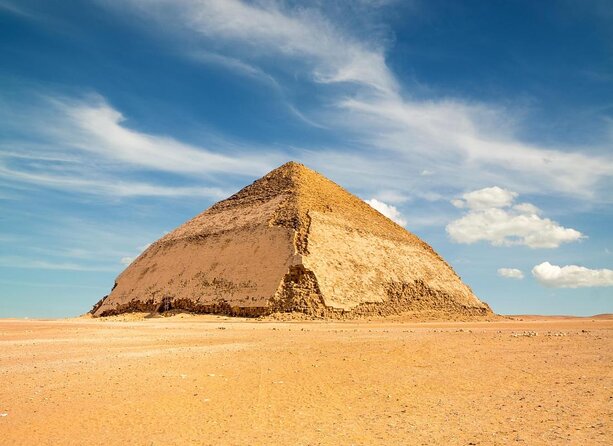
- Bent Pyramid stop is a highlight: it still shows much of its polished limestone cladding
- Red Pyramid plus optional tunnel: you can choose to attempt the narrow descent to Sneferu’s burial chamber
- Mortuary temple and pyramidions: you finish with the more human-scale details of funerary practice
- Admission fees are separate: the tour includes the guide and transport, but not entrance tickets
Why Dahshur is the pyramid trip that feels more real
If your main goal is pyramids with context, Dahshur is a smart move. Giza is famous for a reason, but it can feel like a conveyor belt. Dahshur has a different rhythm: you’re in the ancient necropolis, and the story is less about postcard angles and more about how early Egyptian kings wanted to be remembered.
What I like here is that you get both the big iconic shapes and the finer hints of what those monuments were originally meant to look like. The Bent Pyramid is especially useful for this. You’ll see its desert presence and also get help understanding how it once looked when it still wore much of its polished limestone cladding.
You can also read our reviews of more guided tours in Giza
9am Cairo pickup to Dahshur: the smooth logistics that matter
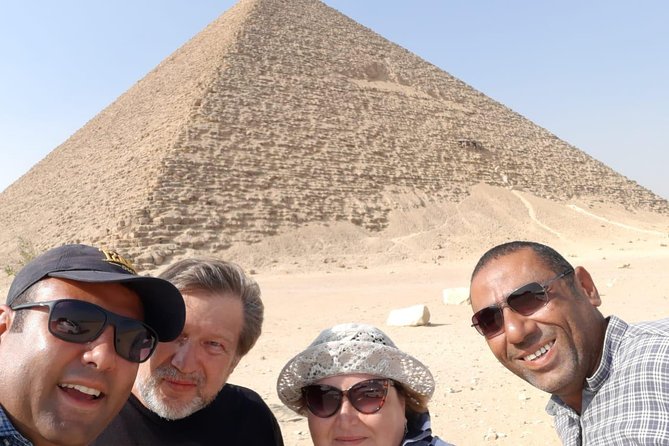
This tour starts with a 9:00am pickup from Cairo or Giza accommodations. From there, you ride about an hour to Dahshur in an air-conditioned minivan with Wi‑Fi. That may sound like a small detail, but it’s a big deal when you’re trying to make the most of daylight hours and avoid unnecessary stress.
You’re also not stuck coordinating multiple rides or waiting around for a shared shuttle. Because it’s private for your group, you’ll keep momentum. The day ends with drop-off at your hotel at roughly 1:00pm, which means you still have your afternoon free for museums, a slow lunch, or a second walk through central Cairo if you want it.
Entering Egypt’s pyramid phase shift at the Bent Pyramid
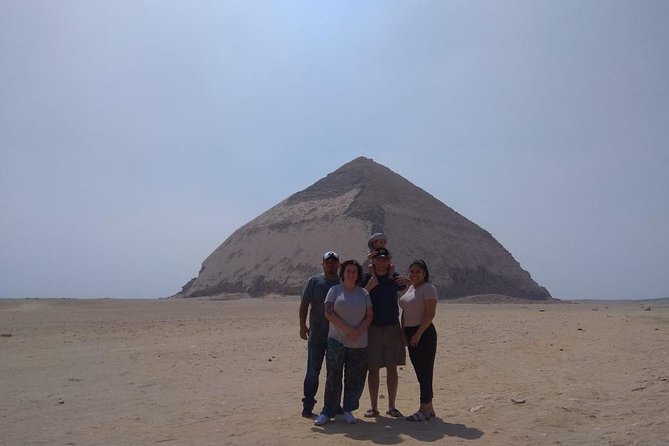
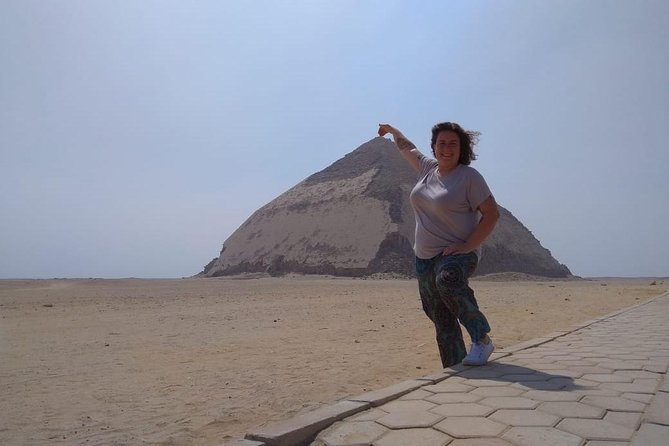
The first major stop is the Bent Pyramid. It rises about 340 feet (104 meters) above the surrounding sand, and it’s the kind of structure that makes you instantly understand why early pyramid builders were learning in real time.
I love this stop for the visual lesson it gives. The Bent Pyramid is the only pyramid in Egypt that retains much of its polished limestone cladding. So instead of seeing a plain blocky shape with everything stripped away, you can imagine what it meant to dress a monument in gleaming stone. Even in harsh desert light, you’ll get a clearer sense of how the appearance would have looked when the pyramid was new.
Practical note at the Bent Pyramid
Plan on walking at least some sections of uneven ground. Nothing extreme is required, but you do want comfortable shoes and a calm pace. This helps you actually read the monument instead of rushing through it.
Red Pyramid: when color, engineering, and myth all collide
After Dahshur’s Bent Pyramid, the tour shifts to the Red Pyramid. The key detail is what happened to its original white limestone. Over time, it’s worn away, leaving stones that can look like they glow red in desert sunlight. It’s not just aesthetic. It’s evidence of how old materials age, and it gives you a way to think about time as something you can see.
This is also the moment where your guide’s explanations start to matter more. If you’re the type who wants the why behind the what, this stop is where you’ll get it. You’ll connect the physical structure to funerary beliefs and the idea that these were engineered for kingship after death—not just built as monuments.
You can also read our reviews of more private tours in Giza
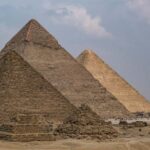

The optional tunnel into Sneferu’s burial chamber
Here’s the big choice. The tour offers an option to descend a narrow stone tunnel into Sneferu’s burial chamber. The tunnel is about 4 feet (1.2 meters) tall, leading to a vaulted room.
Two important considerations:
- If you’re claustrophobic, treat this as a no-go. The tunnel is narrow by design, and you need to be honest with yourself.
- If you have asthma, skip it. The tour information specifically flags this.
You don’t need to push into discomfort to enjoy Dahshur. Even without the descent, you still get the architecture, the story, and the sense of being in a working necropolis.
Mortuary temple and pyramidions: the details most people miss
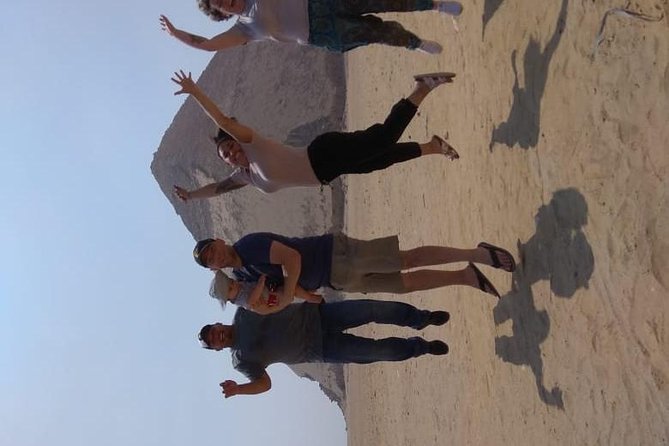
The final stop is Dahshur’s mortuary temple. This is where the day shifts from pyramid shape to funerary process. You’ll hear about how bodies were prepared for mummification, and that turns the pyramids into more than just objects made of stone.
Then you’ll see pyramidions, the decorative caps thought to have topped the pyramids when they were first constructed. If you’ve only ever seen the top portions from afar, pyramidions add a real sense of scale and intention. They also help you visualize the completed monument as something finished, decorated, and meaningful—not just a giant framework.
Why this ending works
Many pyramid trips end right after you’ve gotten your photos. Here, the temple and pyramidion stops help you understand what happened around the pyramid—how people approached it, what rituals mattered, and why it was built the way it was.
Travel time, comfort, and group size: a private tour that stays practical
This tour is private and designed for groups of up to 15 people, which is large enough for a family or small group, but small enough that you’re not lost in a crowd. The big practical win is the personal pacing. At places like Dahshur, tempo matters. You want a chance to stop, ask, and look without feeling rushed.
The ride itself helps you arrive less tired. An air-conditioned vehicle plus bottled water makes the experience more manageable, especially if you’re doing other things the same day.
Egyptologist guidance that keeps the story clear
A great guide can turn Dahshur from a list of pyramids into a connected narrative. In particular, you may encounter guides like Fatma and Michael, who are noted for being engaging, knowledgeable, and willing to adjust the pace when someone needs it.
What that means for you: you’re more likely to understand why the pyramids look the way they do, rather than just memorizing dates and labels. You’ll also get help thinking about what you’re seeing—how a funerary complex works, and why the mortuary temple matters to the overall story.
Also, if you’ve got back issues or mobility limits, having a guide who takes time can be the difference between enjoying the monuments and feeling stressed by every step. One standout strength mentioned with this tour style is that the guide can slow down when you need it.
Price and value: $49.99 worth it for the right traveler
The price is $49.99 per person for a half-day, private guided experience with pickup and drop-off. Admission fees are not included, so you should treat the total cost as tour price plus site entry.
Is it good value? For me, the best argument is not the price tag. It’s what you’re getting in that time window: a qualified Egyptologist, a comfortable ride, and access to the major Dahshur stops without the full Giza crowd energy. When you’re trying to cover Bent Pyramid, Red Pyramid, a mortuary temple, and optional burial chamber access in only a few hours, you’re paying for efficiency and guidance.
There’s also a practical value point: at Dahshur, the pyramid visit is included in the site ticket for this kind of access pattern. That can matter if you’ve seen how some larger Cairo pyramid areas charge extra for certain access.
When the value drops a bit
If you already know the Dahshur basics and you just want photos fast, a guide may feel less necessary. But if you care about understanding the monuments and funerary ideas, this is a strong way to spend your limited time.
What to bring so you don’t spend the day thinking about comfort
You don’t need to overpack, but you do want to be ready for desert conditions and walking.
Bring:
- Comfortable walking shoes for sandy, uneven ground
- Sun protection (hat/sunglasses) since these pyramids sit in open desert light
- A light layer if you’re sensitive to temperature changes through the morning
The tour includes bottled water, which helps. Still, I like having personal water habits ready so you don’t feel limited to one bottle.
For the tunnel option, wear clothing that lets you move safely and stay calm. And if you decide not to go in, that decision is totally valid—you can still get the full value of the rest of the complex.
Who should book this private Dahshur half-day tour
This tour fits best if you:
- Want to see Dahshur specifically, not just cram Giza before your flight
- Prefer a private guide and a calm pace over a noisy group rush
- Like Egyptology storytelling tied to what you’re actually looking at
- Are traveling with a small group (friends, family, or a couple)
It also fits people who want manageable time. The schedule runs from 9:00am to about 1:00pm, so it’s easy to pair with other Cairo plans.
A quick reality check for the tunnel
If asthma or claustrophobia is part of your health picture, skip the descent into Sneferu’s burial chamber. You’ll still get Bent Pyramid, Red Pyramid, the mortuary temple, and the pyramidion details.
Kids and family note
Children must be accompanied by an adult. If you’re bringing kids, it helps to keep expectations realistic about walking and the potential tunnel stop.
Should you book it?
Yes—if you want pyramids with a storyline and you value comfort and pacing. Dahshur is less hectic than Giza, and the combination of Bent Pyramid cladding details, Red Pyramid desert color, and the mortuary temple gives you a better sense of what these monuments were for, not just how they look.
Skip booking only if you know you will not want a guided explanation, or if the burial chamber tunnel is a hard no for your comfort needs—though even then, you may still find the rest of the tour very worthwhile.