REVIEW · GIZA
Private guided tour to Giza Pyramids, Sphinx, Memphis, & Saqqara
Book on Viator →Operated by Blue Nile Tours · Bookable on Viator
Giza feels huge, even before you see it. This private day runs from the Pyramids of Giza to the Great Sphinx and then on to Saqqara and Memphis—so you’re not stuck choosing one “big” site. I especially like the Egyptologist-style explanations and how the route connects the monuments with the people who built them.
I’ll also give points for the practical value: pickup and drop-off, entrance fees, lunch, and even a camel ride can be included (when you choose the all-inclusive option). The only real catch is that it’s an 8-hour, packed loop—so expect walking, sun, and getting in line at popular places even with a guide keeping things moving.
If you want a structured, story-led introduction to ancient Egypt’s most famous stone projects, this is a strong match. And if you’re the type who hates tight schedules, you’ll want to plan for breaks and slow down where you can.
In This Review
- Key highlights at a glance
- Why this one-day route from Giza to Saqqara works
- Hotel pickup, mobile tickets, and time management
- Stop 1: Pyramids of Giza, Valley Temple, and Chephren’s story
- Stop 2: Great Sphinx views, stories, and a camel ride break
- Stop 3: Saqqara’s Step Pyramid and the “first stone building” idea
- Stop 4: Memphis and Mit Rahina Museum, Ramses II, and the Alabaster Sphinx
- Lunch, bottled water, and small comforts that matter
- Camel ride, entrances, and what your $25 really buys
- Who should book this Giza day, and who should skip it
- Should you book Blue Nile Tours for this Giza day?
- FAQ
- How long is the tour?
- What does the tour include?
- Is the camel ride included?
- Where does the tour stop?
- Is this a private tour?
- What’s the cancellation policy?
Key highlights at a glance
- Egyptologist guide with story-first context that turns statues and stone into real questions and answers
- Valley Temple and the mummification site linked to King Chephren to add depth beyond the main pyramids
- Sphinx stop with panoramic viewing plus a camel ride for about 20 minutes
- Saqqara’s Step Pyramid as the “evolution” step toward Egypt’s later pyramid style
- Memphis and Mit Rahina Museum for Ramses II and the Alabaster Sphinx
- All-inclusive option that can cover entrance fees, lunch, and bottled water
Why this one-day route from Giza to Saqqara works
Most visitors come to Egypt aiming at one “wow” moment. This tour helps you collect several—without feeling like you’re sprinting through a spreadsheet. You start with Giza’s three main pyramids, then move to the Sphinx, then shift south to Saqqara, and finally wrap with Memphis and Mit Rahina Museum.
I like this approach because it builds a picture. You don’t just see famous monuments. You see the bigger idea: how Egyptian royal building projects evolved, and how later generations kept telling the same themes with new shapes and new meanings.
And because it’s a private tour for your group, you’re not stuck waiting behind a slow-moving cluster. Your guide can pace the day for questions, photos, and the moments you actually want.
You can also read our reviews of more guided tours in Giza
Hotel pickup, mobile tickets, and time management
You meet your guide at your hotel lobby and then head out for roughly an 8-hour loop. That pickup matters more than it sounds. Giza traffic and parking can turn a simple plan into a stressful one, so having a driver-organized start helps you use your daylight better.
You’ll also use a mobile ticket. That reduces ticket-hunting and helps you spend less time with paper and more time watching the real stuff. Bottled water is provided, which is one of those small things that becomes very important when you’re out in the sun for hours.
Still, manage expectations: even with included admission, you’ll be in a high-demand setting. The guide’s job is to keep your day organized, but you’ll still want to wear breathable clothes, bring sun protection, and accept that the pace is brisk.
Stop 1: Pyramids of Giza, Valley Temple, and Chephren’s story
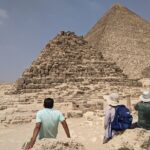
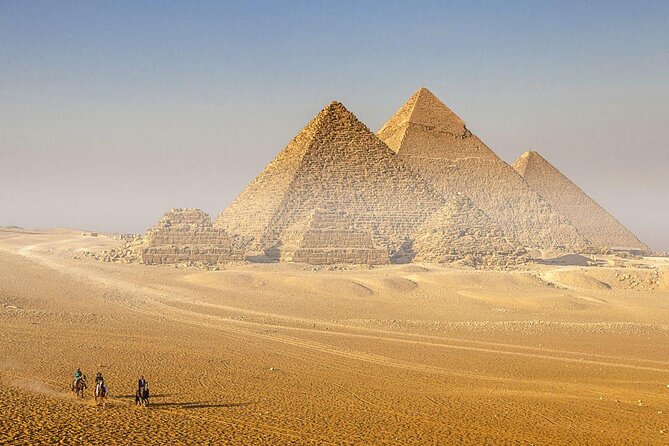
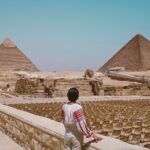
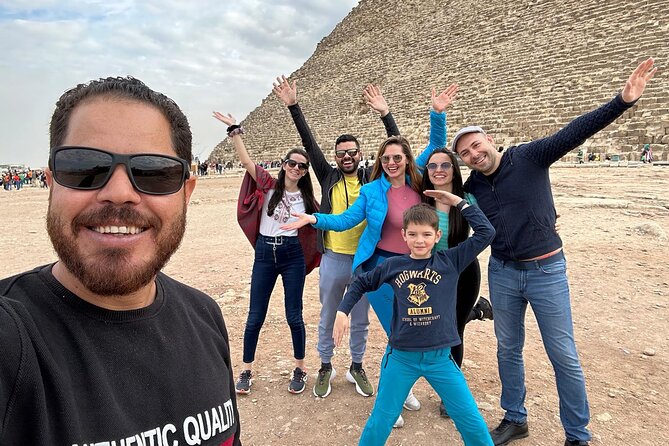
This is where the day earns its reputation. You’ll visit the Pyramids of Cheops, Chephren, and Mykerinus. The big one, Cheops, is widely believed to have been built as a tomb for Pharaoh Khofu, and the construction is often discussed as spanning roughly 14 to 20 years around 2560 BC.
What makes the guided approach worth it here is not just seeing pyramid shapes. It’s hearing how the monuments relate to power, belief, and engineering choices. An Egyptologist guide can point out details that you’d miss if you were just wandering and guessing.
You’ll also get time tied to the Valley Temple and the mummification site for King Chephren. That’s a meaningful addition. Without it, Giza can feel like “three huge mountains of stone.” With it, you get the reminder that these weren’t just landmarks. They were part of a larger process—linked to burial ritual, preparation, and the sacred role of kingship.
Possible drawback: the site is open and exposed. Even if you get the best explanations, you’ll feel the heat and glare. Plan for comfortable walking shoes and a slow-but-steady rhythm. If you’re the type who likes to sit and study, you may want to pace yourself so the rest of the day doesn’t slip.
Stop 2: Great Sphinx views, stories, and a camel ride break
After your first pyramid time, you move to the Sphinx. This stop is short but memorable: about an hour, with a panoramic viewing area first and then getting a close look.
The big statue is the Sphinx—and your guide will share stories about how it was built and why it looks the way it does. That matters, because the Sphinx is easy to turn into a simple photo. A good guide keeps it anchored in question-and-answer mode: who, what, and why, not just wow.
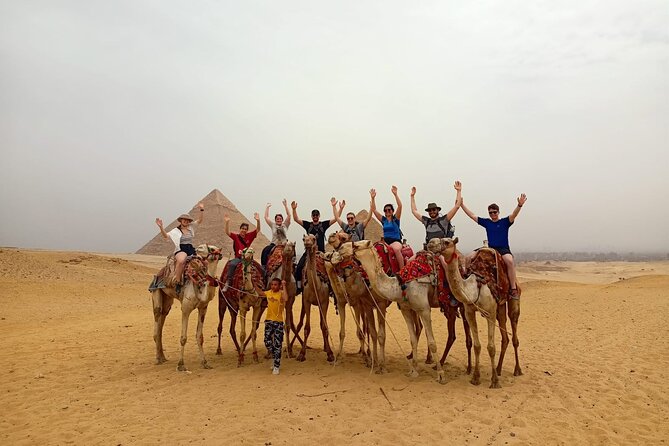
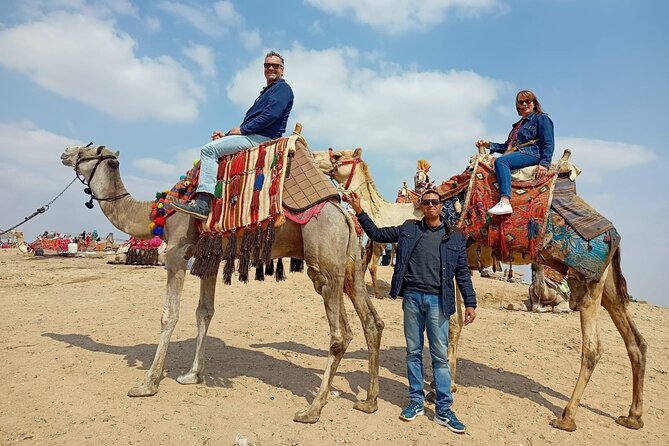
Then there’s the camel ride, timed for around 20 minutes. It’s included in the all-inclusive option, so it’s usually easier to say yes without recalculating the day’s budget on the fly. The ride can also be a helpful pacing tool. It gives you a break from walking while still keeping you “in the moment.”
Consideration: camel rides are popular, but they can feel like a compromise if you’d rather spend that time walking and photographing from different angles. If you’re unsure, think about your priorities before you agree—because once you’re on, you’re on a fixed schedule.
Stop 3: Saqqara’s Step Pyramid and the “first stone building” idea
Saqqara is the shift in tone. It’s not just about scale. It’s about how ancient Egypt learned to build with stone and turned that know-how into the next stages of pyramid design.
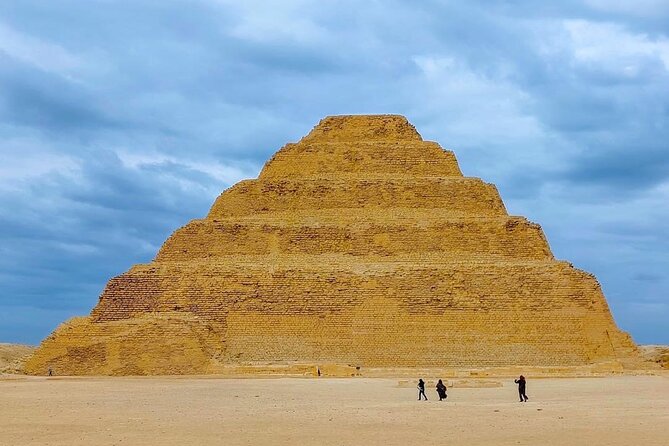
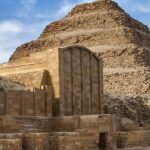
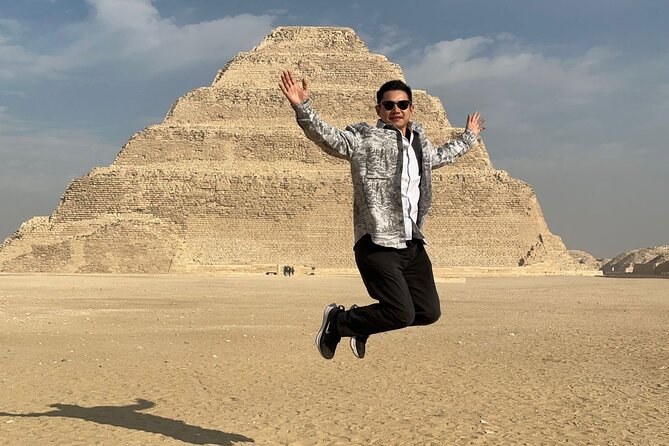
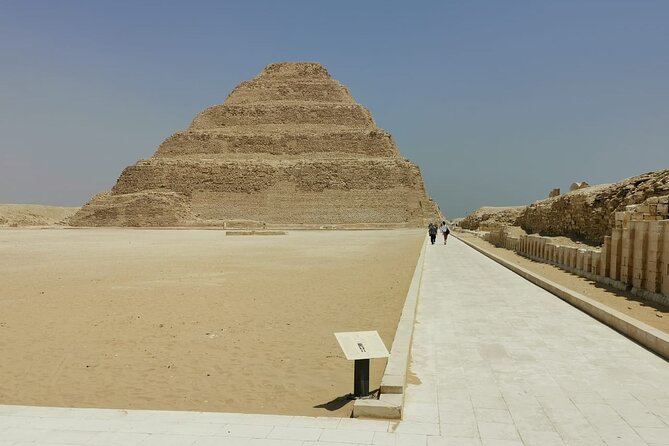
You’ll spend around three hours here, visiting the Step Pyramid built for King Zoser. Saqqara is located about 27 km southwest away from Cairo, so this is also part travel day and part site visit. The distance is long enough that the guide’s timing matters.
The Step Pyramid is considered the first major stone building of its kind. That “start point” angle is what makes it special. You get to see the earlier blueprint that helps explain how later pyramids at Giza became possible at their scale and style.
In practical terms, Saqqara is often a place where your guide’s explanations can feel more “detective-like.” You’ll have the chance to connect shapes and construction choices to a story of gradual improvement, rather than only admiring finished giants.
Possible drawback: this stop can feel physically longer because the walking is spread out. Bring water, take breaks when needed, and don’t feel you must cover every corner at full speed. The value is in understanding what you’re looking at.
You can also read our reviews of more private tours in Giza


Stop 4: Memphis and Mit Rahina Museum, Ramses II, and the Alabaster Sphinx
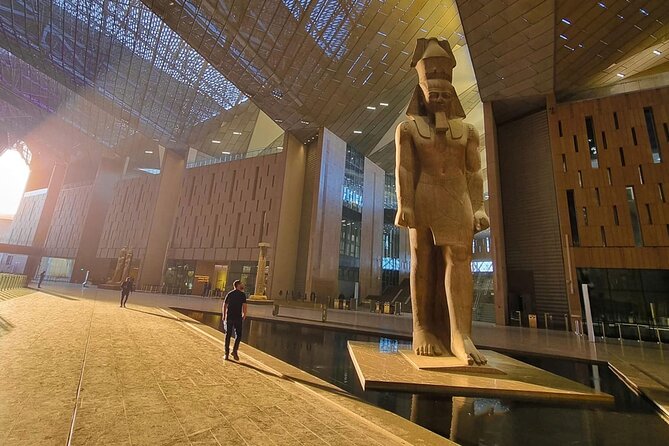
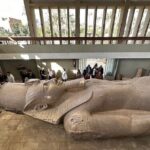
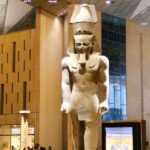
The day ends back in the older orbit of Egyptian cities. You’ll go to the Mit Rahina Museum and see a colossal statue of King Ramses II. Then you’ll also visit the Alabaster Sphinx at Memphis.
Memphis dates back to 3100 BC in the information provided for the tour, which gives you a useful anchor. This part of the day connects Giza’s Old Kingdom pyramid legacy to later periods of Egyptian power and stone sculpture.
This stop is about variety. After pyramids and the Sphinx, the museum pieces can feel more grounded and detailed—less “one giant shape from far away,” more “specific objects made to last.” The Ramses II statue is the kind of thing you notice even when you’re tired, because scale hits you fast.
Consideration: this is the shortest stop at about an hour. If you love museums and want to read everything slowly, you might wish you had more time here. For most first-timers, though, it hits the right balance: big highlights without turning the last hour into a rushed scramble.
Lunch, bottled water, and small comforts that matter
The tour can include an Egyptian traditional lunch (again, in the all-inclusive option). When included, it takes one stress off your day: you don’t have to find a place near each site, negotiate time, or worry about whether food will be available when the group is ready.
Bottled water is included, which is one of the least glamorous items on any itinerary—until you’re doing hours of outdoor sightseeing in heat. It helps you keep energy up and reduces the temptation to cut corners on hydration.
There’s also the “private tour” element. Even if you’re traveling with just a small group, the day tends to feel more personal. Your guide can answer questions as they come up instead of sticking to a script designed for larger crowds.
Camel ride, entrances, and what your $25 really buys
Let’s talk about the price, because $25 per person can sound too good to be true. The catch is the all-inclusive option.
In the included details, entrance fees are listed as included if you select the all-inclusive price option. Lunch is also listed the same way, along with the camel ride (about 20 minutes). So the real question is not just the base rate—it’s what package level you choose.
When you do choose the all-inclusive version, you’re effectively paying for more than sightseeing. You’re paying for:
- Hotel pickup and drop-off
- A qualified Egyptologist guide
- Entrance fees
- Lunch
- Camel ride time
- Bottled water, plus taxes and service charges
For a full day that covers multiple major sites—Giza plus Sphinx plus Saqqara plus Memphis—that package can represent strong value. And because it’s private, your money goes toward guided time rather than cutting you lose into a crowd.
Smart move: before you book, confirm whether you’re choosing the all-inclusive option that covers entrance fees, lunch, and the camel ride. That’s the difference between a good deal and a deal that feels incomplete.
Who should book this Giza day, and who should skip it
This tour fits best if you want:
- A guided introduction to Giza, Saqqara, and Memphis in one day
- Clear explanations from an Egyptologist—especially if you like learning the why behind the stone
- A plan that handles pickup and admission so you can focus on seeing
I’d also say it’s ideal for first-timers who don’t want to spend time figuring out transport between sites. The whole structure is built for efficiency.
Who might not love it? If you need lots of quiet time in one location, or if you’re sensitive to walking in the sun, the packed schedule may feel tight. This isn’t built for slow wandering. It’s built for strong highlights in a single day.
Based on strong feedback, the biggest reason people get excited is the guide quality. In recent feedback, the Egyptologist Haitham stands out for teaching a lot about ancient Egypt and giving detailed explanations on what you’re seeing. If you end up with a similarly story-driven guide, you’ll likely feel like the day makes sense instead of just looking impressive.
Should you book Blue Nile Tours for this Giza day?
If your goal is a high-impact day with an expert guide and minimal logistics headaches, I’d book it. The mix of sites is the point: you get the Seven Wonders moment at Giza, the iconic Sphinx with stories, the evolution angle at Saqqara’s Step Pyramid, and then a Memphis cap with Ramses II and the Alabaster Sphinx.
The decision comes down to two things: your comfort with an 8-hour schedule and your choice of all-inclusive details. If you can handle the pace and you select the package that includes entrances, lunch, and the camel ride, the value is genuinely strong for how much you cover.
FAQ
How long is the tour?
The tour duration is about 8 hours.
What does the tour include?
It can include hotel pickup and drop-off, an Egyptologist guide, bottled water, and entrance fees plus lunch and a camel ride if you choose the all-inclusive option.
Is the camel ride included?
A camel ride of around 20 minutes is included in the all-inclusive price option.
Where does the tour stop?
You’ll visit the Pyramids of Giza, the Great Sphinx, Saqqara (including the Step Pyramid for King Zoser), and then Mit Rahina Museum/Memphis.
Is this a private tour?
Yes. It’s private, meaning only your group participates.
What’s the cancellation policy?
Free cancellation is available. You can cancel up to 24 hours in advance for a full refund, based on the tour’s local time.
If you want, tell me your travel dates and whether you’re leaning all-inclusive, and I’ll help you sanity-check the plan against what you most want to see (pyramids vs. museums vs. more photos time).