REVIEW · LUXOR
Private Tour: Luxor East Bank, Karnak and Luxor Temples
Book on Viator →Operated by South Sinai Travel · Bookable on Viator
Your afternoon starts with ancient stone.
This private East Bank temples combo is a fast ticket to the Thebes story, from Karnak’s 3,000+ years of building phases to Luxor Temple’s later additions. I especially like the Avenue of the Sphinxes approach at Karnak, because it gives you a physical sense of the scale before you ever step inside.
My second big favorite is the way the guide makes the Hypostyle Hall feel understandable, not just huge. One possible drawback: the visit time at each site is limited, so you’ll see the big highlights well, but you won’t have hours and hours to wander every corner at a slow pace.
In This Review
- Key highlights at a glance
- How Karnak and Luxor Temple make sense in one 3.5-hour plan
- The 1:00 pm start, minivan comfort, and why pickup matters
- Karnak’s Avenue of the Sphinxes: the easiest way to grasp the scale
- The Hypostyle Hall: 134 columns and an engineering lesson
- The sacred lake and your brief breathing space at Karnak
- Luxor Temple: the center-stage temple with Ramses II in the spotlight
- Inside Luxor Temple: hieroglyphs, papyrus columns, and Alexander’s chapel
- Value check: is $107.88 per person a good deal?
- Who this tour is best for (and who should consider another option)
- Practical tips to make your Karnak and Luxor time smoother
- Should you book this private Karnak and Luxor Temples tour?
- FAQ
- What time does the tour start?
- How long is the private tour?
- Is hotel pickup and drop-off included?
- Are admission tickets included for Karnak and Luxor Temple?
- Do I need an extra payment for languages?
- What is the cancellation policy?
Key highlights at a glance
- A private Egyptologist guide who helps you read what you’re seeing
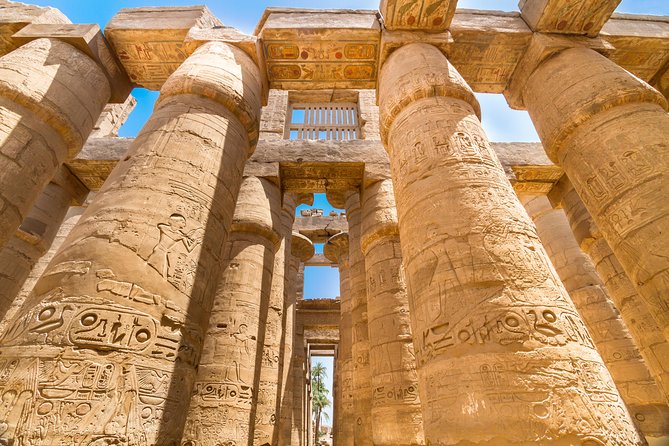
- Karnak’s Hypostyle Hall with 134 massive columns towering over you
- Avenue of the Sphinxes leading you into the Karnak complex
- Luxor Temple built around 1,400 BC, later enhanced by Tutankhamun, Ramses II, and Alexander the Great
- Admission tickets included for both major stops
- Hotel pickup and drop-off plus air-conditioned minivan rides
How Karnak and Luxor Temple make sense in one 3.5-hour plan
This tour’s real power is pacing. You start on the East Bank, where Luxor’s ancient capital status still feels close—because Karnak and Luxor Temple are linked by the long, ceremonial story of Thebes. Karnak is the larger temple complex, built and expanded over time by more than 30 pharaohs, while Luxor Temple feels more like the living showcase in the center of town.
On a half-day schedule (about 3 hours 30 minutes), you get the essential contrast: Karnak is about scale and centuries of additions. Luxor Temple is about a tighter space with later historical fingerprints—especially the way Alexander the Great appears in the temple’s remembered story.
You can also read our reviews of more private tours in Luxor

The 1:00 pm start, minivan comfort, and why pickup matters
With a 1:00 pm departure, you’re avoiding the earliest morning rush. That’s not just about crowds; it also changes the light for photos and makes the day feel a little more relaxed.
You’re picked up from your central Luxor hotel or the Luxor river port area, then driven by air-conditioned minivan between sites. That matters in Luxor, where heat and sun can turn a long outdoor day into a slog. This tour keeps you moving, but not trapped in a long bus ride, because it’s designed as a private experience for your group.
You’ll finish with a drop-off back at the start point. And since you’re getting a mobile ticket, you’re not wasting time hunting paper tickets at a busy entrance.
Karnak’s Avenue of the Sphinxes: the easiest way to grasp the scale
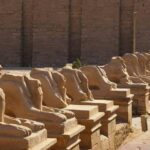
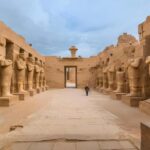
Karnak is the kind of place that can overwhelm you fast. The solution is exactly what this tour does: it starts you with a ceremonial approach. Walking along the Avenue of the Sphinxes toward Karnak’s gateway helps you get your bearings before the complex starts throwing monumental details at you.
Once inside, your guide explains how the entrance structures—especially the massive pylons—were constructed, and how the complex grew by layers. Karnak wasn’t built in one go. It kept being expanded, so the place feels like a timeline you can walk through. You’ll also hear how the oldest parts go back more than 3,000 years, which helps the big picture click rather than just bouncing around in your head.
A smart detail here is the “show me the big moments” style. You’ll walk into major courtyards and head toward the highlight chamber rather than scattering your attention across dozens of scattered ruins.
Possible drawback to plan around: the Karnak stop is about 1 hour for this format. You’ll see the top structures and learn a lot, but if you’re the type who wants to linger in every doorway niche and side sanctuary for 20 minutes at a time, you may feel a little rushed.
The Hypostyle Hall: 134 columns and an engineering lesson
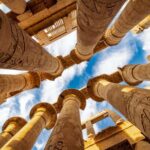
This is the signature moment. The Great Hypostyle Hall is known for its 134 towering columns, and the experience is physical—you look up and your neck feels it. That “ancient forest” feeling is exactly what you want on your first Karnak visit.
What I like about doing this with an Egyptologist guide is that the columns stop being just a photo background. You learn how the long-ago Egyptians raised such massive elements, which gives you a practical sense of how impossible it would have seemed to build this with the tools available. It’s the kind of explanation that makes you slow down for a second—even if you’re normally rushing.
Your guide also points you toward key features of the space: how the interior layout supports ritual movement, and how different areas connect to the temple’s sacred function. Even if you only catch the highlights, the place starts to make sense as a designed environment rather than a random pile of ancient parts.
The sacred lake and your brief breathing space at Karnak
After the grand drama of the columns, Karnak gives you a calmer beat. You’ll see the sacred lake where pharaonic offerings were purified. That shift matters because temple sites can turn into a blur of stone shapes. A short moment on what the space was used for—ritual preparation, purification, sanctuaries—helps everything feel more grounded.
Then you get free time to stroll around the site at your leisure. Use that time well. Don’t try to see everything. Instead, pick a few things the guide pointed out and return to them. That’s how you actually register details like scale, placement, and how the carvings relate to the architecture.




Luxor Temple: the center-stage temple with Ramses II in the spotlight
Next is Luxor Temple, positioned in the middle of Luxor and laid parallel to the Nile. This placement helps you understand why it survived the centuries: it wasn’t only about stone; it was about a temple’s relationship to its landscape.
Luxor Temple is built around 1,400 BC, then later embellished by major figures like Tutankhamun and Ramses II. Alexander the Great also gets tied into the story—through a chapel and remembered rebuilding connected to him. That mix of eras is part of what makes Luxor Temple so fun. You’re not just seeing one pharaoh’s message. You’re seeing how successive rulers and eras kept rewriting the same stage.
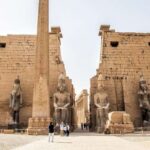
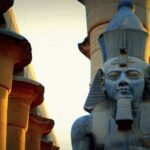
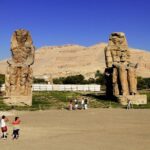
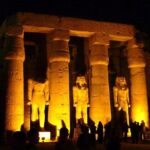
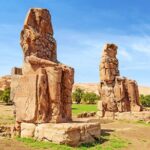
At the entrance, you’ll notice two colossal statues of Ramses II. You’ll also see the granite gateway obelisk, and this tour highlights an extra clue: its original counterpart now stands in Paris’ Place de la Concorde. Even if you’ve never stood in Paris, that reference makes the obelisk story feel global, not just local.
Inside Luxor Temple: hieroglyphs, papyrus columns, and Alexander’s chapel
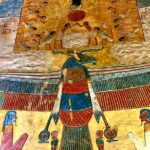
Moving inside, your guide helps you interpret what’s carved into the inner walls and columns. The hieroglyphs can feel like decoration until someone shows you how to read them, at least at a basic level. Here, that guidance turns the carvings into meaningful symbols rather than visual wallpaper.
You’ll pass through courts and richly carved sanctuaries, then into atmospheric anterooms. One of the most specific highlights is the chapel dedicated to Alexander the Great, which was rebuilt in his name. That detail is a great reminder that ancient history isn’t frozen. People keep stepping into older places and adding their own layer to the story.
You’ll also find papyrus-column styling and dense carvings that reflect an Egyptian design language aimed at ceremony. Don’t rush this part. Luxor Temple rewards slow looking, especially if your guide is pointing out connections between architectural layout and temple function.
Value check: is $107.88 per person a good deal?
For $107.88 per person, the value hinges on what’s included. This is a private half-day with:
- a qualified Egyptologist guide
- hotel pickup and drop-off
- private transportation by air-conditioned minivan
- admission tickets included for both main sites
- a tour length of about 3 hours 30 minutes
That’s a lot of “logistics solved for you,” which is often where independent plans in Luxor get messy. Karnak and Luxor Temple are famous, but getting from one to the other on your own, plus navigating entrances and timing, can cost you time and energy. Here, you’re paying for smoother execution and better context.
One pricing note to consider: the tour mentions a 1,000 L.E. supplement for languages other than an English-language guide. If you want a non-English guide, check this before you book so you’re not surprised later.
If you’re traveling as a couple or small group, this format often becomes even better value compared with splitting up costs across multiple taxis or trying to line up a last-minute guide at each site. If you love history and want the place to make sense as you walk, it’s the kind of day you’ll remember for the explanations, not just the photos.
Who this tour is best for (and who should consider another option)
This is ideal if you:
- want a first-time Luxor temples overview without spending a full day
- enjoy learning how pharaohs and later rulers shaped the sites
- like a private guide who can adjust to your pace and questions
- prefer pickup/drop-off and a comfortable ride in between stops
It may be less ideal if you:
- want to spend long hours wandering every side corridor and side sanctuary on your own
- dislike walking through open-air temple areas in strong sun
- need a very flexible schedule, because the experience is structured around a tight half-day window
The tour is described as suitable for most travelers, but temple walking is still real walking—so wear shoes you trust.
Practical tips to make your Karnak and Luxor time smoother
Here’s how to get more from every minute:
- Ask your guide for a “what should I notice first” prompt. In Karnak, your brain will thank you after you know where to focus.
- Use the free-stroll time intentionally. Pick one area at Karnak to revisit after seeing the main highlights, then do the same at Luxor Temple.
- Bring a light plan for comfort. Water and sun protection are smart, since you’ll be outdoors much of the time (the tour doesn’t include food or drinks unless specified).
- Camera strategy beats photo chaos. Don’t spend every stop behind your screen. Quick shots, then look with your eyes, then return for one last framed photo.
- If you’re lucky enough to get a guide like Adel or Michael (names that come up for being punctual and passionate), lean in with questions—those explanations can turn “huge” into “understood.”
Should you book this private Karnak and Luxor Temples tour?
If you want the essential Luxor experience without spending an entire day piecing things together, I’d say book it. The combination works because Karnak gives you the ancient mega-story and Luxor Temple gives you the later layer—plus the guide helps you read what you’re seeing instead of only admiring stone from a distance.
I’d consider a different option only if you already know Karnak extremely well and you want more time for deep, self-paced wandering. For most people, this private half-day hits the sweet spot: major highlights, clear explanations, and practical transport that keeps your afternoon enjoyable.
FAQ
What time does the tour start?
The tour starts at 1:00 pm.
How long is the private tour?
The duration is about 3 hours 30 minutes (approx.).
Is hotel pickup and drop-off included?
Yes. Hotel pickup and drop-off are included.
Are admission tickets included for Karnak and Luxor Temple?
Yes. Admission tickets are included for both stops.
Do I need an extra payment for languages?
A supplement of 1,000 L.E. applies to languages other than an English-language guide.
What is the cancellation policy?
You can cancel for a full refund up to 24 hours in advance of the experience start time, with free cancellation available.