REVIEW · LUXOR
Luxor Full-Day/ West Banks and Karnak and Luxor (private)
Book on Viator →Operated by Trust Way · Bookable on Viator
Five tombs, two banks, one private day. This is a full-day Luxor tour that knits together the West Bank royal sites and the air-conditioned East Bank temples, with an Egyptologist guide and pickup from your hotel or Nile cruise. You get the structure of a guided itinerary, with the practical bonus of time that can flex a bit as you go.
I really like two things about this setup: first, the day is paced so you’re not constantly rushing between sites in uncomfortable heat. Second, you’re not just collecting photos—you’re getting the why behind what you’re seeing, and the reviews repeatedly call out guides like Abdo and Hany for explaining more than the basics.
One consideration: it’s still a long day (about 7–8 hours). You’ll see a lot of ground, and the stops are time-limited—so if you want to linger deeply at just one tomb or temple, this format may feel a bit tight.
In This Review
- Key things to know before you go
- Private Luxor Route: West Bank to Karnak Without the Headache
- Valley of the Kings: Burial Power, Big Names, and 2 Hours to Orient Yourself
- Temple of Hatshepsut at Deir el Bahari: A Pharaonic Woman’s Legacy
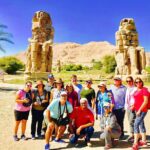
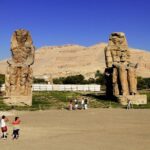
- Colossi of Memnon: The 10-Minute Remains That Make You Stop Anyway
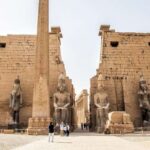
- Karnak Temples: Amon, Mut, and Khonsu in About 2 Hours
- Luxor Temple at Dusk: Amunhotep III and Ramses II in 1 Hour
- Egyptologist Guides Like Abdo and Hany: What the Best Days Feel Like
- Price and Value: Why $22.50 Can Feel Like a Good Deal
- Practical Tips: Make the Long Day Feel Easier
- Should You Book This Private Luxor Day Trip?
- FAQ
- Is pickup included?
- How long is the tour?
- Which sites are included in the day?
- Are entrance fees included?
- Is this tour private?
- What’s included in the price besides sites?
- What is not included?
Key things to know before you go
- Private vehicle, air-conditioned comfort to handle the drive between West and East Bank.
- Egyptologist guide focused on context, not just dates.
- Valley of the Kings has 2 hours, with several major tomb names included in the plan.
- Hatshepsut at Deir el Bahari gets 1 hour, enough time to understand her role without feeling frantic.
- Karnak + Luxor Temple total 3 hours, so you’ll get the core East Bank highlights in one go.
- Colossi of Memnon is brief (10 minutes), but it’s a quick way to see a famous remnant.
Private Luxor Route: West Bank to Karnak Without the Headache
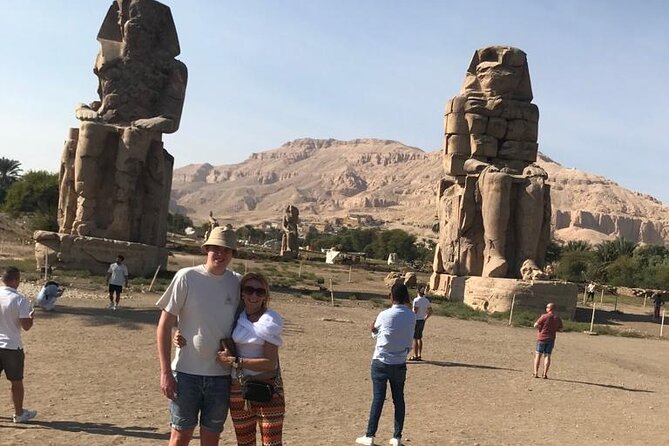
The smartest part of this tour is how it runs the geography. You start on the West Bank for the royal burial sites, then cross to the East Bank for the big temple complexes—so you’re not zigzagging across Luxor all day. Pickup is offered from your hotel or Nile cruise, and you’re transported in a private air-conditioned vehicle, which matters when you’re spending hours outside.
Because it’s private, only your group participates. That changes the feel right away: you can ask for practical adjustments (like how long to spend at a particular area), and you’re not trapped in a loud chain of strangers trying to keep everyone together. The plan also includes a “cool off” rhythm—drive time in AC between the main open-air stops—so you can keep your energy for the next site.
One small reality check: “private” doesn’t mean “infinite time.” This is still a packed set of highlights. Think of it as a best-of Luxor day that’s designed to work even if it’s your first time in town and you don’t want to pick between West Bank and East Bank.
You can also read our reviews of more private tours in Luxor
Valley of the Kings: Burial Power, Big Names, and 2 Hours to Orient Yourself

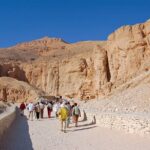
The day begins at the Valley of the Kings, the royal burial ground where multiple pharaohs were interred. The tour gives you about 2 hours here, and the highlights included in the plan are some of the best-known tombs: Tutmosis I, Tutmosis III, Tut-Ankh-Amon, Ramssess VI, Mrenptah, and Amonhotep II.
What I like about this stop is that it’s not treated like a quick roadside photo stop. Two hours is long enough to get your bearings, understand what the valley represents, and still move from one key area to another with a guide guiding the meaning—why these tombs mattered, not just what they look like from far away.
If you want the best experience, come ready for slow looking. The Valley works best when you stop trying to “see everything” and instead focus on a few tombs and the bigger pattern of royal burials. Your guide can help you decide what fits your interests most, especially if you’re aiming for the tomb names that match your interest in specific pharaoh stories.
Entrance is included, so you’re not managing a separate ticket process while your schedule is ticking along.
Temple of Hatshepsut at Deir el Bahari: A Pharaonic Woman’s Legacy
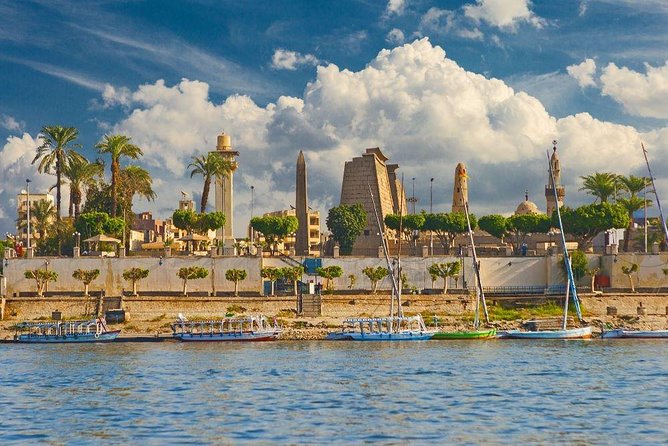
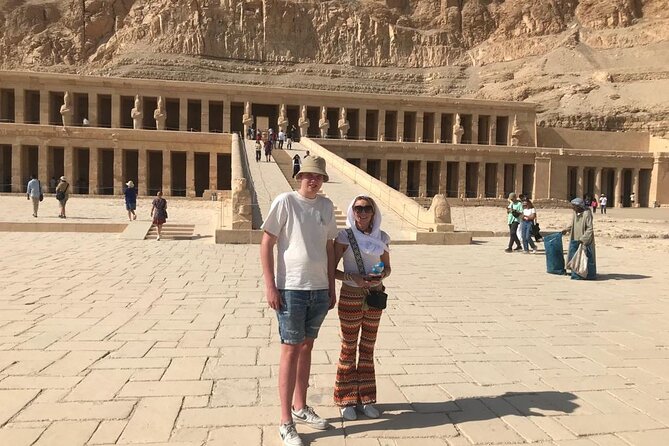
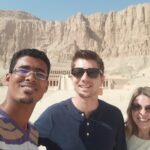
Next is the Temple of Hatshepsut at Deir el Bahari, visited for about 1 hour. This is one of those stops that feels extra meaningful because it’s anchored to a very specific person: Queen Hatshepsut, described here as the daughter of Thutmosis I, ruling around 20 years during the 18th Dynasty (approximately 1490–1469 B.C). The tour also highlights her as the only pharaonic woman who reigned ancient Egypt.
That biography is the key. When your guide explains who she was and how her reign shaped the story of the site, the temple stops being just ancient walls and becomes a message in stone. You’ll get a sense of how power, legacy, and religious purpose were connected in her building program—without needing to be an Egyptology expert first.
Because the visit is scheduled for one hour, it’s a good choice if you like focused, story-driven sightseeing. You’ll likely spend most of that time listening, looking, and asking questions—especially if your guide is the kind that goes beyond the surface descriptions.
Entrance is included, so you can keep your attention on what you’re seeing, not on logistics.
Colossi of Memnon: The 10-Minute Remains That Make You Stop Anyway
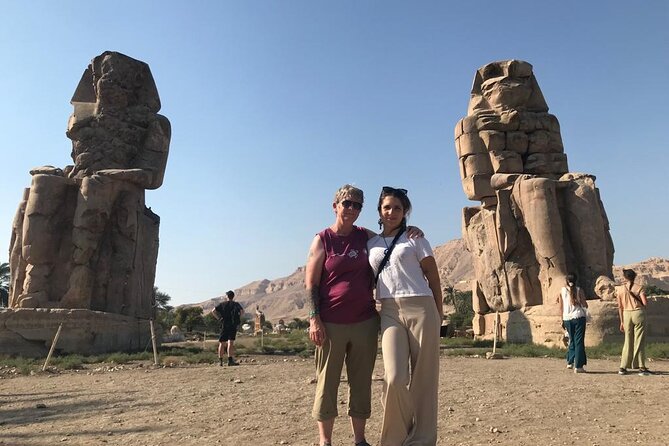
Then you hit the Colossi of Memnon, with only 10 minutes scheduled and admission noted as free. This stop is brief, but it’s not random: it’s tied to the mortuary temple of Amenhotep III, with the statues functioning as the surviving remnants of that larger complex.
In a day that moves fast, a short stop can be either frustrating or useful. Here it tends to be useful because it gives you a recognizable landmark tied to a specific ruler. In practice, this is a moment to glance, take a few photos, and remind yourself that not everything you see in Luxor is intact. Sometimes the story is in what’s left behind.
If you’re the type who hates rushed photo stops, treat this as a quick orientation checkpoint. Don’t try to overfill it. Use the time to get your bearings and save your long attention spans for Valley of the Kings, Hatshepsut, Karnak, and Luxor Temple.
Karnak Temples: Amon, Mut, and Khonsu in About 2 Hours
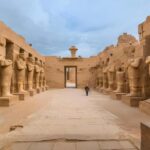
On the East Bank, the big draw is Karnak Temple, scheduled for about 2 hours. This is where you’ll get the sense of scale that makes Karnak such a famous stop. The tour description frames it as the greatest example of worship in history, dedicated to the God Amon, his wife Mut, and their son Khonsu.
That trio matters. When a guide keeps the focus on the “who” (Amon, Mut, Khonsu) and the “why” (worship), Karnak becomes easier to understand. You’re not just walking through ruins that look impressive but vague—you’re mapping the space to the religious system that gave it meaning.
Two hours is a solid window. It’s long enough to get context without turning the visit into a marathon. The best way to get value here is to ask your guide to connect what you’re seeing to the roles of Amon, Mut, and Khonsu, and then let those connections shape your looking.
Admission is included, and the visit is timed so you’re not left burning time in the heat.
A few more Luxor tours and experiences worth a look

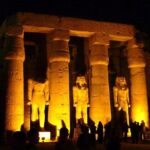
Luxor Temple at Dusk: Amunhotep III and Ramses II in 1 Hour
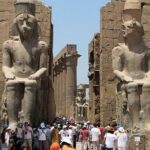
Your final temple stop is Luxor Temple, visited for about 1 hour, with admission included. The tour notes that it was built by Amunhotep III in the 18th Dynasty and completed by Ramses II in the 19th Dynasty.
That “built by one ruler, completed by another” detail is exactly the kind of historical thread that makes a short temple visit feel richer. You’re seeing a site shaped by more than one reign, which is common in Egypt’s long timeline. In a single hour, you can still grasp that continuity if your guide points it out clearly.
This stop also tends to land well because you’ve already built momentum during the day. By the time you reach Luxor Temple, you’re primed to recognize patterns: royal authority, religious purpose, and the way later rulers preserved and expanded earlier projects.
Then you’re driven back to your hotel in Luxor. If you’re doing this as a first-time Luxor visitor, this ending matters—it helps you close the day feeling like the whole puzzle is complete: West Bank burial sites and East Bank worship sites, tied together in one route.
Egyptologist Guides Like Abdo and Hany: What the Best Days Feel Like
The tour’s main ingredient isn’t the list of sites—it’s the guide. This tour includes an Egyptologist tour guide, and the feedback attached to this experience highlights a pattern: guides who are friendly, professional, and willing to go beyond basic temple facts.
Names show up often in the stories: Abdo is called out for being professional and highly informative, and Hany gets praise for being knowledgeable and friendly, with explanations that go beyond the temples’ histories. Other guide names that appear include Mohamed and Ahmed, both described as professional, with good English and helpful archaeological information.
You’ll also notice practical touches that make the day smoother:
- timing flexibility for temple visits (so you’re not always stuck at a rigid minute-by-minute pace)
- guidance for picture-taking (including guides who help you get photos without turning it into a money pitch)
- comfort and cleanliness in the car with air conditioning
- water offered in the morning (a small thing, but it keeps you from running low too early)
How to get the most out of this part: show up with one or two questions. For example, ask why the West Bank tombs mattered to the rulers buried there, or how worship worked across Amon’s circle at Karnak. A good guide will have answers that turn ruins into stories.
Price and Value: Why $22.50 Can Feel Like a Good Deal
The listed price is $22.50 per person, and the plan states entrance fees average $49 per person are included. That’s the core value math here: you’re paying a low headline amount for a day that includes an Egyptologist and multiple paid entries.
Here’s what’s explicitly covered:
- Valley of the Kings admission
- Temple of Hatshepsut at Deir el Bahari admission
- Karnak Temples admission
- Luxor Temple admission
And Colossi of Memnon is noted as free.
So if you’re the kind of traveler who would otherwise pay for guides plus tickets separately, this bundle can make sense financially. And even if you’re comfortable handling tickets yourself, the real value is the time savings and the quality of explanations.
What’s not included: gratuities and any other options. So budget a little for that if you want to tip. Also remember that “private” can cost more than a group tour—but here, the pricing suggests you’re getting a strong value for the included admissions and guide.
Practical Tips: Make the Long Day Feel Easier
This is a high-activity day. Not hard, just busy. Here’s how I’d set you up to enjoy it instead of just surviving it.
- Wear comfortable walking shoes. Valley of the Kings and the temples involve a lot of moving.
- Bring sun protection. You’ll be outside for multiple stops, and a long day can add up fast.
- Plan your pace at the places you care about most. The schedule is fixed, but your guide can help you prioritize within the time you’ve got.
- Use the car breaks. The air conditioning isn’t luxury; it’s part of how the day stays enjoyable.
- If photos matter to you, tell your guide early. The best guidance comes when the photographer in your group is clear about what they want.
If you’re sensitive to heat and crowds, this itinerary can still work because it uses AC between stops and keeps each temple visit relatively focused.
Should You Book This Private Luxor Day Trip?
I think this tour is a great fit if:
- it’s your first time in Luxor and you want both West Bank and East Bank highlights in one day
- you like the structure of a guided day, especially with an Egyptologist
- you value comfort (private, air-conditioned transport) over trying to piece together cross-river logistics on your own
- you want flexibility with timing so you’re not feeling trapped
I’d be cautious if:
- you want a slow, museum-style experience with long stops at only one or two sites
- you’re likely to feel overwhelmed by a full 7–8 hour schedule
Bottom line: if you want the main Luxor hits with context, and you prefer a guide-led day that’s still practical and comfortable, this private West Bank and Karnak combination makes a lot of sense.
FAQ
Is pickup included?
Yes. Pickup is offered from your hotel or Nile cruise to start the day on the West Bank, and you’re driven back to your hotel in Luxor at the end.
How long is the tour?
The duration is listed as approximately 7 to 8 hours.
Which sites are included in the day?
You’ll visit the Valley of the Kings, the Temple of Hatshepsut at Deir el Bahari, Colossi of Memnon, Karnak Temple, and Luxor Temple.
Are entrance fees included?
Yes. Admission is included for the Valley of the Kings, Temple of Hatshepsut, Karnak Temples, and Luxor Temple. Colossi of Memnon is listed as free.
Is this tour private?
Yes. It’s a private tour/activity, so only your group participates.
What’s included in the price besides sites?
The tour includes an Egyptologist tour guide and a private air-conditioned vehicle, along with the listed admissions.
What is not included?
Gratuities and any other options are not included.
If you tell me your travel dates and whether you’re starting from a hotel or a Nile cruise, I can suggest an ideal time-of-day strategy for handling the heat and getting the best flow between West Bank and Karnak.