Luxor makes more sense when you’re not guessing. This private tour pairs a real Egyptologist guide with a smart route through the Valley of the Kings, Deir el Bahari, and both Luxor and Karnak Temples, so you can connect symbols, dynasties, and stories instead of just taking photos. I particularly like the way the day builds momentum: tombs first, then temples, then those huge stone landmarks that seem to watch you back.
The second thing I like is the comfort and attention. You’ll ride in an air-conditioned vehicle, and the private setup keeps the pace human—good for questions and for slowing down when something grabs your eye. One consideration: entrance fees are not included for every stop, so you’ll want to budget a bit extra beyond the tour price, even though Karnak Temple admission is included.
In This Review
- Key points to know before you go
- Why a private Luxor day makes the temples click
- Meet your guide (and why their English matters)
- Valley of the Kings: tombs, pace, and what you’re really looking for
- Deir el Bahari and Hatshepsut’s temple: photos when the light hits
- Colossi of Memnon: the singing statues and the Roman explanation
- Luxor Temple: simplicity, orientation, and later religions
- Temple of Karnak: the included admission you’ll appreciate
- Price and logistics: where the $100 really goes
- Best fit: who this Luxor full-day tour suits
- Should you book this Luxor Full Day Tour?
- FAQ
- Do I need to buy admission tickets for every stop?
- How long is the Luxor full-day tour?
- Is pickup available?
- Is this tour private?
- Who leads the tour?
- What places are included in the itinerary?
- Is the Colossi of Memnon stop included with free admission?
- What’s the tour start time?
- What should I consider about the weather?
- Can I cancel and get a refund?
Key points to know before you go
- Egyptologist-led explanations, including guide Daniel praise for clear English and strong historical context
- Private pacing that keeps the day from feeling like a checklist
- Comfort in an air-conditioned vehicle during driving time between sites
- Free stop at the Colossi of Memnon so you get big impact without added ticket cost
- Luxor Temple’s layered religious history, with references to Ancient Egyptian religion plus later Christianity and Islam
Why a private Luxor day makes the temples click
A full day in Luxor can go two ways. Either you wander around monuments and hope it all connects… or you get someone to help you see the connections fast. This private Luxor tour is built for the second option. It strings together the kinds of stops that normally feel separate in guidebooks: royal tombs, major temple architecture, and the monumental sculpture that anchors the whole area.
With an Egyptologist guide at your side, you’re not just reading walls—you’re learning what the walls were trying to do. That matters at Luxor’s top sights, because the temples aren’t random buildings. They’re designed to stage power, worship, and political messaging across centuries. When you understand that, even a short walk through a doorway feels intentional.
Also, Luxor is hot and dusty at certain times. Having an air-conditioned vehicle for the moves between sites turns the day into something you can actually enjoy, not just survive.
A few more Luxor tours and experiences worth a look
Meet your guide (and why their English matters)
The difference between a decent tour and a great one often comes down to language clarity. In the reviews I saw, guide Daniel stood out for exactly that—strong English and a knack for explaining background in a way that makes the temples easier to understand on your feet. That’s not a small thing. Egyptology can get technical quickly, and you don’t want to spend your day translating in your head.
This is also where the private format helps. You can ask follow-up questions instead of waiting for a group schedule to catch up. And you can get answers tied to what you’re actually looking at—whether it’s the role of the Theban triads at a temple, or why a statue’s story became famous long after it was carved.
Valley of the Kings: tombs, pace, and what you’re really looking for
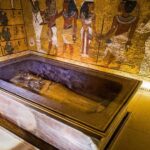
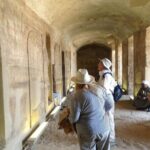
Your day starts at the Valley of the Kings, with about 2 hours of guided time. This is where the pharaohs were buried, and the experience is part history, part atmosphere. Even if you’ve seen photos, being in the valley shifts the scale. The tombs feel built for secrecy—like they were never meant for crowds.
What makes the guided approach valuable here is focus. A visit can turn into a quick look at decorated rooms and nothing sticks. With a guide, you’re more likely to understand what matters: the overall purpose of the tomb, how royal power shows up in scenes and symbols, and what you’re seeing beyond the obvious artwork.
Practical note: entrance tickets are not included for the Valley of the Kings. That’s normal for Egypt tours, but it does mean you should plan for an extra cost on the day.
Deir el Bahari and Hatshepsut’s temple: photos when the light hits
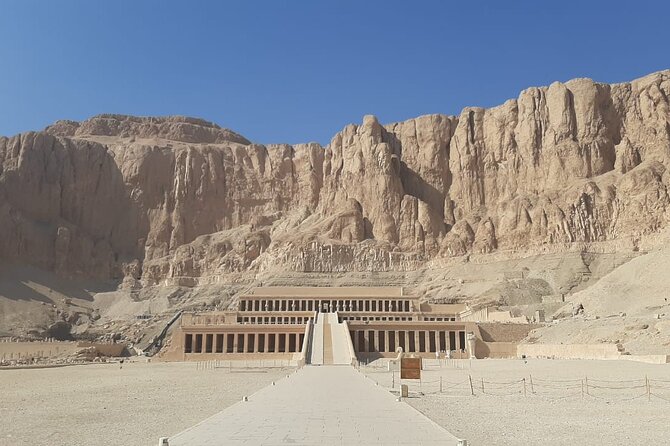
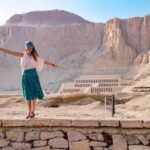
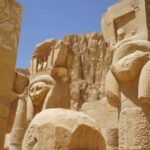
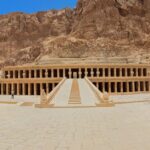
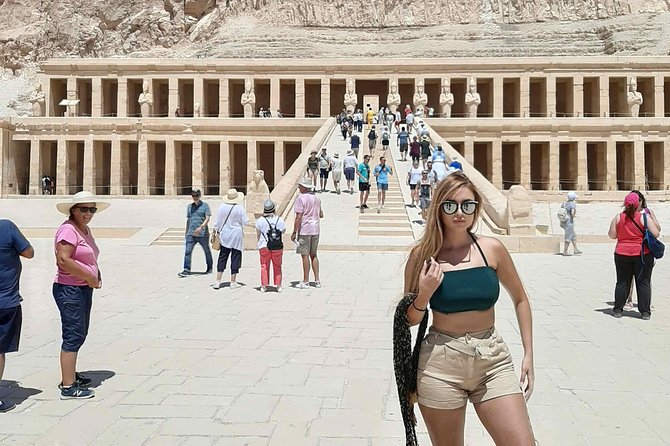
Next up is Temple of Hatshepsut at Deir el Bahari, with 1 hour 30 minutes. This stop is a favorite because it’s photogenic in a very specific way. The layout and terraces can look dramatic in the right light, and the schedule is set up so you’re visiting while the sun is shining—meaning you’ll get those clearer details in the reliefs and stone surfaces.
Hatshepsut herself is a huge reason this temple matters. She’s not a footnote in Egyptian history; she’s tied to one of the most remarkable storylines in the region. Standing here, you start to see how temple design can communicate legitimacy and authority. Your guide’s job is to point out what the stone is saying, not just what it looks like.
Downside to consider: entrance fees are not included at this stop. If you like keeping things simple, budget for tickets ahead of time.
Colossi of Memnon: the singing statues and the Roman explanation
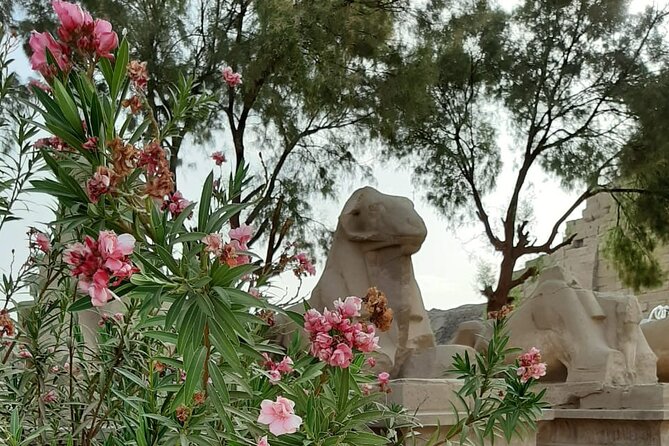
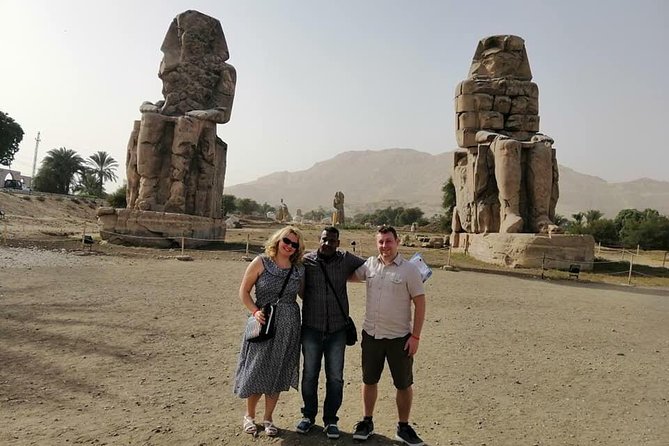
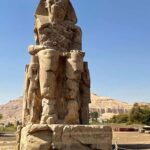
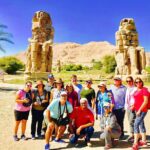
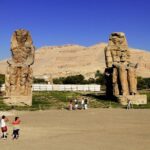
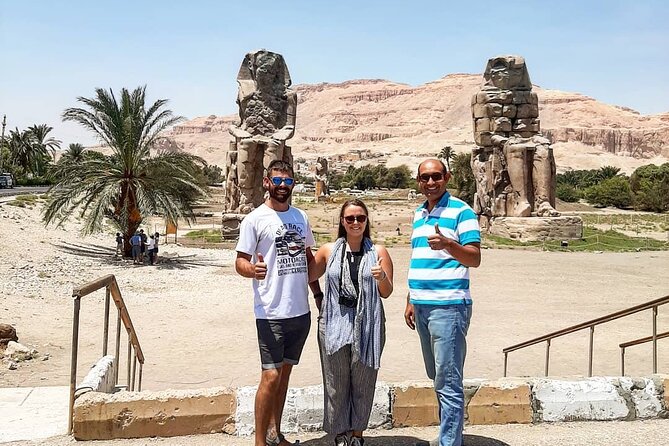
Then you hit the Colossi of Memnon, just 10 minutes on the schedule, with admission listed as free. Short stop, huge payoff. These are two massive seated statues—each 18 meters high and around 720 tons, carved from single sandstone blocks.
Here’s what makes this stop more than a quick photo: the story. These statues were famous for a legend of voices—often called the singing statues or Vocal Memnon. According to the information provided, the singing and twittering stopped due to renovation works connected to Roman Emperor Septimius Severus, dated to 193–211. That Roman link is a reminder that these monuments didn’t just fade away. People centuries later were still paying attention, still telling stories, still interpreting what they saw.
You’ll also hear details about the carvings and what they represent. The statues are said to depict King Amenhotep III, and the decoration includes imagery tied to his mother, his wife, and the god Hapi. If your guide shares that context clearly, the statues stop being two big rocks and start being a political and religious statement in stone.


Luxor Temple: simplicity, orientation, and later religions
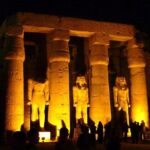
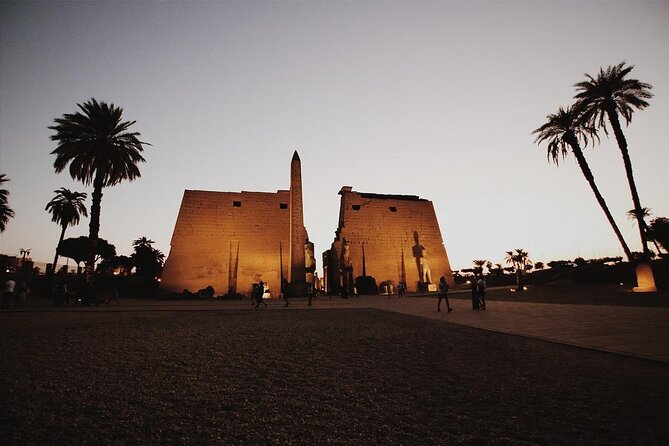
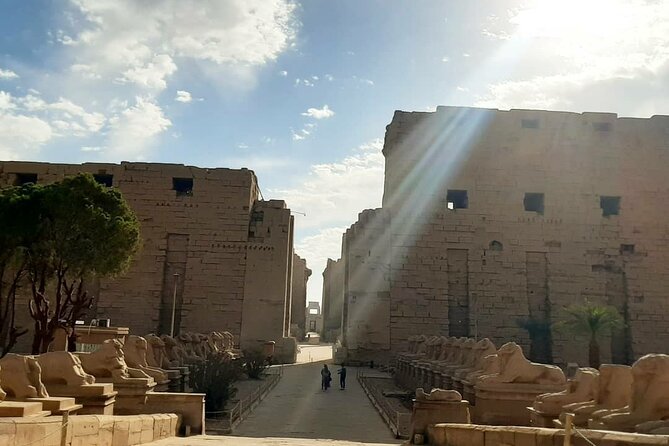
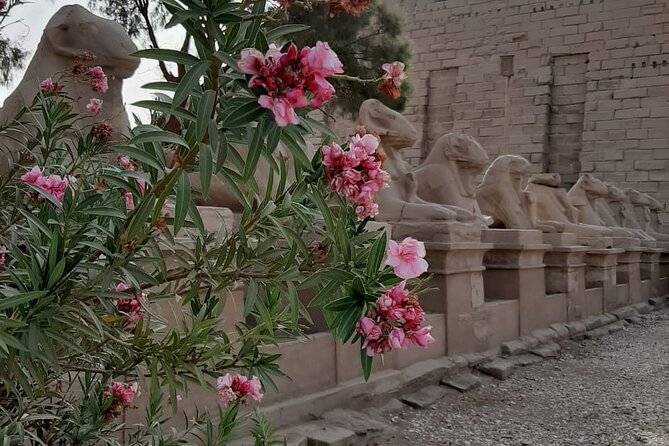
After the Colossi, you move to Luxor Temple for about 1 hour. This temple has a reputation for being impressive because of its relative simplicity. It also has a unique orientation for an Egyptian temple, and it sits on the east bank of the Nile, alongside and parallel to the river.
What I find especially interesting here is the temple’s layered story across time. The information provided notes that Luxor Temple is associated with three kinds of religion: Ancient Egyptian religion, Christianity, and Islam. That’s one of those details you only really appreciate in person. Stone that was built for one sacred system can later be repurposed or reinterpreted, and the result is visible over centuries.
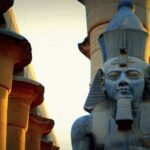
Luxor Temple is described as a cult temple dedicated mainly to the Triads of Thebes: Amon-re, Mut, and Khonsu. It was founded by Amenhotep III, later augmented by Ramses II, and also connected to Alexander the Great. In a short visit, your guide’s job is to connect these names to what you see—so you understand why certain additions matter.
Practical note: entrance tickets are not included for Luxor Temple.
Temple of Karnak: the included admission you’ll appreciate
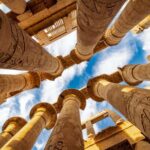
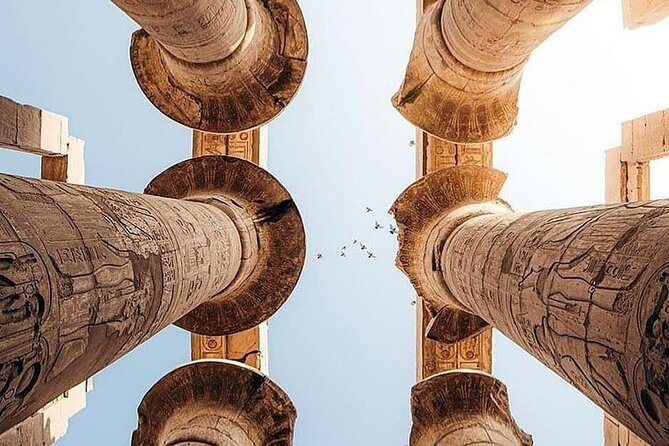
The day ends at Temple of Karnak, where you’ll spend about 2 hours, and where admission is included. Karnak is the kind of place where “more” becomes a real sensory issue. Columns, halls, gateways, and spaces pile up—so having your time structured is smart.
Karnak can feel overwhelming if you walk in without context. With a guide, you get a better sense of what each area is for and how the complex developed. Your route through the site is likely designed to keep you moving at a pace that doesn’t drain your interest.
Because Karnak is listed as admission included, it’s also one less thing to worry about financially. For $100 per person, the value depends heavily on how smoothly the day runs and how much explanation you get. A strong Karnak visit helps justify the price.
Price and logistics: where the $100 really goes
At $100 per person for a 7 to 8 hour private day, the headline value is the Egyptologist guide plus private attention. You’re paying for more than transportation—you’re paying for someone to translate the sights into meaning as you see them.
The vehicle matters too. Between stops, you’ll be in an air-conditioned car. That doesn’t just feel nice. It helps you stay alert when you’re actually at the monuments.
The other half of the value equation is entrance fees. Based on the stops, tickets are not included for the Valley of the Kings, Hatshepsut’s temple, and Luxor Temple. The Colossi of Memnon are free, and Karnak admission is included. So the total day cost for you will likely be tour price plus the entry fees for the non-included sites.
If you’re trying to keep your budget tight, ask yourself this: do you want one guided day to cover the big Luxor hits, or would you rather buy tickets and hire a guide separately? This format usually wins for convenience because it bundles guidance, routing, and time efficiency into one package.
Best fit: who this Luxor full-day tour suits
This tour is a strong match if you:
- Care about ancient history and want context, not just scenery
- Prefer a private tour where you can ask questions and adjust pace
- Want to see Luxor’s major anchors in one day: the royal tomb area, Hatshepsut, and both temple complexes
It may be less ideal if you:
- Want to control every stop yourself with zero ticket planning
- Have extremely tight mobility needs, since you’ll be walking through temple areas and valley paths (the tour notes that most travelers can participate, but it doesn’t promise specialized support)
One more note: the tour requires good weather. If conditions are bad, it may be rescheduled or refunded. In Luxor, weather can change how enjoyable the day feels.
Should you book this Luxor Full Day Tour?
I’d book it if you want a guided day that helps Luxor stop feeling like a pile of monuments. The blend of stops is sensible—Valley of the Kings, Deir el Bahari, Colossi of Memnon, Luxor Temple, then Karnak—and the private format keeps it from turning into a rush.
The biggest reason to choose this one is the guide impact. When you get strong English and clear explanations like Daniel’s praised approach, the temples become easier to read and remember. The only real reason to pause is entrance fees at multiple sites. If you’re okay budgeting for those extra tickets, this tour looks like good value for a full, focused Luxor day.
FAQ
Do I need to buy admission tickets for every stop?
No. Karnak Temple admission is included. The Valley of the Kings, Temple of Hatshepsut at Deir el Bahari, and Luxor Temple list admission fees as not included, while the Colossi of Memnon are free.
How long is the Luxor full-day tour?
It runs about 7 to 8 hours.
Is pickup available?
Yes, pickup is offered.
Is this tour private?
Yes. It’s a private tour/activity, so only your group participates.
Who leads the tour?
An Egyptologist guide leads the tour.
What places are included in the itinerary?
You’ll visit the Valley of the Kings, Temple of Hatshepsut at Deir el Bahari, the Colossi of Memnon, Luxor Temple, and Temple of Karnak.
Is the Colossi of Memnon stop included with free admission?
Yes. Admission is listed as free for the Colossi of Memnon.
What’s the tour start time?
The start time is listed as 12:00 am. If you’re coordinating with other plans, it’s worth confirming the exact pickup timing.
What should I consider about the weather?
The experience requires good weather. If it’s canceled due to poor weather, you’ll be offered another date or a full refund.
Can I cancel and get a refund?
Yes. Free cancellation is available up to 24 hours before the experience’s start time, with a full refund if you cancel in that window.