REVIEW · LUXOR
Full Day Tour to the West Bank & East Bank
Book on Viator →Operated by Ra Egypt Tour Guide · Bookable on Viator
A day in Luxor can feel like a whirl. This one is built to make sense of it, with a private Egyptologist guide and an air-conditioned car moving you between the West Bank and East Bank highlights in one go.
I especially like how the stops are organized around stories, not just buildings. You’ll spend real time at the places that shaped New Kingdom power—like the Valley of the Kings—and then shift to the East Bank where the big temple complexes show you how the ancient Egyptians staged religion in stone.
One thing to consider: entrance fees aren’t included, and ticket lines and midday heat can stretch a 6–9 hour day. If you’re sensitive to walking, plan for uneven ground and some stairs or ramps at major sites.
In This Review
- Key points that make this tour worth your time
- Why This East & West Bank Day Works So Well
- Price and Value: What $52.27 Buys You (and What It Doesn’t)
- West Bank Stop 1: The Valley of the Kings (New Kingdom Power in Stone)
- Temple of Hatshepsut: “Holy of Holies” Mortuary Temple on Three Levels
- Colossi of Memnon: A Fast, Free Photo Moment
- Luxor Temple: Where Ancient Festivals Meet Later Religious Layers
- Karnak Temple Complex: The Open-Air Worship Machine
- How the Egyptologist Guide Makes the Sites Click
- Practical Tips for a 6–9 Hour Day That Stays Comfortable
- Who This Tour Suits Best (and Who Might Want Something Different)
- Should You Book This West Bank and East Bank Tour?
- FAQ
- What’s included in the tour price?
- Are entrance tickets included for the Valley of the Kings, Hatshepsut, Luxor Temple, and Karnak?
- How long is the tour?
- Do they pick you up from your hotel or Nile cruise?
- Is this a private tour or a shared group?
- What’s the cancellation policy?
Key points that make this tour worth your time
- Private Egyptologist guide means explanations actually match what you’re looking at, stop by stop
- Hotel or Nile cruise pickup cuts wasted time before you even start sightseeing
- Air-conditioned private vehicle helps a lot with Luxor’s heat and long distances
- Balanced East + West Bank route covers tombs and temples without forcing you to stitch together two separate tours
- Colossi of Memnon is free, so you get one major photo stop without an extra ticket cost
- Personal service is a real theme in the guide feedback, including cases where guides helped optimize time
Why This East & West Bank Day Works So Well

Luxor is split by the Nile, and most first-time visitors get stuck thinking of it as two separate vacations. This tour treats it like one connected story—kings, gods, and funerary ideas in the West, then public worship and festival life on the East.
The big practical win is that you get a private, guided route rather than a long bus ride full of strangers. That matters because temples and tombs are visual and symbolic. With a guide, you’re not just standing in front of columns trying to guess what matters. You learn what to notice first—where the focus is, what the scenes are trying to say, and why the Egyptians built in those exact places.
You’ll also appreciate the pacing. The itinerary keeps travel and viewing time structured, with 1 to 1.5 hour blocks at the main complexes and a short, efficient stop at the Colossi. It’s designed for a full day without turning into a marathon.
The only real drawback is that you still need to budget for entrance fees and accept that you’re spending most of the day outdoors.
A few more Luxor tours and experiences worth a look
Price and Value: What $52.27 Buys You (and What It Doesn’t)

At $52.27 per person, this is priced like a smart “value-forward” day tour—especially because the tour includes key moving pieces. You’re paying for an Egyptologist guide, a private air-conditioned vehicle, and a protected, official setup (tourism police permission and tax are listed as included).
But entrance fees are not included. Each of the major sites marks admission tickets not included, except the Colossi of Memnon, which is free. So the total cost of your day will be entrance-fee dependent.
Here’s how I’d think about the value. You’re essentially paying to avoid four problems at once:
- You don’t have to coordinate transport between the West Bank and East Bank on your own.
- You don’t have to spend time figuring out which tomb or temple details matter.
- You get comfort in the car, which matters in Luxor.
- You get guided context so the sites don’t blur together.
If you’re traveling with a group, you may also benefit from the listed group discounts, and you’ll have a mobile ticket setup for smoother access. Just plan your wallet for tickets on arrival.
West Bank Stop 1: The Valley of the Kings (New Kingdom Power in Stone)

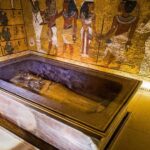
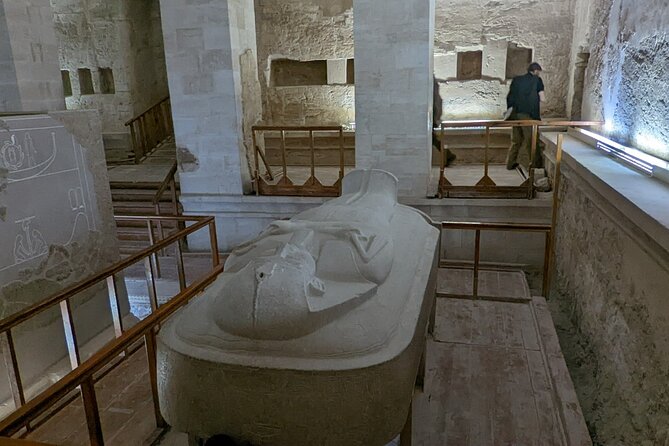
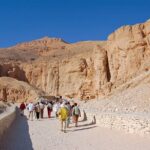
The day starts at the Valley of the Kings, where the West Bank does its loudest work: funerary architecture and royal tombs. Your time here is listed at about 1 hour 30 minutes, and the emphasis is on seeing preserved tombs tied to the New Kingdom era.
The tour specifically highlights tombs associated with major rulers and figures, including Ramses II, Sety I, and the story connection to Tut Ankh Amon. Even if you’ve heard these names before, the Valley feels different in person because you’re looking at burial design, not just statues.
Practical note: you’ll need to buy your entrance ticket separately, since admissions are not included. Also, with tombs, it can feel slightly more rushed if you try to read everything on site. Instead, let your Egyptologist guide point you to what to look for first—often it’s the scenes, arrangement, and what the wall imagery is communicating about kingship and the afterlife.
This is also one of those stops where timing and heat matter. Even with a guided plan, you’ll want comfortable shoes and a light layer if you tend to feel chilly in vehicles but hot outside.
Temple of Hatshepsut: “Holy of Holies” Mortuary Temple on Three Levels
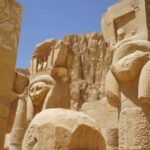
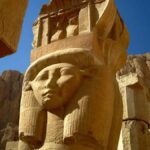
Next comes the Temple of Hatshepsut, described as the Mortuary Temple of Queen Hatshepsut, often called the Holy of Holies. You’ll spend about 1 hour here, and it’s an architectural standout for a reason: the temple is built with three levels connected by ramps, and the walls carry major narrative scenes.
This stop is where the tour shines for anyone who likes their history explained in plain terms. The itinerary focuses on scenes showing Hatshepsut’s divine birth and her commercial expedition to Punt Land. It’s not just a pretty facade—it’s propaganda, religion, and world-building in stone. You also get the worship angle: it’s dedicated to the supreme god Amon-Ra.
One practical consideration: the layout means some walking across temple areas and moving between levels/ramps. It’s not described as a strenuous climb, but it does call for moderate physical fitness. If you know you get tired quickly on uneven paths, tell your guide early so they can help pace you.
Also, since admission tickets are not included, add that cost to your day plan. And do yourself a favor: don’t treat it like a quick photo stop. The temple’s storytelling is the whole point.
Colossi of Memnon: A Fast, Free Photo Moment
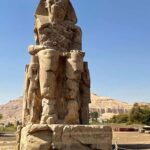
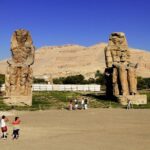
Then you get a breather at the Colossi of Memnon: two gigantic seated statues associated with King Amenhotep III. This stop is short—about 15 minutes—and it’s one of the easier entries into the day’s rhythm.
What I like about this stop is the simplicity. You don’t need a long attention span to appreciate the scale. They represent Amenhotep III in a seating position, and the tour notes them with the idea of accompanying figures, including his mother and wife.
Admissions are listed as free here, which makes it a nice bonus. In a day where several big sites require tickets, it’s a good moment to reset your energy before the remaining East Bank temples.


Luxor Temple: Where Ancient Festivals Meet Later Religious Layers
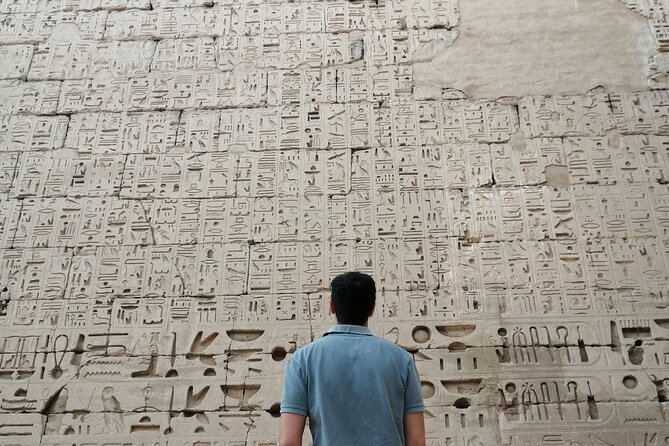
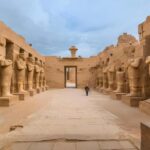
Luxor Temple is a classic way to feel what it’s like when ancient Egyptian sacred space keeps getting reused. You’ll spend about 1 hour here.
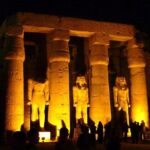
The tour describes how festival scenes are carved on the walls, with references to ancient celebrations inside the temple. You’ll also get a clear building timeline: the inner portion is credited to Amenhotep III, and the outer part to Ramses II. That split matters, because it helps you read the temple as a living project rather than one single moment of construction.
Here’s one detail that makes Luxor Temple more than a straightforward stop. After entering, you’ll find the mosque called Abu Al-Haggag, built on the ruins of a church that existed on temple grounds. Then, behind the temple, there are chapels linked to Amenhotep III and Alexander the Great.
Even if you’re not a structural history nerd, this layered story gives context for why Luxor’s ruins don’t always look like what you expect. People have kept using the sacred geography for centuries.
Admissions aren’t included at this stop either, so factor in the ticket cost. Also, depending on the time of day, you might enjoy this more if you slow down and let the different layers sink in.
Karnak Temple Complex: The Open-Air Worship Machine
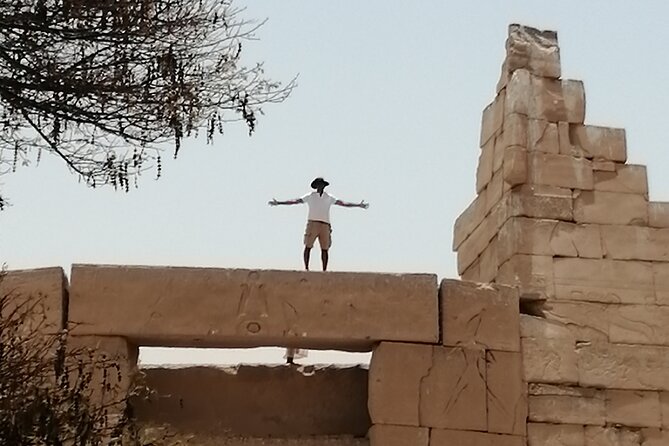
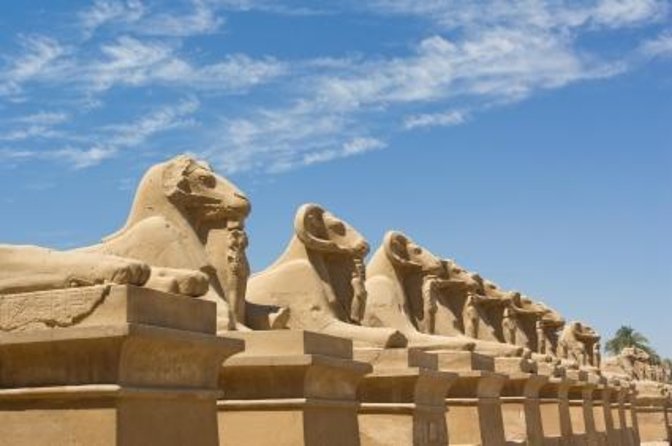
Karnak is massive, and the tour gives you about 1 hour 30 minutes here. It’s described as a vast open-air museum and the second largest ancient religious site in the world. That’s not just trivia. It explains why Karnak can overwhelm you if you arrive without a plan.
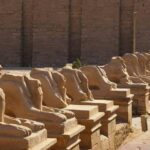
You’ll be shown the major idea behind it: the complex is tied to worship of the Theban triad—Gods Amon, Mut, and their son Khunso. The tour also notes how construction began during the reign of Senusret I in the Middle Kingdom and continued into the Ptolemaic Period. So Karnak isn’t one temple; it’s centuries of additions and reinterpretations.
This is the kind of site where an Egyptologist guide really pays off. Without context, you’re bouncing between pylons, obelisks, and halls and wondering what the hierarchy is. With a guide, you learn what to treat as the main threads—why the complex grows the way it does and how the religious focus shaped what got built.
Tickets aren’t included, so budget for admission. Also, because this is open-air, you’ll want sun protection. Hydration helps you stay sharp for the explanations, not just the photos.
How the Egyptologist Guide Makes the Sites Click
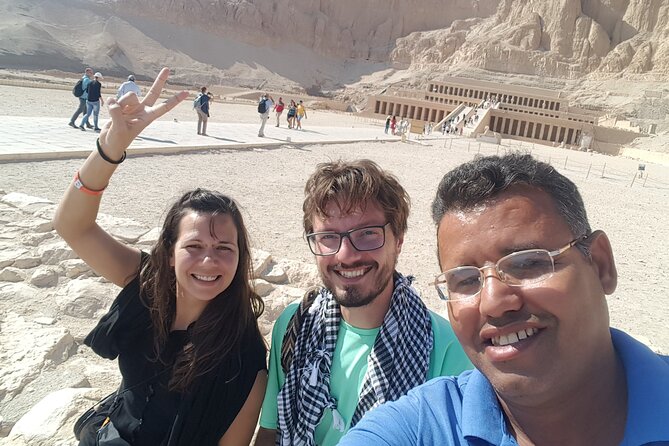
The standout in the feedback is the guide quality, and it’s not vague praise—it’s about personalization. One guide name that comes through is Ali, and the feedback highlights that he offered very personalized service. In at least one case, the guide even helped with pickup from the airport to make better use of the day and time.
That matches what an Egyptologist guide should do: adjust the pace to your questions and your interests. If you care about royal tomb stories, the guide will help you connect symbols to rulers and explain what’s likely most important to look for. If you prefer religious architecture, the guide can shift your focus at Hatshepsut, Luxor Temple, and Karnak so it all feels connected.
Even the short stops benefit. A quick stop like the Colossi of Memnon can become a meaningful snapshot when you understand who they represent and why they were placed there.
Practical Tips for a 6–9 Hour Day That Stays Comfortable
This tour runs about 6 to 9 hours, and that range usually reflects the real-world mix of travel time, site time, and ticket access. I recommend planning your day with a calm start and minimal additional activities afterward.
A few practical moves that will help:
- Wear comfortable shoes for walking on uneven ancient surfaces.
- Bring sun protection (hat, sunscreen). Some parts are open-air.
- Carry water. Meals aren’t included, so you’ll want to manage hunger during the day.
- Expect that some locations involve ramps or steps, especially at multi-level sites like Hatshepsut.
The tour’s air-conditioned vehicle is a major plus for the in-between stretches. It’s also where you’ll get the most benefit from the guide. If you want context, ask questions while you’re moving—then the explanations match what you see immediately after.
If you’re arriving on the same day as your tour, ask about optimizing pickup timing. The feedback includes an example where a guide helped with airport pickup to reduce wasted time. Even if your plan is different, it’s worth raising early.
Who This Tour Suits Best (and Who Might Want Something Different)
This tour is ideal for you if:
- You want a first-timer-friendly route that covers major Luxor East and West Bank icons in one day.
- You value explanations and want an Egyptologist guide to steer your attention.
- You like the convenience of pickup from your hotel or Nile cruise plus private transport.
- You’re traveling with a group that wants flexibility without joining a big shared bus.
It might feel less ideal if:
- You hate paying for separate entrance tickets.
- You prefer a slower, unhurried pace with long museum-style time (this is a full day, but it’s not designed as an all-afternoon wander).
- You’re very sensitive to moderate walking and changes in elevation.
That “moderate physical fitness” note is real. You don’t need to be an athlete, but you should be comfortable enough for a full circuit.
Should You Book This West Bank and East Bank Tour?
If you want one efficient Luxor day that connects the story of royal tombs and temple worship, I’d book it. The combination of private Egyptologist guidance, air-conditioned private transport, and a route built around the big West Bank and East Bank anchors is the core value here.
Just go in with the right expectations: entrance fees are separate, and the day will be long enough that comfort and snacks matter. If you handle that part, you’ll end up with a day that feels coherent—less like a checklist, more like a guided tour through how Luxor was meant to be experienced.
FAQ
What’s included in the tour price?
The tour includes an Egyptologist guide, an air-conditioned private vehicle, tourism police permission, and tax. Entrance fees are not included, and meals or beverages aren’t included either.
Are entrance tickets included for the Valley of the Kings, Hatshepsut, Luxor Temple, and Karnak?
No. Admission tickets are listed as not included for those stops. The Colossi of Memnon is listed as free.
How long is the tour?
The duration is about 6 to 9 hours.
Do they pick you up from your hotel or Nile cruise?
Yes. Pickup is offered, and the tour description notes pickup from your hotel or Nile Cruise.
Is this a private tour or a shared group?
It’s a private tour/activity. Only your group will participate.
What’s the cancellation policy?
You can cancel for a full refund up to 24 hours in advance. The experience also requires good weather, and if it’s canceled due to poor weather, you’ll be offered a different date or a full refund.