REVIEW · LUXOR
Full Day Tour to East and West Banks of Luxor
Book on Viator →Operated by Access Egypt travel · Bookable on Viator
Ancient Egypt, packed into one focused day. This private East- and West-Bank route strings together the West Bank’s Valley of the Kings with the East Bank’s Karnak Temple, while admissions and key timing are handled for you. I especially love how the day is built around the objects you came to see: painted royal tombs, major temple spaces, and the big monuments that still feel monumental even after all these years. One consideration: it’s a long 7 to 10 hours, and the day starts early, so plan on a steady pace.
The included lunch by the Nile helps you keep your energy up between sites, and the small extras (snacks, water, and access to clean bathrooms) make the whole day feel easier. Since it’s private, you’re not squeezed into a cattle schedule; you can move at the rhythm your guide sets and ask questions without feeling cut off.
If you’re booking with moderate physical fitness, you’ll be fine—just remember you’ll do lots of walking through historic sites and spend time in sun. Pickup is offered, so you can drop the stress of figuring out transport and focus on the monuments.
In This Review
- Quick hits you’ll care about
- Why this East-and-West Banks route makes sense
- Valley of the Kings: how 3 tombs can feel like a full story
- Hatshepsut at Deir el Bahari: stone storytelling you can’t ignore
- Colossi of Memnon: big scale, quick stop, good photos
- Karnak Temples: where you feel the weight of 2000 years
- Sphinx Avenue and lunch by the Nile: keep your energy steady
- Luxor Temple and Ramesses II: granite statues and a final big impression
- Price and value: why $125 feels fair for what’s included
- Timing, comfort, and who this day suits best
- Should you book this Luxor full-day tour?
- FAQ
- How long is the full day tour?
- Is pickup offered?
- What time does the tour start?
- Is this a private tour?
- What does the tour include for food and drinks?
- Are admission tickets included?
- How many tombs do you visit in the Valley of the Kings?
- What should my physical level be?
- What happens if poor weather cancels the tour?
- What is the cancellation policy?
Quick hits you’ll care about
- 3 (or more) Valley of the Kings tombs so you’re not just seeing the gate and leaving
- Hatshepsut’s Deir el Bahari temple and the story of Senmut, her architect and lover
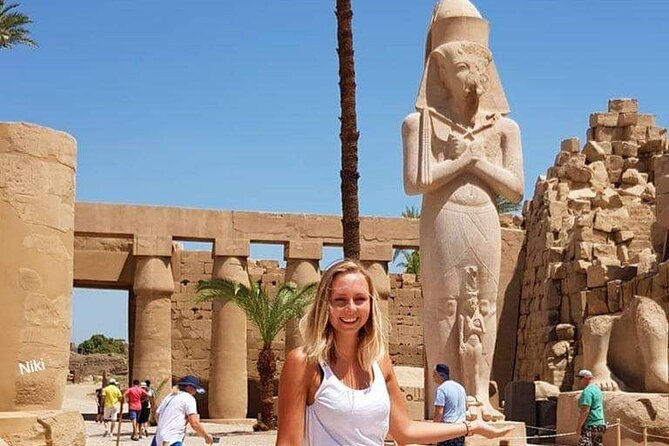
- Karnak’s hypostyle hall with 134 columns, plus obelisks, gates, statues, and the sacred lake
- Sphinx Avenue (about 2 miles) as the link between Karnak and Luxor temples
- Admission tickets included at every major stop, plus lunch, snacks, and bottled water
Why this East-and-West Banks route makes sense

Luxor is split by the Nile into two worlds: the West Bank’s royal burial sites and the East Bank’s temple power centers. This day tour is effective because it doesn’t treat them as separate trips—it builds a logical flow from tombs to temples. That means you spend less time thinking about logistics and more time looking at carvings and paintings.
You’ll also notice the pacing is designed around attention. Sites like the Valley of the Kings and Karnak are famous for a reason, but they can also blur together if you’re rushed. A guide like John (from Access Egypt travel) is praised for organizing the day so you feel safe and not hurried, with answers given in clear English when you want them.
A few more Luxor tours and experiences worth a look
Valley of the Kings: how 3 tombs can feel like a full story
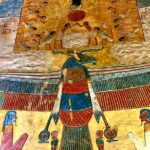
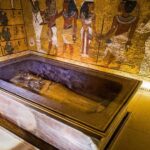
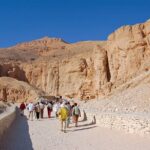
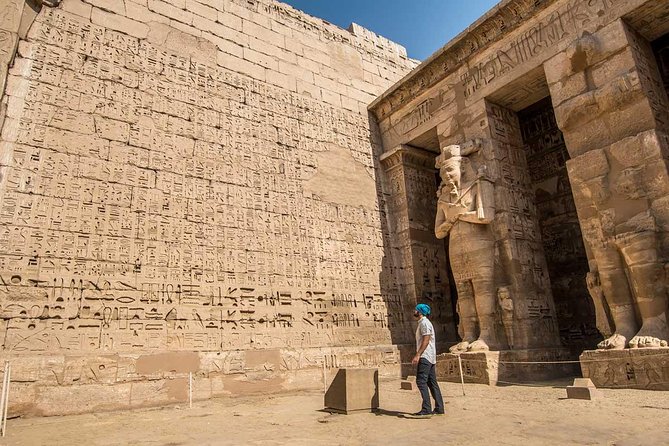
Your morning centers on the Valley of the Kings, the royal burial ground used for the New Kingdom pharaohs beginning around 1500 B.C. Here’s the big reason this stop matters: you get to see tombs that still carry vivid color after roughly 3500 years. It’s not just ruins; it’s art meant for the afterlife, painted for centuries that followed and then hidden by mountains for a long time.
You visit 3 tombs, with the option of more upon request. That small detail changes the whole experience. Three tombs is enough to compare styles and themes, but not so many that you’re exhausted before you reach the temples. If you’re the type who likes to linger on details, ask about adding more tombs early in the day so the timing stays comfortable.
The tour stop is allotted about 2 hours, which is useful because tombs take time to understand. Even without heavy “lecture mode,” you’ll be able to learn what you’re looking at—why these kings were buried here, and why the valley was treated like a secret route into the next world.
Practical note: tomb interiors can feel cooler than outside, but they’re still part of a full outdoor day. Wear comfortable shoes and keep your schedule calm—this is a morning where you want to be awake enough to notice color and pattern.
Hatshepsut at Deir el Bahari: stone storytelling you can’t ignore
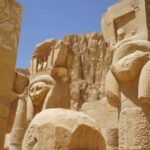
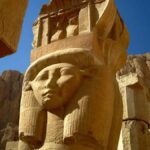
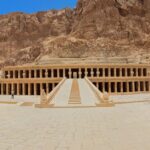
After the valley, you head to Deir el Bahari for the Temple of Hatshepsut—one of Luxor’s standout architectural achievements on the West Bank. Hatshepsut matters because she wasn’t just another ruler; she’s a rare case where you can track her story through the temple’s surviving scenes.
What I like about this stop is that it connects design with drama. The tour talks about her place in Egyptian history and how attempts were made to wipe her out—then shows how her presence persisted. You also learn about Senmut, described here as her architect and lover, which adds a human thread to the stonework.
A highlight on the walls involves her famed commercial expedition through the Red Sea to Somalia. That’s not the usual “only war and kings” version of ancient Egypt. It broadens what you think a temple could represent: power, legitimacy, and trade all stacked into one site.
Time-wise, you’ll spend about 1 hour 30 minutes here. That’s a good amount for a guided view. You get a clear path through the story without feeling like you’re racing the shadows.
Colossi of Memnon: big scale, quick stop, good photos

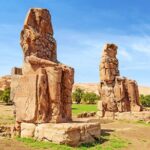
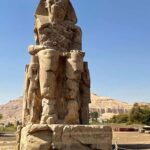
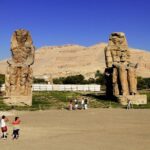
Next up are the Colossi of Memnon, two giant statues exceeding 60 ft (18m). They once flanked the entrance of a major temple built by King Amonhotep III, but earthquakes and flooding destroyed much of the original structure. What survives gives you something surprisingly powerful: scale without clutter.
This stop is short—about 10 minutes—but it’s worth treating as a breather. The statues sit at the foot of the West Bank hills, so your photos aren’t just monuments against sky; they’re monuments against the mountain setting too. You can stand back, frame both statues together, and use that quick pause to reset before Karnak.
One consideration: because the visit is brief, you’ll want to decide quickly what shots you want. If you’re a slow-motion photographer, bring patience—this is the kind of stop where the tour gives you the essentials and moves on.
Karnak Temples: where you feel the weight of 2000 years

Karnak is the emotional center for a lot of people, and this tour treats it with respect. You’ll spend about 1 hour 30 minutes at the Temple of Karnak, described here as the largest monumental complex and built over roughly 2000 years by many pharaohs.
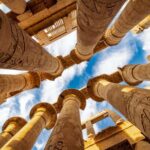
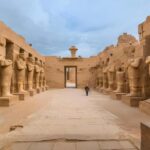
What makes Karnak so compelling is that it’s not one “thing.” It’s a whole temple universe: giant gates, columns, statues, obelisks, and key architectural spaces. In this visit you’ll see the hypostyle hall with 134 columns, noted as still in good state of preservation, plus the sacred lake.
You’ll also get the religious thread tied in. The tour explains that Karnak was dedicated to many gods, including Amun, who was the main god during the New Kingdom period. That matters because it changes how you read the shapes. You start looking at what’s there with a purpose in mind, not just random stones arranged in impressive rows.
A balanced tip: Karnak can feel overwhelming if you’ve seen it for the first time without context. That’s why a strong guide style helps. John is repeatedly praised for being calm, organized, and able to explain ancient Egypt in clear English—exactly what you need so the scale doesn’t just impress you, it also makes sense.


Sphinx Avenue and lunch by the Nile: keep your energy steady
Between temples, the tour includes an open buffet lunch at a restaurant by the Nile, plus chips and cookies and bottled water throughout the excursions. These “small” inclusions make a real difference in Luxor, where your day can turn into a long series of sun, walking, and waiting if you don’t manage energy.
Also, there’s a practical comfort factor: the tour notes clean bathroom access during all excursions. That sounds basic, but on temple-heavy days it’s the kind of detail that keeps your mood from dropping.
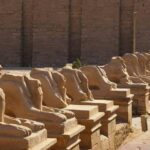
After lunch, you’ll focus on the connection between the major temple complexes. The walk features Sphinx Avenue, described as a 2-mile long route linking Karnak and Luxor temples. It has been recently excavated, and the tour frames it as part of a future plan to turn Luxor into a larger open air museum. That means you’re not just walking a path—you’re walking a recovered link in the ancient ceremonial layout.
Luxor Temple and Ramesses II: granite statues and a final big impression
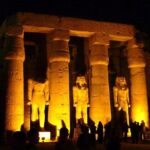
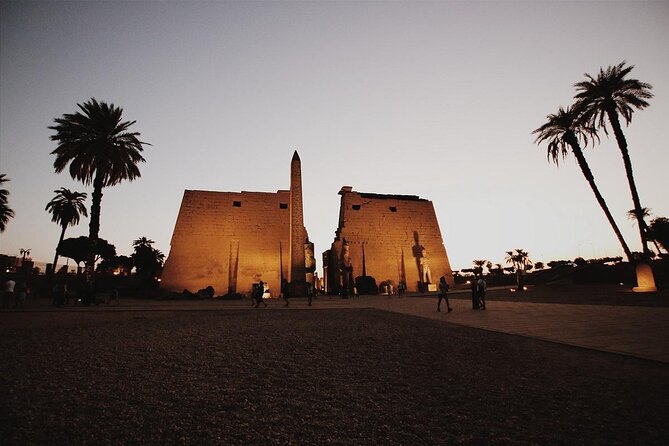
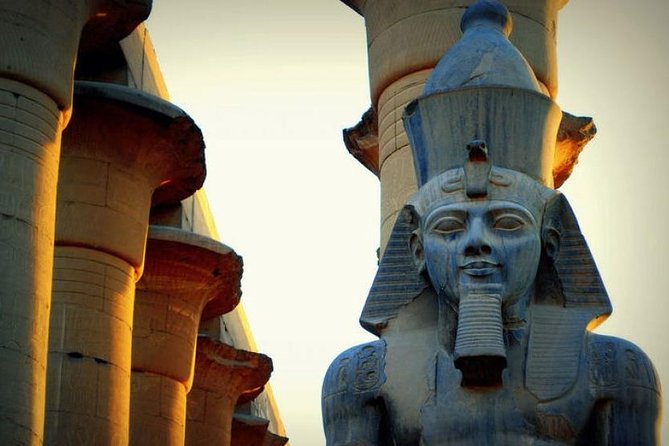
You end at Luxor Temple on the East Bank. This stop is built around what you came to see: the New Kingdom royal space, including major additions by later kings. The tour explains that the temple was originally built during the New Kingdom by King Amonhotep III, and that Ramesses II (Ramesses the Great) added a large addition.
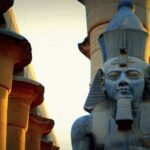
One specific highlight: you’ll see the granite statues of Ramesses II. This is the kind of detail that helps the day land with a clear visual story. You’ve spent hours with tomb art and massive temple architecture; then you finish with a focused concentration of royal power imagery.
You’ll also enjoy the famous Sphinx Avenue walk as part of reaching Luxor Temple from the Karnak side. That’s an important emotional beat. Karnak alone can feel like an ancient city within stone; walking the Avenue helps you feel how the complexes relate to each other in the broader plan.
The time here is about 1 hour, which is enough to see what matters without dragging you into museum-fatigue.
Price and value: why $125 feels fair for what’s included
At $125 per person, the value mostly comes from two things: admissions and time-saving organization.
Admissions are included for all major stops mentioned in the schedule (Valley of the Kings, Hatshepsut’s Temple, Colossi of Memnon, Karnak Temples, and Luxor Temple). You’re also getting more than just site tickets—you’re getting a guided route that reduces guesswork, plus a private setup where you’re not trying to match the speed of a mixed crowd.
Then there’s the “hidden” value: pickup offered, bottled water, snacks, lunch, and clean bathroom access. On a full day like this, those details prevent your day from unraveling into small frustrations. That’s where your money quietly turns into convenience.
Finally, the tour is described as private, meaning your group is the only group participating. In practical terms, that often translates to fewer bottlenecks at entrances and more room to ask questions, especially in places where the architecture is dense and the details matter.
If you’re comparing with cheaper options, the question isn’t just price—it’s whether those options include admissions and guide time at each major monument. Here, the structure is built to deliver the full Luxor highlights without forcing you to do extra planning.
Timing, comfort, and who this day suits best
This tour runs about 7 to 10 hours, and it’s tied to a morning start window (listed as 5:30 AM to 9:30 AM in the schedule). That early start is common for Egypt temple days, but it’s also the reason you can see a lot without feeling like you’re sprinting.
The tour is marked for moderate physical fitness, which I’d interpret as: you’ll walk around temples and move between sites, so don’t book it if you want a mostly seated day. That said, the tour includes a private guide and a plan with time allowances per stop, so it’s not built as a speedrun.
This is a great fit for:
- First-timers to Luxor who want the big East- and West-Bank highlights in one go
- People who like their history explained clearly and in a calm pace
- Families or small groups who benefit from a private guide and flexibility (with the option to request more than 3 tombs)
Should you book this Luxor full-day tour?
Yes, if you want a well-paced Luxor day that hits the headline sites without making you juggle tickets, routes, and timing. The biggest reason I’d book it is the combination of admissions included plus a private guide who can make the monuments feel understandable, not just impressive.
Skip it only if you’re sensitive to long days, early starts, or you want a totally unstructured experience with lots of wandering on your own. Otherwise, this route gives you a smart Luxor overview with enough depth to make the West Bank tombs and East Bank temples feel connected.
FAQ
How long is the full day tour?
The tour lasts about 7 to 10 hours (approx.).
Is pickup offered?
Yes, pickup is offered.
What time does the tour start?
The listed start window is 5:30 AM to 9:30 AM.
Is this a private tour?
Yes. It’s a private tour/activity, and only your group participates.
What does the tour include for food and drinks?
Lunch is included as an open buffet restaurant by the River Nile. Snacks (chips and cookies) and bottled water are also included during the excursions.
Are admission tickets included?
Yes. Admission tickets are included for the Valley of the Kings, Temple of Hatshepsut, Colossi of Memnon, Temple of Karnak, and Luxor Temple.
How many tombs do you visit in the Valley of the Kings?
You enjoy seeing 3 tombs, and it may be possible to visit even more upon request.
What should my physical level be?
The tour notes a moderate physical fitness level.
What happens if poor weather cancels the tour?
The tour requires good weather. If it’s canceled due to poor weather, you’ll be offered a different date or a full refund.
What is the cancellation policy?
Free cancellation is available. You can cancel up to 24 hours in advance for a full refund. If you cancel less than 24 hours before the start time, the amount paid will not be refunded.