REVIEW · LUXOR
Full Day Tour of the West and East Banks of Luxor
Book on Viator →Operated by Visit Luxor Egypt · Bookable on Viator
Four temples. One smooth day.
This West and East Banks Luxor tour is interesting because it strings together the best-known sites in a single 7.5-hour block, with an Egyptologist guide and air-conditioned transport. I especially like the East Bank to West Bank flow, because you can see how Luxor’s story shifts from temples to tombs. A small consideration: the entrance fees aren’t included, so you’ll want to budget for tickets at each stop.
What I liked most is how the guide experience seems to be the heart of the day. The pace can feel easy, the explanations land clearly, and the tour includes help with photos at key points. I also appreciate the practical setup: hotel pickup/drop-off, bottled water, and a clean vehicle that keeps the day comfortable, especially in warm months.
The main drawback to keep in mind is time and add-on cost. You’ll be moving between sites for a full day, and each major attraction has its own ticket you pay on-site. If you prefer spending long stretches inside museums or sitting with no schedule pressure, you might want a slower, site-by-site plan instead.
In This Review
- Key Things I’d Bet on With This Luxor Tour
- Why This East-and-West Luxor Day Works
- Luxor Temple: Start With Amun-Ra and Real Temple Energy
- Karnak Temple: The Largest Religious Complex Gets Real
- Nile Crossing + Valley of the Kings: Tomb Visits With A Real Sense of Purpose
- Deir el-Bahari and Hatshepsut’s Temple: The Cliffside Masterpiece
- Price and Value: What You Pay, What You Don’t
- Guide Style, Photo Help, and How Comfort Shows Up in Real Life
- Who This Tour Is Best For (And When to Choose Something Else)
- Bottom Line: Should You Book This West and East Banks Luxor Tour?
- FAQ
- How long is the Full Day Tour of the West and East Banks of Luxor?
- Is the entrance fee included in the tour price?
- What’s included in the tour?
- Will I be picked up from my hotel?
- Is this tour private?
- Can I cancel for a full refund?
Key Things I’d Bet on With This Luxor Tour
- East-and-West timing that makes sense: Temples first, then the Valley of the Kings and Deir el-Bahari.
- Hotel pickup and drop-off: Fewer logistics headaches, more time for the monuments.
- A professional Egyptologist guide: The day gets better when you understand what you’re seeing.
- A/C comfort plus bottled water: Great value during long driving gaps between stops.
- Scenic Nile River crossing: It’s not just transport; it’s part of the route.
- Clean, relaxed pacing: Reported as family-friendly and smooth, not rushed.
Why This East-and-West Luxor Day Works
Luxor can be a lot. Streets are busy, the heat can be real, and distances between sites add up. This tour’s big advantage is the structure. You get a planned route that covers the main headline monuments on both banks, so you don’t spend your day figuring out what’s closest, what’s open, and how to get there.
You also get the guide factor, which matters here. These places aren’t just impressive stone. Without a guide, it’s easy to admire carvings and walk out still wondering what everything means. With an Egyptologist on board, you can connect the dots between Amun-Ra worship on the East Bank and the royal afterlife focus on the West Bank.
Finally, it’s private, meaning it’s just your group. That tends to make everything calmer, especially if you have kids, or if your schedule is tight. The day is still packed, but it feels organized rather than frantic.
A few more Luxor tours and experiences worth a look
Luxor Temple: Start With Amun-Ra and Real Temple Energy
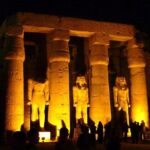
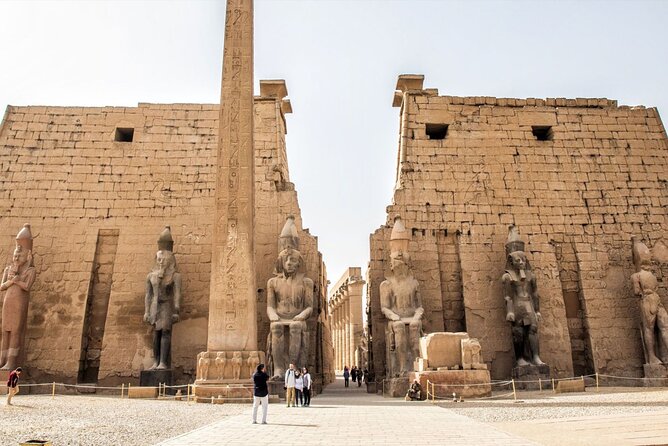
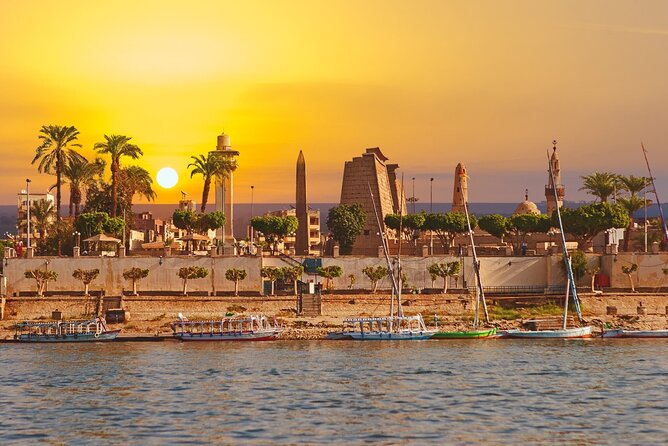
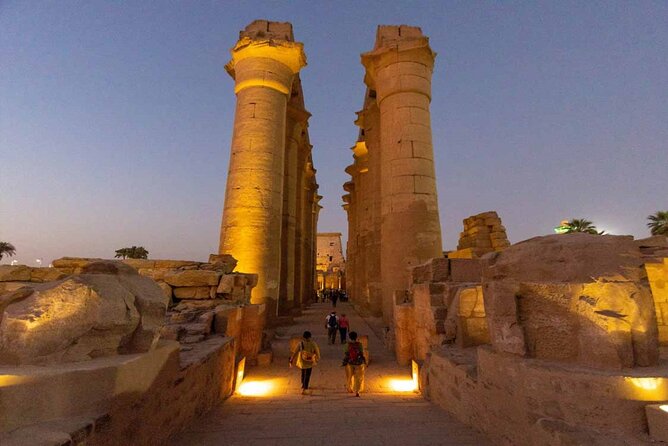
The tour kicks off at the Temple of Luxor, where you start your day inside the sacred geography of ancient Thebes. Even when you’re not a history nerd, this stop grabs your attention quickly. The scale, the layout, and the carved surfaces work together in a way that makes the temple feel more like a story than a pile of ruins.
This is also a smart first stop. You get a solid introduction before the more intense West Bank sites. The timing allows you to see the temple’s details without being completely exhausted later in the day.
One practical note: the Luxor Temple entrance fee is not included (about $10). You’ll want to carry some cash for tickets, or be ready to pay at the site if that’s how your tour operates. If you like photographing architecture, early timing helps, because later you can get busier and hotter.
Karnak Temple: The Largest Religious Complex Gets Real
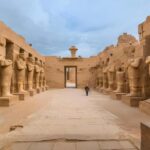
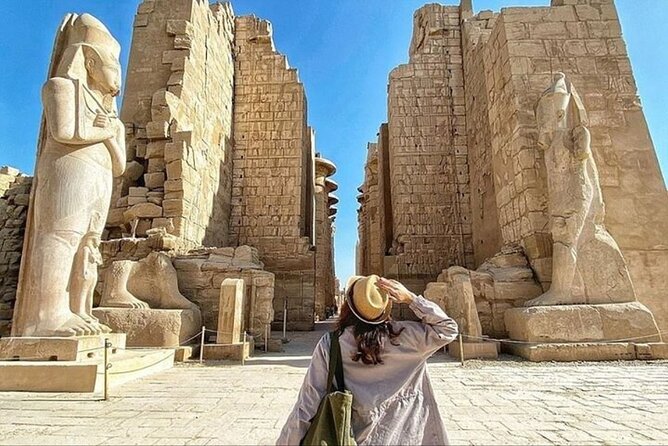
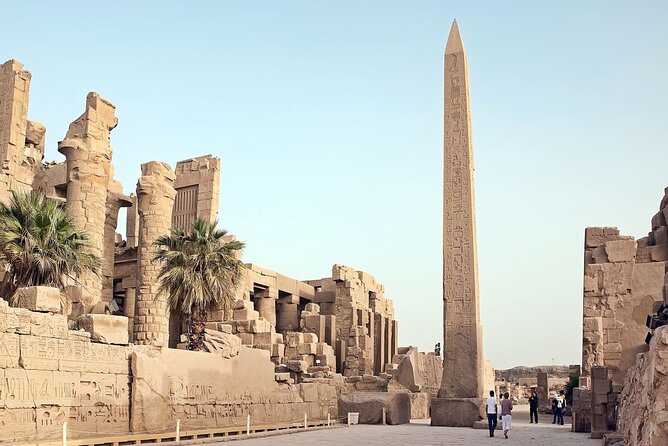
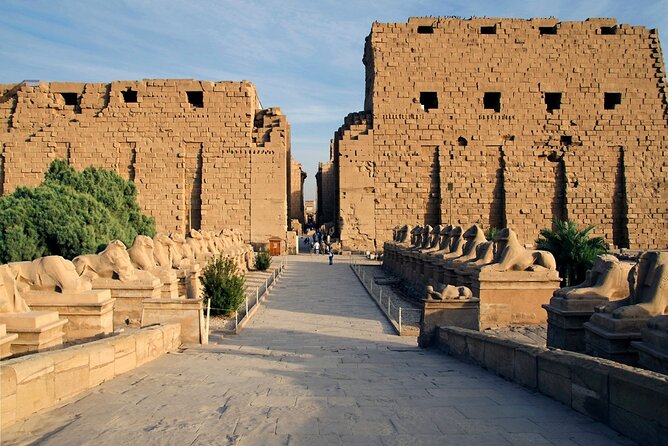
Next comes Karnak Temple, famous as the largest religious complex ever built. This is where people often say wow, and then you realize wow isn’t enough. Karnak is a place where you can feel the layers: different halls, towering columns, and sacred water features that were part of temple rituals.
The key here is mindset. Don’t try to “see everything.” Instead, let the guide point out what to look for, and choose a few areas to focus on. You’ll get more out of it than trying to sprint from one corner to another.
Karnak is also time-friendly in a good way. The tour allocates about 2 hours, which is enough to wander thoughtfully and still move on before the rest of the day stacks up. Like Luxor Temple, the Karnak entrance fee is not included (about $10). If you’re comparing tours, this matters for your total budget.
Nile Crossing + Valley of the Kings: Tomb Visits With A Real Sense of Purpose
After Karnak, you cross the Nile River to the West Bank. The crossing is scenic, and it’s a nice change of pace. It breaks the day visually, and it mentally cues you that you’re about to switch from temple worship to royal burial traditions.
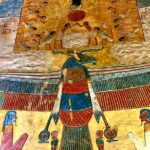
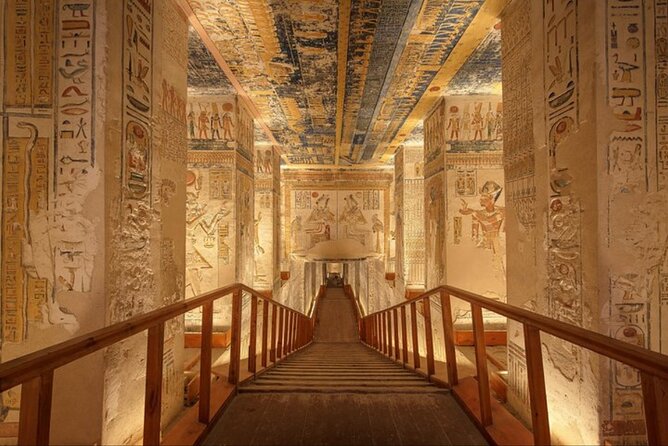
Then you hit the Valley of the Kings, where pharaohs were laid to rest. This stop is one of the most emotionally powerful on the route, because tombs compress drama into architecture. You’re not looking at one monument. You’re entering a landscape built around the idea of an afterlife journey.
Your tour time here is about 2 hours, including visiting tombs. The tour doesn’t list specific tomb names, so plan to go with what’s available and what your guide recommends on the day. The entrance fee is again not included (about $10), so keep budgeting that way.
Two practical tips for this part:
- Wear shoes you can walk in comfortably. Ground can be uneven around tomb areas.
- If you’re sensitive to low light, you might want to move slowly and let your eyes adjust.
Even with all the famous names in the Valley of the Kings, what really makes it click is having someone explain the logic behind what’s carved where and why.
Deir el-Bahari and Hatshepsut’s Temple: The Cliffside Masterpiece
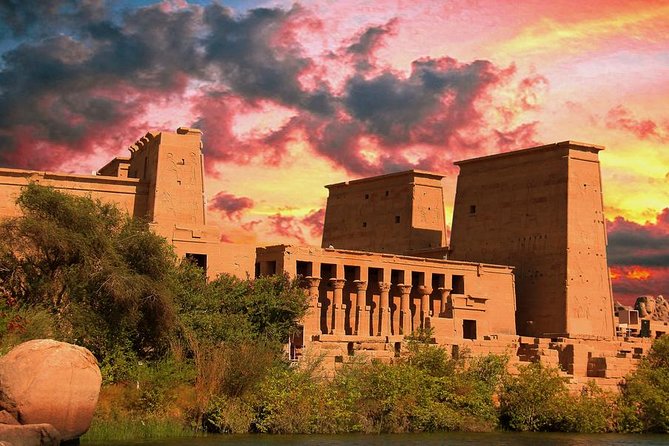
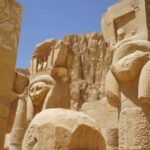
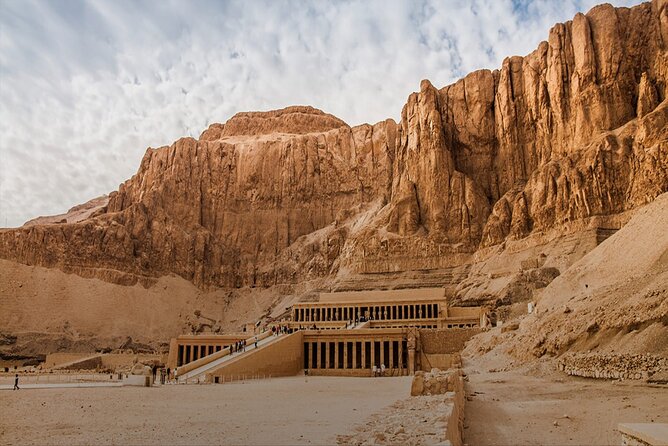
The last major site is the Temple of Queen Hatshepsut at Deir el-Bahari. This is the stop people remember later, even if you can’t recall every detail. The temple’s cliffside setting creates a natural framing effect, and the structure is so distinctive it feels like it was designed to be seen from multiple angles.
Your visit is scheduled for about 2 hours, which works well. You’re not just walking through; you have time to notice the design choices and how the temple connects to the hillside. It’s also a good endpoint for the West Bank story arc: after tombs, you shift to monumental architecture tied to royal power and legacy.
As with the other major stops, the entrance fee isn’t included (about $10). This means your day’s ticket cost can add up quickly if you’re traveling with a group. If you’re budget-conscious, I’d do the math early rather than assume the $69.34 covers everything at the gates.


Price and Value: What You Pay, What You Don’t
The tour price is $69.34 per person and includes a lot of the heavy lifting. You get:
- Hotel pickup and drop-off
- All transportation in an air-conditioned vehicle
- A meet-and-greet setup
- A professional Egyptologist guide
- Bottled water
- Taxes and service charges
- A mobile ticket
What’s not included are the entrance fees at each site, listed as approximately $10 each for Luxor Temple, Karnak Temple, Valley of the Kings, and Hatshepsut’s Temple. That’s roughly $40 total in entrance fees per person, before tips.
So how does that change the value equation? If you’re willing to pay on-site anyway, you’re mostly buying convenience and expert guidance. If you want fewer add-ons, you may feel the pricing split. Still, for a day that covers four headline monuments with hotel transfers and guide expertise, it’s generally strong value.
One more cost to remember: tips for the guide and driver. The tour doesn’t include this, and in Egypt it’s typical to tip for good service.
Guide Style, Photo Help, and How Comfort Shows Up in Real Life
This itinerary lives or dies on pacing and communication. In the feedback I’ve seen around this kind of tour, the best days have a guide who keeps things organized, answers questions, and doesn’t turn temple time into a lecture marathon.
Here, the emphasis is on a friendly, confident guide and a relaxed rhythm. There are also reports of guides being patient with families and helping with photos at key stops. That matters more than you might think. In Luxor, if you try to manage your own photo timing while walking through crowds and heat, you’ll miss the story.
Vehicle comfort helps too. The tour uses a clean, air-conditioned vehicle and bottled water. That makes a difference between a day you enjoy and a day you just endure. After a couple of hours of walking and sun, you’ll feel grateful for that cool ride back.
The tour is also private, so your group can move at a pace that fits your energy level, instead of being dragged along by a larger group schedule.
Who This Tour Is Best For (And When to Choose Something Else)
I think this tour is a great fit if you:
- Want the classic East Bank + West Bank highlights in one day
- Like learning as you walk, not reading brochures in silence
- Travel with kids (there are mentions of children ages 7 and 10 having a good time)
- Appreciate a guide who keeps the day smooth and organized
It may be less ideal if you:
- Hate paying multiple entrance fees on-site
- Want long, slow museum-style visits at each stop
- Are traveling at a pace that can’t handle 7.5 hours of movement and transitions
If you’re trying to choose between doing fewer sites with more time, or doing the “greatest hits” route, decide based on your travel style. This tour is built for people who want structure.
Bottom Line: Should You Book This West and East Banks Luxor Tour?
If you want a well-timed, guided day that hits Luxor Temple, Karnak, the Valley of the Kings, and Hatshepsut’s Temple, this is an efficient way to see the biggest names without wrestling with logistics. The combo of hotel pickup, A/C transport, bottled water, and an Egyptologist guide adds up to more than just sightseeing.
Just go in with clear expectations: entrances cost extra (about $10 per site), and tips are part of the real-world cost. If that matches your budget, you’ll likely end the day feeling like you understood the temples and the tombs as one connected story.
FAQ
How long is the Full Day Tour of the West and East Banks of Luxor?
The tour runs for approximately 7 hours 30 minutes.
Is the entrance fee included in the tour price?
No. Entrance fees are not included. Luxor Temple, Karnak Temple, Valley of the Kings, and Temple of Hatshepsut are listed as approximately $10 each.
What’s included in the tour?
It includes hotel pickup and drop-off, all transportation in an air-conditioned vehicle, a professional Egyptologist guide, bottled water during the tour, and all taxes and service charges.
Will I be picked up from my hotel?
Yes. The tour includes meet and greet at your hotel with hotel pickup and drop-off.
Is this tour private?
Yes. It’s listed as a private tour/activity, meaning only your group will participate.
Can I cancel for a full refund?
Yes. You can cancel up to 24 hours in advance for a full refund. Canceling less than 24 hours before the start time isn’t refundable.