REVIEW · LUXOR
Full Day Tour :Kings valley &Karnak &Luxor and Hatshepsut Temples
Book on Viator →Operated by Monarch Vacations · Bookable on Viator
Luxor can be a lot. This full-day route is how you see the big hits without wasting time. You start on the West Bank with the Valley of the Kings, then shift to the East Bank for Hatshepsut, Karnak, and Luxor Temple. The mix makes the day feel like Egypt in two moods: royal tombs underground and temples built to impress the gods.
I really like two things about this setup. First, the schedule is built for actual site time: 2 hours in the Valley of the Kings, 1.5 hours at Hatshepsut, and 2 hours at Karnak, not just a quick drive-by. Second, you get an English Egyptologist guide plus the key entry fees bundled in, so you’re not doing the math every time you change locations. In the reviews, guides like Mahmoud and Mo are praised for slowing down, answering questions, and making sure you can take photos without feeling rushed.
One drawback to plan for: it’s a long day in the sun and crowds. Even with bottled water and an air-conditioned vehicle, you’ll still want good sun protection and comfortable shoes, because the walking is real and the line culture at major temples can be unpredictable.
In This Review
- Key Stops, Real-Time Flow: How This Day Works
- Valley of the Kings: Where Pharaohs Got Their Forever
- Hatshepsut at Deir el-Bahari: Why This Pharaoh Still Commands Attention
- Karnak Temple: The Temple Complex That Refused to Stop Growing
- Colossi of Memnon: A Quick Stop With Heavy Stone Attitude
- Luxor Temple: A Temple Still in Use for Centuries
- Price and What You’re Really Paying For
- Getting the Most From the Day: Timing, Comfort, and a Smart Strategy
- Who This Tour Is Best For
- Should You Book This Luxor Full-Day Tour?
- FAQ
- How long is the tour?
- What’s included in the price?
- Do you offer pickup from hotels?
- How many people are in the group?
- Are language options available besides English?
- Is free cancellation available?
Key Stops, Real-Time Flow: How This Day Works
This tour is designed around what Luxor does best: big monuments packed along the Nile that would be hard to coordinate on your own. The route also follows a sensible logic. You begin with royal burial at the Valley of the Kings, then move to one of Egypt’s standout rulers, Hatshepsut, and finish with Karnak and Luxor Temple, where centuries of building and reuse are visible in the stone.
You’ll also feel the rhythm of the day. Some stops are deep and photo-friendly (tombs and temple interiors). Others are quick but striking (the Colossi of Memnon). The total duration runs about 6 to 8 hours, which usually means you’ll be back at your hotel area the same day—useful if you only have one day in Luxor.
Valley of the Kings: Where Pharaohs Got Their Forever
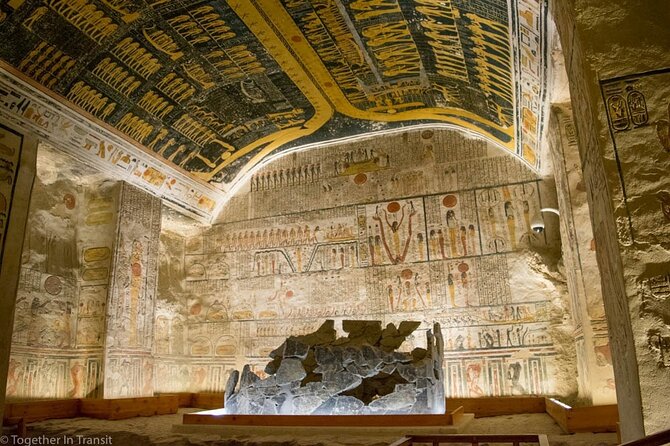
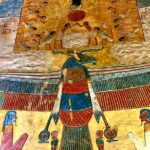
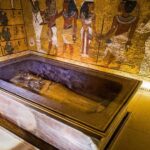
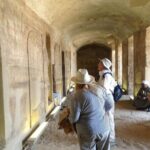
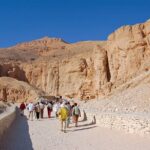
The Valley of the Kings is the classic starting point for a reason. This is the sacred burial ground where richly decorated tombs were prepared for pharaohs such as Tutankhamun and Ramses II. Even if you only know the headlines, the walls inside many tombs have scenes built to explain the afterlife—figures, symbols, and stories laid out like an ancient instruction manual.
You’re given about 2 hours at the site, and that matters. Too-short visits turn into a blur of doorways. With the time here, you can pick your moments, take in the carvings, and still have enough energy left for the rest of the day.
Practical tips: go in with comfortable walking shoes and plan for heat. Also, tombs can feel cooler than outside for brief stretches, so you might want a light layer you can manage easily. And yes, bring your camera plans—this is exactly the place where you’ll want to frame shots before you get tired.
A few more Luxor tours and experiences worth a look
Hatshepsut at Deir el-Bahari: Why This Pharaoh Still Commands Attention
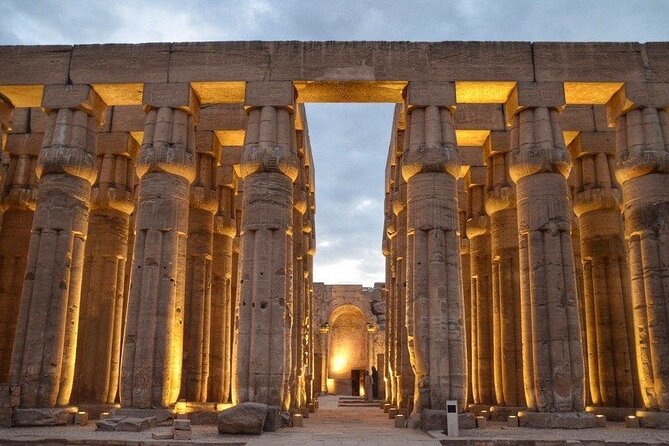
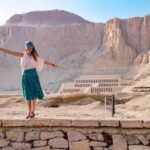
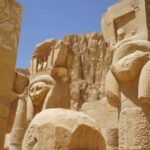
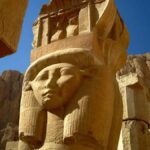
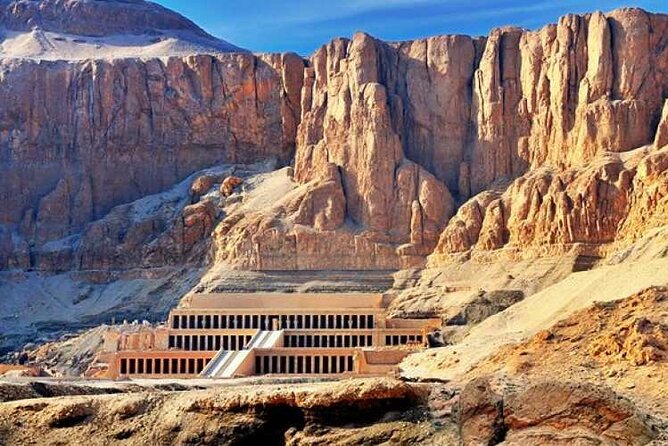
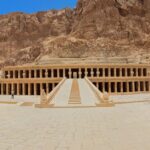
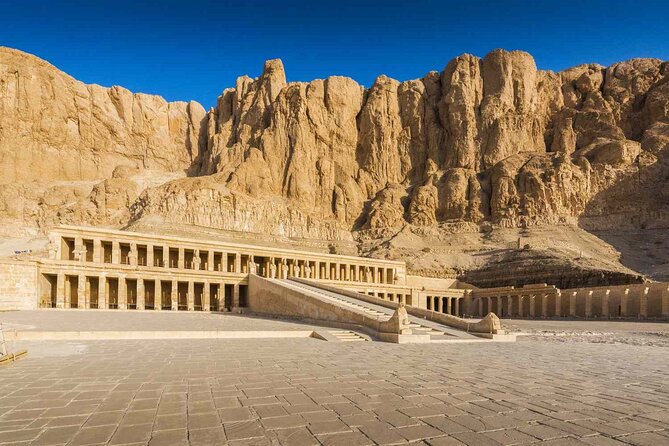
After the tombs, you head to Deir el-Bahari, the Temple of Hatshepsut. This is one of the best-preserved royal temple complexes in Egypt, and it’s easy to see why the site is famous even beyond archaeology circles.
Hatshepsut ruled in the 18th Dynasty and is remembered as one of the few female pharaohs. One detail that really helps visitors understand the place: she often portrayed herself in male royal style—clothing and even a false beard—so her authority landed in a society where male rule was the norm. The temple’s dramatic layout also makes that political message feel physical, not just written.
You’ll get about 1 hour 30 minutes here, and that’s a good amount of time to walk the terraces, look at the monumental setting, and let the story connect. In the same way that the Valley of the Kings is about the afterlife, Hatshepsut’s temple is about power, legitimacy, and a ruler trying to make her reign last.
Karnak Temple: The Temple Complex That Refused to Stop Growing
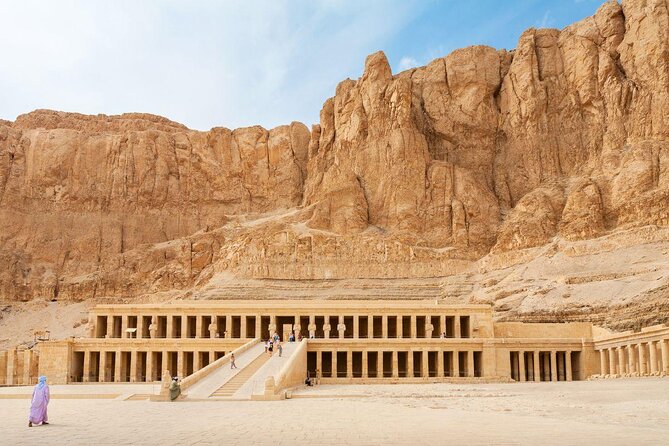
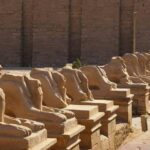
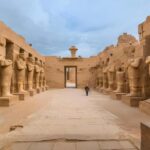
Next comes Karnak Temple, and this is where scale starts to mess with your sense of distance. Karnak is one of the largest religious complexes in ancient Egypt, built and expanded over roughly 2,000 years. It’s dedicated to the Theban triad: Amun-Ra, Mut, and Khonsu.
This temple complex grew with contributions from many pharaohs, which means you’re not looking at one single moment in time. Instead, you’re seeing layers of belief and building style stacked together. The main complex is massive—about 80 hectares—so even with guidance, it helps to have time to choose what to focus on.
You’ll spend about 2 hours at Karnak, which is just about right. It lets you see the major areas and still pause when something catches your eye. In the reviews, guides such as Mahmoud are praised for explaining context and for being patient with questions and photos. That kind of pace is exactly what you want in a place this big.
Colossi of Memnon: A Quick Stop With Heavy Stone Attitude
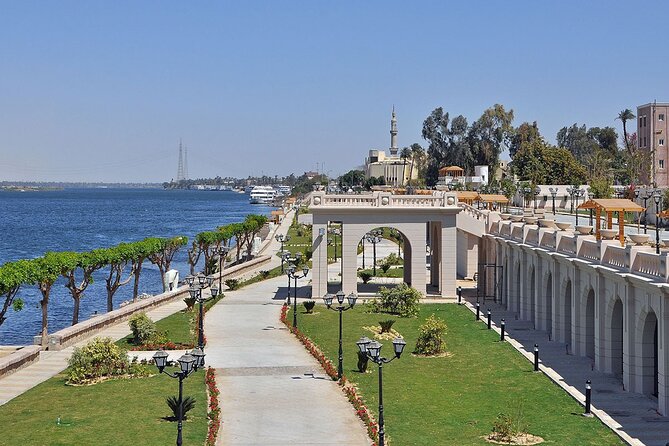
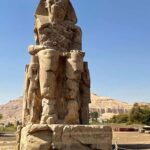
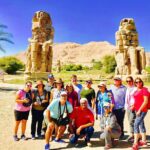
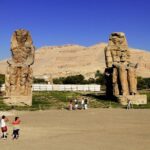
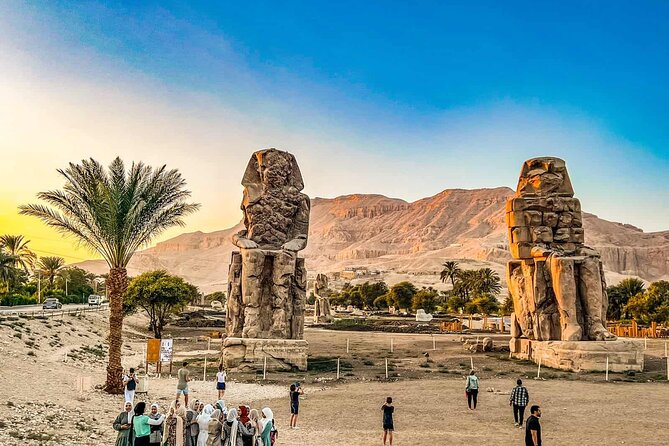
Then you’ll see the Colossi of Memnon, two towering statues that once guarded the entrance to the mortuary temple of Amenhotep III. They’re not a long-stay stop—about 20 minutes—but they’re memorable. You get the impact of massive stone work without needing to spend half your day on one location.
This is also a good breather in the schedule. By the time you reach the Colossi, you’ve already walked a lot of history. Now you get to pause, look at scale, and reset before the final temple stretch.
Luxor Temple: A Temple Still in Use for Centuries
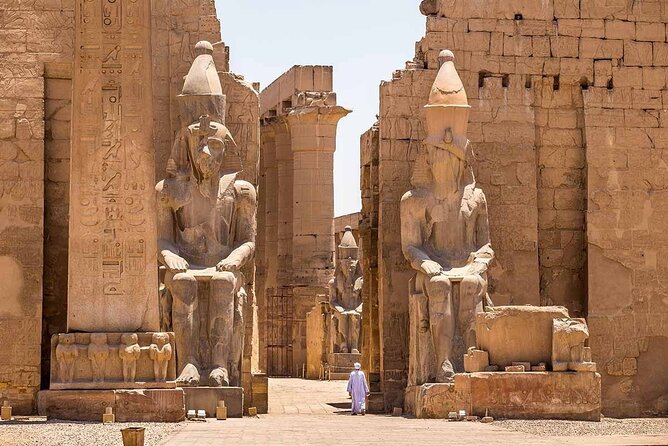
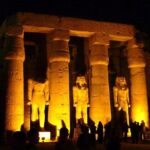
On the East Bank, you’ll visit Luxor Temple, one of the best-preserved temples in Egypt and a standout for its long timeline of use. The site sits in the heart of modern Luxor, and unlike some monuments that feel sealed in time, Luxor Temple was used and modified through multiple eras, including Greek, Roman, Christian, and Islamic periods.
That matters because it changes how you read the stone. You’re not just looking at ancient Egyptian worship; you’re also seeing proof that later cultures continued to work with the space. The temple is about 1 hour in this tour plan, which works well because the setting is dense and you’ll want to keep moving so you don’t miss key views.


Price and What You’re Really Paying For
The advertised price is $18 per person, and it includes a lot of what typically costs extra in Egypt: lunch, bottled water, an air-conditioned vehicle, private transportation, an English Egyptologist guide, and entry fees for the Valley of the Kings, Hatshepsut Temple, Karnak Temple, and Luxor Temple.
That’s where the value shows. When entry fees and core transport are covered, you don’t get hit later with the usual set of add-ons. And when the guide is included, you get explanations that help you move through each site with a framework, not just with a map and hope.
A couple of costs to note: airport pickup is extra ($10), and if you want an added language option (French + Spanish + German), there’s an extra 15 euro. If you’re sharing a small group and you care about pace, private transport is a plus.
Getting the Most From the Day: Timing, Comfort, and a Smart Strategy
This is not a sit-and-chat tour. You’ll be outside in the daylight, walking through monumental spaces, and switching banks by vehicle. Here’s how you make it smoother:
- Wear comfortable shoes you trust on uneven stone and temple paths.
- Bring sun protection even though bottled water is provided.
- Use the guide for picture timing. In the reviews, guides like Mo and Abdul are specifically praised for giving time to explore and take photos without feeling rushed.
- Don’t be shy about asking for small adjustments. Some reviews mention extra stops like a spice market and jewelry shop when interests came up, so if you have a particular curiosity, it’s worth raising early.
Also, your meeting point is at Sofitel Winter Palace Luxor, on Cornish El Nile Street. That’s handy because it’s a central, known location.
Who This Tour Is Best For
This full-day plan works best if you want a tight Luxor hit list in one go. You’ll enjoy it if:
- you’re history-focused but don’t want to manage tickets and logistics on your own
- you like guided context so the sites make sense fast
- you only have a single day (or a limited window) and want both East and West Bank highlights
It may feel like a lot if you prefer long museum-style wandering or you hate crowds. Still, the scheduled time at each site helps keep the day from becoming a constant sprint.
Should You Book This Luxor Full-Day Tour?
I’d book it if you want big Luxor landmarks, guided explanations, and included entry fees without juggling a bunch of separate bookings. The strong point across the feedback is the guide experience—people mention patient, clear explanations and enough time for photos, which is exactly what you need for Karnak and tomb sites.
If you’re the type who needs a very slow pace, or you’re highly sensitive to walking in heat, consider trimming expectations and bringing your comfort gear. But if your goal is to see Valley of the Kings, Hatshepsut, Karnak, Memnon, and Luxor Temple in one organized day, this route makes a lot of sense for the price.
FAQ
How long is the tour?
The tour runs about 6 to 8 hours, with site time including roughly 2 hours at the Valley of the Kings, 1 hour 30 minutes at Hatshepsut, 2 hours at Karnak, and 1 hour at Luxor Temple. The Colossi of Memnon stop is about 20 minutes.
What’s included in the price?
The tour includes lunch, bottled water, air-conditioned vehicle transport, private transportation, an English Egyptologist guide, and entry fees for the Valley of the Kings, Hatshepsut Temple, Karnak Temple, and Luxor Temple.
Do you offer pickup from hotels?
Pickup is offered, but airport pickup is listed as extra. The meeting point is Sofitel Winter Palace Luxor on Cornish El Nile Street.
How many people are in the group?
It’s described as a private tour/activity, so only your group will participate.
Are language options available besides English?
An English Egyptologist guide is included. An additional 15 euro is mentioned if you choose French + Spanish + German.
Is free cancellation available?
Yes, you can cancel for a full refund if you cancel up to 24 hours in advance of the experience’s start time, based on local time.