REVIEW · LUXOR
4 Night Luxury Nile Cruise Egypt With Free Abu simbel
Book on Viator →Operated by Sueño Travel Egipto · Bookable on Viator
Four days of Nile views, no hotel swaps. This is a Luxor-to-Aswan cruise setup that trades constant packing for steady comfort, with guided visits to the big-name Upper Egypt highlights. You get a luxury cruise experience plus the big-ticket day trip people care about, including Abu Simbel.
What I like most is simple: all onboard meals are included, and you’ll travel with an English and Spanish speaking guide each day. The one thing to plan for is that many admission tickets aren’t included, and tips for guides and drivers are also not part of the price.
In This Review
- Key Points to Know Before You Go
- Luxury, But With Real Sights: What This Trip Feels Like
- Price and Value: Is $660 Actually a Good Deal?
- Getting Started in Luxor: Karnak and Luxor Temple
- The Valley of the Kings, Deir el Bahari, and Colossi of Memnon
- Horus at Edfu and the Temple of Kom Ombo: Two Temples, Different Energy
- Abu Simbel at Dawn: The Day Trip That Justifies the Cruise
- Aswan Highlights: Philae Temple and the High Dam
- Comfort on Board: Rooms, Meals, and Time to Rest
- Group Size, Transfers, and Timing: How It Impacts Your Day
- What’s Not Included (And How to Budget Without Stress)
- Should You Book This Luxor to Aswan Luxury Cruise?
- FAQ
- How long is this cruise?
- Where does the tour start?
- What sites are included on the guided days?
- Are meals included?
- Are admission tickets included?
- What language is the guide?
- What is the maximum group size?
Key Points to Know Before You Go
- 4 nights aboard a luxury Nile cruise with meals and accommodations handled for you
- Daily sightseeing with a multilingual guide (English and Spanish)
- Abu Simbel included for free, with an early start to beat the worst timing
- Small group size up to 15 travelers, which usually means less chaos at monuments
- Top-deck leisure options like a pool and exercise machines can make downtime feel useful
Luxury, But With Real Sights: What This Trip Feels Like
I like cruises in Egypt when they solve the annoying parts: changing hotels, hauling luggage, and losing half a day to transit. This one runs the classic Upper Egypt route (Luxor down to Aswan) while keeping you on the water, so your “travel day” is more about moving through scenery than moving your suitcases.
You’ll be well fed too. Lunches, dinners, and breakfasts are included during the cruise portion, so you can focus on temples and tombs without constantly hunting for food between stops. And because your guide speaks English and Spanish, you get the “what am I looking at?” answers without having to piece it together yourself.
The vibe is comfort first, but not a lazy, skip-the-details cruise. You still get real structure each day: guided visits, scheduled sailing time, and time set aside for the main monuments.
You can also read our reviews of more boat tours in Luxor
Price and Value: Is $660 Actually a Good Deal?
At $660 per person for an about 5-day package (with 4 nights on the Nile), the value comes from what’s bundled. You’re not just buying a boat ride. You’re paying for daily tours with a guide, included meals, and the transfers that usually add hidden cost and stress when you DIY this route.
The “gotcha” is that admission tickets for stops are generally not included. That means you should budget for entry fees on top of the cruise price. Still, the rest of the package is tight: air-conditioned vehicle, pickup/transfer handling, and guidance every day. When you price it out yourself, those basics add up fast.
Also, the group size cap (up to 15) matters. It often helps keep the day moving at monuments where big crowds can turn a simple visit into a long, stop-and-go slog.
Getting Started in Luxor: Karnak and Luxor Temple
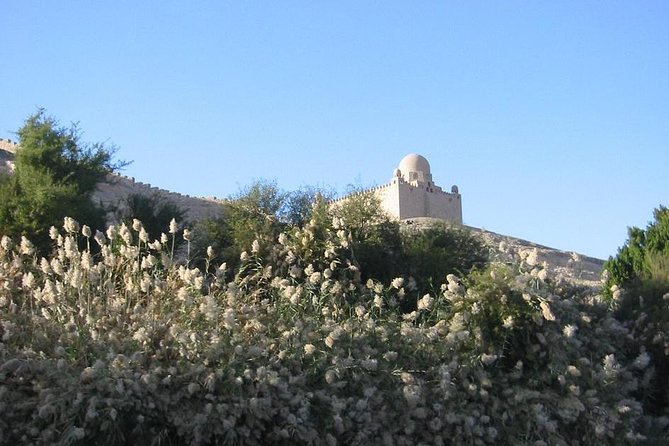
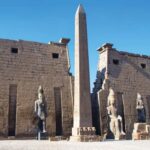
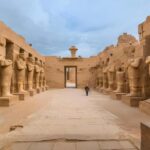
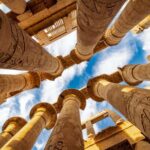
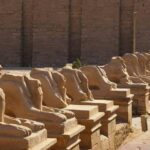
Your first day sets the tone with two of Egypt’s most famous temple complexes. Karnak is the big one: you’ll walk through the small avenue of sphinxes and then see the Great Court, the towering Hypostyle Hall, and the sacred lake area. You’ll also spot Queen Hatshepsut’s granite obelisks and that giant scarab symbol that’s basically a reminder that this site was designed for more than just stone admiration.
Karnak can feel overwhelming on your own because it’s massive and layered. With a guide, you get a way to read the space. You’re not just looking at columns and walls. You’re learning what each section was used for and why certain pieces are positioned the way they are.
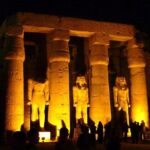
Then comes Luxor Temple. It’s smaller than Karnak, but it’s no less impressive, especially if you catch it with the right light. You’ll visit the colonnade with its papyrus-headed columns and the area associated with Amenophis III. This temple also works as a mood shift: after Karnak’s scale, Luxor Temple feels more intimate, like the main event is closer to you.
Practical note: entrance tickets aren’t included, so if you care about minimizing extra spending later, plan on adding admissions to your budget.
The Valley of the Kings, Deir el Bahari, and Colossi of Memnon
Day two is the “tomb and terrace” day, built around three places people remember for different reasons.
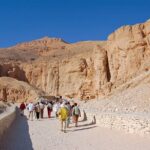
First, you’ll visit the Valley of the Kings in the morning. This is where the tombs sit in the dry desert rock, and it’s one of the most focused experiences in Egypt: a guided walk through the logic of royal burial, with you seeing multiple “real tombs” rather than just standing outside gates. It’s also one of the easiest days to lose track of time because the details are constant.
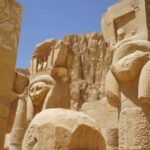
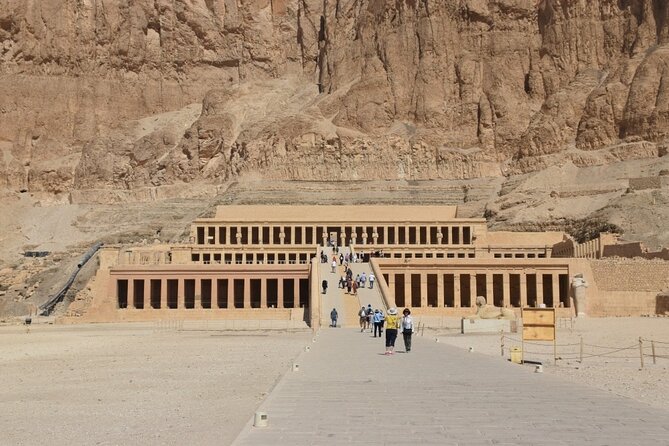
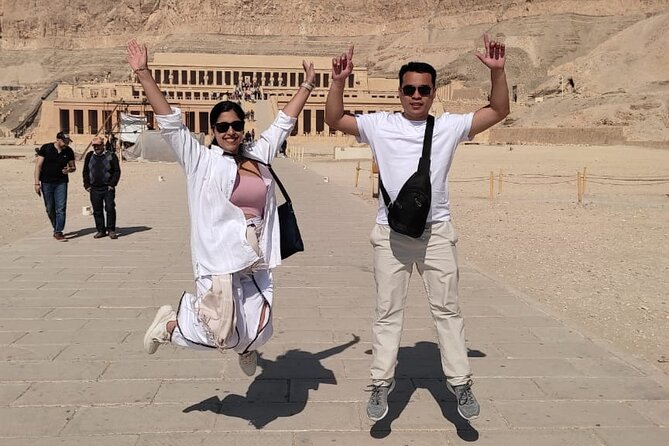
Next is the Temple of Hatshepsut at Deir el Bahari. The bas-reliefs here are a major part of what makes this site special. Instead of a generic temple stop, you get a sense of her story and the symbolism of her power—especially the carved scenes that relate to her expedition to Punt.
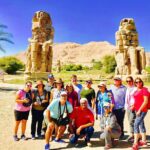
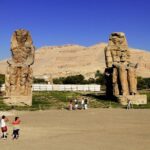
Then you finish with the Colossi of Memnon. These are colossal statues, weathered into their own kind of mythology. You’ll stop to see the statues and learn the mystery connected to the location. Even if you’re not a “tomb nerd,” this stop tends to click because it’s so visually dramatic.
At this point, you’ll head back to the cruise and sailing begins toward Edfu. That short “in-between” feeling matters. You’re not stuck in a car all day; you get a transition where the trip can actually breathe.
Horus at Edfu and the Temple of Kom Ombo: Two Temples, Different Energy
Day three is set up with a clear contrast: Horus at Edfu, then Kom Ombo before sleeping in Aswan.
At the Temple of Horus, you’re stepping into one of the best-preserved temple experiences. It’s the main temple conserved in Egypt, and the focus is on Horus as the “halcon” (falcon) figure. The temple is powerful in its design and the way it channels you along the sacred spaces. With a guide, you’ll understand why the iconography is repeated and what it’s meant to communicate.
Then you sail to Kom Ombo and visit the Temple of Sobek, associated with the crocodile. One of the most useful things about having a guide here is that these temples can look like they’re all the same if you only skim the details. You’ll learn what makes this one distinct and how the religious themes shift by location.
By evening, you’re continuing the cruise and spending the night in Aswan, so you’re setting up for the early morning Abu Simbel run.
A few more Luxor tours and experiences worth a look



Abu Simbel at Dawn: The Day Trip That Justifies the Cruise
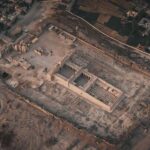
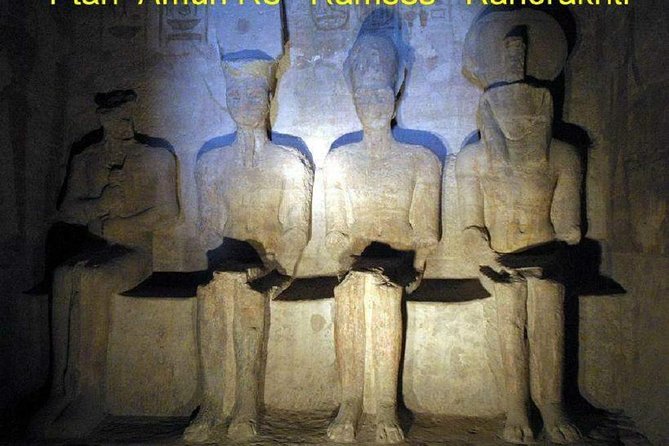
If you’re choosing this package mainly for Abu Simbel, you’re in the right place. The trip departs at dawn, which is the kind of timing you want for both comfort and managing the day. You’ll visit the great temple complex connected to Ramses II as a group, then return to the boat for lunch.
This is the day where the scale hits you. Even without being a history expert, the sheer size and planning of the complex is the point. And because the visit is structured, you’re not wandering around wondering what you’re looking at. A guide helps you connect the features to the larger story tied to Ramses II.
One caution: it’s a long day. You’ll be out for about 8 hours total for the Abu Simbel portion, and the morning start means you should be ready to trade sleep for a big payoff.
Aswan Highlights: Philae Temple and the High Dam
Day five keeps the momentum but shifts it to Aswan’s major landmarks.
You’ll start with breakfast, then head to the Temple of Philae. This temple stop is all about walking through an important sacred area and seeing how the religious center functioned in this region. It lasts about 2 hours, which is usually enough time to see the key sections without feeling like the guide is rushing.
After Philae, you’ll visit the Aswan High Dam, inaugurated in 1971. This is a totally different kind of “monument,” and it gives context to how modern Egypt manages water and power along the Nile. If you’re the kind of person who likes a bit of “how things work now,” this stop adds a practical layer to the ancient sites.
Then you transfer onward to the airport or station to end the service.
Comfort on Board: Rooms, Meals, and Time to Rest
The cruise portion is meant to take the pressure off. You won’t be changing hotels every day, and that alone helps the trip feel calmer. The rooms are reported as clean and tidy, and the top deck is described as a place where downtime actually feels fun, including a swimming pool and exercise machines.
Food is a big part of cruise value, and this one leans into variety. Meals are served on board as part of the package, with a buffet-style feel that tends to include decent vegetarian options. That matters in Egypt, where vegetarian-friendly meals can be easy to find in cities but harder when your schedule is packed.
One more small perk you might appreciate: the pace is structured enough that you get moments to reset between tours. You’re not doing a “run from temple to temple with no break” setup.
Group Size, Transfers, and Timing: How It Impacts Your Day
With a maximum of 15 travelers, you’ll typically get a smoother experience at major sites. That doesn’t mean you’ll feel alone at Karnak or in front of famous statues, but it usually helps the guide manage entrances, walking groups, and photo stops without turning everything into a bottleneck.
Transfers are also included: round-trip movement to and from the cruise port, plus an air-conditioned vehicle. That reduces friction, especially on days with multiple stops.
Start time is 8:00 am, so plan to treat mornings like the main event. If you’re not a morning person, bring water and something light to hold you over on the way into the day’s first monument.
What’s Not Included (And How to Budget Without Stress)
You should plan for two extra cost categories:
- Admission tickets for the sites are not included for most stops.
- Tipping for guides and drivers is not included.
If you’re trying to budget carefully, treat the cruise price as the base and then add a realistic amount for entry fees and tips. This is also why it helps to travel with a bit of flexibility; if you’re expecting everything to be fully paid in advance, Egypt can surprise you.
Should You Book This Luxor to Aswan Luxury Cruise?
I’d book this if you want Upper Egypt in a comfortable, guided format with meals handled and minimal hotel juggling. It’s a strong fit if you care about the major monuments but also want your trip to feel organized rather than exhausting.
You should think twice if you’re trying to travel with a super tight all-in budget, since you’ll likely pay for admissions separately and tipping adds another layer. Also, the early departure for Abu Simbel is not for people who plan to sleep in.
Finally, if you like the idea of a smaller group and a cruise that gives you time to rest between days, this one makes sense. It’s not only about “seeing the famous places.” It’s about getting them without the logistics headache.
FAQ
How long is this cruise?
It’s about 5 days total, including 4 nights aboard the Nile cruise.
Where does the tour start?
It starts in Luxor, with a start time of 8:00 am.
What sites are included on the guided days?
Stops include Karnak Open Air Museum, Luxor Temple, the Valley of the Kings, the Temple of Hatshepsut at Deir el Bahari, Colossi of Memnon, the Temple of Horus, the Temple of Kom Ombo, the Abu Simbel Temple Complex, the Temple of Philae, and a visit to the Aswan High Dam.
Are meals included?
Yes. Breakfast (4), lunch (4), and dinner (4) are included.
Are admission tickets included?
Admission tickets are not included for the stops listed (with one stop marked free). You should budget for site entry fees separately.
What language is the guide?
The tour includes an English and Spanish speaking tour guide.
What is the maximum group size?
The tour has a maximum of 15 travelers.