REVIEW · LUXOR
4-Night, 5-Star Nile Cruise from Luxor to Aswan
Book on Viator →Operated by Nile Holiday · Bookable on Viator
Watching temples slide past the Nile beats hurry. This 4-night Luxor-to-Aswan cruise slows the days down, and you’re paired with an Egyptologist guide for the big-name sights like Karnak and the Valley of the Kings. I also love that entrance fees and meals are handled for you, so you can focus on the ruins (not receipts). The main drawback is that the itinerary stacks several West Bank and temple visits in a single day, so you’ll want solid walking shoes and a slower rhythm for stairs and uneven stone.
On trips with guides such as Emad and Mahmoud, the explanations tend to be clear and organized, which makes the carvings and layouts click fast. And when the guiding team includes folks like Abdul, the pacing feels friendly rather than rushed, even when you’re moving between sites.
In This Review
- Key Highlights at a Glance
- What You’re Really Buying: a Luxor-to-Aswan Slow-Travel Cruise
- Hotel Pickup, Private Group Feel, and Transfers That Reduce Stress
- Karnak and Luxor Temple: Walking Into 134 Columns
- Day 2 West Bank: Colossi of Memnon, Valley of the Kings, and Hatshepsut
- Colossi of Memnon
- Valley of the Kings (3 tombs included)
- Temple of Hatshepsut at Deir el Bahari
- Edfu and Kom Ombo: Temple Time With Real Nile Breathing Room
- Kom Ombo Temple: a mirror-plan worth slowing for
- Aswan Classics: Unfinished Obelisk, High Dam, and Philae Island
- Unfinished Obelisk
- Aswan High Dam
- Philae Temple Island
- Food, Evening Entertainment, and How to Use On-Board Time Well
- Price and Value: Why $749 Can Make Sense (and When It Won’t)
- Optional Abu Simbel at the End: How to Decide
- Should You Book This Luxor to Aswan Nile Cruise?
- FAQ
- FAQ
- How long is the cruise from Luxor to Aswan?
- What’s included in the tour price?
- Are meals included on the cruise?
- Do I get a pickup in Luxor?
- Is there an Egyptologist guide?
- Are entrance fees covered for all the main temples?
- Can I visit King Tutankhamun’s tomb?
- What about other Valley of the Kings tombs like Ramses VI or Seti 1?
- Is Abu Simbel included, or is it optional?
- Are tips included?
- What passport timing do I need?
- Is there a cancellation option?
Key Highlights at a Glance
- Egyptologist guidance on every excursion, not just a quick audio talk
- Karnak and Luxor Temple in one stretch, with free time to wander
- West Bank classics: Colossi of Memnon, Valley of the Kings (3 tombs), and Hatshepsut
- Edfu by carriage back and temple time with long-preserved Ptolemaic walls
- Kom Ombo’s mirror-image temple plan dedicated to two sets of gods
- Aswan temples and engineering: Unfinished Obelisk, High Dam, and Philae Island
What You’re Really Buying: a Luxor-to-Aswan Slow-Travel Cruise
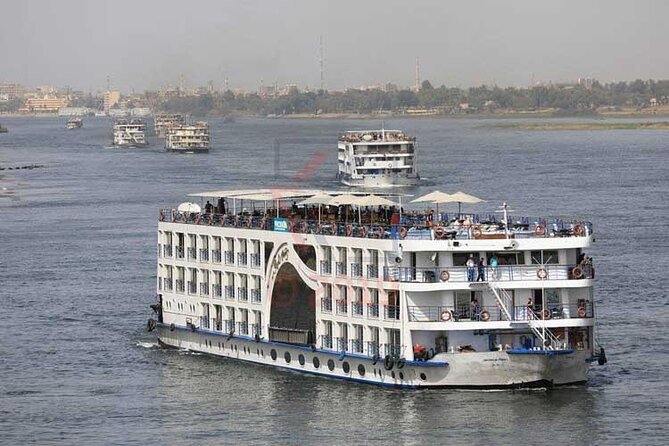
The core value here is simple: you’re not driving back and forth across Egypt. You’re based on the Nile ship for four nights, so every sightseeing day feels like a side trip instead of a constant move.
For you, that means more time for the moments that make the Nile special: light on the river, changing desert hues, and the way the day cools off when you’re back on board. It’s also a smart way to see a lot without feeling like you’re sprinting between ticket booths.
You can also read our reviews of more boat tours in Luxor
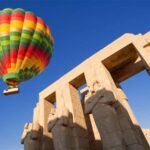

Hotel Pickup, Private Group Feel, and Transfers That Reduce Stress
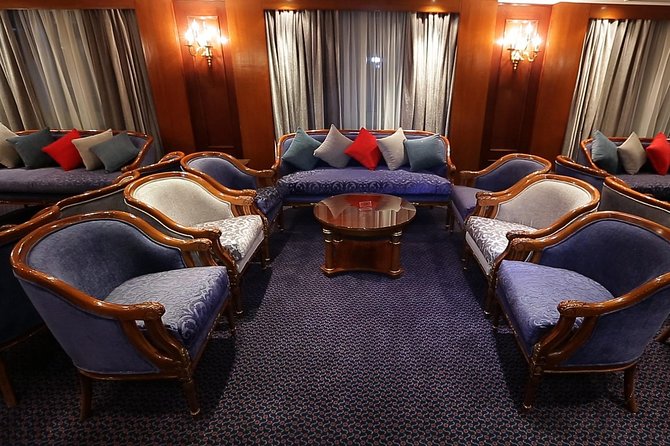
This is set up as a private tour/activity, meaning only your group participates. That matters because temple time and logistics go smoother when you’re not stuck waiting for a big mixed crowd.
Pickup and drop-off are included in Luxor, with transfers handled in a modern air-conditioned vehicle. In practice, that reduces the most annoying part of Egypt travel: figuring out how to get from airport or train to the right meeting point, then back again.
Here’s my practical tip: keep your most important items easy to grab—water, sunscreen, a hat, and a light layer—because temple stops and drives can stack back-to-back.
Karnak and Luxor Temple: Walking Into 134 Columns
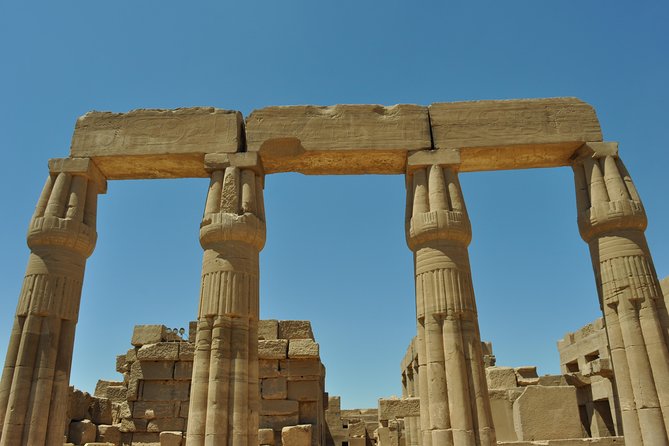
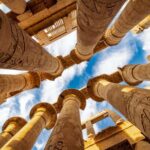
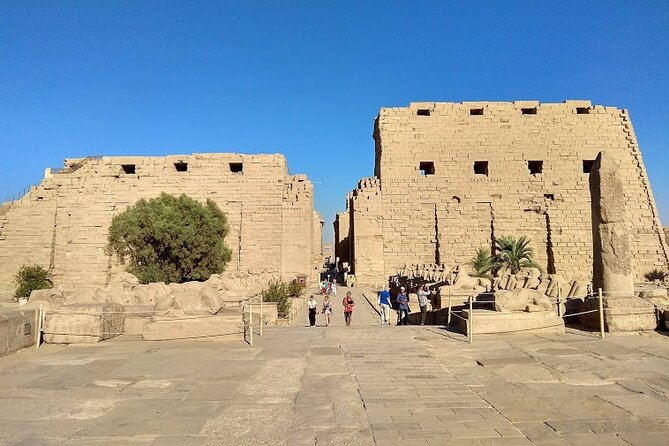
Karnak Temple is one of those places where you immediately understand why people describe it as overwhelming. You walk into the Great open court, then head for the Great Hypostyle Hall with its 134 towering columns, which gives you a sense of scale before your brain has time to catch up.
You’ll also see the sacred lake area inside the complex, a detail that helps connect the ruins to how ancient Egyptians staged ceremonies and offerings. After your guided portion, you get additional free time to explore at leisure—use it. Karnak is the kind of site where looking at details for 20 minutes can teach you more than rushing through every wall.
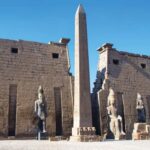
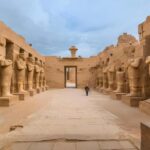
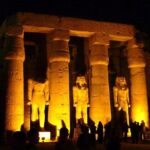
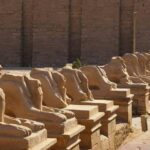
Then you move to Luxor Temple. This is the other side of the story, and it ties in nicely with Karnak. Luxor Temple connects to Karnak by the famous Avenue of Sphinxes (a three-kilometer stretch, with parts still marking the approach). It was built and decorated by Ramses II, and later additions came from Tutankhamun, Amenhotep III, and Alexander the Great.
Value check: doing Karnak first, then Luxor Temple while the information is still fresh, helps you read the sites as a connected sacred landscape rather than two separate stops.
Day 2 West Bank: Colossi of Memnon, Valley of the Kings, and Hatshepsut
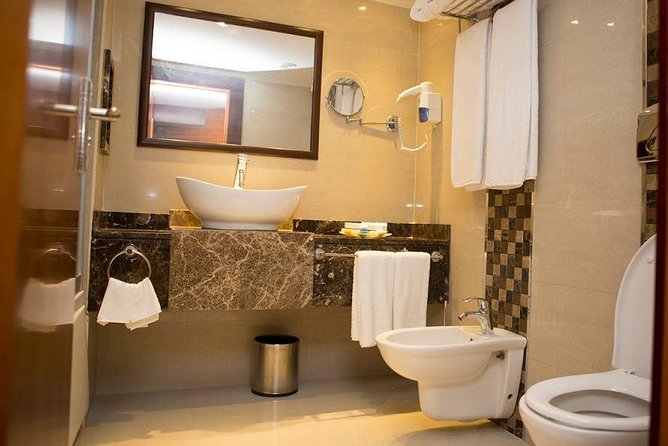
West Bank days feel like a different pace of Egypt—older, quieter, and heavy with stone. You start with breakfast on board, then cross to the West Bank.
Colossi of Memnon
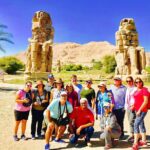
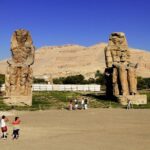
Your first stop is the Colossi of Memnon, two massive statues carved from quartzite sandstone blocks. They represent Pharaoh Amenhotep III and were once part of a far larger colonnade. The statues are short on explanations and long on impact. Even from a distance, they set the mood for the day.
You can also read our reviews of more evening experiences in Luxor



Valley of the Kings (3 tombs included)
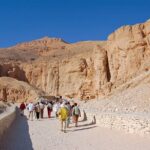
Next comes the Valley of the Kings, where you’ll visit three of the best-preserved tombs. A key detail: guides are not permitted inside the tombs, but your guide will tell you what to look for before you go in. That helps because tomb interiors can be dark and visually dense—without guidance, it’s easy to miss the point of the wall scenes.
You can also add the tomb of King Tutankhamun if you want (extra tickets on the spot). My advice: if this is your one big must-see, plan it for this day while you still have momentum and your guide’s context.
Temple of Hatshepsut at Deir el Bahari
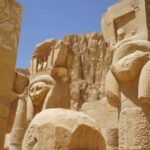
The day ends with the temple of Hatshepsut, one of the most striking monuments in the region. It was built over almost two levels of terraces, set against steep cliffs, and it feels like a stone amphitheater. Hatshepsut ruled for nearly 22 years, and seeing that scale of planning helps make her story feel real rather than like a textbook line.
Drawback to consider: this is a long day with several stops and real walking. If you’re prone to sore knees or get tired in hot sun, slow down where you can, drink water, and give yourself a few minutes to sit whenever the schedule allows.
Afterward, you return to the cruise for lunch and sailing toward Edfu via the Esna lock. That sail time matters. It’s not just a transfer—it’s your chance to see real daily life along the river: fishermen casting nets, farms along the banks, and desert hills behind everything.
Edfu and Kom Ombo: Temple Time With Real Nile Breathing Room
After breakfast, you visit Edfu Temple, one of the best-preserved Egyptian temples. It’s dedicated to Horus, the falcon god, and it was completed over a 180-year period. That long build time shows up in the temple’s sense of solidity—you can feel why it survived when so much else didn’t.
You’ll also take a horse and carriage ride on the return way to the site. It’s a change of pace that makes the trip feel less like a conveyor belt.
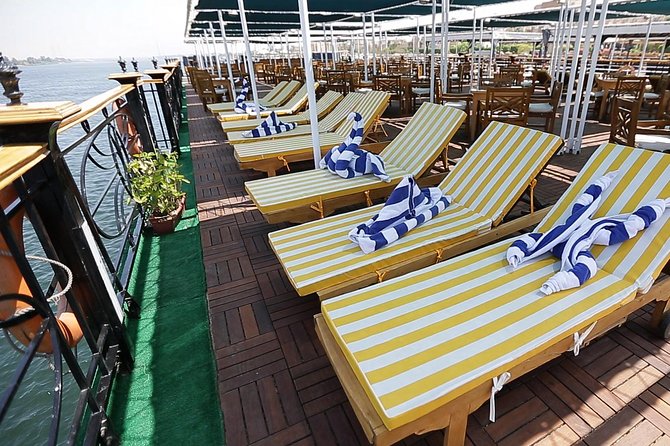
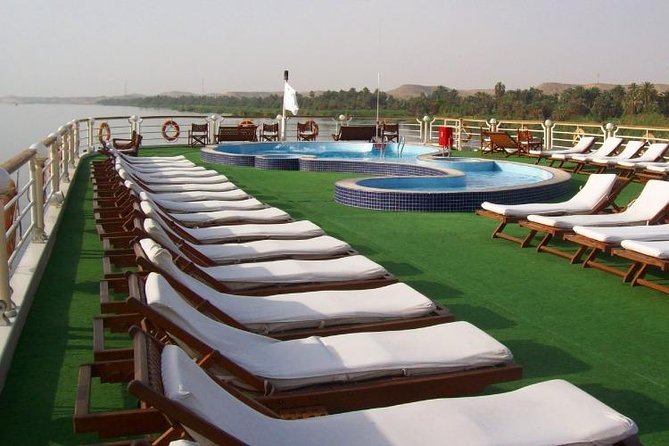
When you’re done, you cruise upriver with time on the sundeck. This part is where the cruise earns its keep. You’re not constantly in a group line, and you can watch the river edges slide past without thinking about tickets.
Kom Ombo Temple: a mirror-plan worth slowing for
In the afternoon you arrive at Kom Ombo, north of Aswan, and visit the temple built on a high dune. It dates back to the second century BC and sits right along the Nile’s edge.
Kom Ombo is unique because it has a mirror-image design, split down the middle. One side is dedicated to Sobek, the crocodile-headed god connected with fertility. The other side is dedicated to Haroeris (also known as Horus the falcon god). If you like symbolism and design, this is the temple where the layout itself becomes the story.
Return to the cruise and continue sailing to Aswan.
Aswan Classics: Unfinished Obelisk, High Dam, and Philae Island
Aswan is where the Nile feels wider and the history hits a different tone: engineering, islands, and temples that sit between modern water control and ancient worship.
Unfinished Obelisk
You start at the unfinished obelisk in the ancient quarry. It’s a rare kind of museum piece: you’re looking at the work-in-progress, which helps you understand ancient stonecutting techniques. The info you get here is the kind of detail that turns a normal photo stop into an actual lesson. The obelisk would have been enormous—around 42 meters and nearly 1,200 tons if finished.
Aswan High Dam
Next is the Aswan High Dam, described as an engineering miracle from the 1960s. You’ll see how the dam changed the Nile’s rhythm by ending the river’s devastating floods. It’s a reminder that Egypt’s story is not only ancient—it’s also about how people managed this river in modern times.
Philae Temple Island
Then you take a motorboat ride to Philae Temple Island, located between the old Aswan Dam and the High Dam. The island is sacred to Isis, mother of Horus and wife of Osiris.
You’ll get a walking tour through the temple, then free time to explore at leisure. My advice: use that free time to compare what you saw earlier in the trip. Once you’ve visited Karnak, Luxor, and Edfu, Philae often feels more intimate, and you notice different kinds of details.
Back on board, you enjoy lunch and then free time.
Food, Evening Entertainment, and How to Use On-Board Time Well
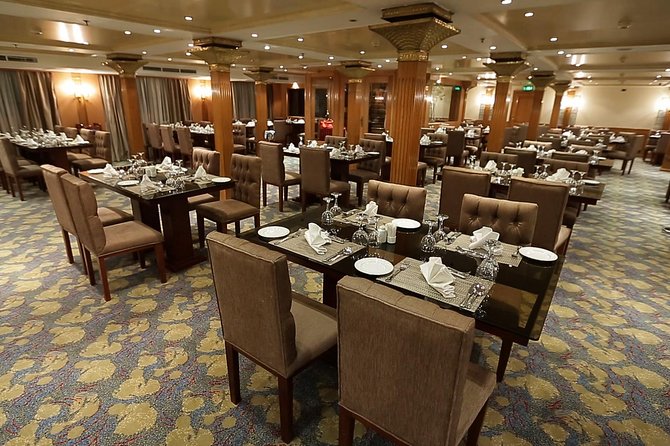
This cruise runs full board, with three meals a day plus evening entertainment. Breakfast happens on board on your excursion days, and you also get included lunches and dinners during the cruise.
On a trip like this, food inclusion is a big deal. You skip the stress of finding meals between temple times. And because the itinerary includes a lot of walking and sun, having lunch and dinner covered makes the day feel calmer.
Evening entertainment is included too. I can’t predict what form it takes on your specific sailing, but having it built in means you won’t feel stuck hunting for options after a long day.
Practical tip: plan to spend at least one extra hour on the sundeck. It’s not required, but it’s often when the Nile clicks—quiet river air, the ship’s gentle motion, and the best chance to absorb how the scenery changes as you move.
Price and Value: Why $749 Can Make Sense (and When It Won’t)
At $749 per person, you’re paying for a 4-night, 5-star Nile cruise setup with Egyptologist-guided excursions and included entrance fees between Luxor and Aswan. The strongest value is the bundle: guide, transport, meals, and sites are handled together.
You still need to budget for the extras the itinerary does not cover, like paying on the spot for optional tomb entries beyond what’s included. For example, the tomb of Tutankhamun is extra if you add it, and other Valley of the Kings tombs such as Ramses VI, Seti 1, or additional entries are not included.
Tipping is also not included. On a cruise with a full schedule, tipping matters to the people doing the day-to-day work.
So when does this price feel less attractive? If you already plan to DIY most of the route and only want one or two major temples, a bundled cruise can be more than you need. But if your goal is a smooth, guided Luxor-to-Aswan arc, this package is built for exactly that.
Optional Abu Simbel at the End: How to Decide
On the last day in Aswan, there’s an optional Abu Simbel temple visit. It runs about 4 hours, and it’s offered by car or plane. The admission ticket is listed as free in the tour details, but remember that extras not mentioned are not included.
Should you add it? If you’re the type who wants one big, iconic finale, this can be the highlight. If you’re already temple-weary after Karnak, the Valley of the Kings, Edfu, Kom Ombo, and Philae, you might save your energy for a slower Aswan evening.
A good rule: add Abu Simbel only if you still enjoy long temple days. If you’re feeling tired, Aswan itself is a good place to recover and wander.
Should You Book This Luxor to Aswan Nile Cruise?
If you want an Egyptologist guide, included entrances, and a real chance to enjoy the Nile without constant travel stress, I think this is a solid choice. You also get a strong “temple cluster” itinerary—Karnak plus Luxor Temple, then the West Bank, then Edfu and Kom Ombo, then Aswan’s Philae and engineering stops. That flow is what makes the trip feel efficient.
Book it if:
- you want full-board convenience and fewer meal decisions
- you enjoy temple interiors and want guided context
- you like the idea of sailing as part of the experience, not just transportation
Consider a different option if:
- you dislike structured days and want more free time between sites
- you have mobility limits that make stairs and stone walking difficult
- you expect to spend most of the trip DIY-style
FAQ
FAQ
How long is the cruise from Luxor to Aswan?
The experience runs for 5 days (about 4 nights on the cruise).
What’s included in the tour price?
Entrance fees for sights between Luxor and Aswan, Egyptologist-guided excursions, hotel pickup and drop-off in Luxor, all Nile cruise excursions listed, and full-board meals on board are included.
Are meals included on the cruise?
Yes. Breakfast, lunch, and dinner are included on the cruise for the days specified in the tour.
Do I get a pickup in Luxor?
Yes. Meet-and-assist service is included, and pickup is offered from Luxor locations such as the airport, hotel, or train station. Drop-off is included in Aswan at the end.
Is there an Egyptologist guide?
Yes. A qualified Egyptologist tour guide joins you during the excursions.
Are entrance fees covered for all the main temples?
Entrance fees to the listed sights between Luxor and Aswan are included. Some items, like specific tombs in the Valley of the Kings, are not included and are paid on the spot.
Can I visit King Tutankhamun’s tomb?
You can if you choose to add it with extra tickets on the spot.
What about other Valley of the Kings tombs like Ramses VI or Seti 1?
Entry inside additional tombs (including Ramses VI, Seti 1, and others mentioned) is payable on spot and is not included.
Is Abu Simbel included, or is it optional?
It’s optional at the end in Aswan. The tour description lists it as Abu Simbel by car or plane, about 4 hours.
Are tips included?
No. Tipping is not included, and personal expenses are not included.
What passport timing do I need?
Your passport should have at least six months remaining validity.
Is there a cancellation option?
The experience is non-refundable and cannot be changed for any reason.