REVIEW · LUXOR
Tour From Luxor to Aswan Edfu, Kom Ombo, Philae and High Dam
Book on Viator →Operated by Hello Egypt Tours · Bookable on Viator
Temples and Nile views, all day long. I love the private pace between Luxor and Aswan, and I also like how the schedule stacks the biggest stops—Temple of Horus and Kom Ombo—before the day gets hectic. The main drawback is the trade-off you expect on a long circuit: you’ll be on the road for hours and doing a fair amount of temple walking.
This is the kind of day that works when you want a lot of highlights without hunting schedules or missing connections. One thing that really stands out is the guide touch—Ahmed is called out as especially informative, and the day runs smoothly and respectfully when you’re not doing it on your own.
Before you go, plan for extra costs. Entry fees, lunch, and tipping are not included, so the $80 price is strongest if you budget for the basics and want everything else handled for you.
In This Review
- Key things to know before you go
- A Luxor-to-Aswan day built for momentum
- Setting off from Luxor: private pickup and the drive to Edfu
- Temple of Horus in Edfu: strong carvings, smart timing
- Kom Ombo’s double temple: Sobek and Haroeris in one visit
- Lunch in Aswan: a necessary reset between temples
- Philae Temple and Agilkia Island: Isis after relocation
- Aswan High Dam and Lake Nasser: modern engineering, same river
- What the $80 price covers (and what it doesn’t)
- How to make the day feel easier: timing, comfort, and photos
- Who this tour is best for
- Should you book this Luxor to Aswan temple and engineering day?
- FAQ
- How long is the Luxor to Aswan tour?
- What sites are included in the day?
- Is pickup and drop-off included?
- Is this tour private or shared?
- Are entry fees included in the price?
- Is lunch included?
- What about bottled water?
- Do I need to bring a ticket on my phone?
- Is tipping included?
- What is the cancellation policy?
Key things to know before you go
- Private hotel/cabin pickup with round-trip transfer so you’re not coordinating rides
- Edfu first, which helps you get real temple time early in the day
- Kom Ombo’s double layout for Sobek and Haroeris, with plenty of Nile-side atmosphere
- Philae on Agilkia Island after relocation due to the High Dam, so you see the story in stone
- High Dam + Lake Nasser views at the end for a modern-Egypt contrast
- Mobile ticket plus bottled water, which makes the day feel low-stress
A Luxor-to-Aswan day built for momentum
This is a classic Egypt “road chapter” day: you move north-to-south by private vehicle and trade modern transport comfort for ancient temple stops along the way. The rhythm is the whole point. You’re not bouncing around small attractions—you’re hitting major sites that most people would struggle to piece together efficiently.
The value is that you get a single, planned route with pickup and drop-off, and a guide who keeps things organized. In practical terms, that means less time figuring out where to go next and more time standing in front of carvings that actually took your ancestors centuries to build.
That said, it’s still a full day—about 11 hours—so bring the mindset of a day trip, not a relaxed stroll. If you’re prone to travel fatigue, you’ll want water, shade breaks, and comfortable shoes from the start.
You can also read our reviews of more tours and experiences in Luxor.

Setting off from Luxor: private pickup and the drive to Edfu
Your day begins with prompt pickup from your hotel or Nile Cruise in Luxor. From there, you ride in a private air-conditioned vehicle toward Edfu City, with bottled water along the way.
I like the pickup system because it reduces the usual Cairo-and-Luxor problem: you don’t have to coordinate a meeting point or scramble for transportation. It also keeps the day on schedule, which matters because the biggest temples can be crowded later.
One small consideration: since it’s private, the timing is still firm. If you’re the type who likes to linger in the morning, you’ll want to prep early so you don’t feel rushed right before departure.
Temple of Horus in Edfu: strong carvings, smart timing
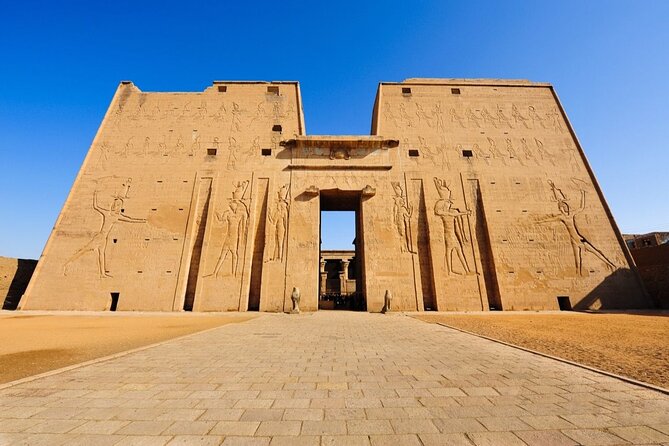
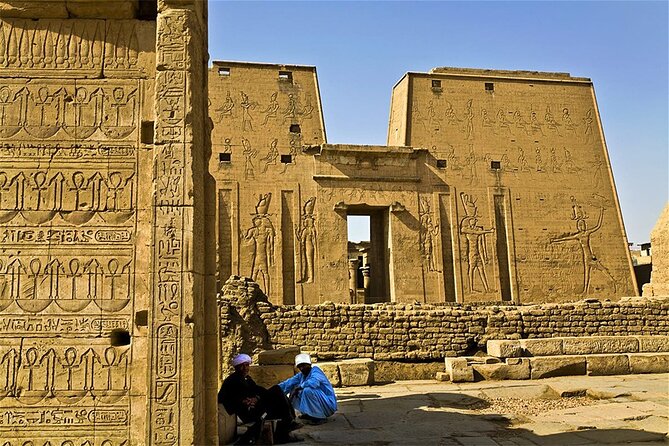
Edfu is your first major temple stop, and it’s a great choice to hit early. The Temple of Horus is known for its well-preserved structure and intricate carvings, and you get about one hour on-site.
Here’s why that works for your day: Edfu is built to reward focused viewing. If you spend the time looking at the columns, doorways, and relief scenes rather than treating it like a quick photo stop, you’ll leave with a clearer sense of how Egyptian temple design guides your eye.
A practical note: entry fees aren’t included, so you’ll need to budget for ticketing. Also, one hour is enough to enjoy the main areas, but not enough to go super slow. If you love details, plan to prioritize what you see instead of trying to read everything.
Kom Ombo’s double temple: Sobek and Haroeris in one visit
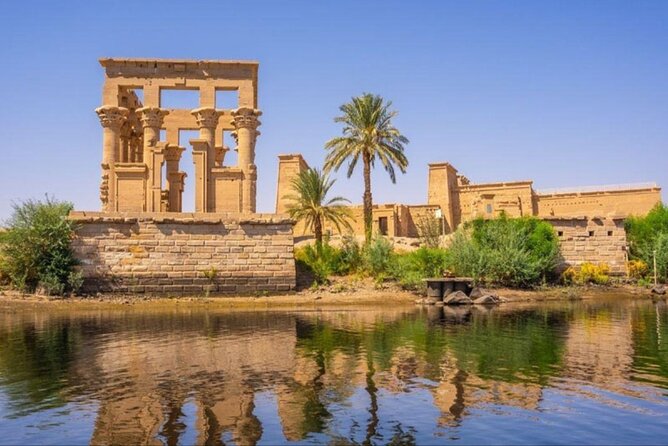
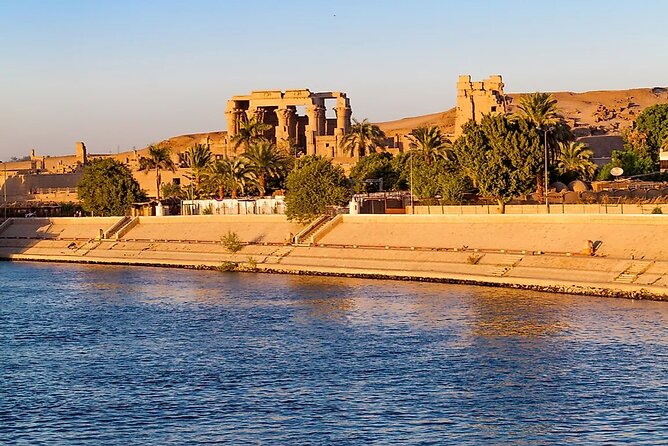
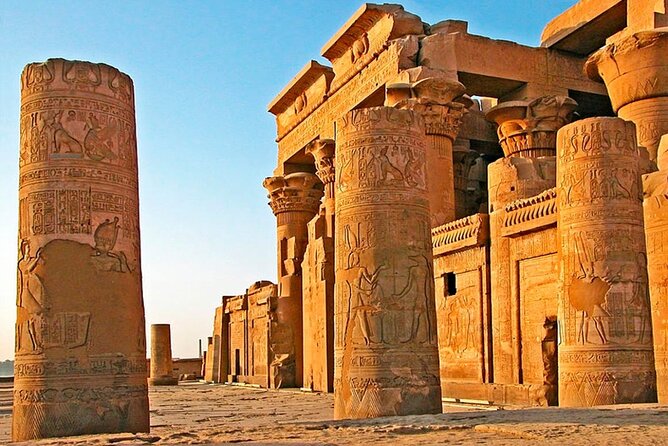
Next you head to Kom Ombo City for the Temple of Kom Ombo, and this is where the tour gets more distinctive. This double temple concept means you see two sets of areas dedicated to different gods—commonly described as Sobek and Haroeris (and related companion worship spaces).
You’ll get about two hours here, which is generous compared to the earlier stop. That extra time helps because Kom Ombo rewards comparison: look at how symmetrical design and duplicated courts and halls make the temple feel like one building with two “sides” of meaning.
The Nile views are also part of the experience. Even if you ignore the architecture for a moment, the river setting gives your photos context—this isn’t a temple stuck in isolation; it’s part of a lived river culture.
Drawback to consider: Kom Ombo entry fees aren’t included, and two hours can still feel brisk if you’re a slow reader. If you want to take everything in, wear sunscreen and plan for heat pacing.
Lunch in Aswan: a necessary reset between temples
After Kom Ombo, the plan shifts to Aswan with a lunch break at a local restaurant. Lunch is not included, but having it slotted into the route is honestly a big deal on a day like this.
When a tour is built around multiple major sites, the temptation is to skip food. Don’t. You’ll enjoy the rest more if you eat before Philae and the High Dam, when you’ll be walking in sun and dealing with the late-day energy drop.
Because the tour doesn’t include lunch, you’ll want to bring a simple strategy: choose something filling and easy to eat, and keep some time buffer for hydration. Bottled water is provided, but you’ll still feel better if you pace your drinks and don’t rely only on the included bottle.

Philae Temple and Agilkia Island: Isis after relocation
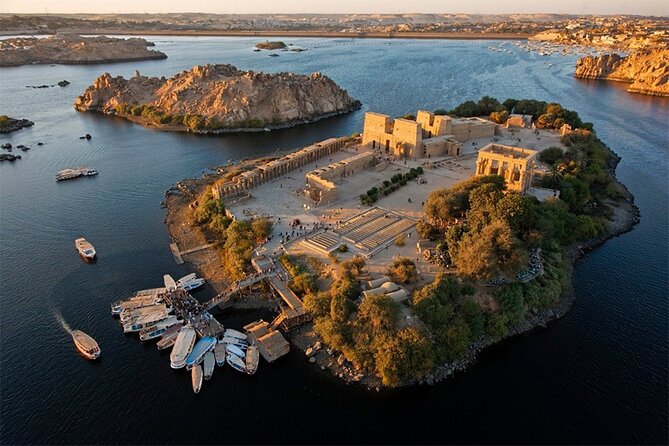
Next comes the big emotional shift: Philae. The Philae Temple is on an island in Lake Nasser, but the story of the site matters as much as the stones. The structures were relocated to Agilkia Island to help preserve them due to construction of the High Dam.
You’ll spend about two hours here. I like this stop because the temple isn’t just ancient—it’s also a record of modern decision-making. You can look at the physical setting and understand that Egypt’s heritage doesn’t only survive through time; it also survives through efforts people make when the river changes.
What you’ll see is a remnant of an ancient complex, dedicated to the goddess Isis. Even if you don’t know every symbol, the overall temple layout and the condition of the remaining structures help you grasp why people traveled here for worship.
Consideration: entry fees aren’t included, and because Philae sits in a lakeside environment, it can feel exposed. I recommend you dress for sun and plan your photo breaks so you don’t burn out early.
Aswan High Dam and Lake Nasser: modern engineering, same river
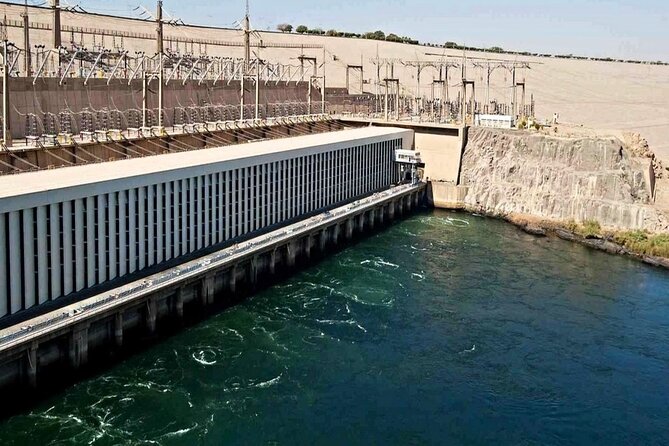
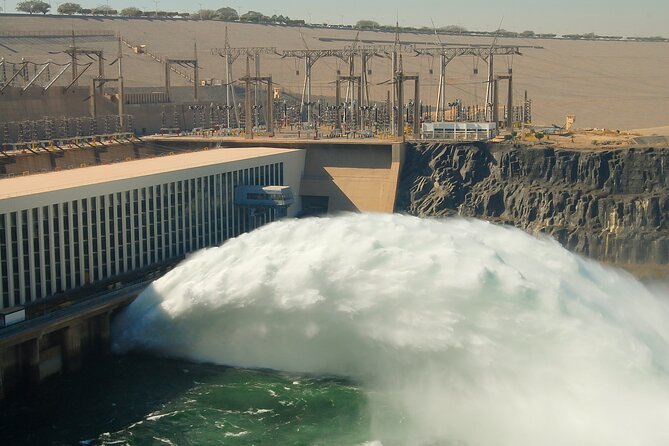
The day ends with a visit to the Aswan High Dam, a monumental structure built in 1961. You’ll learn about the dam’s construction, its impact on the region, and then you’ll enjoy panoramic views of Lake Nasser and the surrounding area.
About one hour is scheduled here, which is enough for a solid overview and a handful of view moments. This final stop is a smart pairing after Philae because you go from ancient worship sites to a modern force that changed what those sites could look like in the first place.
If you like big-scale perspectives, this is where your brain gets the “Egypt beyond temples” understanding. The dam is modern Egypt in action, and Lake Nasser is the proof—water and engineering reshaping how life and heritage relate to the Nile.
One thing to budget for: the High Dam entry is not included, so you’ll likely pay at the site. Bring cash or confirm what payment types are accepted before you go, since ticketing can be site-specific.
What the $80 price covers (and what it doesn’t)
At $80 per person, the value is mainly in logistics. You get hotel pickup and drop-off, private transportation, a private tour, and bottled water. That’s a real advantage in Upper Egypt, where paying for transportation separately can quickly eat your budget.
What you should expect to pay separately:
- Entry fees for the temples and the High Dam
- Lunch
- Tipping
- An Egyptology tour guide is listed as not included
That last line is worth reading carefully. You’ll have a guide to run the day and explain key things, and the experience is clearly guided. But if you specifically want a more academic Egyptology-focused guide service, you may need to arrange that as an add-on since it’s not included.
My take: if you’re a couple or a small group, private transport plus pickup alone can make the day feel like good money. If you’re traveling solo and want the cheapest option possible, you might find alternatives with lower ticket handling costs. Still, fewer hassles often cost less than you think once you value time.
How to make the day feel easier: timing, comfort, and photos
This tour is built for movement, so your comfort choices matter. You’ll be transferring between cities and spending time at temples and viewpoints, with sun and walking involved.
A few things I’d do to make it feel manageable:
- Wear comfortable walking shoes you can trust on uneven ground
- Bring sun protection, because several stops involve open air
- Keep your phone ready for a quick photo rotation at each major point, then turn it off and look again
- Plan to take short breaks during the day rather than trying to wait until you’re exhausted
Also, the schedule keeps you from drifting. That’s a plus if you dislike chaos, but it means you should be on time for pickup and ready when the vehicle departs.
If you’re trying to avoid crowds, the early start on Edfu helps. It’s easier to enjoy the temple with fewer distractions before the day peaks.
Who this tour is best for
This is a strong fit if you:
- Want to cover Edfu, Kom Ombo, Philae, and the High Dam in one day without coordinating multiple transport segments
- Prefer a private setup over sharing a group bus
- Like “hit the highlights, then enjoy the details while you’re there” pacing
It’s also a good choice if you’re short on time between Luxor and Aswan. You get the major stops tied together into a single plan, which is exactly what you want when you’re trying to see a lot and still sleep at a reasonable hour.
If you’re the type who wants deep, slow museum-style reading at every site, you might find the time limits tight. But if you balance curiosity with pacing, the schedule feels efficient rather than rushed.
Should you book this Luxor to Aswan temple and engineering day?
I think you should book if you want a well-organized private day that connects ancient temples with a modern engineering landmark. The route makes sense: you start with Edfu’s Temple of Horus, shift to Kom Ombo’s unusual double structure, move to Philae’s relocated story on Agilkia Island, then end at the High Dam for Lake Nasser views.
You might pass if you hate long days, don’t want to pay extra entry fees and lunch, or need a slower travel tempo than an 11-hour circuit can provide.
If you do book, go in with a simple plan: budget for entry tickets and lunch, wear comfortable shoes, and treat each stop like a chance to really look—not just snap and move on. With that mindset, this is the kind of day you can remember because it links the Nile’s past and present in a way that feels real, not staged.
FAQ
How long is the Luxor to Aswan tour?
The tour lasts about 11 hours.
What sites are included in the day?
You visit the Temple of Horus in Edfu, the Temple of Kom Ombo, Philae Temple (on the island area related to Agilkia Island), and the Aswan High Dam.
Is pickup and drop-off included?
Yes. You get hotel pickup and drop-off.
Is this tour private or shared?
It’s private. Only your group participates.
Are entry fees included in the price?
No. Entry fees are not included.
Is lunch included?
No. Lunch is not included.
What about bottled water?
Bottled water is included.
Do I need to bring a ticket on my phone?
You’ll have a mobile ticket.
Is tipping included?
No. Tipping is not included.
What is the cancellation policy?
You can cancel for free up to 24 hours in advance for a full refund. Confirmation is received at booking.