REVIEW · CAIRO
Full Day tour to great pyramids Sphinx Citadel and Bazaar
Book on Viator →Operated by Egypt Tours Online · Bookable on Viator
Early starts, big monuments, and real Cairo energy. This all-day run packs the Giza Plateau landmarks into a tight, guided loop, then finishes in the Khan el-Khalili market. I especially like how the day mixes the famous icons with Muhammad Ali Mosque and a chance to bargain with help from the guide.
Two things I really like: the pickup and transport are set up so you do not spend your morning hunting taxis or figuring out logistics, and the guide makes the pyramids more than just photos. On one booking, I like that you get a structured stop plan from the Giza Plateau to the Citadel, instead of wandering and hoping you hit everything.
One drawback to plan around: the included entry covers basic areas only. If you want to go inside a pyramid, add on activities like camel riding or the solar boat experience, those cost extra.
In This Review
- Key things that make this tour work
- The value in a full day: $57 worth of Cairo and Giza
- 8:00 am pickup and the private vehicle plan
- Stop 1: Giza Plateau and the Valley Temple + Sphinx views
- Stop 2: The Great Sphinx up close (and why it feels different)
- Stop 3: Cheops (Khufu) and the story behind the facts
- Stop 4: Khafre’s pyramid complex, with the names behind the excavations
- Stop 5: Menkaure’s pyramid complex and the quieter scale
- Stop 6: Cairo Citadel of Saladin and Muhammad Ali’s alabaster mosque
- Stop 7: Khan el-Khalili bazaar and bargain basics that actually help
- Optional add-ons: inside pyramids, solar boat, camel, quad, felucca
- Lunch and the best way to handle meals on this kind of day
- The overall rhythm: a lot of monuments, not a slow museum day
- Who this tour fits best (and who should consider a different plan)
- Should you book this tour?
- FAQ
- What time does the tour start?
- How long is the experience?
- Is hotel pickup and drop-off included?
- Are the entry fees included?
- Can I enter the pyramids from inside?
- Is lunch included?
Key things that make this tour work
- Hotel pickup and private A/C transfers so the day stays efficient from the first hour.
- Giza Plateau time includes Valley Temple and close-up Sphinx views, not just distant skyline photos.
- Four major pyramid complexes covered in sequence: Cheops, Khafre, and Menkaure, plus the Sphinx area.
- Citadel + Muhammad Ali Mosque as a full 2-hour stop, letting you slow down a bit.
- Khan el-Khalili with bargaining help, aimed at getting you unstuck (and maybe a better price).
- Optional upgrades available, but only if you choose them during booking and budget for the extras.
The value in a full day: $57 worth of Cairo and Giza
This tour is priced at $57 per person for an 8-hour day, with hotel pickup and drop-off included. For many first-time visitors, the hardest part of Egypt sightseeing is not the landmarks. It is coordination: getting to Giza on time, moving between sites, and not losing half a day to transport delays.
Here, you get private A/C vehicle transfers and a guide, plus bottled water. Entry fees are included too, but with an important caveat: the included tickets are for basic area access only. That means you should treat this as a well-paced highlights tour, not a ticket to go inside every pyramid.
You will also get a mobile ticket, which is handy if you want less paperwork and a faster start when you reach each stop.
You can also read our reviews of more shopping tours in Cairo


8:00 am pickup and the private vehicle plan
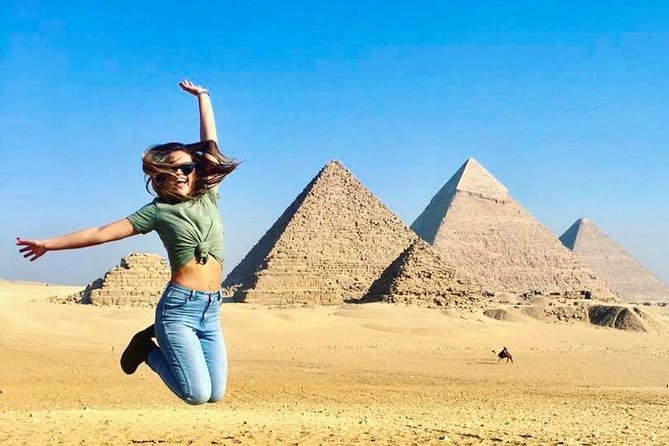
The day starts at 8:00 am, with pickup from your hotel in Cairo. From there, you ride by private A/C vehicle to Giza. In practice, this kind of transfer plan matters because Giza is not a quick jump from central Cairo. A smooth ride reduces stress, and you start sightseeing before the heat and crowds start to feel heavy.
This is also set up as a private tour/activity for your group. Even if you are traveling with friends or family, you are not sharing your day with strangers from other hotels. That usually makes it easier to keep your pace steady and ask questions without a loud, constant group shuffle.
Stop 1: Giza Plateau and the Valley Temple + Sphinx views
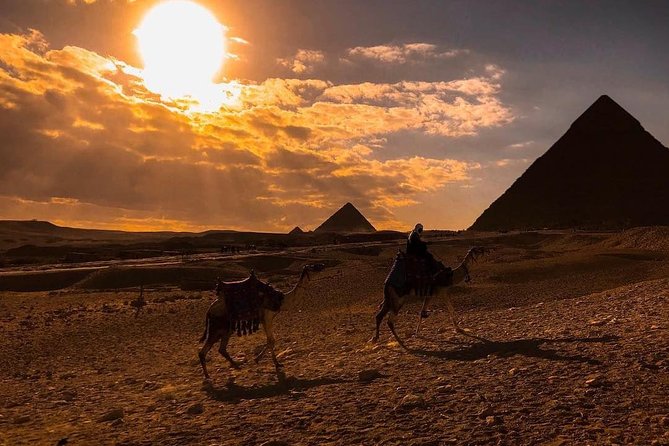
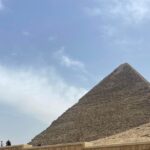
The big anchor of the day is the Giza Plateau stop (about 3 hours). This is where you see the Great Pyramids of Cheops, Chephren, and Mykerinos (Menkaure). Cheops is described as the most colossal ever built. You will also learn how each pyramid served as a final resting place for a king of Egypt’s 4th dynasty.
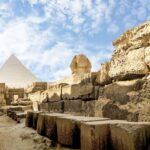
What I like about starting here is the logic. You are at the core landscape, and then the rest of your pyramid/sphinx route makes sense. The stop also includes the Valley Temple, which is tied to mummification and funerary rituals. You will hear that this is also one of the spots where you get a close-up view of the Sphinx.
One practical note: the included entry is for the basic areas, so plan your expectations around seeing monuments from the allowed zones. If you want to add time for pyramid interiors or special access activities, this tour offers upgrades, but they are not part of the standard ticket.
Stop 2: The Great Sphinx up close (and why it feels different)
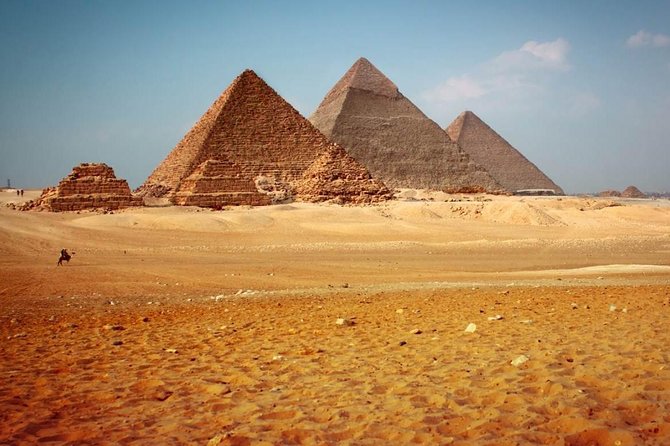
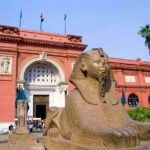
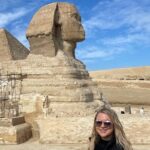
After the plateau walk, the day focuses on the Great Sphinx (about 30 minutes). The Sphinx is described as a giant funeral complex guarded by the legendary lion body with the face of king Chephren.
Here’s what makes the Sphinx work in person: it is not just one statue. It is a whole atmosphere. Once you are close enough, the scale becomes hard to explain in a photo. The head, the body, and the surrounding complex all push you to look at the site as a designed setting, not a standalone “must-see.”
The short time at this stop is intentional. You have multiple pyramid complexes ahead, and this keeps the day moving without turning the Sphinx into a long detour.
Stop 3: Cheops (Khufu) and the story behind the facts
Next comes the Great Pyramid of Cheops (Khufu) (about 30 minutes). This stop is where you go beyond the obvious photo angle and hear about how we know things about Khufu.
You will be told that a key reference is an incredibly small artifact: a three-inch high ivory figurine connected to Khufu, found in a temple ruin at Abydos in 1903. You will also hear that many reliefs and statues are fragmentary, and some parts of Khufu’s buildings are lost. In other words, the guide does not just recite dates. You get a sense of how Egyptology works: clues survive, clues don’t, and later inscriptions help fill gaps.
You may also hear about how what’s known comes from inscriptions in his necropolis at Giza and later documents, including the Westcar Papyrus. That sort of detail makes your Cheops stop feel less like a checklist item and more like a puzzle with real evidence.
A few more Cairo tours and experiences worth a look


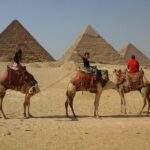

Stop 4: Khafre’s pyramid complex, with the names behind the excavations
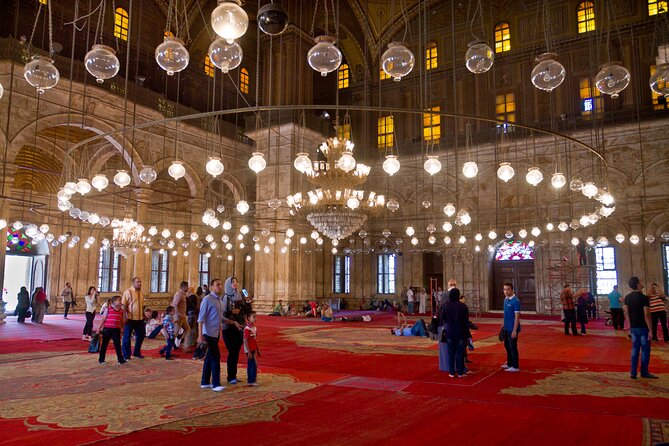
Then you move on to Khafre’s Pyramid (about 30 minutes). This complex is explained as more than one pyramid. It includes a valley temple, a Sphinx temple, a causeway, a mortuary temple, and the king’s pyramid.
The guide connects the site to excavation findings too, with names and timelines. For example, the valley temple is said to have yielded statues of Khafre, with several found in a well by Mariette in 1860. More excavations by Sieglin (1909–10) and others are mentioned as part of the ongoing uncovering of the complex.
This is one of the best stops for people who like structure. You are not just seeing monuments; you are seeing how the site is organized, and you learn why those components mattered in the funerary landscape.
Stop 5: Menkaure’s pyramid complex and the quieter scale
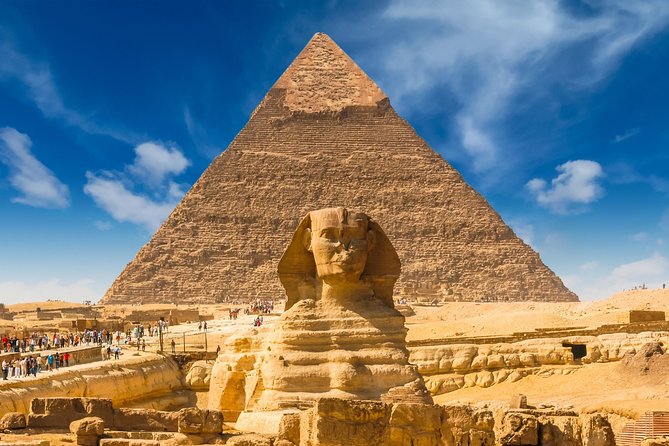
After Khafre, you visit Menkaure’s Pyramid (about 30 minutes). The Menkaure complex is described with the same big components: valley temple, causeway, mortuary temple, and the king’s pyramid.
Here the guide points out that the valley temple once contained several statues of Menkaure. During the 5th dynasty, a smaller ante-temple was added. The mortuary temple is also said to have yielded several statues.
This stop can feel a little more grounded because Menkaure’s pyramid is not always the first thing people picture. That can be a plus. It gives your brain a chance to process the scale of Giza as a whole rather than getting stuck on the one pyramid every photo tries to capture.
Stop 6: Cairo Citadel of Saladin and Muhammad Ali’s alabaster mosque
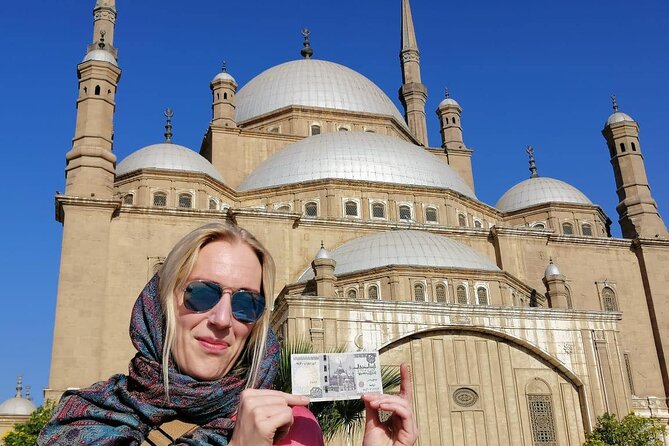
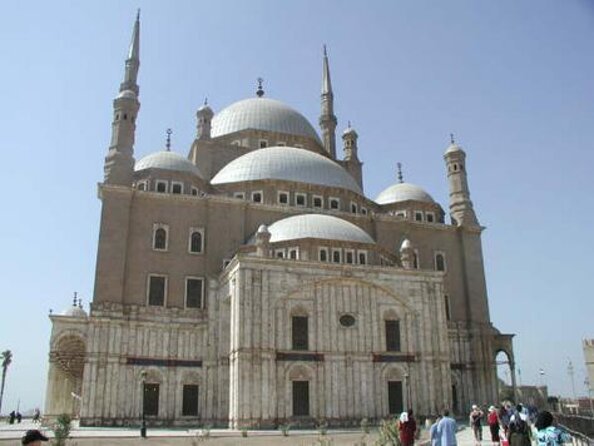
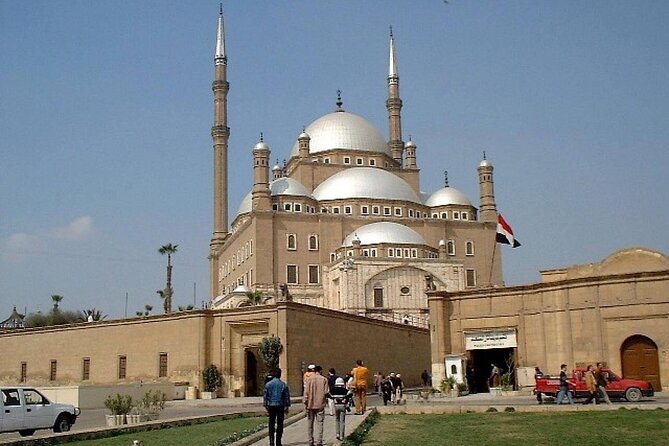
After Giza, the tour switches gears to Cairo’s Citadel of Saladin. This part runs about 2 hours, with a visit to the Mohamed Ali Mosque, often called the Alabaster Mosque.
This is a smart shift. Pyramids and Sphinx are intense. A mosque stop gives you a different type of monument experience: architecture, interior light, and a strong sense of place in the city. Also, the Citadel setting helps you understand Cairo beyond the bazaar lane and the Giza skyline.
You should dress with respect for mosque visits. Even when the stop is about sightseeing, you will want clothing that works for a religious site, and you will likely need to follow any guidance from the guide on arrival.
Stop 7: Khan el-Khalili bazaar and bargain basics that actually help
The day ends at Khan el-Khalili (about 1 hour). This is Cairo’s famous market district, known for shops selling brassware, copper items, perfumes, leather, silver, gold, and antiques.
The key here is that your guide helps you navigate it. If you have ever felt awkward about bargaining, this is where the insider support is worth its weight. You do not have to become a hard-nosed negotiator, but you do need a starting point and some local context. With that help, you can focus on quality and choices instead of feeling pressured.
One timing reality: one hour goes fast in Khan el-Khalili. If you want to browse slowly, have a quick mission (one category of souvenirs, one small shopping list), and be ready to move.
Optional add-ons: inside pyramids, solar boat, camel, quad, felucca
The standard tour is built around basic access. If you want more, the booking can include extra activities for additional fees, such as:
- entering any pyramid from inside
- visiting the solar boat of king Cheops
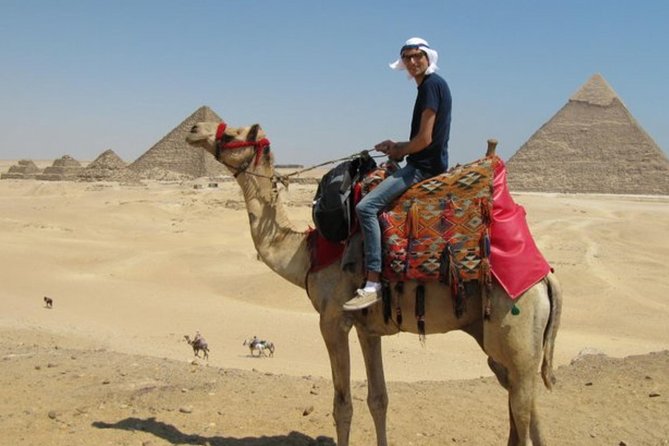
- riding a camel around the Giza pyramids
- riding quad bikes in the wide desert
- a felucca boat ride sailing on the Nile
This is where you should be strategic. Add-ons can be a great way to personalize the day, but they also take time and can shift your comfort level. If going inside a pyramid is your top priority, plan around that decision early so the schedule does not get squeezed.
Lunch and the best way to handle meals on this kind of day
Lunch is optional. The tour includes time for a lunch break before heading to the Citadel and Muhammad Ali Mosque area. Because lunch is not included, you should budget extra and be flexible about what you find nearby.
My practical advice: if you are picky about where you eat, look for a place close to your next stop so you do not waste time traveling. If you are not picky, the optional lunch break is still useful as a reset before the afternoon architecture and shopping.
The overall rhythm: a lot of monuments, not a slow museum day
This is an 8-hour highlights tour with defined stops: 3 hours on the plateau, short pyramid segments, 2 hours at the Citadel, and about an hour in the bazaar. That rhythm is great if you have limited time and you want to tick off the big “Cairo and Giza” landmarks in one go.
But it is not a slow, wandering day. The pyramid stops are time-limited, and the included access is basic area only. If you want long stays, deep photography sessions inside monuments, or long shopping marathons, you might find the schedule a bit tight unless you add those experiences in a planned way.
Who this tour fits best (and who should consider a different plan)
This tour fits best if you:
- want an affordable, organized day that covers the major Giza sights and key Cairo highlights
- prefer having a guide for context, especially around the pyramids and excavation details
- like the idea of shopping with bargaining help in Khan el-Khalili
It might not fit as well if you:
- want guaranteed inside access to pyramids as part of the base price
- plan to spend hours inside one monument instead of moving through multiple sites
- want a very relaxed pace with lots of free time for wandering
If you fall into the second group, consider building your day around fewer stops or booking add-ons carefully so you get the experience you actually want.
Should you book this tour?
If you want a solid first pass through Giza, the Sphinx, the Citadel, Muhammad Ali Mosque, and Khan el-Khalili in one day, this booking is a strong value. The combination of pickup, private A/C transfers, guide-led context, and entry for basic areas makes it a low-stress way to see a lot.
Book it if your priority is seeing the landmarks efficiently and learning enough to make those stones mean something. Skip or modify expectations if your top goal is inside-pyramid access or a long, slow pace. With optional add-ons available during booking, you can also tailor it, but you should budget for extras.
If you want a flexible plan, you can cancel for a full refund if you cancel at least 24 hours before the experience starts, which gives you room to adjust if your Cairo days change.
FAQ
What time does the tour start?
The tour starts at 8:00 am with hotel pickup in Cairo.
How long is the experience?
The duration is listed as about 8 hours.
Is hotel pickup and drop-off included?
Yes. The tour includes hotel pickup and drop-off, and transfers by private A/C vehicle.
Are the entry fees included?
Yes. Entry fees are included, but they cover basic area access only.
Can I enter the pyramids from inside?
Inside-pyramid entry is not included in the standard tour. It may be added as an optional extra for an additional fee.
Is lunch included?
Lunch is not included. There is an optional lunch break during the day before the Citadel and Muhammad Ali Mosque visit.