REVIEW · CAIRO
Day Tour to Giza Pyramids Complex, Egyptian Museum & Bazaar
Book on Viator →Operated by Egypt Tours Portal · Bookable on Viator
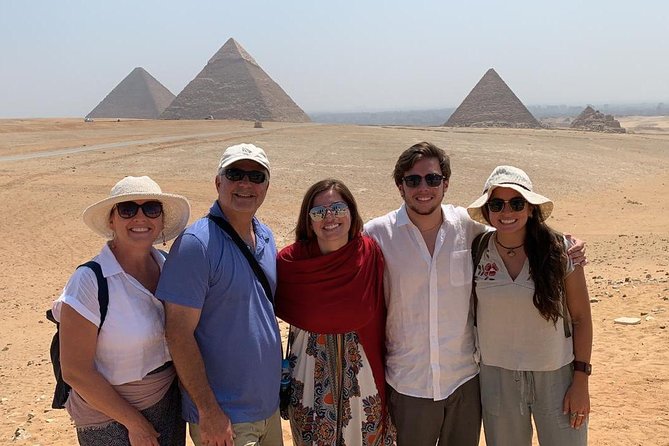
Pyramids in daylight still feel unreal. I like that the day is led by an Egyptologist who helps you make sense of what you’re staring at, and I like the way you get museum time to see major Egyptian treasures rather than just a quick outside look, especially Tutankhamun-related highlights.
A possible drawback: it’s a full 8-hour stretch in the sun, with a lot of walking between sites—so wear real shoes and plan for crowds.
In This Review
- Key Highlights You’ll Actually Notice
- Giza Necropolis Pickup and the Moment Everything Clicks
- Great Pyramid of Khufu: What the Ticket Gap Means
- Great Sphinx Stop: Nose Stories and Quick Photo Strategy
- Valley Temple of Khafre: Short Stop, Big Purpose
- Egyptian Museum: Getting Past the First-Minute Confusion
- Khan al-Khalili in One Hour: Browse With Boundaries
- Price and Value for an 8-Hour Cairo Day
- The Human Factor: How the Guide Affects the Whole Day
- What to Bring and How to Time Your Energy
- Should You Book This Giza Pyramids, Egyptian Museum, and Bazaar Tour?
- FAQ
- How much does the tour cost?
- How long is the experience?
- Do I get hotel pickup, and is transport air-conditioned?
- How big is the group?
- What’s included in the price?
- What isn’t included?
- Is entry to the Great Pyramid included?
- Is Khan al-Khalili part of the tour, and do you pay admission?
- When do I get confirmation, and how does cancellation work?
Key Highlights You’ll Actually Notice

- Small group size (max 15) helps the pacing feel manageable through Giza and the museum.
- Egyptologist-led narration turns the Pyramids Complex from photos into real context.
- Great Sphinx plus Valley Temple stops give you more than the usual one-photo circuit.
- Egyptian Museum time (3 hours) lets you see major collections, including Tutankhamun treasures.
- Khan al-Khalili for 1 hour is just enough time to browse without losing the whole day.
Giza Necropolis Pickup and the Moment Everything Clicks

The day starts with hotel pickup in a modern, air-conditioned vehicle. That matters in Cairo, because heat plus traffic can wreck your energy fast, and you’ll want to arrive at Giza with your brain switched on.
Once you meet your guide, you’ll head into the Giza Necropolis area and begin with the kind of orientation that makes the rest of the day easier. This is where the “wow” becomes useful: your guide can point out what you’re looking at, who it’s connected to, and why each monument sits where it does. You’ll get about 2 hours here, with an admission ticket included for that portion.
I also like that the time isn’t only about chasing famous angles. It gives you space to understand the layout before you move on to the biggest single attraction: Khufu’s pyramid and the Sphinx.
You can also read our reviews of more museum experiences in Cairo


Great Pyramid of Khufu: What the Ticket Gap Means
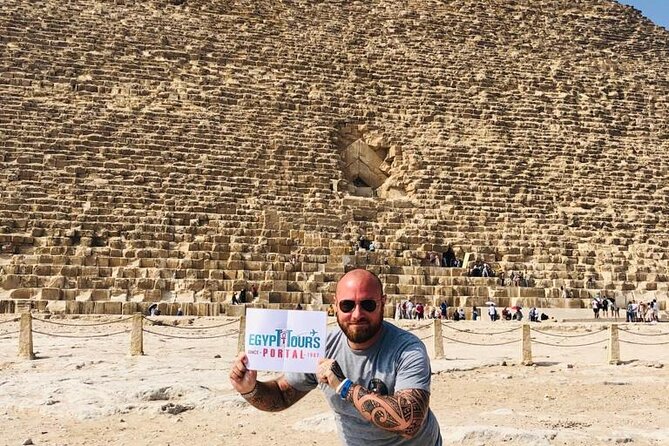
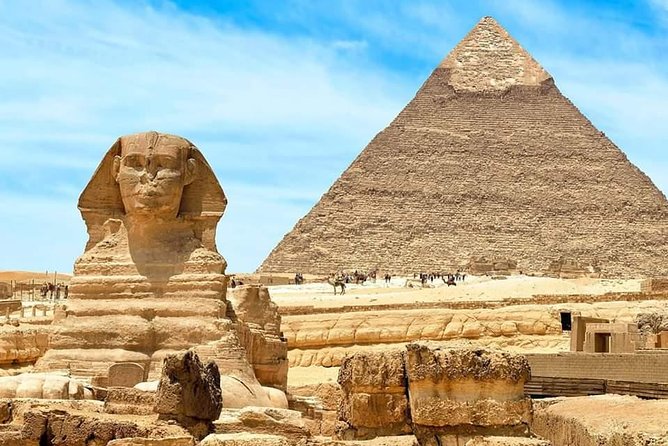
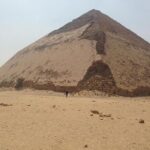
The Great Pyramid of Cheops (Khufu) is the star of the Giza Plateau. It’s the largest pyramid in the complex, built for King Khufu, reaching about 147 meters, with more than 2.3 million stones—each described as weighing roughly from 2.5 tons up to 9 tons.
Here’s the practical catch: the schedule lists time at the Great Pyramid (about 1 hour), but it also notes the admission ticket for entry is not included. So if seeing it from outside is enough for you, you’re fine. If you want inside access, budget extra and confirm what you’ll need to pay before you get there.
Either way, don’t treat the Great Pyramid as a single stop. I recommend staying mentally switched on while you’re there: ask your guide to explain the different “levels” of what you see—structure, scale, and how the site reads as one engineered landscape rather than just three or four monuments.
Great Sphinx Stop: Nose Stories and Quick Photo Strategy
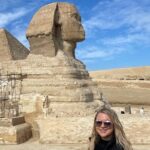
Then comes the Great Sphinx, and yes, it deserves its own stop. You’re looking at a limestone statue carved from a single piece of stone, connected to King Khafre (and often described in terms of facial resemblance). The commonly shared dimensions for the statue are about 73 meters long and 20 meters high.
You’ll get around 30 minutes here, and the admission ticket is included. With that short time, go in with a plan:
- Take one wide shot first (showing the Sphinx and its setting).
- Then do two close angles from different sides for variety.
- Save your biggest lens effort for the moment you get the light you want.
And here’s a great guide question built into the vibe of the stop: ask why the Sphinx is missing its nose. Even if you’ve heard theories before, a good Egyptologist will give you the story in a way that helps you remember the monument as a real, damaged artifact—not just a postcard.
Valley Temple of Khafre: Short Stop, Big Purpose
After the Sphinx, the tour shifts to a quieter but meaningful site: the Valley Temple of Khafre. The schedule describes it as a place connected with mummification and purification rituals for ancient Egyptian rulers and pharaohs.
This part is only about 30 minutes, with admission included. That short timing is a plus if you don’t want to lose the day to one location—but it does mean you’ll want to listen closely. Valley temples can feel less dramatic than the pyramids from a distance, yet they’re often where you get the strongest sense of ceremony, preparation, and belief.
If you like history that feels like it has a job to do, this stop usually lands well because it connects architecture to lived ritual. And it’s a nice contrast after the Sphinx’s iconic face.
Egyptian Museum: Getting Past the First-Minute Confusion
The Egyptian Museum is where the tour becomes more than monuments. You’ll spend about 3 hours there, and admission is included.
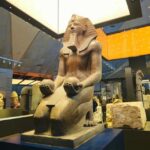
The museum is described as covering the history of Egyptian civilization with a strong focus on Pharaonic and Greco-Roman periods. It’s also noted for its collections of art spanning thousands of years, with major highlights from King Tutankhamun’s treasures—specifically gold items including his golden mask, placed in his tomb for about 3,500 years.
Two museum details you should keep in mind so you don’t get lost:
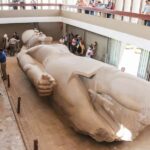
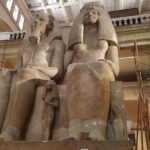
- The ground floor includes large, heavy objects, including colossal figures inside the main atrium area.
- The collection scale is huge, and the museum is known to have stored massive numbers of items at its peak.
With only 3 hours, your best move is to let the guide steer you through the biggest “anchors.” I’d focus on seeing the major Tutankhamun-related pieces clearly and using your guide to explain how that collection fits into the larger Egyptian timeline. That way you leave feeling like the museum helped you interpret what you saw at Giza, instead of feeling like you just survived a big building.
You can also read our reviews of more shopping tours in Cairo





Khan al-Khalili in One Hour: Browse With Boundaries
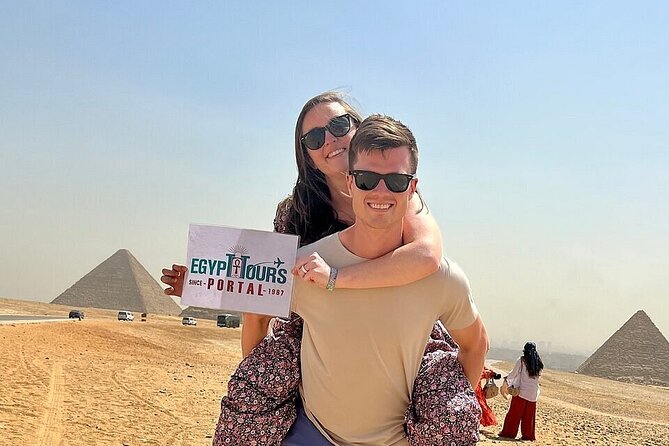
Finally, the tour ends with Khan al-Khalili, described as the largest open-air market in the world. You’ll get about 1 hour, and the stop is free of admission fees.
This is your chance to browse without turning the day into a shopping marathon. The market is known for Egyptian items like clothes, spices, and lots of souvenirs. I like this approach because it keeps one foot in culture and another in practicality: you can pick up gifts, snack ideas, or just enjoy the streetscape—then you’re done when your energy runs out.
Set boundaries early. If you’re not a “haggle for sport” shopper, decide what matters to you (spices? papyrus? small crafts?) and keep your list short. Otherwise, the options can blur together fast.
Price and Value for an 8-Hour Cairo Day
At $136.37 per person for about 8 hours, this is one of those Cairo deals that can be either great value or just okay—depending on what you want to add on.
Here’s the value math based on what’s included:
- Hotel pickup by air-conditioned vehicle
- An Egyptologist guide
- Admission fees to the listed places
- Meet and assist at your destinations
- Lunch at an Egyptian restaurant
The big “watch this” item is the Great Pyramid entry ticket mentioned as not included in the schedule. So if you plan to go inside the Great Pyramid, you may need to cover that separately. If you don’t care about inside access, your money goes farther on the rest of the day.
Either way, paying for a guided route is often the best way to avoid wasting hours figuring out entrances, timing, and what to focus on. In a city where sites can be confusing even when you’re close, having someone who knows the order and flow is a real time-saver.
The Human Factor: How the Guide Affects the Whole Day
The strongest pattern in the supplied guidance is that the guide matters a lot. People specifically highlighted guides such as Ahmed Elgohary, describing a passion for the job and deep context while moving through pyramids, the Sphinx, and the museum. Emy came up repeatedly for being prompt, organized, and patient, including taking lots of family photos and explaining Egyptian history with care.
Other named guides in the same “make the day work” category include Mohamed Osman, Moses (Amir Moses), Manal, Mohamed Salah, Hany Mubarak, and Reham Sabry. The consistent theme: people felt safe, guided through busy spots, and not rushed.
If you want the day to feel smooth, try to ask your guide questions early—especially around the Sphinx story and what to look for at the museum. A good guide will shape your experience quickly if you give them a chance.
What to Bring and How to Time Your Energy
This is a big sights day. Here’s how I’d prepare so you enjoy it instead of counting the minutes.
For comfort:
- Comfortable walking shoes (not sandals)
- A hat and sunscreen (Giza sun can be relentless)
- A refillable water bottle
For museum success:
- Wear breathable layers. Museums can swing between cool halls and warm crowds.
- Bring a note list: Tutankhamun highlights you care about most. Then let your guide do the rest.
For photos:
- Plan for quick angle changes at the Sphinx and Great Pyramid area.
- Ask your guide to help with family photo positioning early so you’re not negotiating settings while everyone is tired.
The pacing is structured (you have set times at each stop), so your goal is to arrive ready and ask smart questions, not to “collect” every single detail.
Should You Book This Giza Pyramids, Egyptian Museum, and Bazaar Tour?
If you want a one-day Cairo plan that hits the headline sights (Giza Pyramids, Sphinx, Egyptian Museum) plus a culturally grounded market stop, this is a strong fit. It’s especially worth considering if you’d rather spend your time learning and seeing key artifacts than trying to plan logistics through Cairo traffic.
I’d think twice if:
- You’re hoping for a slow, deeply unhurried museum day (3 hours is solid but still limited).
- You want Great Pyramid entry inside, because the schedule flags that ticket as not included.
- You’re sensitive to heat and crowds, since this is an all-in, sun-heavy day.
If you’re flexible, dress for the weather, and lean on your Egyptologist for context, you’ll come away with a much clearer picture of how Giza’s monuments and Cairo’s museum collection connect.
FAQ
How much does the tour cost?
The tour price is $136.37 per person.
How long is the experience?
It runs for about 8 hours.
Do I get hotel pickup, and is transport air-conditioned?
Yes. Pickup is offered from your hotel in Cairo, and you’ll travel in a modern air-conditioned vehicle.
How big is the group?
The tour has a maximum of 15 travelers.
What’s included in the price?
The package includes an air-conditioned vehicle, an Egyptologist during your private day tour, admission fees to the listed places, meet-and-assist service, and lunch at an Egyptian restaurant.
What isn’t included?
The tour does not include Egypt entry visa, tipping, or any additional services not mentioned in the program.
Is entry to the Great Pyramid included?
The schedule notes that admission ticket for the Great Pyramid of Cheops (Khufu) is not included.
Is Khan al-Khalili part of the tour, and do you pay admission?
Yes, Khan al-Khalili is included for about 1 hour, and it’s listed as free admission.
When do I get confirmation, and how does cancellation work?
You receive confirmation within 48 hours of booking, subject to availability. There is free cancellation up to 24 hours in advance for a full refund.