REVIEW · CAIRO
Cairo Full-Day Tours to Giza Pyramids ,Egyptian Museum & Bazaar
Book on Viator →Operated by EMO TOURS EGYPT · Bookable on Viator
Pyramids in one day can feel unreal. This full-day outing is built for maximum wow: you start on the Giza Plateau with the pyramids and Sphinx, then shift into downtown Cairo for the Egyptian Museum and a slice of everyday city life at Khan al-Khalili. I like that the pace is structured enough to hit the big sights without feeling totally lost, and I also like the long museum stop that gives you room to actually see Tutankhamun-related treasures. The main drawback is simple: time gets tight, and going inside pyramids is not included (you’ll pay extra if you want that).
What makes this option practical is the door-to-door feel. You get hotel/port pickup and drop-off by private vehicle, bottled water, and a schedule that typically runs about 8–10 hours starting at 8:00 am. You also get a private tour setup for your group, which usually helps you move through crowds with less hassle—if your guide keeps things organized.
In This Review
- Key highlights worth planning around
- A Full-Day Cairo and Giza Run: What 8–10 Hours Really Means
- Pyramids of Giza and the Valley Temple: Cheops, Chephren, Mykerinos, and the Sphinx
- Going Inside the Pyramids: When Extra Tickets Matter
- Egyptian Museum at Tahrir Square: Tutankhamun’s Treasures in a Pink Dome
- Liberation Square (Midan el-Tahreer): Arab Spring History Meets Traffic Reality
- Khan al-Khalili: Souvenirs, Spices, and How to Not Get Yanked Around
- Photo Time on the Giza Plateau: Getting the Shots Without Stress
- Logistics and Comfort: Private Vehicle, Pickup, and Bottled Water
- Price and Value Check: Why $8 Can Still Turn Into More
- Guide Quality Can Make or Break Your Day
- Who This Tour Fits (and Who Might Prefer a Slower Day)
- Should You Book This Cairo Full-Day Tour?
- FAQ
- What time does the tour start?
- How long does the tour last?
- Is hotel pickup and drop-off included?
- Are tickets to go inside the pyramids included?
- What is included in the price besides transportation?
- Is lunch included?
- Can I cancel for a full refund?
- What happens if weather is bad?
Key highlights worth planning around
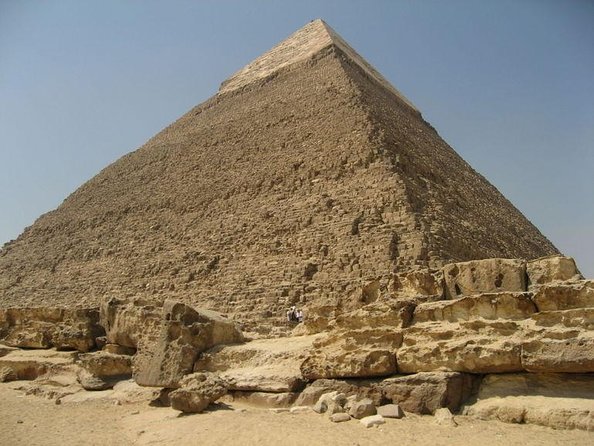
- Giza Plateau in one shot: Great Pyramids, Valley Temple area, and the Sphinx all on the same day
- Real time for the Egyptian Museum: about 3 hours in the domed building at Midan Tahrir
- Cairo beyond monuments: Liberation Square (Midan el-Tahreer) and Khan al-Khalili market time
- Photo stops are built in: a dedicated panoramic view time for pyramid photos
- Inside-pyramid upgrades are optional: basic area is included, interiors cost extra
- Guide quality can swing the day: names like Osama, Nehad, and Sayed Amin are frequently praised in feedback
A Full-Day Cairo and Giza Run: What 8–10 Hours Really Means
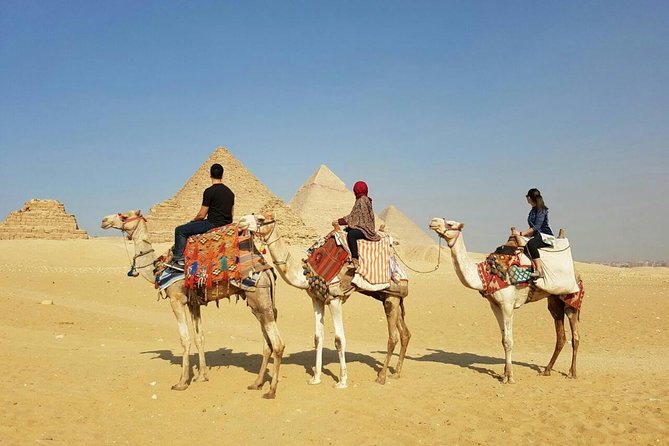
This is an all-day “greatest hits” itinerary. You’ll spend a big chunk of your daylight hours on the move between Giza and downtown Cairo, plus time walking at sites that don’t exactly move like a museum hallway.
Plan for a day that feels full. You’ll likely appreciate that the tour keeps you moving from one anchor stop to the next—pyramids first, museum second, market last—so you’re not stuck figuring out transportation or fighting your way through ticket lines alone. The flip side is that you’ll have fewer long, slow breaks. If you hate being rushed, bring a patient mindset and focus on the moments that matter most to you: Sphinx views, museum rooms, and your Khan al-Khalili time.
The tour’s start time is 8:00 am. For Cairo, that matters. Earlier usually means fewer crowds and better light for photos.
You can also read our reviews of more museum experiences in Cairo


Pyramids of Giza and the Valley Temple: Cheops, Chephren, Mykerinos, and the Sphinx
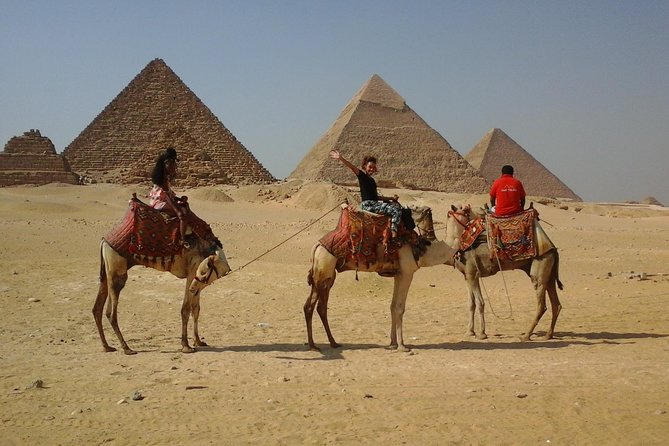
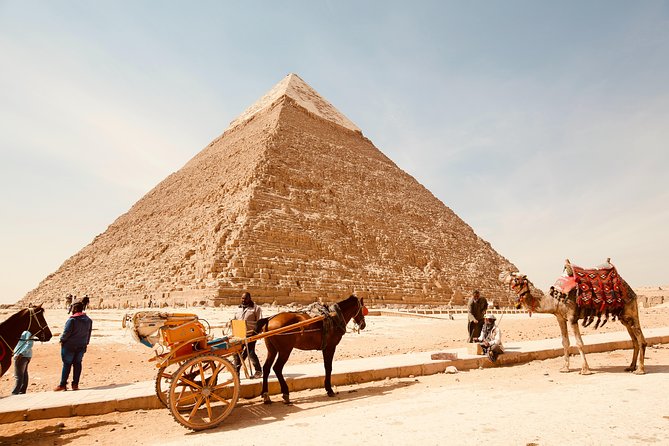
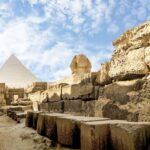
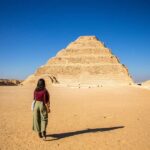
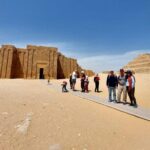
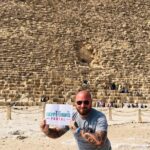
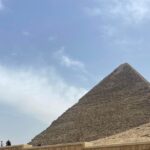
Your first major stop is the Giza Plateau area, where you’re set up to see the three pyramid giants—Cheops (Khufu), Chephren (Khafre), and Mykerinos (Menkaure)—plus the Sphinx area. The Valley Temple is part of this first stretch, and it’s the kind of place where the story feels physical: you’re walking through ruins that connect directly to how the royal complex worked.
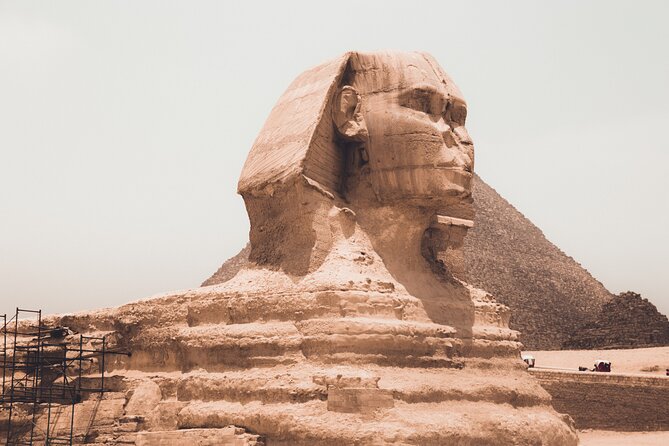
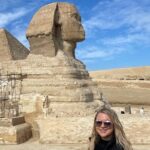
The Sphinx is a headline sight for a reason. Even when you’ve seen photos, nothing quite prepares you for scale and the way the face dominates the view. The tour is designed so you get a close-up look as part of your Giza time, rather than treating it as a quick glance from a distance.
What I like about this approach is that it ties the monuments together. You’re not only ticking boxes—you’re seeing the relationships between the pyramids, the temple zones, and the “guardian” figure. That makes the whole place feel like one massive system instead of three separate landmarks.
Going Inside the Pyramids: When Extra Tickets Matter
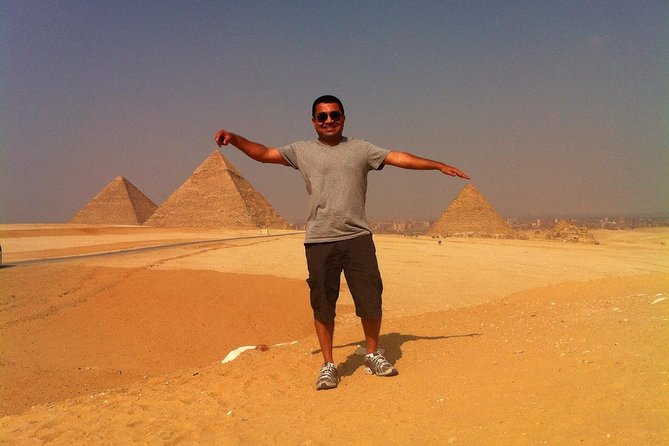
Here’s the part to watch: inside-pyramid visits are not included. The tour notes that you can buy interior tickets during the visit if you want to go in.
This is a key decision for your day. Going inside one pyramid changes the experience a lot. It’s cooler inside, the angles are tight, and you get a more direct sense of construction techniques. But it also eats time and adds extra cost, and not everyone wants the narrow, enclosed feeling.
If you want the best value from your time, pick just one interior (or none) and keep the rest of your energy for the museum and market. The tour includes admission for “basic area” access at multiple stops, but interiors are the add-on.
Also note that coverage can differ by option—so if your goal is interior entry, confirm what’s included before you arrive.
Egyptian Museum at Tahrir Square: Tutankhamun’s Treasures in a Pink Dome
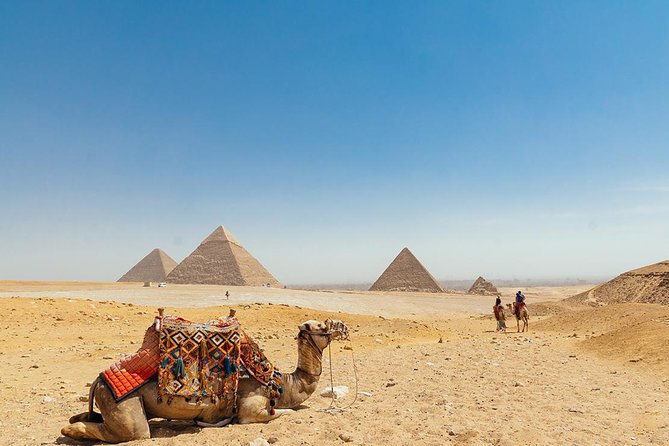
After Giza, you head into downtown Cairo to the Egyptian Museum at Midan Tahrir. You get about 3 hours here, which is a big deal. Cairo museums can turn into frantic stampeding if your time is short. With a longer slot, you can actually slow down and choose what you want to see.
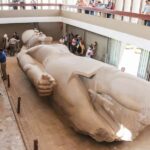
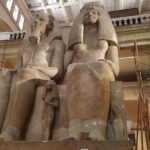
The museum itself is described as a prominent domed building. Inside, the tour highlights Tutankhamun-related treasures alongside other pharaonic finds, mummies, jewelry, and everyday objects like eating bowls and toys connected to Egyptians whose names have been lost to time. That mix is why the museum works even if you’re not a deep-dive Egyptology person. You’re seeing both power and daily life.
I also like this museum stop because it anchors your day. After the monumental cold stone of Giza, the museum makes the artifacts feel grounded and human. The day stops being only “wow” and starts becoming “oh, I get it.”
If you’re sensitive to crowds, go in with a strategy: pick a few must-see rooms, and don’t try to see everything. Three hours is plenty for a focused pass.
Liberation Square (Midan el-Tahreer): Arab Spring History Meets Traffic Reality
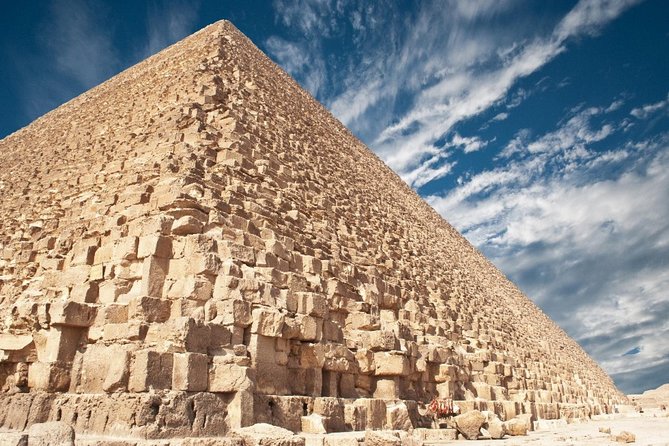
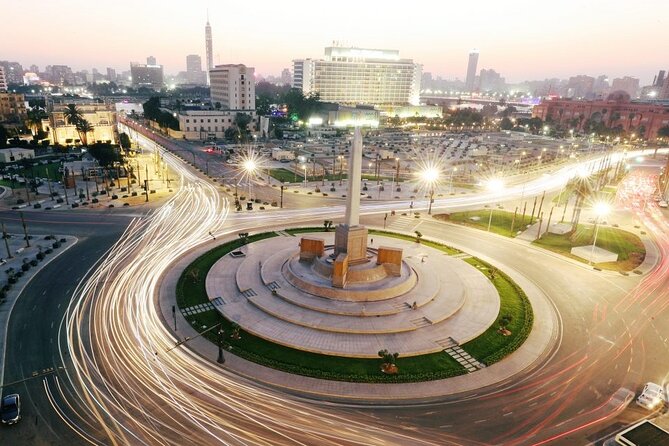
Your stop at Liberation Square (Midan el-Tahreer) is short—about 30 minutes—but it adds context that most pyramid-only days miss.
Midan el-Tahreer is linked to the 2011 protests that became known as the Arab Spring. On paper, that sounds heavy. In real life, it’s a traffic circle with major roads meeting. The contrast is part of the point: you’re looking at political history in the middle of Cairo’s normal rhythm.
This is one of those stops that works best if you treat it like a quick reset. After hours of stone and artifacts, stepping into a modern square gives you a breather and helps you feel the city beyond the monuments.
You can also read our reviews of more shopping tours in Cairo




Khan al-Khalili: Souvenirs, Spices, and How to Not Get Yanked Around
The day ends with Khan al-Khalili, a market area dating back to the 14th century. You get about 1 hour here, guided, which is a smart way to do it. Markets like this are easy to enjoy but also easy to overdo if you wander without a plan.
Khan al-Khalili is where you can pick up souvenirs and browse for spices. It’s also where you’ll feel the sensory overload—sound, motion, colors, bargaining. With a guide, you’re less likely to get stuck in a “too expensive” conversation for an hour.
One important caution: some full-day Cairo tour formats can include time in shops that sell papyrus products. In at least one past experience, a papyrus stop felt overpriced and pushed as an “original” product. You can avoid that headache by asking early whether your day includes a papyrus shop, and what the pricing approach will be. If you’re not interested, say so calmly and stick with the market time you want.
Photo Time on the Giza Plateau: Getting the Shots Without Stress
You get a dedicated panoramic view moment—about 30 minutes—specifically for photographing the pyramids. That matters because the best pyramid photos are rarely the ones you grab while rushing between sites.
This is also where you can slow your breathing and take in the whole complex. If you’re the kind of person who wants “one iconic shot” for your camera roll, you’ll likely be glad this time is built into the schedule.
If your phone battery runs hot in the sun, bring a portable charger. That’s not tour-specific advice—it’s just smart for Cairo.
Logistics and Comfort: Private Vehicle, Pickup, and Bottled Water
This is set up with hotel/port pickup and drop-off, plus transport by private vehicle. For Cairo, that’s not just convenience. It reduces the “how do I get from here to there” pressure when you’re already dealing with crowds and heat.
Bottled water is included, which helps. You’ll still want to move carefully in the midday sun, especially in summer months. The tour runs 8–10 hours, so treat hydration as part of the plan, not an afterthought.
The tour also lists a mobile ticket option and group discounts. Even though it’s described as a private tour/activity for your group, those elements can still matter for how the day runs smoothly at ticketing points.
Price and Value Check: Why $8 Can Still Turn Into More
The listed price is $8.00 per person, which seems unusually low for a full-day Cairo/Giza combo. I can’t guarantee how that price reflects your final bill, because the key details say entry fees and pyramid interiors can be extra depending on options.
Here’s the value math you should do before you book:
- What’s included: private transport, pickup/drop-off, bottled water, and admission ticket coverage for basic areas at stops
- What’s often extra: inside pyramid tickets, tips, and optional items like a lunch stop
Lunch is described as optional, with koshari mentioned as a local restaurant option. If you skip lunch, you may still be fine—but you’ll want snacks or a plan to eat without delaying the group.
Also remember: tips are not included. In practice, that means you should bring some cash for your guide and driver.
The big takeaway: the tour is likely a strong value if you want the classic sights in one day and you’re okay paying for any “must-have” upgrades like pyramid interiors.
Guide Quality Can Make or Break Your Day
One of the clearest patterns in feedback is that guides are the difference between a good tour and a memorable one. In the names that show up with strong praise, you’ll see:
- Osama (praised for professionalism and friendliness)
- Sayed Amin (praised for making Egyptian history come alive)
- Mohammad (praised for thorough explanations and caring for safety)
- Hamafa (praised for smart viewpoints and good museum time)
- Nehad (praised for clear English and helpful care)
- Ahmed (praised for attentiveness and treating guests like family)
- Bossi (praised for making Cairo/Giza history feel easy to follow)
Not every guide will be your perfect match, and language level can vary. If English clarity matters to you, it’s worth asking what languages the guide speaks and whether the guide can tailor explanations to your pace.
Also, watch how you respond if your guide suggests extra stops outside the main sites. If you’re not interested in shop-style detours, say so early and politely.
Who This Tour Fits (and Who Might Prefer a Slower Day)
This tour fits you if:
- You want Giza + Egyptian Museum + Khan al-Khalili in one organized day
- You like a clear schedule and hate the stress of transit planning
- You’re okay with paying extra if you decide to go inside a pyramid
It may not fit you as well if:
- You prefer long, slow museum wandering and deep site time
- You get cranky when the day runs tightly packed (8–10 hours is still long)
- You strongly dislike market pressure and would rather do shopping on your own time
If your ideal Egypt day is “one pyramid, one museum gallery, then a cafe,” you might do better with a more relaxed half-day structure. But if your goal is classic highlights, this is built for that mission.
Should You Book This Cairo Full-Day Tour?
Yes, I’d consider booking it if your priority is hitting the big Cairo icons efficiently. The combination is the point: pyramids and Sphinx in the morning, Egyptian Museum time in the middle of the day, then Liberation Square and Khan al-Khalili to end on something distinctly Cairo.
Before you lock it in, do two smart checks:
- Confirm what’s included versus what costs extra, especially inside-pyramid access.
- Ask whether your day includes any shop-style stops like papyrus sales, and decide in advance if you want that time.
If you’re flexible about the schedule and you go in knowing where extra costs can appear, this can be a high-value way to see a lot of Egypt in one day without getting stuck in logistics.
FAQ
What time does the tour start?
The tour start time is 8:00 am.
How long does the tour last?
The duration is listed as about 8 to 10 hours.
Is hotel pickup and drop-off included?
Yes. The tour includes hotel/port pickup and drop-off.
Are tickets to go inside the pyramids included?
No. Inside pyramid visits are not included, and you can buy additional tickets during the tour if you want to enter.
What is included in the price besides transportation?
Included items are transport by private vehicle, private tours, hotel/port pickup and drop-off, and bottled water. Admission is described as included for basic areas at stops.
Is lunch included?
Lunch is listed as optional. koshari at a local restaurant is mentioned as an optional lunch choice.
Can I cancel for a full refund?
Yes. You can cancel up to 24 hours in advance for a full refund. If you cancel less than 24 hours before the start time, the amount paid is not refunded.
What happens if weather is bad?
This experience requires good weather. If it’s canceled due to poor weather, you’ll be offered a different date or a full refund.