REVIEW · LUXOR
Private tour Valley of the Kings and King Tutankhamun Tomb
Book on Viator →Operated by Luxor Travels · Bookable on Viator
Tut’s tomb hits differently in person. This private West Bank tour pairs a qualified Egyptologist guide with air-conditioned transport, so you’re not just hopping between sights—you’re getting the story that makes each stop click. You’ll see the Valley of the Kings and the UNESCO-listed highlights around it, including Hatshepsut’s Deir el Bahari and the Colossi of Memnon.
What I like most is the value for a private setup at $55 per person, especially with hotel pickup and drop-off included. You also get a guide who can slow down for questions, so you’re not racing like it’s a theme-park queue. One thing to plan for: entrance fees aren’t included, and with multiple tomb stops, you’ll want a bit of cash ready for tickets (and keep an eye on payment preferences).
In This Review
- Key highlights you’ll actually feel on the day
- Price and Logistics: What You’re Paying For
- The West Bank Morning: Pickup, Air-Con, and Getting Oriented
- Valley of the Kings: The Necropolis That Explains Tutankhamun
- A small reality check
- Tutankhamun’s Tomb: The Famous Face-to-Face Moment
- The private part you’ll appreciate
- Ramses III in KV11: Colorful Reliefs and Strange Side Scenes
- Why this stop is worth your time
- Ramses IX: The Ceiling Moment (and a Sarcophagus You Notice)
- Tomb of Merenptah (KV8) and Howard Carter Connections
- Deir el Bahari and Hatshepsut: Your Big Temple Reset
- Practical tip
- Colossi of Memnon: Two Statues, Three Generations of Royal Memory
- Who This Tour Suits Best (and Who Might Prefer Different)
- What to Bring: Heat, Photos, and Payment Prep
- Guide Factor: Amin and Tahir as Examples of the Human Difference
- Should You Book This Private Tutankhamun Tour?
- FAQ
- What time does the tour start?
- Is hotel pickup included?
- Is this a private tour?
- How long is the tour?
- Are entrance fees included?
- Can I cancel for a full refund?
Key highlights you’ll actually feel on the day
- Private guide time means your questions don’t get swallowed by a group schedule
- 8:00am pickup from central Luxor or the harbor keeps your day efficient in the heat
- Valley of the Kings + Tutankhamun tomb gives you the big moment plus context around it
- Tomb-to-tomb variety: KV11 Ramses III, Ramses IX, and Merneptah’s KV8 (and more nearby)
- Deir el Bahari and Hatshepsut add a major temple break from darker tomb corridors
- Admission fees are extra, so budget ahead instead of getting surprised at the gates
Price and Logistics: What You’re Paying For
At $55 per person, this is one of those Luxor deals that looks simple until you add up the parts. You’re getting a private Egyptologist guide plus air-conditioned vehicle transport and hotel pickup and drop-off. In other words, you’re not paying just for the sites—you’re paying for a smoother day and a human translator of Ancient Egypt.
The trade-off is that entrance fees are not included. That means the headline price won’t match what you pay at the gate. Plan on extra costs for tombs/temple admissions, and keep small flexibility in your day in case you choose to add or swap sites.
Time-wise, the tour runs about 5 hours starting at 8:00am. That morning start matters in Luxor. The Valley of the Kings isn’t the place you want to tour at peak heat with a loose plan and no schedule.
You can also read our reviews of more private tours in Luxor
The West Bank Morning: Pickup, Air-Con, and Getting Oriented
You start with 8:00am pickup from a hotel in central Luxor or from the harbor, then head into the West Bank. The air-conditioned ride isn’t just comfort—it’s practical. You’ll be walking in sun and climbing in and out of tomb entrances. A cooled break before you start makes the day feel easier.
Once you arrive near the Necropolis of Thebes, your Egyptologist guide frames what you’re seeing. This is where a private tour pays off. Instead of treating tombs like isolated “rooms with carvings,” you understand what each tomb design is trying to do—protect, honor, and guide someone through the afterlife.
Valley of the Kings: The Necropolis That Explains Tutankhamun
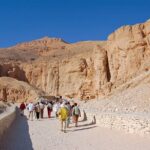
The first major stop is the Valley of the Kings. This is where you get the “why this place exists” feeling. Even if you already know the headline name—Tutankhamun—I like that the tour starts with the larger setting first. You learn how the Valley fits into royal burial traditions in the New Kingdom era.
The provided time is about 1 hour here, which is enough for the big picture and for a guided walk through key points. A good guide also helps you read tomb labels and layout ideas so you can make sense of what you’re looking at later. You won’t have to guess why one tomb feels busier, darker, or more “decorative” than another.
A small reality check
You’re dealing with uneven paths, stone steps, and tight corridors inside tombs. This tour moves at a friendly pace, but it’s still an active day. Wear shoes you trust and plan your energy accordingly.
Tutankhamun’s Tomb: The Famous Face-to-Face Moment
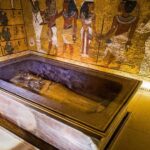
Next is the stop everyone bookmarks: the Tomb of Tutankhamun. This is the one you’ve heard about for years, and seeing it in context is the difference between “I saw it” and “I get it.”
The big facts you’ll hear on the ground are powerful: Tutankhamun became king at about 10 years old and died at 19. That timeline makes the experience feel human, even though it’s royal myth and archaeology doing the heavy lifting.
From a practical standpoint, the time at this stop is about 25 minutes. That’s not a long museum visit, but it’s workable if your guide is helping you focus on what matters. You’ll also learn the key detail that helps you interpret the whole Tut story: his famous golden mask is displayed at the Egyptian Museum in Cairo. In the Valley, you’re connecting the site itself to the broader Tut legacy—not just chasing a single artifact.


The private part you’ll appreciate
If you get a guide like Amin (one guest specifically praised him as exceptionally knowledgeable and very friendly), you’ll likely get extra clarity and time to explore at your own pace. That matters in tombs. You don’t want your “Tut moment” reduced to a quick photo sprint.
Ramses III in KV11: Colorful Reliefs and Strange Side Scenes
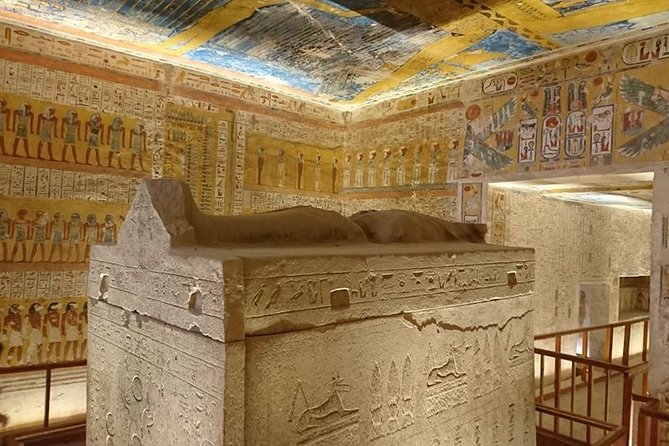
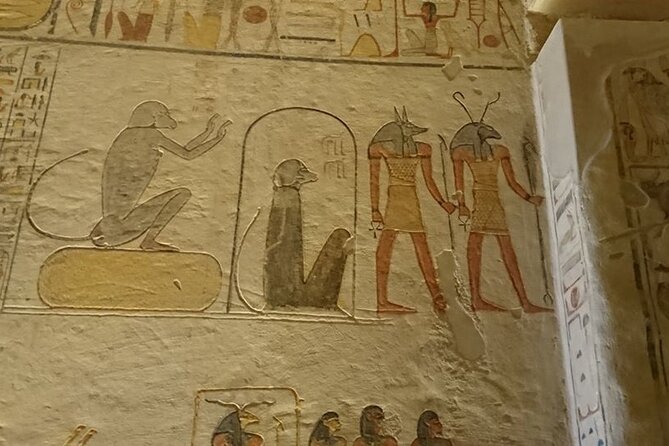
After Tut, the day shifts into the “so this is what else was going on” phase. The tour includes Tomb of Ramses III (KV 11), where the design becomes a lesson in how Egyptians imagined protection and passage.
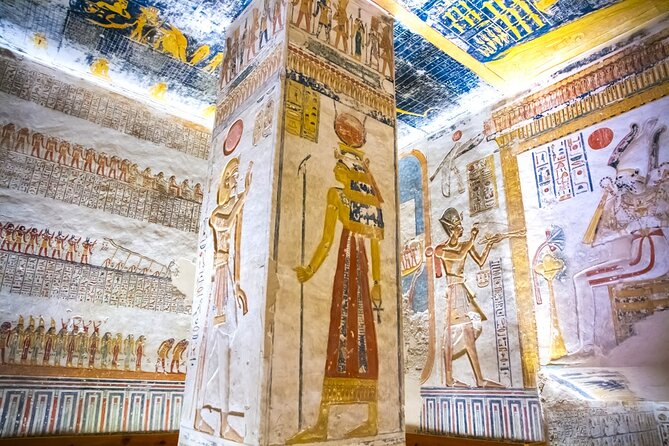
One of the most interesting details you’re likely to hear here: KV11 has colorful painted sunken reliefs with ritual texts (the tour mentions things like the Litany of Ra and the Book of Gates). That focus helps explain why royal tombs weren’t just decoration. They were instructions—religious directions for what comes next.
But KV11 also has a twist: there are secular scenes in side rooms, including foreign tributes such as detailed pottery from the Aegean. The tour info also points out the “alternate name” idea: the blind harpists—which is tied to the tomb’s nickname, often called the Tomb of the Harpers.
Why this stop is worth your time
Tutankhamun is the headline, but Ramses III is the reminder that the Valley is a system. You’re seeing different approaches to the afterlife across rulers, not one frozen moment in time.
Ramses IX: The Ceiling Moment (and a Sarcophagus You Notice)
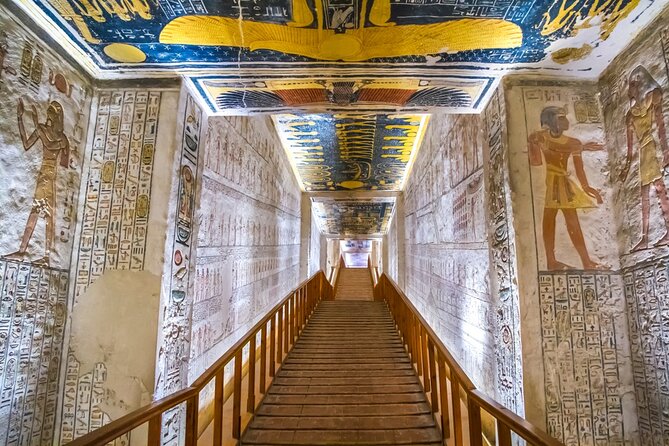
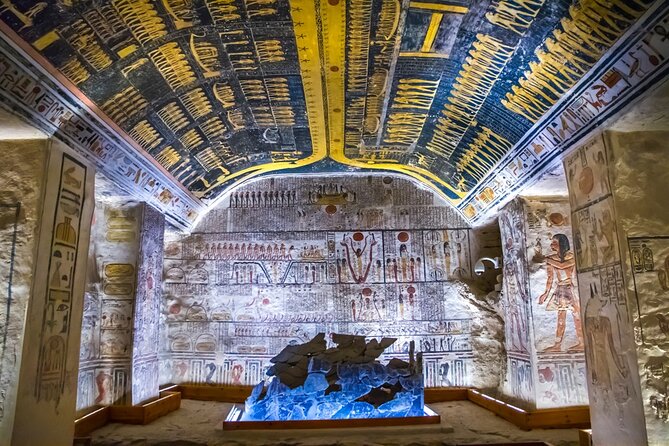
The next tomb stop is Tomb of Ramses IX. This one is described as packed with color and detail, including work on a ceiling above the sarcophagi featuring the goddess Nut stretching across the space.
You’ll also be told that the sarcophagus is one of the largest in the Valley, even if some of the paintings have deteriorated. That’s an important point for managing expectations: tomb art can be stunning and still show wear. Understanding that helps you appreciate what remains instead of feeling like something “wasn’t as good as photos.”
The stop time is about 25 minutes, which is enough to see the main decorative layout and absorb the guide’s interpretive notes.
Tomb of Merenptah (KV8) and Howard Carter Connections
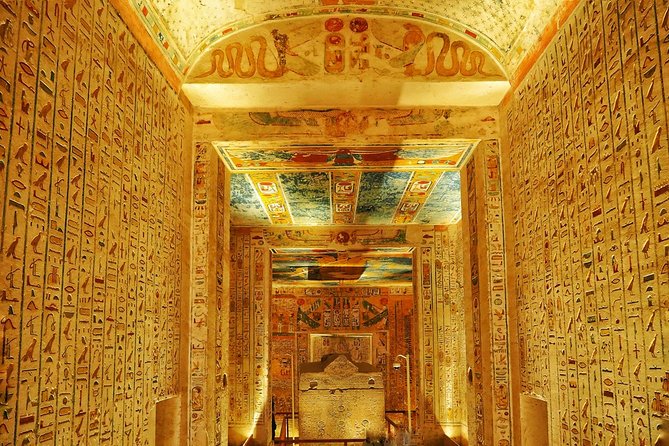
The tour also includes Tomb of Merenptah, noted as Tomb 8 in the Valley of the Kings. The guide explanation here is very “Egyptian belief meets architecture.” The information you’ll hear connects Ptah (and also Ptah’s falcon form as a deity) to the protective role of figures placed in tombs.
You’ll also get a historical archaeology note: Howard Carter is credited with discovering this tomb in 1903 (as listed in the tour details). That’s a nice bridge between ancient burial design and modern excavation history—especially since the tour later includes a Howard Carter House stop in the Valley area.
The tour info emphasizes a change in design: fewer lateral rooms, but higher corridors and rooms. In plain terms, it can feel more open and tall as you move through.
Deir el Bahari and Hatshepsut: Your Big Temple Reset
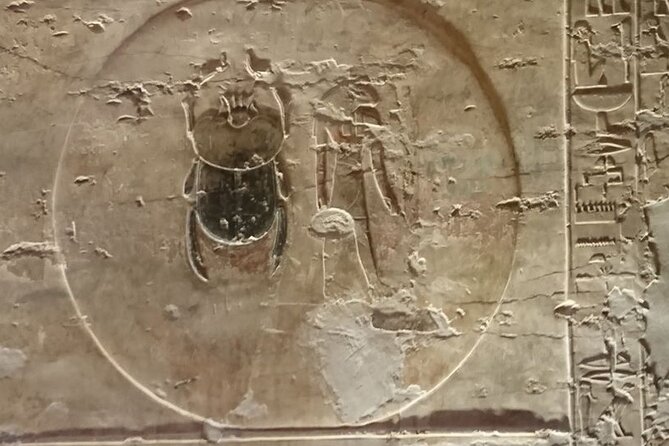
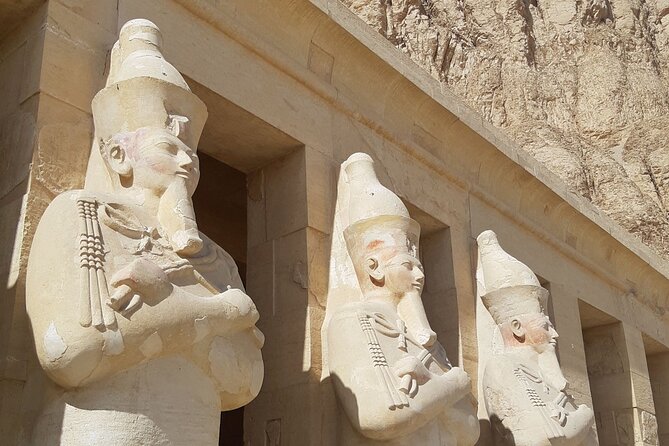
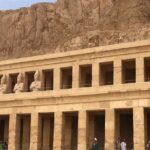
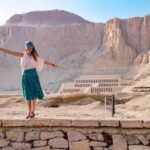
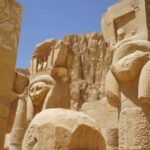
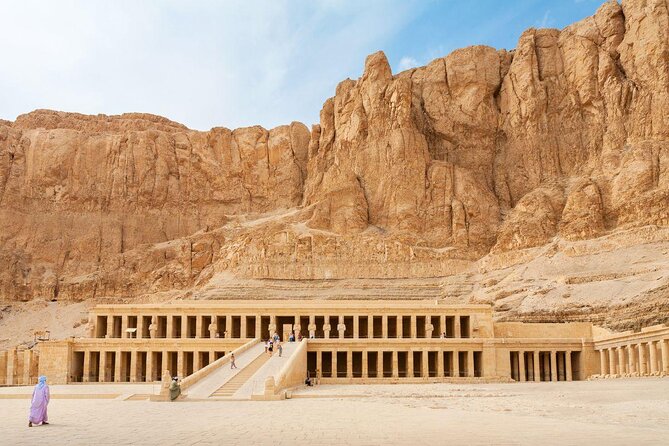
Between tomb darkness and tomb darkness, this is the sanity saver: Deir el Bahari and the Temple of Queen Hatshepsut.
The guide framing is key. Hatshepsut is described as the only woman to reign as Pharaoh, and she’s noted as an ancestor of Tutankhamun within the same dynasty. So this stop isn’t random sightseeing. It’s the family timeline—how Tut’s world sits inside a longer dynasty story.
The temple visit is about 1 hour. That’s enough time to notice the layout and appreciate why people consider this one of Luxor’s top architectural sights. It also gives you a break from the enclosed tomb spaces.
Practical tip
Deir el Bahari can be sunny and exposed in parts. Bring water and consider a hat that you can actually tolerate after wearing it all morning.
Colossi of Memnon: Two Statues, Three Generations of Royal Memory
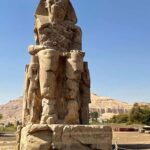
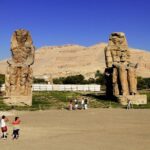
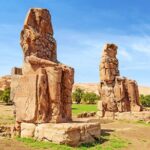
The final major stop is the Colossi of Memnon. These are described as the two largest ancient statues in Egypt, dating back to Amenhotep III. The tour info also connects the family line: Amenhotep III is the father of Akhenaten and the grandfather of Tutankhamun.
That means by the time you reach this stop, you’ve seen a full chain—Hatshepsut’s dynasty link, Tut at the peak of fame, and then the royal lineage anchored by Amenhotep III’s monumental statues.
The time here is short (about 15 minutes), so keep it simple: take in the scale, read what your guide points out, and get the photos you’ll want later. Then you’ll be driven back to your hotel in an air-conditioned vehicle.
Who This Tour Suits Best (and Who Might Prefer Different)
This tour is a strong fit if you want:
- A private Egyptologist guide to explain what you’re looking at, not just where to stand
- The major West Bank hits in one morning: Valley of the Kings, Tut’s tomb, Hatshepsut, Colossi of Memnon
- A structured day that includes transport and pickup, so you spend less time negotiating and more time understanding
It’s also a good choice for first-timers who feel overwhelmed by the sheer number of tombs in the Valley. The guide role is basically your shortcut through the complexity.
You might want something else if you prefer slower, standalone visits to just one or two tombs. With multiple stops packed into a 5-hour window, this can feel like “see a lot” rather than “linger forever.”
What to Bring: Heat, Photos, and Payment Prep
Luxor can be hot, and at least one guest specifically advised to use cream up and take a hat. Do both. Sunscreen and a hat are not “nice to have” here—they’re survival basics.
For photos, remember that tombs can be dim. You’ll get chances, but don’t expect every corner to photograph perfectly. Your best photos often come from patient looking, not nonstop shooting.
One more practical note from a lower rating: guides can be picky about currency—this person suggested having payment in Euros or USD, not Egyptian pounds. I can’t promise every situation will be like that, but it’s a safe habit. Bring some USD or EUR just so you’re not scrambling.
Guide Factor: Amin and Tahir as Examples of the Human Difference
Private tours live and die on the guide. Two names came up in the feedback you provided: Amin and Tahir. Amin was praised as extremely knowledgeable and friendly, with good pacing and time for questions. Tahir was also described as helpful and informative, with lots of information packed in.
Even if you don’t get those exact guides, the takeaway for you is this: ask questions early. A great Egyptologist guide will steer your attention. If your questions are strong, your tour tends to feel personal fast.
Should You Book This Private Tutankhamun Tour?
If you want a smart, time-efficient Luxor West Bank morning that connects Tutankhamun to the broader Valley and dynasty context, this is an easy yes. The standout value is the combo of private guiding + pickup/transport at a price that won’t blow up your budget—especially since it’s a morning start designed around comfort and access.
I’d book it if:
- you want the “big name” moments plus context
- you like explanations and want your questions answered
- you prefer not to handle logistics on your own
I might skip or compare if:
- you hate moving quickly between tombs
- you’d rather spend more time at fewer sites
- you don’t want extra spending for entrance fees
Bottom line: for $55 per person, a private guide makes this tour feel like more than a checklist. With the right sun protection and a little planning for ticket costs, you’ll come away understanding why these sites mattered—long before they became famous.
FAQ
What time does the tour start?
The tour starts at 8:00am.
Is hotel pickup included?
Yes. Hotel pickup and drop-off are included, with pickup from central Luxor or the harbor.
Is this a private tour?
Yes. It’s private, so only your group participates.
How long is the tour?
The tour lasts about 5 hours.
Are entrance fees included?
No. Entrance fees are not included.
Can I cancel for a full refund?
Yes, you can cancel for a full refund if you cancel up to 24 hours in advance of the experience’s start time. If you cancel less than 24 hours before, the amount paid is not refunded.