REVIEW · LUXOR
Private Luxor East Bank’s Best Sights from Luxor
Book on Viator →Operated by Luxor Travels · Bookable on Viator
Private tours in Luxor can feel like magic—because you control the pace. This one is built for the East Bank’s big hits, with an Egyptologist guiding you through Karnak Temple and Luxor Temple, plus a museum stop that adds context fast.
I love that the day mixes scale and story: you start with artifacts you can connect to the temples, then you walk into the places those ideas were staged. I also like the hands-on guidance from Ragab El Motgalye, an Egyptologist guide described as both sharp and hardworking, with a background that includes working alongside an archaeologist on a Luxor dig. The one possible drawback is timing and entry costs: the route is packed into about 5 hours, and the notes around admission fees aren’t perfectly consistent—so plan to confirm what you’ll pay for entry tickets before you go.
In This Review
- Key points at a glance
- Why this East Bank loop feels smarter than doing it piece by piece
- The morning logistics: 8:00 am pickup and an air-conditioned ride that buys you time
- Stop 1: Luxor Museum—Tutankhamun finds and Sobek the crocodile god
- Stop 2: Luxor Temple—Amun-Ra, Mut, Khonsu, and Ramses in the mix
- Stop 3 and core of the day: Karnak Temple—Hypostyle Hall energy and Sacred Lake atmosphere
- The short stops that still count: Avenue of the Sphinxes and the Thutmoses I obelisk
- The real value: an Egyptologist who helps you read the temples
- Tickets and the price: does $59 feel fair for a private East Bank day?
- Who this tour is best for (and who should look at other options)
- A small bonus: support beyond the itinerary
- Should you book Private Luxor East Bank’s Best Sights from Luxor?
- FAQ
- What time does the tour start?
- How long is the private tour?
- Is hotel pickup and drop-off included?
- Is this a private tour?
- Are entrance fees included in the price?
- What is the cancellation policy?
Key points at a glance
- East Bank focus: Karnak and Luxor Temple, plus the Avenue of the Sphinxes and Sacred Lake, in one efficient loop
- Museum context first: Luxor Museum brings you face-to-face with Tutankhamun-related finds and the Sobek crocodile god statue
- Private Egyptologist-led pacing: your guide helps you notice what matters, not just what you see
- Air-conditioned pickup and drops: hotel round-trip transport is included, so you waste less time figuring things out
- A guide who can help beyond the tour: one review highlights Ragab organizing an airport cab deal afterward
Why this East Bank loop feels smarter than doing it piece by piece
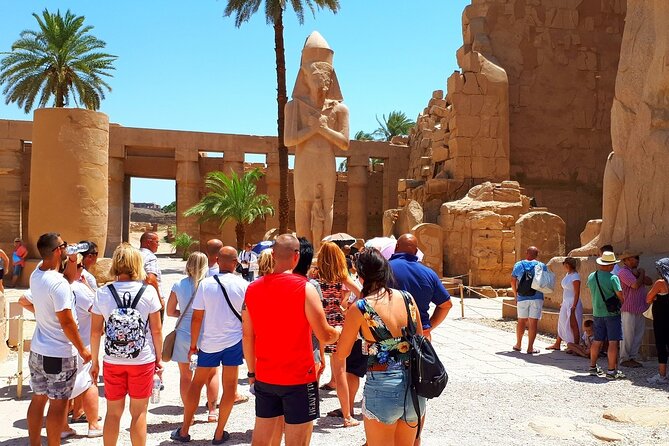
If you only have a day in Luxor, you can easily end up seeing monuments but missing the “why.” This tour tackles that problem. You visit Luxor Museum first, then go straight into the sacred spaces of Karnak and Luxor Temple. That order matters because the museum artifacts help you recognize the same themes—kingship, gods, and the way power was shown in stone.
The other smart move is that it’s private. You’re not stuck listening from the back while other people rush ahead. You can slow down on the columns, pause by wall carvings, and let your Egyptologist connect dots. One review called out how seeing Karnak at night (like at the Sound and Light Show) is nice, but that daytime scale is something your brain has to experience in person.
The tour is also realistic. It’s about 5 hours and built around a classic East Bank lineup, with hotel pickup at 8:00 am and air-conditioned transportation. That makes it easier to plan the rest of your day—dinner, a Nile cruise, or just a nap that you’ll absolutely deserve.
You can also read our reviews of more private tours in Luxor
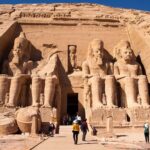
The morning logistics: 8:00 am pickup and an air-conditioned ride that buys you time
This starts at 8:00 am with hotel pickup and drop-off in an air-conditioned vehicle. That’s not just comfort—it’s strategy. Luxor traffic and heat can mess with your energy. When transportation is handled, you can focus on the archaeology, not on coordinating rides.
Because it’s a private tour, you should feel the schedule working for your group. You get a guide throughout the day, so you’re not restarting your “learn mode” at every stop. Even the short segments—like the Avenue of the Sphinxes and a Thutmoses I obelisk view—stay connected to the bigger story of Karnak.
One practical thing to keep in mind: the day moves. You’ll get some free time at each ancient site, but the overall route is built to fit major monuments into one morning and early afternoon.
Stop 1: Luxor Museum—Tutankhamun finds and Sobek the crocodile god
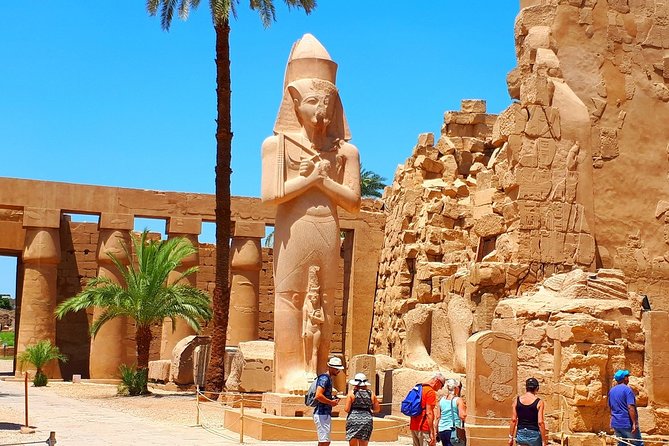
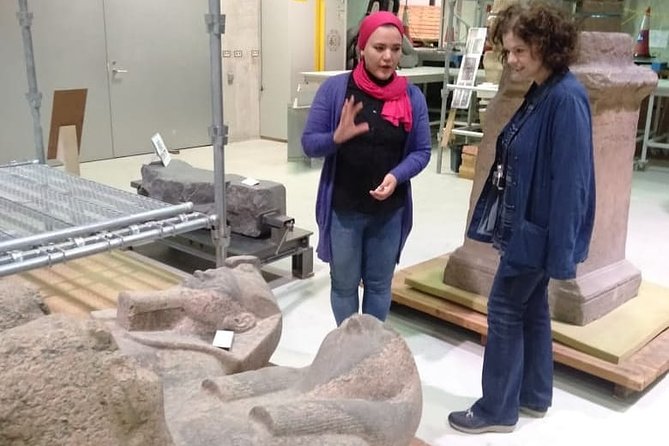
Luxor Museum is a short stop, but it’s the part that makes the rest of the tour click. You’re brought to the museum and shown a collection of items found in Luxor. Some of those are linked to Tutankhamun’s tomb, which helps you understand how Luxor connects to the wider story of Egypt’s royal monuments.
Then there’s a highlight that many visitors don’t expect: the statue of Sobek, the crocodile god. Seeing Sobek in person changes how you interpret Egyptian symbolism. It’s not just “religion as text”—it’s gods with animal forms, mixed with royal power and temple life. You’ll also see items related to King Amenhotep III and some mummies.
What I like about doing the museum first is that it sets your brain up for what you’ll see later. Karnak and Luxor Temple are loaded with names, symbols, and purpose-built designs. Without context, you can end up staring at walls and feeling like you’re missing the point. A museum stop helps you get your bearings fast.
Time note: the museum stop is listed around 45 minutes. That’s enough for a guided overview, but it’s not a full museum marathon. If you’re the kind of person who wants to read every label, you might wish for a longer visit—but on a five-hour private route, this timing works.
Stop 2: Luxor Temple—Amun-Ra, Mut, Khonsu, and Ramses in the mix
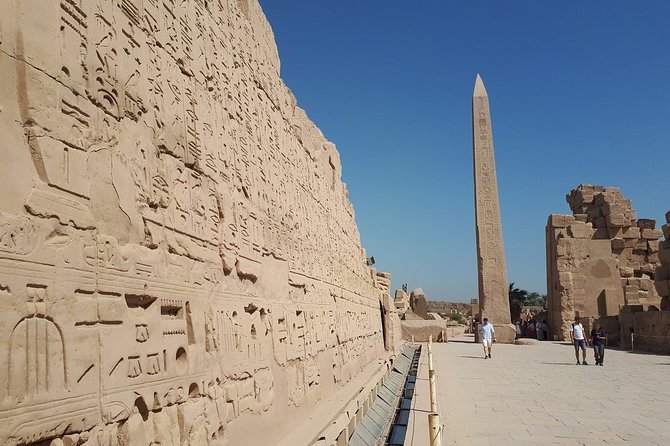
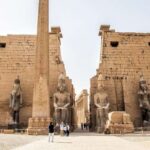
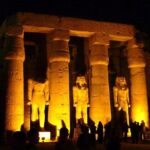
After the museum, you head to Luxor Temple, dedicated to the Theben Triad of Amun-Ra, Mut and Khonsu. That trio is central to how the temple complex represents divine order—what you see isn’t random. Temples like this were designed so the sacred world and the king’s authority sat together in the same space.
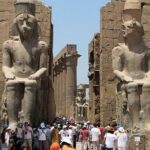
During the guided portion, you’ll notice statues connected to Ramses the Great. That matters because it shows how later rulers reinforced earlier religious and political messages. Egypt’s monuments aren’t only “one moment in time.” They’re layers.
You’ll tour with your Egyptologist, then you’ll get free time to explore. That’s a key balance point: guided interpretation gives you meaning, and the small window on your own lets you wander a little and feel the atmosphere of the temple grounds without someone rushing you along.
Tradeoff: Luxor Temple is less of a maze than Karnak, so it’s easier to absorb quickly. That’s good, but it also means you’ll want to use your free time intentionally—slow down at the big statues and take in how the temple shapes movement.
Stop 3 and core of the day: Karnak Temple—Hypostyle Hall energy and Sacred Lake atmosphere
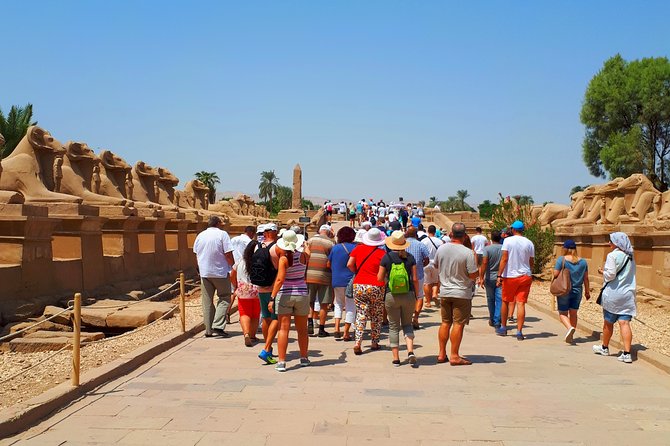
Karnak is the reason most people come to Luxor in the first place. This tour gives it about 2 hours, and within that time you’ll see major sections of the vast temple complex.
Karnak is not one temple. It’s a collection of temples built across many years. That is why it feels overwhelming at first—you’re looking at centuries stacked into stone. The guide’s job is to make it legible. With an Egyptologist leading, you get the “what is this” and the “why is it here,” not just the “what it looks like.”
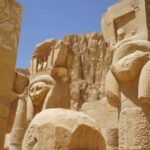
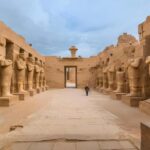
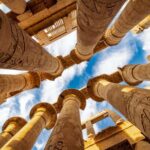
On your route, you’ll pass the Avenue of the Sphinxes, visit parts of the Hypostyle Hall, and see obelisk elements linked to Queen Hatshepsut and Thutmosis I. You’ll also see the Temple of Amon, plus details described such as a granite scarab connected to Amenhotep III.
You’ll also get to the Sacred Lake. That’s one of the quieter parts of Karnak, even though it’s still within the grand sacred space. The lake helps you feel that this wasn’t just about walls and statues; it was part of ritual and temple life. It’s the kind of stop where, if you listen, the whole place starts to breathe.
Why this works as a private tour: Karnak rewards attention. The scale can trick your brain into moving too fast. With your guide, you can pace yourself and understand what to look for—how different areas connect, and how power and divinity are staged in architecture.


The short stops that still count: Avenue of the Sphinxes and the Thutmoses I obelisk
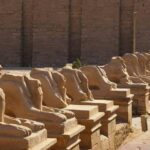
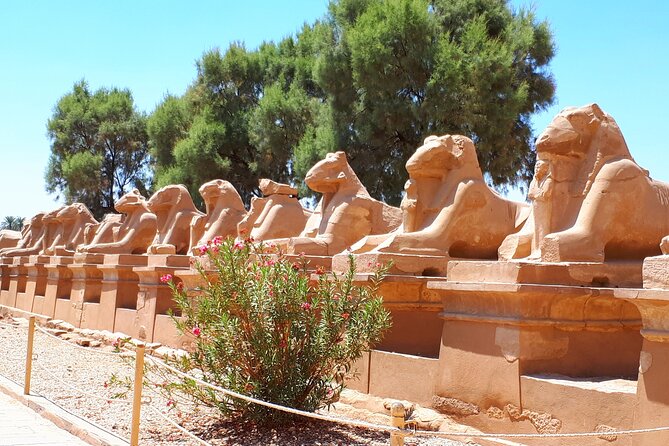
The itinerary calls out two quick viewing points: the Avenue of the Sphinxes and the Obelisk of Thutmoses I.
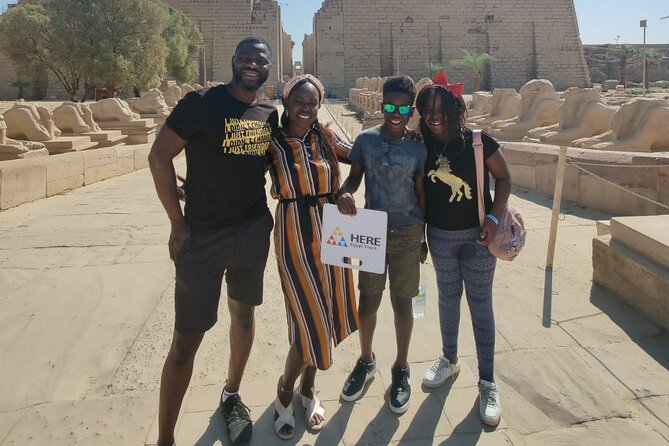
Even though the time is brief, these are the kind of moments you’ll remember because they’re instantly visual. The Avenue of the Sphinxes gives you that dramatic lined-up entrance feeling. You start to grasp how processions were imagined—movement toward the sacred center, guided by repeated symbol after symbol.
The obelisk view is similar. An obelisk is a landmark, and Thutmosis I is one of the names you’ll keep encountering in a Karnak day. Seeing it as a real object—tall, solid, placed with intention—makes the guide’s explanations stick more than if you only hear them.
Use these moments to take photos, sure. But also look up. These monuments are designed for your body’s attention—your neck cranes for a reason.
The real value: an Egyptologist who helps you read the temples
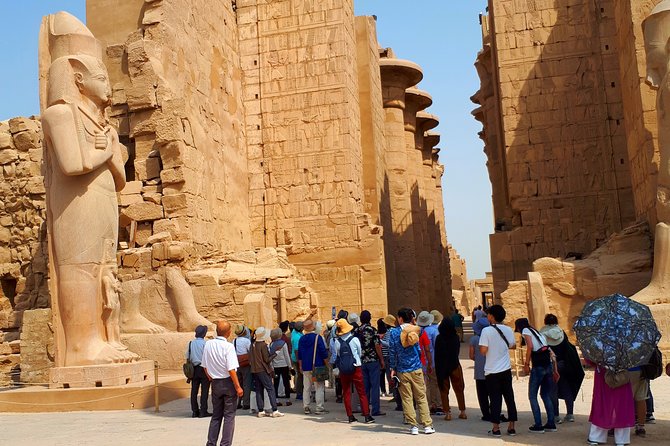
A lot of “temple tours” end up being a fast walkthrough with occasional facts. This one is built around an Egyptologist guide, and that changes what you notice.
Ragab El Motgalye is specifically mentioned in feedback as a very knowledgeable, hardworking guide, and one review also highlighted that he worked with an archaeologist on a Luxor dig. That kind of background tends to show up as clarity: fewer vague statements, more explanation of how symbols and rulers connect to what you’re seeing.
In practical terms, you’ll get commentary on the way between sights as well as at the sites. That matters in Luxor. Travel time is inevitable. When your guide fills that time with context, your whole day feels more efficient.
What you should ask your guide (and what I recommend):
- Which parts of Karnak are meant for which kinds of ceremonies?
- Why does Luxor Temple focus on the Theben Triad?
- What does Sobek represent beyond being a crocodile?
If you can follow the answers, the monuments stop feeling like random greatness and start feeling like a system.
Tickets and the price: does $59 feel fair for a private East Bank day?
At $59 per person, this is a budget-friendly way to do a private itinerary with a named Egyptologist and hotel pickup/drop-off. The pricing makes sense if you compare it to hiring a driver plus a separate guide, then paying for a “shopping detour” you don’t need.
That said, there’s one detail you should double-check before you commit: entrance fees. The tour information lists entrance fees as not included, but it also says entrance fees are included for the mentioned sites. Those two statements contradict each other, and you don’t want surprises when you’re standing at ticket counters.
So here’s the sensible move: confirm the all-in total for entry tickets when you book. If the price is truly all-inclusive, great. If not, you’ll at least know what to budget so you can focus on the sights.
Duration reality check: This is around 5 hours. That’s long enough to cover major monuments with guidance, but it’s short enough that you won’t get hours of independent wandering. If you want museum-level time and slow photography time, you might prefer adding extra hours on your own after the tour.
Who this tour is best for (and who should look at other options)
This tour fits best if you want the East Bank’s biggest monuments in one morning with clear guidance and minimal logistics stress. It’s especially good for:
- First-timers who feel overwhelmed by Karnak’s size
- Couples or small groups who want private pacing
- People who like learning as they go, but don’t want to get stuck reading walls without context
- Anyone who wants Luxor Museum to make sense of the temple scenes
It’s less ideal if you:
- Want lots of solo time inside each site without structure
- Plan to spend extra hours in the museum reading every label
- Prefer a slower tour that turns into a half-day photo walk
The good news is that free time is built in at sites, so you’re not completely boxed in. You just won’t have endless hours either.
A small bonus: support beyond the itinerary
One review mentioned that Ragab also helped organize a cab trip to the airport afterward, with pricing described as cheaper than handling it separately. That’s not something you should assume will happen automatically, but it’s a useful signal: if you need help with practical transport after your tour, it’s worth asking your guide. In Luxor, small planning help can save time and stress.
Should you book Private Luxor East Bank’s Best Sights from Luxor?
Book it if you want a private East Bank day that hits Karnak and Luxor Temple without wasting your time figuring out logistics. The combination of a museum context stop plus guided temple interpretation is a smart way to make the day feel more meaningful than just sightseeing.
I’d still do one quick check before booking: confirm exactly what’s included for entrance fees, since the information you’ll see can be inconsistent. If that’s sorted, this is a solid value way to see the main temples—and to understand what you’re looking at while you’re there.
FAQ
What time does the tour start?
The tour starts at 8:00 am.
How long is the private tour?
It’s about 5 hours.
Is hotel pickup and drop-off included?
Yes. You get hotel pickup and drop-off, and transportation is by air-conditioned vehicle.
Is this a private tour?
Yes. It’s private, and only your group participates.
Are entrance fees included in the price?
The information lists entrance fees as not included, but it also states that entrance fees for the mentioned sites are included. Confirm the total entrance fee situation when you book.
What is the cancellation policy?
Cancellation is free up to 24 hours in advance for a full refund. If you cancel less than 24 hours before the start time, the amount won’t be refunded.