REVIEW · GIZA
Private guide’s trip to Giza pyramids, Great sphinx valley temple
Book on Viator →Operated by gyneno Travel · Bookable on Viator
Seeing the Pyramids without the hassle is key. This private half-day centers on the Giza Plateau’s big hitters—the Great Pyramid, Khafre Pyramid, and the Great Sphinx—with an Egyptologist-led pace that lets you actually understand what you’re looking at. You avoid the usual taxi circus by riding in an air-conditioned, chauffeured vehicle with front-door pickup.
I like two things a lot: first, the guide-led format gives you real time to ask questions, not just a fast walk-by. Second, the tour is designed around comfort and efficiency—hotel pickup, organized stops, and plenty of opportunities for photos at the right angles.
One consideration: most big sites inside Giza have extra ticket costs if you want to enter a pyramid, and optional add-ons like camel rides are not automatically included. Also, four to five hours is plenty to see the classics, but it is not a full-day deep dive.
In This Review
- Key highlights to look for
- Taxi chaos vs. a calm, private Giza half-day
- Pickup, timing, and how the day flows (without feeling rushed)
- Stop 1: The Pyramids area overview that helps you look smarter
- Stop 2: Khufu’s Great Pyramid time, plus the inside-pyramid reality
- Stop 3: Khafre Pyramid for the comparison your eyes will appreciate
- Stop 4: The panoramic three-pyramid viewpoint (plus optional camel time)
- Stop 5: Great Sphinx time and the valley-temple atmosphere
- What you get from a guide like Nader or Engi
- Price and value: is $16 really a good deal?
- Comfort, logistics, and small things that matter in Giza
- Who this tour suits best (and who should rethink it)
- Should you book this Giza pyramids + Sphinx tour?
- FAQ
- Is this a private tour or a group tour?
- How long is the tour?
- Do I need extra tickets to enter the pyramids?
- Are hotel pickup and drop-off included?
- Is camel riding included?
- What if weather is bad?
Key highlights to look for
- Private Egyptologist guiding so you can ask questions as you go, not after
- Hotel pickup and drop-off in a chauffeured, air-conditioned vehicle
- Structured stop timing that balances walking, photos, and explanations
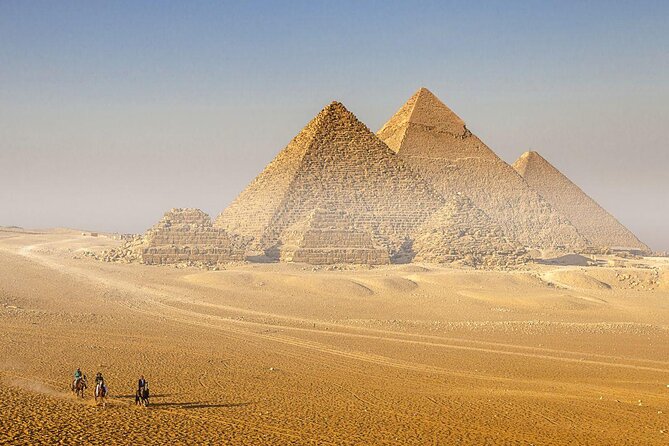
- Photo-focused viewpoints, including a panoramic spot for the three-pyramid view
- Sphinx area time with chances to pause and look around nearby stalls/markets
Taxi chaos vs. a calm, private Giza half-day
Giza is famous for a reason, but let’s be honest: it can feel stressful. The biggest headache is not the monuments—it’s getting from place to place while trying to stay on schedule, decode directions, and avoid the endless back-and-forth of street-level logistics.
This tour flips that. You get the big sights with a driver and guide working together, so you’re not bouncing between multiple taxis. The plan is built around a half-day time window (about 4 to 5 hours) that works well if you have one day in Cairo and don’t want to waste it in traffic.
The other thing you’re buying is attention. A guide like Nader (and also Engi/Engy in other bookings) doesn’t just point. They explain the “why” behind what you’re seeing—stories, theories, and historical context that help you look beyond the postcard version of the Pyramids. Even the pacing feels intentional: you get time to stop, read the scene with your own eyes, and ask questions instead of being hustled.
You can also read our reviews of more guided tours in Giza
Pickup, timing, and how the day flows (without feeling rushed)
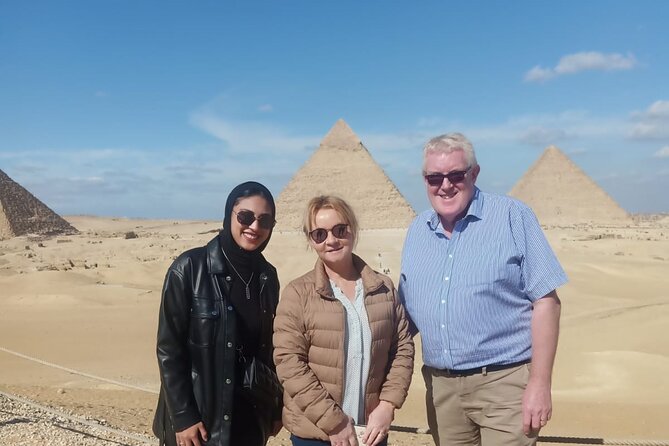
The tour starts with pickup from your hotel in Cairo or Giza. The meeting point is listed as Marriott Mena House near the Pyramids area, but what matters for you is the promise of front-door pickup and drop-off from your accommodation.
Once everyone is collected, you’ll be in your own air-conditioned vehicle for the transfers between stops. That matters because the Giza Plateau can feel bigger than it looks, and walking long distances in the heat gets old fast. With a chauffeured ride, you’re using energy for the sights—not for parking lots and road crossings.
Your guide leads with a short orientation and then moves you through the key stops in a sensible sequence:
- Pyramids of Giza introduction and overview
- Great Pyramid of Khufu (Cheops) area time
- Khafre Pyramid viewing and comparison
- a panoramic viewpoint for the classic three-pyramid picture
- Great Sphinx time with explanations and photo opportunities
Also note the practical side: this is a private tour, so it’s only your group. That tends to make timing smoother, especially for photo stops and questions.
Stop 1: The Pyramids area overview that helps you look smarter
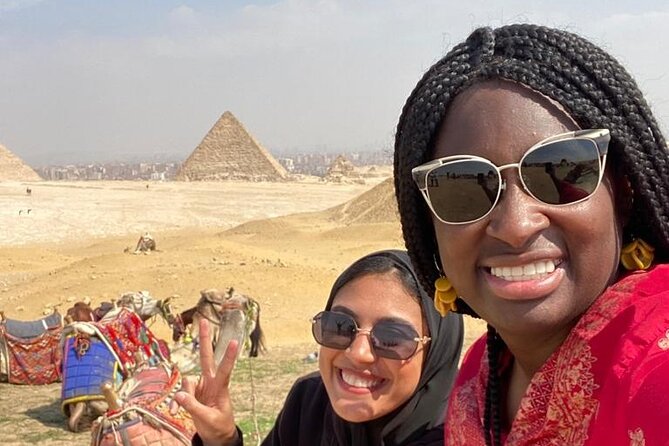
Your first stop is on the Pyramids of Giza area for about 1 hour. This is where the guide sets the stage—how ancient Egyptian civilization developed and what the Giza Plateau means in the big picture.
I like this approach because it prevents that common first-visit problem: you arrive, you see the monuments, and then you leave with only an overwhelming feeling and no hooks to hold the information. Here, you start with context, including different theories and facts that your guide shares along the way.
This orientation is also a good time for your own questions. If you’re the type who wonders how something like the Pyramids could be built the way they were, or why the site layout looks the way it does, you’ll get room to ask instead of being forced into silence.
Admission tickets: the tour notes admission depends on which option you choose, and the time at each stop counts as guided sightseeing. If entry tickets are selected, you’ll use them at the appropriate points. If not, you’ll likely need to buy on-site.
Practical tip: if you want strong photos early, do it here. The first stop is often the easiest time to get a clear “I’m here” set before the day fills up with heat and crowds.
Stop 2: Khufu’s Great Pyramid time, plus the inside-pyramid reality
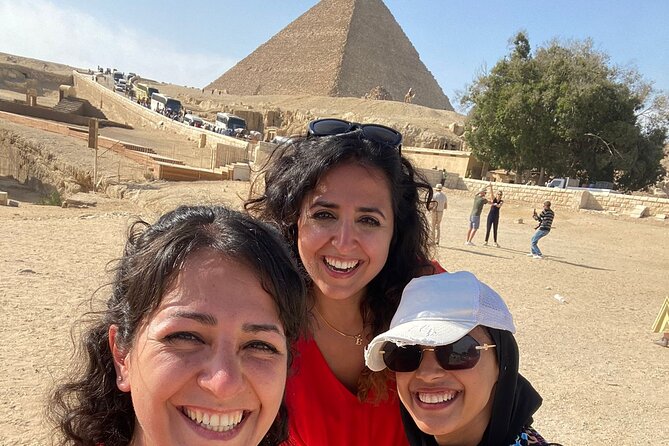
Next comes the Great Pyramid of Khufu (Cheops) with about 1 hour on site. This is the stop most people came for, and the guide frames it as one of the seven wonders—then mixes in explanations and theories about the ancient builders, technology, and purpose.
Here’s the useful part for your planning: the tour’s own details make it clear that going inside any pyramid is extra. You can handle that directly at the ticket office with your guide’s help. So you should decide early:
- If you want interior access, plan for extra time and ticket purchases.
- If you’re happy viewing from outside, you’ll keep the flow tighter.
Even if you do not go inside, this stop is still worth it. Up close, you start noticing why this monument still feels unreal: scale, stonework, and angles that look different depending on your distance.
One more thing: a good guide helps you time your photos. Expect that you’ll pause for pictures, then move before you lose your best light.
Stop 3: Khafre Pyramid for the comparison your eyes will appreciate
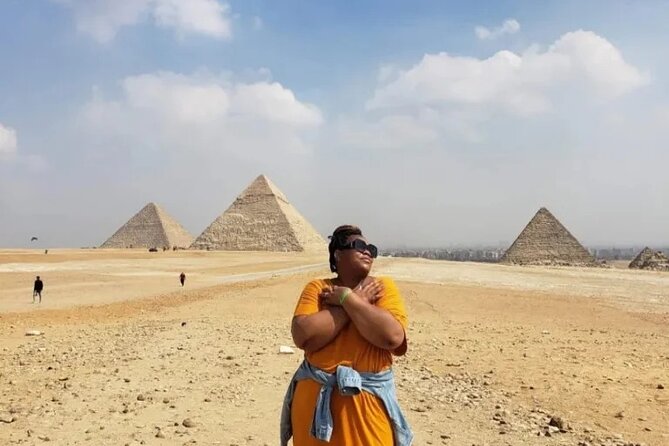
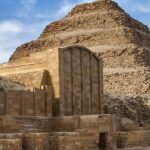
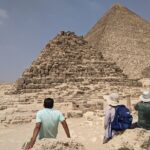
After Khufu, you’ll head to Pyramid of Khafre for about 30 minutes. This short stop can feel quick on paper, but the point is comparison. Your guide escorts you so you can see the differences between the two major pyramids and understand why Khafre built what he built.
This is one of the smartest parts of the tour. Most first-time visitors treat the Pyramids like a single object. Here, you start training your eye to notice how each pyramid differs and what those differences might mean.
For photos, 30 minutes is usually enough if you’re not trying to do a full studio session. If you are, ask your guide to prioritize your best angles first, so you don’t spend the last minutes rushing.
Admission tickets again may be part of your chosen option, but the tour clearly states that entry into pyramids is extra if you want it.
You can also read our reviews of more private tours in Giza


Stop 4: The panoramic three-pyramid viewpoint (plus optional camel time)
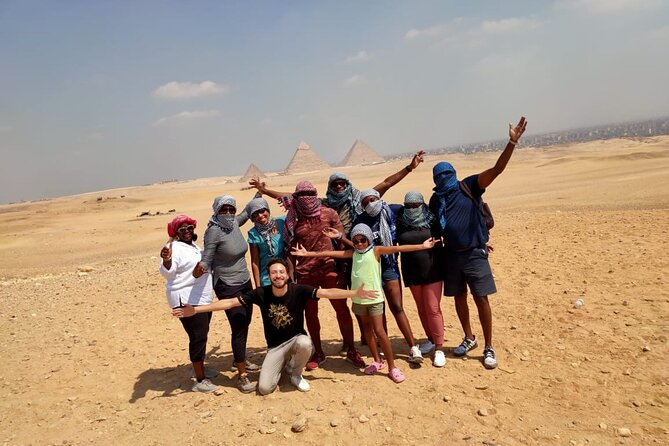
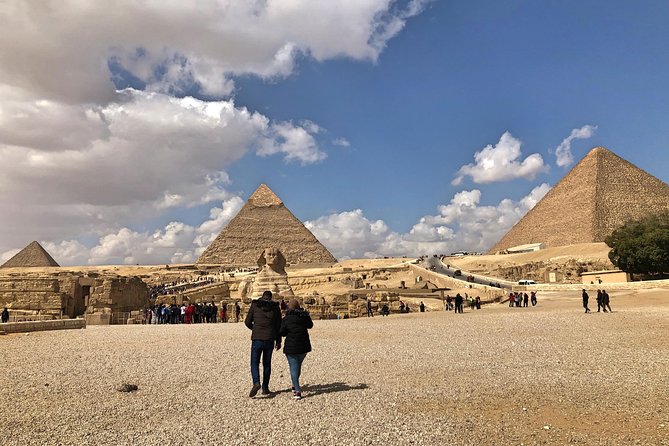
Then you shift to a panoramic view spot on the Giza Plateau with about 30 minutes. This is where your guide takes you to one of the best areas to see the full view of the three pyramids together in a single picture.
If you care about photos, this is not a throwaway stop. It’s a chance to compress the entire “Giza” story into one strong frame. Even if you’re not obsessive about photos, it gives your brain a reference point: you can finally see how the site works as a whole.
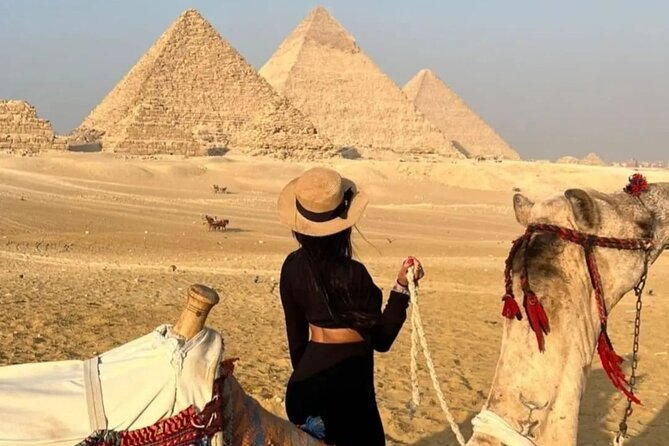
The tour also notes that camel rides can happen here, but they are extra and not included. If you want the ride, you can decide based on the spot conditions and your comfort level. If you don’t, use the time for walking, stretching, and resetting before the Sphinx.
Quick reality check: a camel experience can eat into your photo time, so if you want both, try to ask your guide how to keep it efficient.
Stop 5: Great Sphinx time and the valley-temple atmosphere
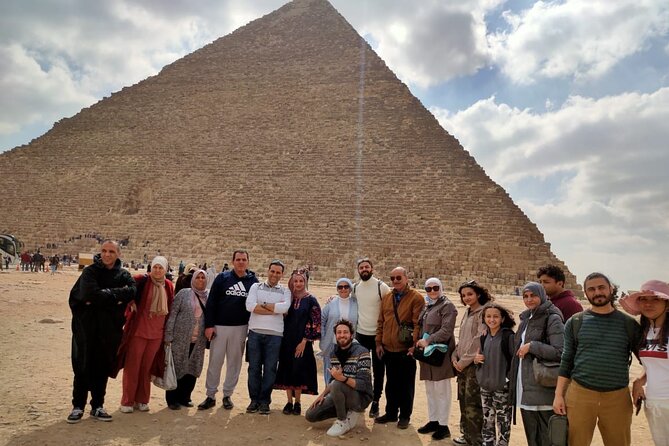
Your final major stop is the Great Sphinx of Giza for about 1 hour. This is a big emotional moment for many people. The Sphinx isn’t just a statue; it’s a presence, and the guide helps you read it with context.
The tour description emphasizes the Sphinx as one of the largest statues in the world, made from a single stone face with a lion’s body. Your guide will explain the masterpiece aspect and spend time on questions people keep trying to solve across decades.
This is also where you can benefit from a guide who is good at turning history into something you can actually follow. In guide-led tours, the best ones connect the story to what you’re seeing right now.
One more practical detail: guides are described as flexible with pacing and time for stops near the markets around the Sphinx. That’s a nice bonus if you want a quick glimpse of everyday life around the monument area, not just the monument itself.
If you’re photographing, keep an eye on how the light hits the Sphinx from different angles. Ask your guide where they suggest standing for the clearest results.
What you get from a guide like Nader or Engi

The reviews and guide details point to a consistent pattern: the best part is how the story is told.
Guides such as Nader have been praised for breaking down Egyptian history in clear, engaging English, staying patient, and answering questions without making you feel rushed. Engi/Engy is also described as energetic and inspiring—someone who makes the monuments feel understandable instead of just awe-inducing.
From a visitor’s point of view, that means:
- You don’t just hear facts. You get explanations you can repeat later.
- You can ask follow-up questions when something doesn’t click at first.
- The pace feels human—walking, pausing, then moving on.
It also helps that some guides show a strong sense of how to handle group needs and picture-taking. If you’re traveling with a phone camera or a serious camera, you’ll likely appreciate someone who knows the angles and when to stop.
Price and value: is $16 really a good deal?
The listed price is $16 per person, which is surprisingly affordable for a private, guided half-day with hotel pickup. But value depends on what’s included and what you’ll pay separately.
Here’s the important breakdown based on the provided details:
- Pickup and drop-off from Cairo/Giza accommodation: included.
- Bottle of water: included.
- Expert guide: included.
- Area entry tickets: included only if you select that option.
- Lunch and camel ride: included only if you select that option.
- Tipping: not included.
- Inside-pyramid tickets: extra at the ticket office.
- Far pickup (airport or 6 October City): extra $10 noted.
- Language-specific guides (French/German/Italian/Spanish): extra $20.
So here’s the “smart shopper” advice: confirm what ticket option you’re choosing. If area entry is not included, you may end up paying more once you add those fees. Still, the private guide + transport can remain good value, especially if you’re traveling as a small group.
If you do include entry tickets, then $16 starts looking like a bargain because you’re paying for organization, time, and expertise—not just access.
Comfort, logistics, and small things that matter in Giza
A half-day means you’re packing in a lot, so comfort matters.
This tour is built around:
- an air-conditioned vehicle
- direct hotel pickup and drop-off
- guided stop durations that help you plan your time
Physical pace: the tour says moderate physical fitness is enough. That suggests you’re doing walking and standing around the sites, but you’re not doing a full marathon. Still, wear good shoes. The ground can be uneven and hot, and you’ll want traction for photos.
Weather: it requires good weather. That’s not a small note—Giza under clear sky is a different experience than cloudy or rainy conditions. If weather gets bad, the plan can be changed or refunded.
Also, service animals are allowed, and the tour is near public transportation, which is useful to know if your plans shift.
Who this tour suits best (and who should rethink it)
This experience fits best if you want:
- the big Giza monuments in a half-day
- a guide with the time to answer questions
- a calmer day with chauffeured pickup instead of taxis
- strong photo opportunities at major stops
You might want to look at another option (or be extra careful with add-ons) if:
- you want lots of time inside multiple pyramids (this tour flags inside access as extra and the schedule is tight)
- you’re trying to turn Giza into a multi-day archaeology project
- you don’t want to handle any ticket decisions at all—because admission choices and inside access are part of the reality here
If you’re a history-minded traveler, a first-timer, or someone who hates feeling rushed, this is a strong fit.
Should you book this Giza pyramids + Sphinx tour?
I’d book it if you want the classics—Great Pyramid (Khufu), Khafre, and the Great Sphinx—with comfort and a guide who can explain what you’re seeing while keeping the schedule realistic.
It’s especially worth it if:
- your group wants private attention and flexibility for questions and photos
- you’re short on time in Cairo
- you’d rather pay for organization than gamble on taxi logistics
Before you hit confirm, do two things:
- verify whether area entry tickets are included in your selected option
- decide if you want inside-pyramid access and/or the camel ride, since those are extra
If those are squared away, you’re left with a very focused, efficient, and genuinely engaging way to experience one of the world’s most famous places.
FAQ
Is this a private tour or a group tour?
It’s a private tour/activity, meaning only your group participates.
How long is the tour?
The duration is about 4 to 5 hours.
Do I need extra tickets to enter the pyramids?
The tour notes that admission for entering any pyramid is extra. You’ll handle that at the tickets office with your guide.
Are hotel pickup and drop-off included?
Yes. Pickup and drop-off to and from your accommodation in Cairo or Giza are included.
Is camel riding included?
Camel riding is included only if you choose that option. Otherwise it’s extra and not included.
What if weather is bad?
The experience requires good weather. If it’s canceled due to poor weather, you’ll be offered a different date or a full refund.