REVIEW · GIZA
Private Guided Tour to the Mosques of Sultan Hassan, Al-Rifa’i, and Ibn Tulun in Cairo
Book on Viator →Operated by Pyramids Land Private Tours · Bookable on Viator
The minarets of Cairo tell a story. In one private morning, you’ll visit Ibn Tulun, Sultan Hassan, and Al-Rifa’i and see how Islamic architecture changes from early forms to Mamluk and Ottoman styles. I especially like the way this tour keeps you moving efficiently, while still giving real context from a private Egyptologist guide. The main thing to watch is the dress code: knees and shoulders must be covered, or you could be turned away.
I love that the route covers three major mosques with very different vibes and dates, so the comparisons feel natural instead of textbook. I also appreciate the practical setup: hotel pickup in Cairo or Giza, a private air-conditioned van with on-board Wi‑Fi, and bottled water so you’re not scrambling before your first photos. The only drawback is that the focus is architecture in broad strokes, so if you’re chasing ultra-specific technical detail, you might want to ask your guide extra questions as you go.
If you’re the type who likes old Cairo but also wants clarity, this is a strong way to spend a morning.
In This Review
- Key things I found most useful
- Van Pickup, Timing, and How to Prepare for a 9:00am Start
- Mosque Order: Why the Route Starts at Ibn Tulun
- Ibn Tulun Mosque: Early Islamic Architecture and That External Staircase Minaret
- Sultan Hassan Mosque and Madrasa (1360): Mamluk Power in Stone
- Al-Rifa’i Mosque (Royal Mosque): Ottoman Style and Royal Tomb Connections
- The Egyptologist Guide Experience: How Private Makes Architecture Feel Clear
- Value and Price: Is $42.86 per Person Worth It?
- Getting the Most From the Sites: Comfort, Walk Pace, and Photo Timing
- Who This Tour Is Best For
- Should You Book This Private Mosques Tour?
- FAQ
- What’s the duration of this private mosques tour?
- What time does the tour start?
- Which mosques are visited?
- Is the tour private or shared?
- Is pickup and drop-off included?
- Do you provide transportation, and is it comfortable?
- What’s included during the tour?
- Is there a dress code for the mosques?
- Is the tour suitable for children?
- Can I cancel for a full refund?
Key things I found most useful
- A true three-mosque comparison in one 4-hour block, so you can actually contrast styles instead of seeing them one by one
- An Egyptologist guide in the driver’s seat, with explanations geared toward what you’re looking at, not just general facts
- Ibn Tulun’s external-staircase minaret as a standout early Islamic architectural feature
- Madrasa + mausoleum at Sultan Hassan, giving you more than a pretty facade
- Al-Rifa’i’s Ottoman-style look and royal connections, including the final resting place of Egyptian royal family members and the last Shah of Iran
- Hotel pickup in Cairo or Giza plus a private van, which cuts down the hassle on a busy morning
Van Pickup, Timing, and How to Prepare for a 9:00am Start
This tour starts at 9:00am, with hotel pickup in Cairo or Giza. You’ll ride in a private, air-conditioned van that includes on-board Wi‑Fi, which is handy if you want to check maps, confirm your ride details, or just stay connected without burning data.
The tour is about 4 hours total, and that matters because these sites are close enough to manage in a morning, but still spread out enough to feel like a real “Cairo mosques” experience. In practice, the timing means you should plan for a steady pace: you’ll be walking, entering, and looking carefully at three different complexes without long breaks.
Before you go, be very literal with the dress code. To enter places of worship on this tour, you must cover knees and shoulders—no shorts, no sleeveless tops—for both men and women. I’d rather you show up dressed and confident than risk being refused entry and losing time.
You can also read our reviews of more guided tours in Giza

Mosque Order: Why the Route Starts at Ibn Tulun
You’ll drive first to the Mosque of Ibn Tulun, then move on to Sultan Hassan, and finish at Al-Rifa’i Mosque. That order works well because it starts with something truly early and still intact, then steps into later power and style.
It also helps you mentally. Early architecture tends to feel simpler and more direct; as the morning progresses, you start noticing heavier symbolism, grander institutional layouts, and more layered designs. By the time you reach the Ottoman-influenced Al-Rifa’i, you’ve already trained your eye to compare.
Tip: since it’s a private tour, you can ask your guide to slow down at specific spots. If you care about photography, you can also ask where the best angles are before you move on.
Ibn Tulun Mosque: Early Islamic Architecture and That External Staircase Minaret
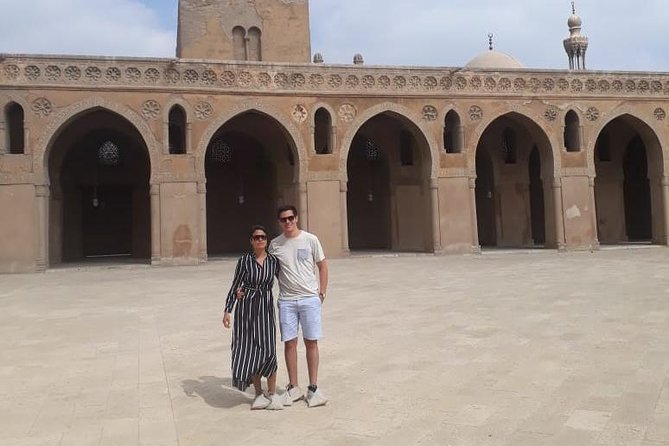
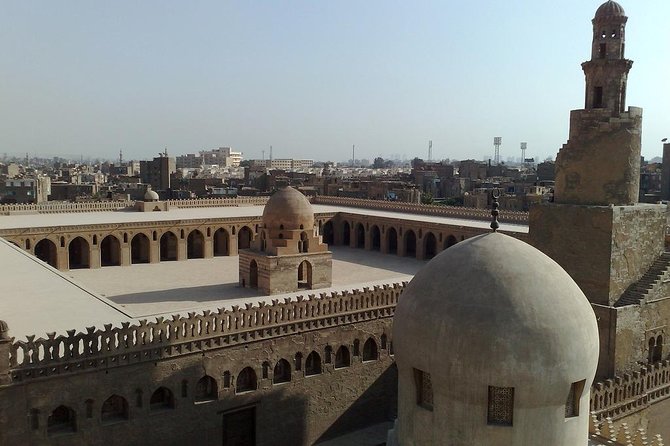
The day begins at the Mosque of Ibn Tulun, often described as the oldest still-intact mosque in Egypt, completed in 879. That one detail changes how you see everything. You’re not touring “old” in a vague way—you’re looking at a site tied to very early Islamic architecture in the region.
One standout feature is its minaret with an external staircase. This is the kind of detail that you’ll notice more when someone points it out. The minaret isn’t just decorative; the design tells you how people historically moved and accessed parts of the structure.
As you walk the complex, your guide’s role is to translate what you’re looking at into clear language. The goal here isn’t to overwhelm you with dates and terms. It’s to help you spot what feels “early” versus what feels later, so you can compare rather than simply admire.
Practical consideration: this is still a working religious space. Be ready to move quietly and respectfully, and expect that the pace may shift depending on visitor flow at each stop.
Sultan Hassan Mosque and Madrasa (1360): Mamluk Power in Stone
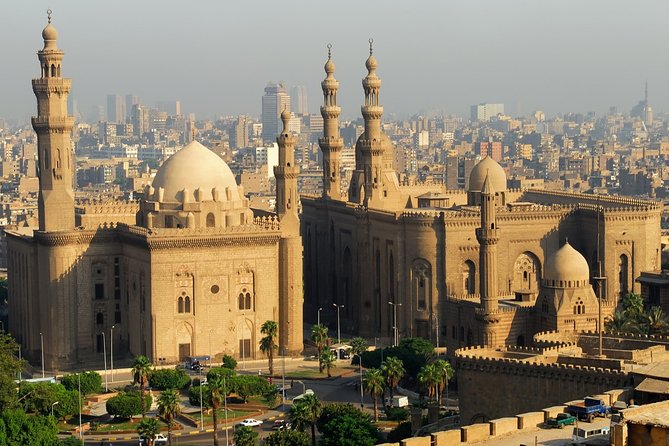
Next you’ll head to the Mosque and Madrasa of Sultan Hassan, dating to 1360. This is where the architectural story really starts to sharpen. The site represents a Mamluk style of Islamic architecture, and you’ll see how the visual language shifts compared with Ibn Tulun.
The complex includes both a mausoleum and madrasas (religious schools). That blend is important, because it means you’re not only seeing a mosque designed for prayer—you’re also seeing a structure built to function as an educational and ceremonial center. If you like understanding how buildings served real roles in daily life, this stop will land well.
What I like about this part of the tour is that it’s easy to connect architecture to purpose. Your guide can point out how monumental mosque design often reflects authority and institution-building, not just aesthetics. You’ll also get more of that “compare mode” feeling here: Mamluk style tends to feel more imposing, more deliberate, and more about complex presence.
If you’re the type who wants to know what you’re seeing, ask your guide how the madrasa layout influences the experience of the complex. Even without getting too technical, it helps you understand why the spaces feel the way they do.
Al-Rifa’i Mosque (Royal Mosque): Ottoman Style and Royal Tomb Connections
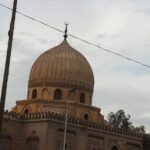
Your final stop is the Al-Rifa’i Mosque, also known as the Royal Mosque. It was constructed in the late 1800s and early 1900s, and it’s known for Ottoman-style architecture. That timeline shift is massive. You’re moving from 1360 and 879 into a much more modern era of monumental religious architecture.
The “why does this matter” part here is the royal and historical context. Al-Rifa’i is the final resting place of members of the Egyptian royal family, and it also includes the burial of the last Shah of Iran, who died in 1980. That detail turns the architecture into something personal and political, not just decorative.
You’ll likely feel the style difference quickly. Ottoman-influenced work tends to read as more patterned and visually formal. Your guide can help you connect those stylistic choices to the broader influences at work during the period of construction.
Photo tip: ask before you move in where the light and angles look best. In a private setting, this is one of those small “you’ll be glad you asked” moments that can make your photos look far more intentional.
You can also read our reviews of more private tours in Giza




The Egyptologist Guide Experience: How Private Makes Architecture Feel Clear
A big reason this tour works is the guide. You’re not doing a bus tour with a quick script. You’re with a qualified Egyptologist guide who can adjust the pace and answer follow-up questions.
In one case I appreciated, the guide named Mahmoud brought a mix of strong English and clear explanations, plus a great sense of humor. That sounds minor, but it matters. When the guide is relaxed and confident, you’re more likely to understand what you’re seeing and enjoy the sites instead of just rushing through them.
For your own experience, this is the moment to lean in. Don’t be shy about asking things like:
- What feature makes this mosque feel Mamluk rather than early Islamic?
- Where should I look for the Ottoman influence at Al-Rifa’i?
- What’s the one detail I shouldn’t miss at Ibn Tulun?
On a private tour, you can turn “general sightseeing” into actual learning without turning the visit into a lecture.
Value and Price: Is $42.86 per Person Worth It?
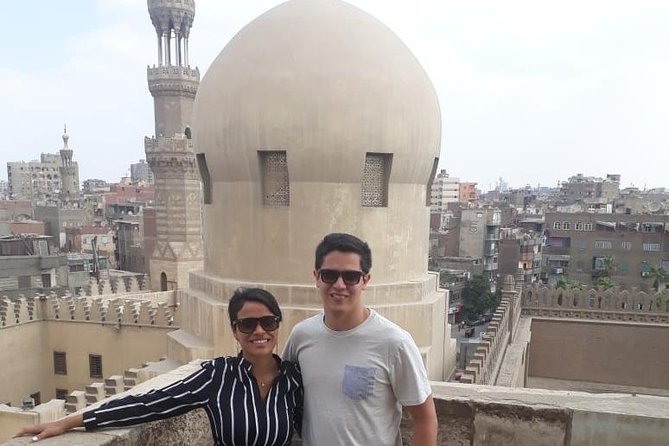
At $42.86 per person for a private 4-hour tour, the value depends on what you care about.
Here’s the practical way I’d judge it:
- If you want private transportation and hotel pickup/drop-off in Cairo or Giza, this price is more reasonable than you might expect. Cairo traffic and logistics can eat up time fast if you’re trying to DIY.
- If you’re focused on seeing three landmark mosques and learning the differences, the guide turns that into more than a photo stop.
- If you’re traveling as a couple or small group, private settings often feel like good value because you’re paying for convenience and interpretation, not just access.
What you should weigh: the tour is 4 hours, so it’s not trying to cover every detail of each site. It’s designed to give you a strong comparison across three mosques, not to be a full-day deep study.
If your budget allows and you want a structured morning with minimal hassle, I think this is a solid use of money. If you’re happy with a quick walk-through and don’t care about architectural context, you might find a cheaper option meets your needs.
Getting the Most From the Sites: Comfort, Walk Pace, and Photo Timing
This tour suits people with moderate physical fitness. That doesn’t mean it’s extreme, but you should expect walking and standing while you look closely at multiple complexes. Wear shoes you can trust. Cairo stone paths can be unforgiving.
Also, remember that entry rules are strict. The dress code is clear: no shorts, no sleeveless tops, and keep knees and shoulders covered. Bring a light layer if you’re worried about comfort. And if you’re carrying a bag, keep it manageable since you may need to adjust as you enter.
For photos, your best move is to ask your guide where to stand before you start shooting. In a private format, you can get personalized advice based on where you’re positioned and what you want to capture. That’s the difference between random shots and images that actually communicate the architecture.
Who This Tour Is Best For
This private tour is a great fit if:
- You want a clear architecture comparison across three major mosques in Cairo
- You’d rather have a guide explain what matters than read alone
- You prefer hotel pickup/drop-off and a private vehicle to reduce stress
- You’re traveling with a partner or small group and want a paced morning without crowds running your schedule
It may be less ideal if:
- You’re a hardcore architecture specialist looking for advanced technical detail
- You want lots of free time at each stop with minimal guidance
- You’re unwilling to follow the dress code rules
If you fall in the “I want it meaningful and well-organized” category, you’re exactly the target.
Should You Book This Private Mosques Tour?
I’d book this tour if you want a smart, efficient way to see three of Cairo’s most important mosques and understand the differences between early Islamic, Mamluk, and Ottoman-influenced architecture. The biggest strengths for me are the private Egyptologist guidance, the smooth pickup and van comfort, and the way the route creates a natural comparison from Ibn Tulun (completed 879) to Sultan Hassan (1360) to Al-Rifa’i (late 1800s/early 1900s).
If you do book it, go in with one goal: pick one architectural feature at each mosque and focus on it. You’ll come away remembering specific details instead of just the overall impression.
FAQ
What’s the duration of this private mosques tour?
It lasts about 4 hours.
What time does the tour start?
The start time is 9:00am.
Which mosques are visited?
You’ll visit the Mosque of Ibn Tulun, the Mosque and Madrasa of Sultan Hassan, and the Al-Rifa’i Mosque.
Is the tour private or shared?
It’s private. Only your group participates.
Is pickup and drop-off included?
Yes, hotel pickup and drop-off in Cairo or Giza are included.
Do you provide transportation, and is it comfortable?
You’ll travel by a private air-conditioned minivan, and the van includes on-board Wi‑Fi.
What’s included during the tour?
Included items are a qualified Egyptologist guide, bottled water, local taxes, Wi‑Fi in the van, and private transportation with hotel pickup/drop-off.
Is there a dress code for the mosques?
Yes. You must cover knees and shoulders. No shorts or sleeveless tops, and you may be refused entry if you don’t comply.
Is the tour suitable for children?
Children must be accompanied by an adult.
Can I cancel for a full refund?
Yes, you can cancel for a full refund if you cancel at least 24 hours before the experience start time.