REVIEW · LUXOR
Private Full-Day Luxor Tour to East and West Banks
Book on Viator →Operated by Luxortourguide · Bookable on Viator
A full-day in Luxor hits hard, in a good way. This private tour links the East and West Banks with hotel pickup and an air-conditioned car so you spend less time fighting heat and traffic. I especially like that you’re not stuck in a big crowd; your guide can slow down when the details matter. One thing to plan for: entrance fees aren’t included, and the optional King Tut tomb costs extra.
What I really like is the way the guide turns each site into a story you can actually follow. At the Valley of the Kings, your guide can’t go inside the tombs, but they’ll tell you what to look for in the decorated rooms—so you’re not wandering blankly. You also get real breathing room: free time at both Deir el Bahari and Karnak helps you reset before the next jump.
The main consideration is not the sights—it’s what you do with your time off the main track. Like many tours in Egypt, there can be souvenir stops, and you’ll want to stay alert for sales pressure. The good sign is when your guide keeps it low-key and explains how to judge shop quality and avoid getting stuck with overpriced stuff.
In This Review
- Key highlights and what to watch for
- East and West Banks in one day: how this tour flows
- Valley of the Kings: what you’ll actually get inside (and what you won’t)
- Deir el Bahari and Hatshepsut’s Temple: where the story lands
- Colossi of Memnon: short stop, long shadow
- Karnak Temple: how to make sense of the chaos of scale
- Luxor Temple: the East Bank’s grand finale
- Price and value: why $40 can be a smart deal
- Souvenir stops and the pressure question: how to keep control
- How long you’ll be out there, and what to pack
- Who this private Luxor day tour suits best
- Should you book this Luxor private tour?
- FAQ
- FAQ
- Does this tour include hotel pickup and drop-off?
- Is the tour private?
- How long is the tour?
- Are entrance fees included in the price?
- Is food or drinks included?
- Can I visit the tomb of King Tutankhamun?
- Are guides allowed inside the tombs?
- What happens if I need to cancel?
Key highlights and what to watch for
- Private, air-conditioned transport that makes a long day feel manageable
- Egyptologist guidance that helps you read monuments instead of just seeing them
- Valley of the Kings context even though guides can’t enter the tombs
- Deir el Bahari free time to explore Queen Hatshepsut’s temple at your pace
- Karnak’s 134-column Hypostyle Hall and the slow “time travel” deeper you go
- Optional King Tut tomb upgrade available for an extra cost
East and West Banks in one day: how this tour flows
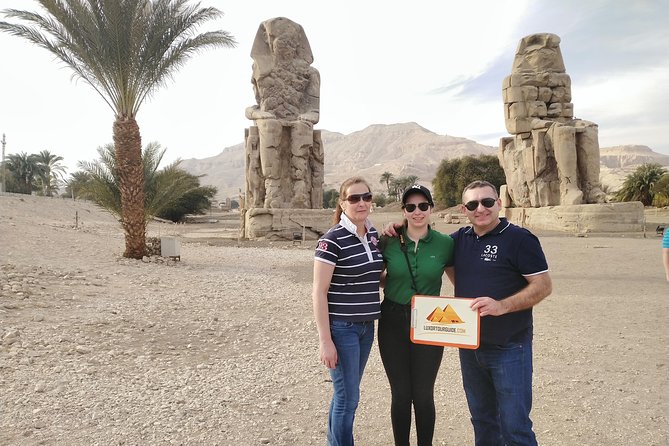
Luxor works best when you stop thinking in terms of “two sides of town” and start thinking in terms of two ancient worlds. The East Bank is where you’ll see major temple complexes tied to living worship. The West Bank is where royal funerary traditions dominated—so the vibe changes fast once you cross the river.
This tour is designed for that contrast. You move from burial landscapes to monument temples, then back to grand ceremonial spaces. Because it’s private, your schedule tends to feel less like a cattle route and more like a day that matches your pace. The air-conditioned vehicle is a big deal here. Luxor’s heat can drain energy fast, and you’ll feel it most between stops.
The other practical advantage: the guide doesn’t just point at walls. The day is built around explanation—how pharaohs built, how priests and kings used these spaces, and what key features mean when you’re standing in front of them.
You can also read our reviews of more private tours in Luxor
Valley of the Kings: what you’ll actually get inside (and what you won’t)
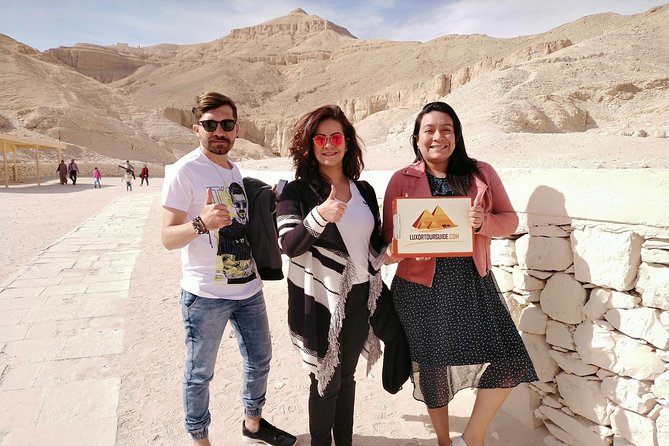
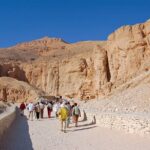
You start on the West Bank at the Valley of the Kings, the burial place for kings of Thebes (ancient Luxor). You’ll have a brief stop at the visitors center first. That matters more than it sounds—having a bit of context before you reach the tomb entrances makes the interior decorations easier to read.
Here’s the key detail: guides are not permitted inside the tombs. That can feel like a downside if you expect a full walkthrough, but it’s also a reality of how these tombs are managed. The workaround is that your guide will tell you what to look for once you’re inside—so you still get interpretation, just delivered at the threshold rather than over your shoulder.
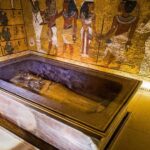
Plan on about 1 hour 30 minutes at this stop, and remember that admission isn’t included. If you want the tomb of King Tutankhamun, there’s an additional cost you pay directly. If you’re the kind of person who wants one special tomb experience, this is the time to decide. If you’d rather keep costs down, stick to the basic tomb areas covered by the included access.
One more practical tip for your day: wear shoes that handle uneven ground and tuck in sunscreen and a hat. You’re going to do a fair amount of walking even when some stops look short on paper.
Deir el Bahari and Hatshepsut’s Temple: where the story lands
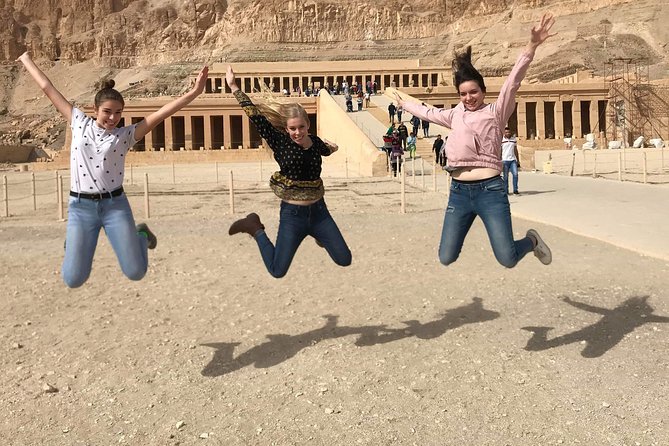
Next up is the Temple of Hatshepsut at Deir el Bahari. This is one of those places that hits you visually even before you understand it. The site is built with dramatic terraces and long sightlines, and your guide will walk you through the history and the famous backstory of Queen Hatshepsut.
The big reason people remember Hatshepsut isn’t just that she ruled. It’s that she’s connected to how power was presented—your guide explains how she posed as a male to secure the throne. That context makes the temple feel less like a random collection of stones and more like deliberate political messaging.
Your tour time at Deir el Bahari is about 1 hour, and you also get free time to explore. That free time is worth its weight. You can wander the courtyards slowly, take in the hieroglyph decorations, and look for how the temple design guides you across levels.
Admission tickets are not included here either, so budget for entrance fees when you plan your day total. If you’re trying to stay on schedule, use the free time for short, focused wandering instead of trying to “see everything.” Your energy will matter later at Karnak.
Colossi of Memnon: short stop, long shadow
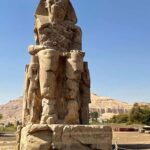
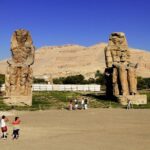
Then you hit the Colossi of Memnon—two giant statues marking the site of the funerary temple of Amenhotep III. The statues are all that remain, so the stop can feel almost too short at about 20 minutes.
That said, it’s still a worthwhile pause. The sheer scale of these figures does something to your sense of time. It’s hard to fully process “this used to be a temple complex” when you’re only seeing the last-standing fragments. But that’s exactly why it works in a longer itinerary: it gives you a breather between major complexes, while also reminding you how much has been lost.
Since admission is listed as free here, this stop is a cost-friendly way to keep moving through the West Bank story without burning your budget.
Karnak Temple: how to make sense of the chaos of scale
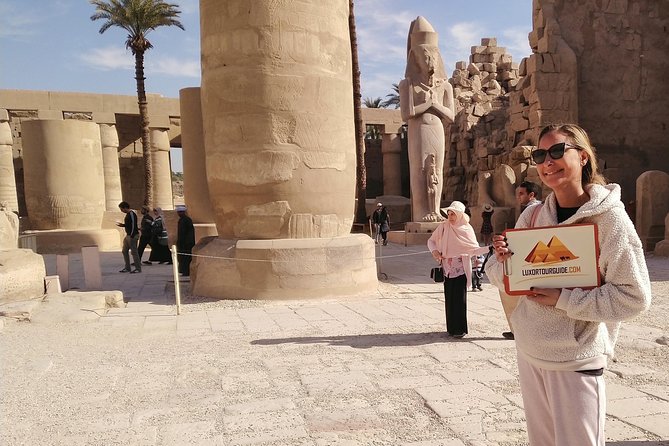
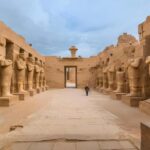
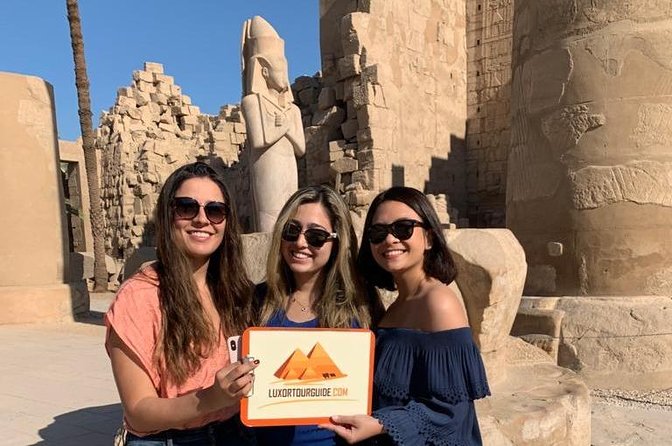
Most Luxor days live or die by Karnak. This stop includes an approach that’s more than a walk: you’ll enter along the Avenue of Sphinx, and your guide explains how the massive facade was constructed. That kind of framing is huge when you get inside—otherwise Karnak can feel like you’re staring at “big stuff” with no anchor.
Inside, the key idea is growth over time. As your guide takes you deeper, you’re essentially stepping through different pharaohs and different eras. The oldest ruins date back over 3,000 years, and you can feel that layering in the space.
Your main time here is about 2 hours, with additional free time after the tour. The highlight is the Great Hypostyle Hall, famous for its 134 columns. Standing under them, you get that forest-of-stone effect—columns rising like they’re holding up a ceiling made of history.
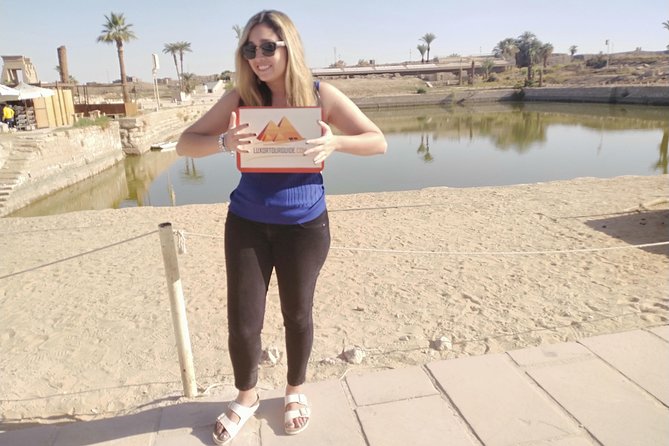
At the rear you’ll also find the sacred lake, where pharaohs and offerings to the gods were purified centuries ago. It’s one of those features that doesn’t scream for attention from the outside, but it helps you understand how the complex functioned as a living religious machine, not just a monument display.
Again: admission tickets aren’t included. If you’re budgeting, Karnak is one of the costs you should expect to cover.
Also, keep your expectations realistic about walking speed. Karnak is enormous. Even with a guide, you’ll want to pick a “main zone” to focus on during your free time—otherwise you’ll end up power-walking, and the place won’t have a chance to register.
A few more Luxor tours and experiences worth a look


Luxor Temple: the East Bank’s grand finale
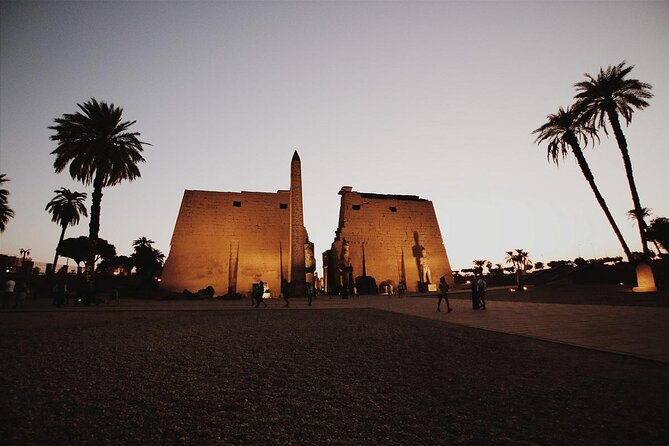
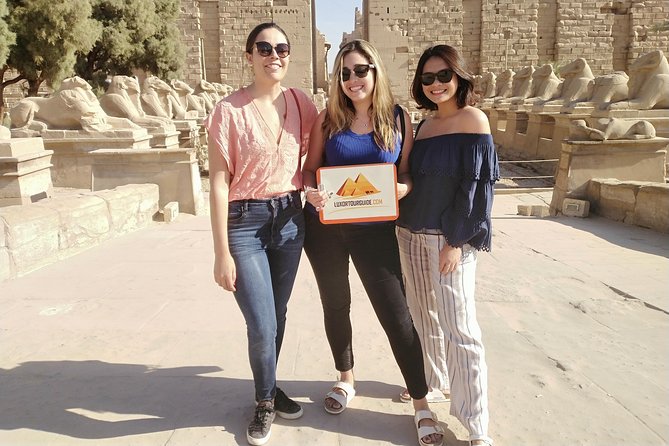
After the West Bank’s funerary mood, you move to Luxor Temple on the East Bank. This temple was once connected to Karnak by a two-kilometer Avenue of Sphinx, and you’ll see portions of that historic route as you approach.
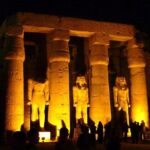
Luxor Temple is dominated by statues connected to Ramses II, the warrior pharaoh. The temple’s survival is part of the appeal: it withstood Nile floods, foreign invasion, and thousands of years of exposure to the elements. When you’re standing there, it helps to remember that “intact” is a miracle in ancient-world terms.
Your guide helps with the inside walls and columns too. The inner surfaces feature intricate hieroglyphics, and you’ll learn how to decipher what you’re seeing—at least at a practical level, so it’s not just symbols you can’t translate.
You’ll also hear about how Alexander the Great wrote himself into Luxor Temple’s history, which adds a later twist to a site that feels purely ancient. And there’s a famous visual payoff: you can see one of the original pair of obelisks, with the second now in Paris at Place de la Concorde.
This stop is about 1 hour, which is a good amount. It’s long enough to absorb key pieces without dragging. Admission isn’t included, so plan for that as part of your total day budget.
Price and value: why $40 can be a smart deal
At $40 per person, the value here is less about a single ticketed attraction and more about what’s bundled. You’re getting a qualified Egyptologist guide, hotel pickup and drop-off, and transport in an air-conditioned vehicle. The tour also includes parking fees, fuel surcharge, and the driver, plus service charges and taxes.
That’s what helps this work for most travelers: you pay for interpretation and logistics, not just for the right to walk into tombs and temples.
The clear trade-off is that entrance fees are not included. Food and drinks are also not included unless specified, and gratuities are recommended. If you go into the day assuming the $40 covers everything besides souvenirs, you’ll be surprised.
But if you think of it like this: the base price buys the guide and the transport, and you top up with tickets as needed—that’s when it starts to feel like a bargain. Especially if your alternative is paying for separate half-day guides and then trying to arrange rides across both banks.
Souvenir stops and the pressure question: how to keep control
One negative experience shows up in the form of complaints about shopping pressure—getting led into shops that feel like a hard sell. That’s a real risk in tourist-heavy areas, and it’s not unique to Luxor.
The good news: the tour’s guidance response highlights what you should look for in a guide. A solid approach is when the guide explains the difference between local souvenir shops and government stores, without pushing you to buy. There should be no sense of obligation. Another sign of a healthier shopping experience is when the guide points out that you can return what you purchase.
So what should you do on the day?
- If you’re offered a shopping stop, ask what makes the place different and whether returns are possible.
- Decide early if you want souvenirs at all. If you don’t, you’ll save yourself time and stress.
- If you feel pushed, keep your decision simple and repeatable: no thanks, not today.
This is still a temple-and-tombs tour first. If shopping starts feeling like the main event, speak up calmly and refocus on the next stop.
How long you’ll be out there, and what to pack
The tour runs about 6 to 8 hours. That’s a long stretch, but it’s also the right amount of time to see both major temple complexes and a standout West Bank lineup.
Your biggest discomfort risks aren’t mystery—they’re heat, sun, and fatigue. Bring:
- Sunscreen and a hat
- Water (since food and drinks aren’t included unless specified)
- Comfortable walking shoes
- A light layer for mornings and temple shade
Because the itinerary includes a mix of walking and waiting, you’ll feel best if you keep your schedule simple. Don’t plan a late-night dinner immediately afterward unless you’re a stamina machine.
Who this private Luxor day tour suits best
This is ideal if you want:
- A private day (only your group participates)
- The convenience of hotel pickup/drop-off
- An Egyptologist guide who connects what you see to why it mattered
- A route that covers both sides of the Nile—without you having to coordinate multiple transfers
It’s also a good fit for couples, small families, and small groups who want a clear itinerary but still like the flexibility of short free-time windows.
If you’re the type of traveler who wants to spend hours roaming independently with no guidance, this might feel structured. But if you like direction and context—especially when you’re looking at hieroglyphs, tomb art, and giant temple layouts—you’ll probably appreciate the way the day is built.
Should you book this Luxor private tour?
If you want one day that hits Luxor’s top monuments without the hassle of arranging transport yourself, I’d say this tour is a strong choice. The main strengths are clear: private logistics, air-conditioned rides, and a guide who explains what you’re seeing in a way that makes the stones feel alive.
Book with eyes open on costs. Plan for entrance fees at the stops, and if King Tut is a must, know there’s an extra payment directly for that tomb. Also, be ready to handle souvenir offers with a firm head and a clear decision.
If you’re okay with those trade-offs, this is the kind of day that gives you a working mental map of Luxor fast: Valley of the Kings for the funerary world, Deir el Bahari for Hatshepsut’s power story, Karnak for scale and layered time, and Luxor Temple for the East Bank finale.
FAQ
FAQ
Does this tour include hotel pickup and drop-off?
Yes. The tour includes hotel pickup and drop-off, plus transport by an air-conditioned vehicle.
Is the tour private?
Yes. It’s listed as a private tour/activity, and only your group will participate.
How long is the tour?
It lasts about 6 to 8 hours.
Are entrance fees included in the price?
No. Entrance tickets for the sites are not included. Admission is also listed as not included for the Valley of the Kings, Deir el Bahari, Karnak, and Luxor Temple.
Is food or drinks included?
No. Food and drinks are not included, unless specified.
Can I visit the tomb of King Tutankhamun?
The Valley of the Kings stop notes that visiting the tomb of King Tutankhamun is possible, but there is an additional cost payable direct.
Are guides allowed inside the tombs?
No. The Valley of the Kings description says guides are not permitted inside the tombs, but your guide will explain what to look for.
What happens if I need to cancel?
You can cancel for a full refund if you cancel up to 24 hours in advance of the experience’s start time. If you cancel less than 24 hours before, it won’t be refunded.