REVIEW · LUXOR
Luxor to Aswan: 5-Day Private Nile Journey
Book on Viator →Operated by Journey To Egypt · Bookable on Viator
Nile nights beat any waiting-around sightseeing day. This Luxor-to-Aswan private-style cruise turns the biggest Nile Valley sites into a clear, guided circuit, with local experts at each stop and meals handled onboard so you’re not juggling logistics all day. I especially liked the way guides like John and Mena bring history down to size, even while you’re surrounded by scale-you-can’t-fathom temples; the main catch is that some experiences can carry extra tickets, including the Tutankhamun tomb.
You’ll also get that “small group” feel (max 8 travelers), and the itinerary mixes heavy hitters with calmer moments like a felucca ride and sundowner. One more consideration: cruise-ship quality can vary by sailing, and a couple of reviews flagged service quirks like bar staffing, so treat onboard comfort as a bonus, not the main event.
In This Review
- Key highlights to know before you go
- Luxor to Aswan in five days: what the trip really feels like
- Karnak and Luxor Temple on the East Bank: scale you can measure
- Valley of the Kings and Hatshepsut’s temple: tombs plus the power of design
- Edfu’s Temple of Horus and Kom Ombo’s crocodile-cult temple
- Philae’s island temple, the Unfinished Obelisk, and a felucca sundowner
- Abu Simbel add-on: worth it if you plan for the long road
- Price and logistics: what $1,000 buys you (and what you still control)
- Choosing your guide and cruise vibe: small group comfort, real service variation
- Who should book this Luxor-to-Aswan journey
- Should you book this Luxor to Aswan private Nile journey?
- FAQ
- What route does this cruise take?
- Are airport transfers included?
- Are site entry fees included?
- What meals are included during the trip?
- Can I add Abu Simbel?
- Is there free cancellation?
Key highlights to know before you go
- Small group (max 8) keeps you from getting lost in a crowd while still seeing everything
- Guided shore excursions to Karnak, Edfu, Kom Ombo, and other must-sees
- Full-board meals included across most days, so your budget stays steadier
- Philae on Agilika + the Unfinished Obelisk connect ancient craft to the High Dam story
- Felucca scenic sundowner in Aswan gives you a real break from temple steps
- Optional Abu Simbel is a long road trip, but it’s built for jaw-dropping payoff
Luxor to Aswan in five days: what the trip really feels like
This is a “see the Nile Valley on rails” kind of trip. You move in an orderly loop from Luxor’s temple monuments to Aswan’s island sacred sites, with cruises between stops that keep travel time from eating your sightseeing day.
The value comes from the combination: guided entrances, included entry fees for the sites listed, and full meals onboard. That matters because Egypt can be paperwork-heavy when you do it solo—getting everything lined up costs energy, not just money.
Because it’s capped at eight travelers, you should expect a more responsive rhythm: your guide can slow down, answer questions, and route you toward shade when the sun gets impatient.
You can also read our reviews of more private tours in Luxor
Karnak and Luxor Temple on the East Bank: scale you can measure
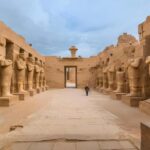
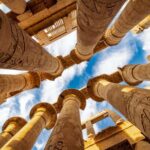
Day one is all about the East Bank’s headline act: Karnak Temple. You’ll walk into the Great Hypostyle Hall, where the columns rise to about 80 feet, creating that mind-bending forest effect even when you know you’re only seeing stone. This is the place to understand how Egyptian power advertised itself—massive, repetitive, and built to outlast anyone who ever commissioned it.
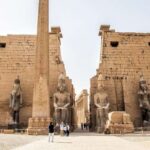
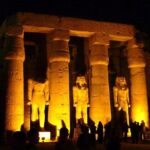
You’ll also continue to the Temple of Luxor, with Ramses II statues at the pylons and a courtyard tied to his reign. Look for the colonnade of Amenhotep III, with its roughly 50-foot-high columns—one of those details that makes the temple feel less like a ruin and more like a living stage set.
A practical consideration: Karnak and Luxor Temple are both busy, and the sites include a lot of walking. If you’re heat-sensitive, plan for breaks and water whenever your guide offers them.
Valley of the Kings and Hatshepsut’s temple: tombs plus the power of design
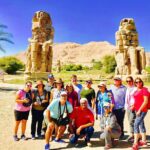
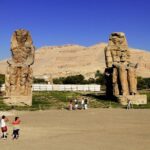
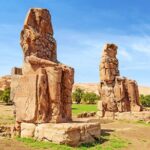
Switching to the West Bank is a big tonal change. You start with the Necropolis of Thebes and see the Colossi of Memnon—two massive statues that make it easy to picture why this area became a burial landscape.
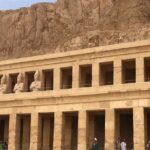
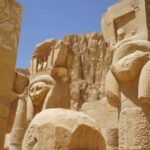
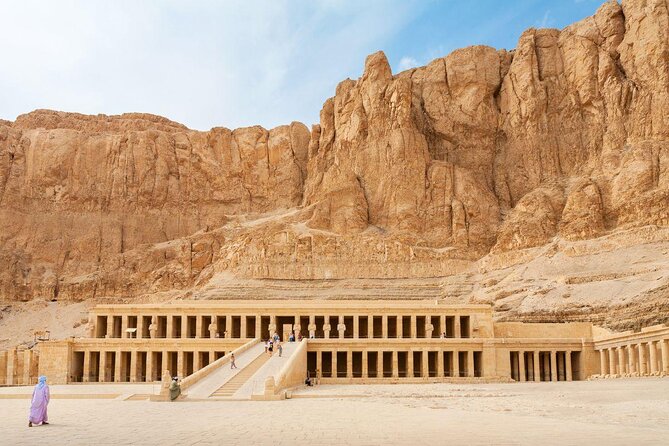
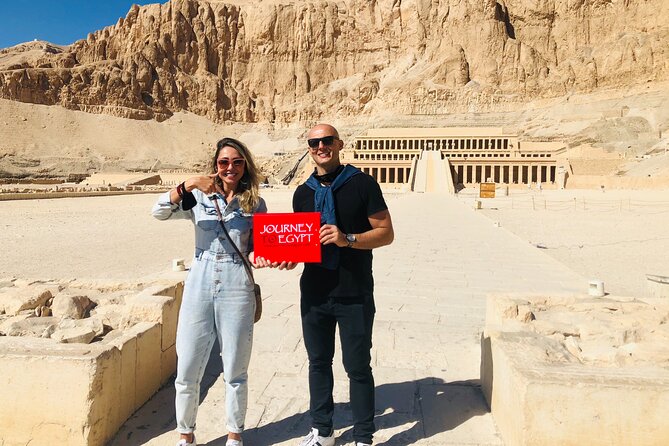
Next comes Hatshepsut’s Temple, credited as one of ancient Egypt’s major achievements and tied to Egypt’s first female pharaoh. Even if you only remember one thing from this day, try to remember how the temple is arranged—designed to impress as you move through it, not just from one angle.
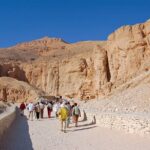
Then you reach the Valley of the Kings, a UNESCO World Heritage Site where tomb building stretched for about 500 years beginning in the 16th century BC. This is where the itinerary gets specific: you’ll enter the tomb of Tutankhamun, but the experience notes an extra ticket on the spot.
That detail is important for budgeting and peace of mind. You can love the idea of visiting Tutankhamun’s tomb and still want to be mentally prepared for extra costs once you’re already there—so bring cash and keep a little flexibility in your schedule if tickets involve waiting.
Edfu’s Temple of Horus and Kom Ombo’s crocodile-cult temple
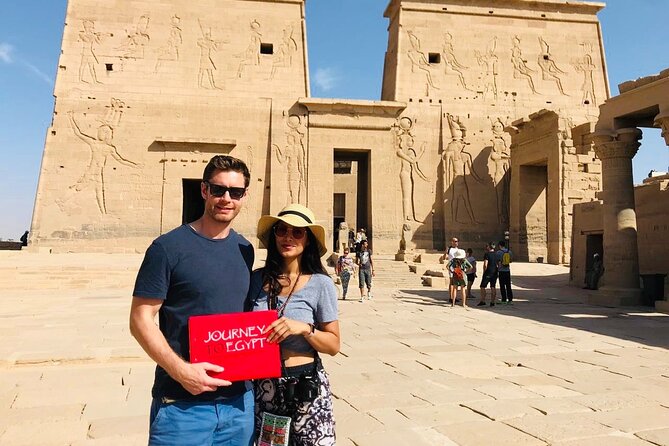
Day three adds two of the most memorable “religion as architecture” stops on the Nile route.
First is the Temple of Horus in Edfu, built around 230 BC by Ptolemy III. It’s described as amazingly well-preserved and colorful, and when you’re standing there, that matters: you can read the temple like a story rather than just viewing broken fragments.
After that, you cruise to Kom Ombo (often called hill of gold). You disembark to visit a Greco-Roman temple dedicated to Haroeris (sun god) and Sobek (crocodile god). The mummified remains of crocodiles are a striking moment—less about shock, more about how ancient Egyptians tried to explain the living river through myth.
A small caution: temple days can blend together if you don’t slow down. Use your guide’s timing to take a few minutes on your own to look for carvings and symbols, not just photos.
Philae’s island temple, the Unfinished Obelisk, and a felucca sundowner

Day four gives you Aswan’s signature combination: water, craft, and myth.
You’ll ride a motorized boat to Philae Temple on Agilika island. Philae is dedicated to Isis, and the site reflects a fusion of Egyptian, Greek, and Roman influences. You’ll also learn that the temple was dismantled and reassembled during the Aswan High Dam construction—a major theme here, because the Nile isn’t just scenery. It’s infrastructure, and it has consequences.
After that, you go to the granite quarries and the Unfinished Obelisk. This monolith is noted as about one-third taller than other ancient Egyptian obelisks, which is a fascinating detail: it shows you how ambitious the builders were, and how projects didn’t always finish as planned.
Then comes the fun break: a felucca ride around the Aswan Islands with a scenic sundowner. This part is more than a photo moment. It’s the downtime your brain needs after dense stone and tight entrances—time where the river becomes the main character.
A few more Luxor tours and experiences worth a look




Abu Simbel add-on: worth it if you plan for the long road
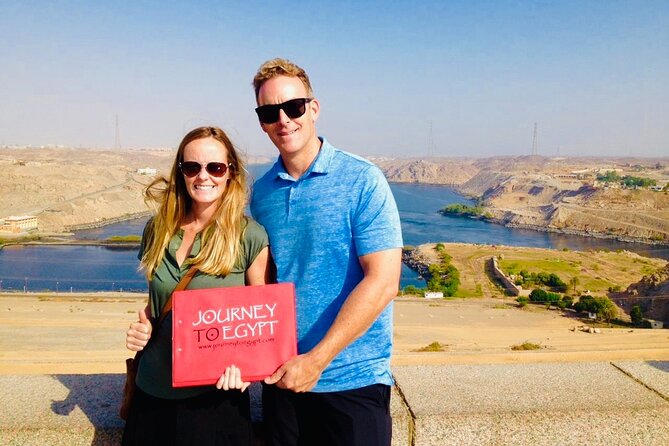
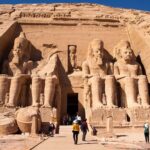
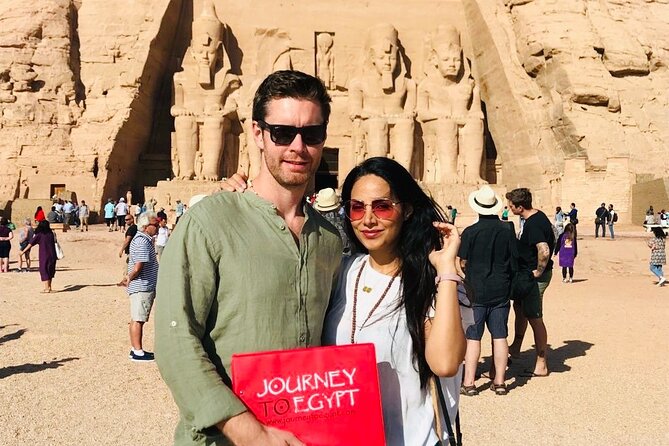
Abu Simbel is optional, but it’s the day-trip that most people picture when they think of Ramses II. The plan is roughly 3.5 hours each way by road, and the payoff is two monumental temples: Ramses II and Queen Nefertari.
The description focuses on the façade—especially the four statue faces of Ramses II, each about 70 feet tall. Another key detail is the rescue story: the entire site was disassembled and moved to protect it from floodwaters caused by the Aswan High Dam.
That disassembly-and-move detail changes how you see the site. It’s not just ancient grandeur; it’s also a modern preservation effort. If you’re short on time or you hate long drives, skip it. If you’re the type who wants one “big wow” day even if it’s tiring, this is the one.
Price and logistics: what $1,000 buys you (and what you still control)

At $1,000 per person, you’re paying for a package that reduces the annoying parts: guided shore excursions, included entry fees for listed stops, accommodation for four nights, and onboard meals. You’re also getting meet-and-assist at arrival and departure and all transfers by modern air-conditioned deluxe vehicle.
That’s the real value: fewer handoffs, fewer ticket lines, and fewer decisions when your day is already packed with ancient sites. You’re not spending your vacation doing admin.
Still, don’t assume everything is perfectly frictionless. The itinerary itself flags that some admissions may not be included on every line item, and the Tutankhamun tomb is explicitly described as extra on the spot. Also, onboard drinks aren’t included, and tipping for cruise crew, guides, and drivers isn’t included—so keep a budget for that.
If you’re trying to compare costs, price this trip as: private-feeling guiding + four nights of accommodation + full-board meals + entry fees + transfers. That mix is what makes the number feel reasonable rather than scary.
Choosing your guide and cruise vibe: small group comfort, real service variation
This trip’s “private” feeling is driven by size: max 8 travelers. In practice, that tends to help with flow—less waiting, more responsive guiding, and more chances for your questions to get answered while you’re still standing in front of the carvings.
The reviews you provided repeatedly name guides such as John and Mena for their patience and historical explanations. That lines up with what you want on a Nile itinerary: you don’t just want to be herded from gate to gate. You want someone who can interpret what you’re seeing—especially at places like Karnak and the Valley of the Kings, where the symbolism can get overwhelming fast.
On the ship side, reviews include both praise and minor complaints. One review raved about ship and food quality; another flagged issues like pool deck bar staffing and less-than-stellar cocktail service. So, I’d think of the ship as comfortable basecamp, not the main attraction. Your real “wow” is the shore time.
Who should book this Luxor-to-Aswan journey
This is a strong fit if:
- You want big archaeological sites with guided context, not self-guided wandering.
- You like a structured plan but still want a small-group feel (max 8).
- You’d rather pay for included basics—meals, guides, entry fees—than manage tickets and logistics daily.
- You’re traveling as a couple, family group, or solo traveler who appreciates calm organization.
It’s less ideal if:
- You hate early-to-late days filled with walking and sun exposure.
- You’re trying to do this as a purely budget-only trip, since optional items and on-the-spot tickets like Tutankhamun can add costs.
- You expect “luxury in every detail” onboard; the trip is more about the destination circuit than the spa-level ship experience.
Should you book this Luxor to Aswan private Nile journey?
If you want the Nile Valley’s best sites with real guidance, I think this is a smart booking. The itinerary hits the classic anchors—Karnak, Hatshepsut, the Valley of the Kings, Edfu, Kom Ombo, Philae, and Aswan by felucca—and it wraps them in transfers and included meals that protect your time.
My go/no-go checklist:
- Confirm what’s included for entrances on your exact sailing, especially around Tutankhamun’s tomb.
- Budget extra for tips and any on-the-spot admissions noted at the sites.
- Decide early whether you want Abu Simbel—it’s optional, but the long road ride is part of the deal.
If your top priority is seeing these places efficiently with a guide who can explain what you’re looking at, book it. If your top priority is total spontaneity and minimal costs, you might find a different style of travel fits better.
FAQ
What route does this cruise take?
It runs from Luxor to Aswan, with shore excursions in between and an end transfer to Aswan Airport.
Are airport transfers included?
Yes. The experience includes meet-and-assist on arrival and departure, plus a complimentary airport arrival transfer.
Are site entry fees included?
Entrance fees for the sites mentioned in the itinerary are listed as included. The tomb of Tutankhamun is noted as an extra ticket on the spot.
What meals are included during the trip?
Breakfast is included for 4 days, and lunch and dinner are included as well (full board across the cruise days). On the final day, breakfast is included.
Can I add Abu Simbel?
Yes. Abu Simbel is optional and listed as about 3.5 hours each way by road.
Is there free cancellation?
Yes. You can cancel up to 24 hours in advance for a full refund.