REVIEW · LUXOR
Luxor East and West Bank Tour with Egyptologist
Book on Viator →Operated by Ahmad Salah-eldin Zaki Best Egyptologist Guide in Egypt · Bookable on Viator
Luxor’s temples make more sense when someone walks you through them. This private east-and-west bank day pairs major sites with an Egyptologist guide who can explain what you’re seeing, while you ride in comfort in a newer luxury car.
Two things I like right away are the licensed local guides/archaeologists approach and the private, tailored flow of stops across both banks. You also get bottled water and air-conditioned transport so the day stays easier to handle.
One drawback to plan for: the entrance fees and lunch are not included, so your day can cost a bit more once you account for tickets at each site.
In This Review
- Key highlights worth planning around
- The feel of a private Luxor day, not a rushed circuit
- Meet Ahmad Salah-eldin Zaki: guide style that keeps you engaged
- Deir el-Bahari and Hatshepsut’s terraces: the story starts above
- Valley of the Kings: 62 tombs, plus the meaning behind the scenes
- Colossi of Memnon: the 16.6-meter giants and a Greek name
- Temple of Medinat Habu: cartouches, Amun-Ra, and Ramesses III
- Karnak’s columns and the underground sacred lake
- Luxor Temple: a layered monument with mosque and church
- Price and logistics: is $84 a good value?
- Who this tour suits best
- Should you book this Luxor east and west bank tour?
- FAQ
- What is included in the $84 per person price?
- Are entrance fees included?
- Is lunch included?
- How long is the tour?
- Where does the tour start and end?
- Is pickup available?
- Is this tour private?
- Do you use a mobile ticket?
- What is the cancellation policy?
Key highlights worth planning around
- Egyptology with real credentials: the guides are described as licensed, and also archaeologists.
- A structured east-to-west storyline: you move from Deir el-Bahari to the Valley of the Kings, then back to Karnak and Luxor Temple.
- Hatshepsut details you won’t get on a quick walkthrough: terrace layout, the Anubis and Hathor chapels, and the upper sanctuary.
- Valley of the Kings wall texts: you’ll hear what texts like the Book of the Dead and Book of the Gates mean in tomb art.
- Karnak scale explained in concrete terms: 134 columns and a hall-size you can picture against a famous landmark.
- Luxor Temple’s many eras in one spot: Egyptian, Greek, Roman, and Islamic layers, including a mosque and a church.
The feel of a private Luxor day, not a rushed circuit
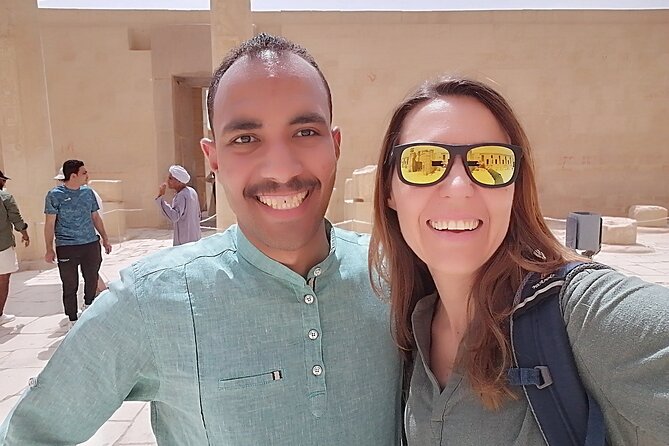
This tour is built as a one-group experience. That matters in Luxor, where the sites can feel crowded and the best moments often come from asking questions and getting context in real time.
You’ll start with pickup at Luxor Railway Station and return there. The schedule runs about 8 to 12 hours, which is long enough to see the big-ticket sights without feeling like you’re sprinting nonstop.
Transport is air-conditioned, and the vehicle is described as newer and comfortable. You’re also getting bottled water during the day, which sounds small until you’re doing multiple outdoor sites in the heat.
You can also read our reviews of more tours and experiences in Luxor.
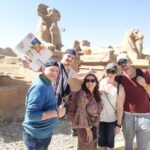
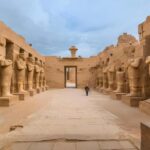

Meet Ahmad Salah-eldin Zaki: guide style that keeps you engaged
The key to this kind of Luxor tour is the guide. Here, the founder is Ahmad Salah-eldin Zaki, described as an expert Egyptologist guide and noted as particularly strong in English and Dutch.
What stands out from how this is presented is the confidence of a guide who can connect details to meaning. The tour group is positioned as a set of qualified local guides and archaeologists, not just a generic booking desk, and that shows in the promise that everything is handled properly.
Expect an approach that treats your questions as part of the experience. Multiple client notes emphasize that Ahmad answers questions clearly, and that he’s polite, caring, and makes people feel comfortable in Egypt. If you’re traveling with kids or teens, that human warmth and flexibility can make a big difference.
Deir el-Bahari and Hatshepsut’s terraces: the story starts above
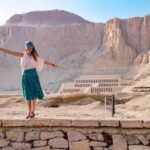
The west bank day begins at the Temple of Hatshepsut in Deir el-Bahari. Hatshepsut ruled for more than 21 years, and the temple layout reflects that. Terraces step up the hillside, turning the view itself into part of the narrative.
One practical note: the first terrace is closed for restoration, so you’ll focus on the second terrace and the best-preserved angles. That’s actually a good thing for planning—your time goes into the parts you can fully experience.
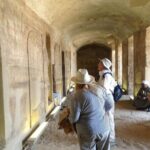
On the second terrace, you’ll visit two chapels. One is dedicated to Anubis, shown with the jackal head and a black face, and the colors inside are described as original and extremely vivid after more than 3,000 years. The other chapel is dedicated to Hathor, linked to beauty, motherhood, music, and broader sacred feminine symbolism in ancient Egypt.
You’ll then move up to the upper terrace sanctuary, described as the most important part of the temple, with many stories tied to it. This stop is scheduled for about 2 hours, and it’s where a strong Egyptologist voice really helps—you start seeing patterns, not just walls.
Valley of the Kings: 62 tombs, plus the meaning behind the scenes
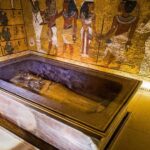
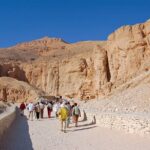
Next comes the Valley of the Kings, the classic west bank site for royal tombs. The pitch here is big for a reason: you’re going deeper into the mountain to encounter tombs of kings and queens, with 62 royal tombs referenced as part of the site.
The time window is about 2 hours, which is enough to move past the basics and understand what you’re looking at. The most useful thing for most first-timers is learning that tomb art isn’t random decoration.
In tomb walls you’ll hear about ancient Egyptian “books” written or depicted as part of the burial world. The tour highlights texts like the Book of the Dead, the Book of the Caverns, the Book of the Gates, and the Book of the Earth. Even if you don’t memorize names, you’ll start connecting why these texts appear and what they signal about life-after-death beliefs.
Possible consideration: admission tickets for this stop are not included, so plan to pay separately. Also, some areas can involve a bit of walking on uneven ground, so comfortable shoes help.
Colossi of Memnon: the 16.6-meter giants and a Greek name
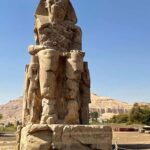
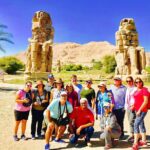
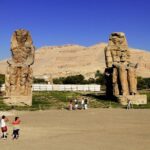
Then the day shifts to something more open and iconic: the Colossi of Memnon. You’ll see two enormous monolithic statues linked to Amenophis III.
The tour description gives striking measurements: each statue is about 16.6 meters high, made from red granite. It also mentions the stone was taken from a quarry in Cairo, which is the kind of detail that makes the scale feel real rather than abstract.
You’ll also hear how the name Memnon is Greek in origin. The original statues and the king’s era are connected to the “Magnificent” title and a prosperous period marked by artistic splendour.
This stop is about 1 hour, and it usually functions as a mental reset after the more intense tomb focus. Admission here is listed as free, so it’s one less ticket to worry about.
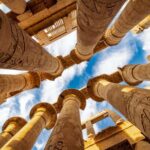

Temple of Medinat Habu: cartouches, Amun-Ra, and Ramesses III
Your next stop is the Temple of Medinat Habu, built by King Ramesses III and dedicated to Amun-Ra, the sun god. This is a good middle stop when you want both architecture and symbolism without needing to rush.
Inside, you’ll see references to the Ritual Massacre, and you’ll also notice cartouches—those oval frames that carry the king’s name. The tour notes that each king in ancient Egypt had two names, not just one: the birth name (the day he was born) and the coronation name (the day he ascended to the throne).
That two-name idea changes how you read inscriptions on walls. Instead of treating every name as random, you start understanding why rulers had layered identity in official religious and political contexts.
This stop runs about 1 hour, and entrance fees are not included in the tour price.
Karnak’s columns and the underground sacred lake
After the west bank focus, you head back to the east bank for Karnak Open Air Museum, described as the biggest temples in the whole world. Karnak is the kind of place where you can easily feel lost—so I like that this tour gives you landmarks and numbers.
Karnak’s development timeline is described as starting in the Middle Kingdom, with completion in the New Kingdom. The exact date given is December 23th 1946 B.C, though what matters for you is the long, layered construction story.
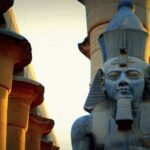
The highlight is the Hall of Columns with 134 columns. The tour gives a strong scale comparison: it could contain the Cathedral of Notre Dame in France, and it’s about 5,000 square meters. You’ll also see the sacred lake, noted as originally underground, and you’ll hear about key statues, including a statue of Ramessess.
This stop is scheduled for about 2 hours, which is a good pacing choice. If you only had 45 minutes, you’d likely just skim the biggest features without understanding the “why” behind them.
Again, entrance tickets are not included for Karnak.
Luxor Temple: a layered monument with mosque and church
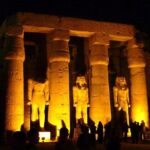
The day closes at Luxor Temple, often called a place of multiple civilizations. The tour description dates its building to 1974 B.C under Amenophis III, then completed by Ramesses II, and it’s framed as an evolving religious center over centuries.
Here’s what makes Luxor Temple especially interesting for visitors: the tour lists Ancient Egyptian, Greek, Roman, and Islamic influences in the same space. You’ll even see a mosque and a church inside the complex.
You’ll also encounter two obelisks. One remains on site, while the other is described as having been sent as a gift from Mohamed Ali Pasha to King Louis Philippe of France, and placed in the Place de la Concorde in Paris. That kind of modern link helps you understand why Egypt’s monuments are never only ancient in your mind.
Luxor Temple is about 1 hour on this schedule. Entrance fees are again listed as not included.
Price and logistics: is $84 a good value?
At $84 per person, this tour includes a lot of the expensive parts that often get added later: air-conditioned vehicle, private transportation, guiding services, gratuities, and bottled water.
What you should budget extra for is simple: entrance fees are not included, and lunch is not included. That means your final day cost depends on how many sites you actually enter and what ticket types you choose.
The value only really clicks if you care about interpretation. If you’re the type who wants the story behind Anubis chapel colors, why tomb texts matter, and what cartouches can tell you about two royal names, then the guide-driven format is what you’re paying for.
Also note: the tour offers a mobile ticket and pickup, with confirmation received at booking. You’ll be back where you started, so you don’t have to figure out late-day transit.
Who this tour suits best
I’d recommend this for anyone who wants a Luxor day that’s both structured and personal. It’s a strong fit for couples, solo travelers, and especially families, since the guide approach is described as respectful, caring, and willing to adapt.
If you’re comfortable spending hours walking through sacred sites, you’ll get the most out of it. If you want a strict museum-style plan with minimal time outdoors, you may find the long day and temple hopping a bit intense.
It’s also a good choice if you hate feeling left out by a tour that moves too fast. The private format means your questions can stay part of the flow, not something you save for later.
Should you book this Luxor east and west bank tour?
If you want the big Luxor sites with a guide who can explain what you’re seeing, I think this is an easy yes. The combination of Egyptologist guidance, a private setup, and an itinerary built around both banks makes it feel like a real day of learning, not a checkbox drive.
Book it if you’re okay paying separate entrance fees and planning lunch on your own. Skip it if your priority is staying strictly low-cost or if you’d rather self-navigate without paying for guided interpretation.
In Luxor, the difference between a memorable day and a forgettable one is often the guide’s ability to connect details to meaning—and this tour is clearly designed around that.
FAQ
What is included in the $84 per person price?
The tour includes an air-conditioned vehicle, private transportation, guiding services, gratuities, and bottled water.
Are entrance fees included?
No. Entrance fees/tickets for the sites are not included in the price.
Is lunch included?
No. Lunch is not included.
How long is the tour?
The duration is listed as approximately 8 to 12 hours.
Where does the tour start and end?
It starts at Luxor Railway Station, Luxor City, Luxor, Luxor Governorate 1362367, Egypt, and ends back at the same meeting point.
Is pickup available?
Yes, pickup is offered.
Is this tour private?
Yes. It is a private tour/activity, and only your group participates.
Do you use a mobile ticket?
Yes. The tour mentions a mobile ticket.
What is the cancellation policy?
You can cancel for a full refund if you do so up to 24 hours in advance of the experience start time. If you cancel less than 24 hours before, the amount you paid will not be refunded.