REVIEW · LUXOR
Enjoy Day Tour to East and West banks of luxor Highlights From Luxor
Book on Viator →Operated by Book Your Tours · Bookable on Viator
Luxor is two worlds in one day. This full-day tour strings together the best East Bank and West Bank sights with an Egyptologist guide, plus door-to-door transfers and lunch, so you don’t spend your time figuring out logistics. I like the small-group guide setup (English-speaking, with time to answer questions), and I like that you hit major highlights without bouncing around on your own.
The main thing to plan for is cost on top of the base price: entrance tickets are not included for most stops, and you’ll also want to budget for tipping. In heat, an eight-hour schedule can feel long, so bring stamina and sun protection.
In This Review
- Key things to know before you go
- East and West Bank in One Day: the real value
- Getting there: pickup, private transfers, and small-group comfort
- Valley of the Kings: focus your time in the royal tomb valley
- Temple of Hatshepsut at Deir el-Bahari: terraces that feel engineered
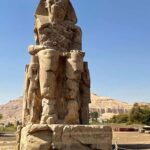
- Colossi of Memnon: short stop, big presence
- Karnak Temple Complex: Amun, Mut, Khonsu, and centuries of building
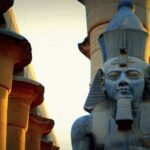
- Luxor Temple: Amenhotep III and Ramses II in the same complex
- Lunch and timing: how to make an eight-hour day feel manageable
- Price and what you’ll likely pay on top
- What kind of traveler should choose this tour
- Final verdict: should you book it
- FAQ
- How long is the Luxor East and West Banks day tour?
- What does the tour cost?
- Is hotel pickup and drop-off included?
- Do I need to pay entrance fees for the stops?
- Is this a private tour?
- Is lunch included?
- Is the guide English-speaking?
- What is the cancellation policy?
Key things to know before you go
- Private-feel, small-group guide time: the Egyptologist works with a group of about 6 to 8, not a giant bus crowd
- East and West Bank, full-day order: Valley of the Kings, Hatshepsut, Karnak, and Luxor Temple in one run
- Air-conditioned private vehicle: transfers are handled for you from hotel (or airport) to return
- Lunch included: you get a built-in break instead of improvising midday
- Entrance fees are mostly extra: Valley of the Kings, Hatshepsut, Karnak, and Luxor Temple require tickets; Colossi of Memnon is free
East and West Bank in One Day: the real value
This itinerary is built for people who want the big Luxor highlights without losing half the day to transit planning. You get a clean rhythm: start on the West Bank with the funerary sites, then shift to the East Bank with the major temple complexes. It’s one of the most time-efficient ways to understand how ancient Thebes worked as a whole city, split by the Nile.
I especially like that the tour doesn’t just drop you at entrances. With an Egyptologist leading the way, you’re more likely to notice what matters: why each temple is where it is, what the carvings were meant to communicate, and how the different periods connect. Even when you only spend a set block of time at each stop, the guide’s context can make the sights feel less like random ruins.
The drawback is simple math: it’s a packed day. Expect walking, sun exposure, and a schedule where “one more photo” has consequences for the rest of the route.
You can also read our reviews of more tours and experiences in Luxor.

Getting there: pickup, private transfers, and small-group comfort
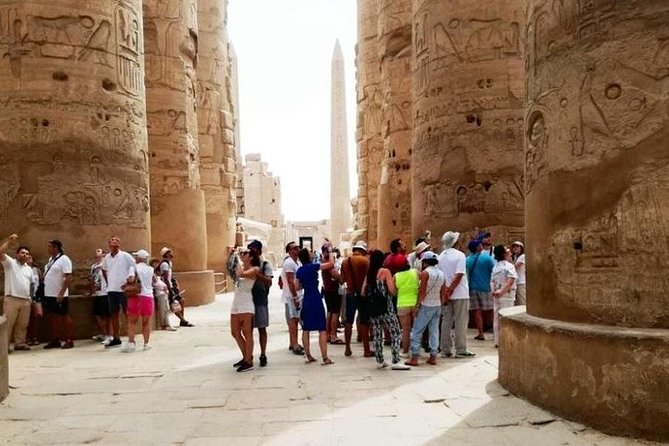
A big reason this tour works is the transportation. You get pickup from your Luxor hotel or the airport, and you return afterward, using a private air-conditioned vehicle. That matters in Luxor, where travel time adds up fast and the heat can turn short distances into chores.
The guide format is also practical. You’re not in a big crowd with separate tour factions, but your Egyptologist is guiding a small group of about 6 to 8. I like this balance because you still get answers to questions, but you also get the efficiency of a set itinerary.
One more detail that helps: you’ll receive a mobile ticket, which reduces the hassle of paperwork. If you’re juggling multiple bookings while you’re in Egypt, anything that makes the day smoother is worth it.
Valley of the Kings: focus your time in the royal tomb valley
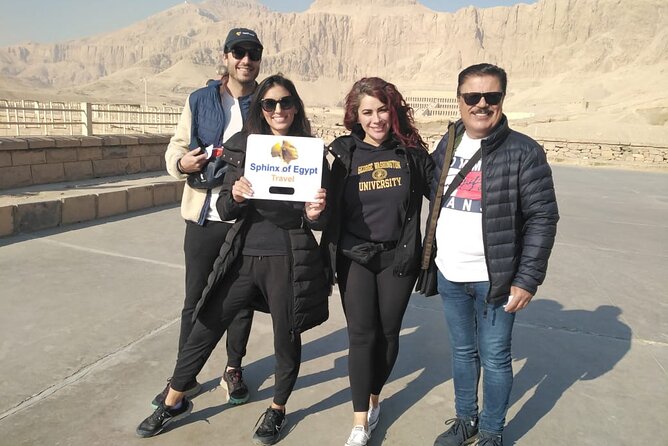
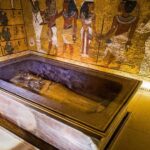
Stop one is the Valley of the Kings, facing ancient Thebes on the West Bank. This valley was used as a royal burial place over centuries, and it’s split into two main valleys, with most royal tombs located in the Eastern Valley. That division is useful to know because it explains why the area feels like a whole system rather than a single landmark.
You have about two hours here, and the key thing is that your entrance ticket is not included in the tour price. You’ll need to pay your site entry separately. Since the itinerary doesn’t specify which tombs you’ll view, treat your time as a chance to understand the layout and choose what you want to see most.
In hot weather, this is where planning helps. If you’re sensitive to heat, you’ll want to pace your visits and prioritize the tombs that are most meaningful to you. The guide’s historical framing can help you decide faster, especially if you’re torn between several options.
Temple of Hatshepsut at Deir el-Bahari: terraces that feel engineered
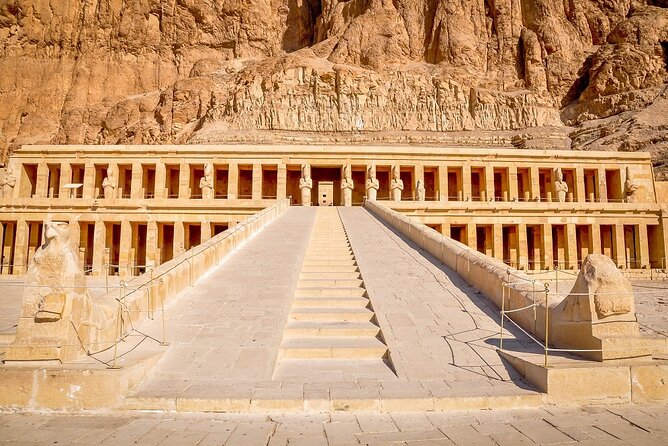
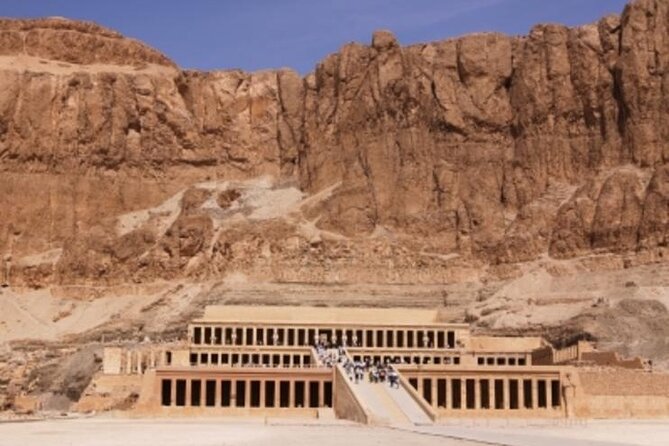
Next comes Deir el-Bahari and the Temple of Hatshepsut. This is one of the most visually striking West Bank temples, and it’s also a smart stop if you want architecture that looks different from the more straightforward temple plans you’ll see later.
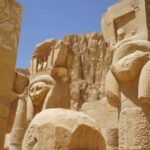
You spend about 1 hour 30 minutes here, and the entrance ticket is not included. Hatshepsut’s temple is known for its three successive floors on open terraces, built mainly of limestone. The design is unique compared with many Egyptian temples on the East Bank, and that contrast is part of the point: you’re seeing how royal ideology and geography shaped temple design.
The guide context is where this stop pays off. Statues of Osiris and Hatshepsut were installed in front of pillars on the second terrace, and they were originally colored. If you walk through the terraces while understanding what the temple was meant to represent, the whole structure makes more sense than if you treat it like a photo backdrop.
If you’re visiting in peak heat, arrive ready to move steadily. Terraces can feel exposed, and this is one of the stretches where the day’s pace becomes noticeable.
Colossi of Memnon: short stop, big presence
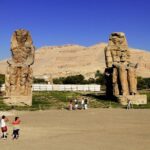
The Colossi of Memnon are a quick one—about 30 minutes—and the entrance is free. These are two enormous stone statues associated with Amenhotep III, and they’re the main survivors tied to a temple in his memory.
Greek tradition links the name Memnon to a legendary figure, and the story behind a cracked statue is part of why people remember this spot. Even if you ignore the myth, the scale lands. These statues are about 19 meters tall, so they don’t feel like “one more ruin.” They feel like a monument meant to be seen and understood from a distance.
This stop is a good breather in the middle of a heavy day. It also works as a reset: you get monumental presence without the long ticket-and-tomb time that some other attractions require.

Karnak Temple Complex: Amun, Mut, Khonsu, and centuries of building
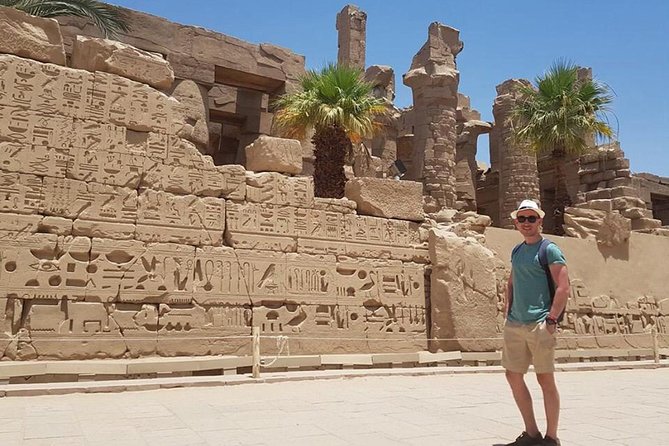
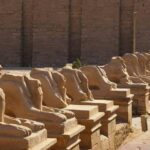
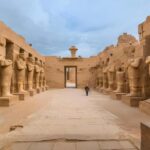
After the West Bank sights, you move to the East Bank and Karnak Temple Complex. This isn’t a single temple; it’s a whole cluster of temples, buildings, and columns that expanded over time—from the Middle Kingdom kings through later eras up to the Roman period.
You get about 1 hour 30 minutes, and once again, admission tickets are not included. Karnak is famous for religious symbolism: it’s tied to the divine “trinity” of Amun (Amun Ra in modern terms), Mut, and Khonsu. The tour framing helps because those names aren’t just trivia—they explain why structures inside the complex relate to each other.
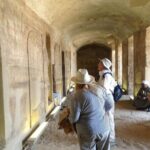
What I like most about Karnak with an Egyptologist is how you can separate what you’re seeing from what you’re guessing. With context, the sheer size stops feeling random. You start to recognize patterns: areas devoted to specific aspects of worship, and the way later rulers added to earlier plans.
Karnak is also where you’ll likely want comfortable footwear. The ground can be uneven, and you’re going to want to keep your pace steady rather than stopping every time you spot a new column.
Luxor Temple: Amenhotep III and Ramses II in the same complex
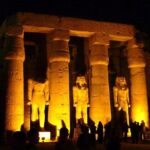
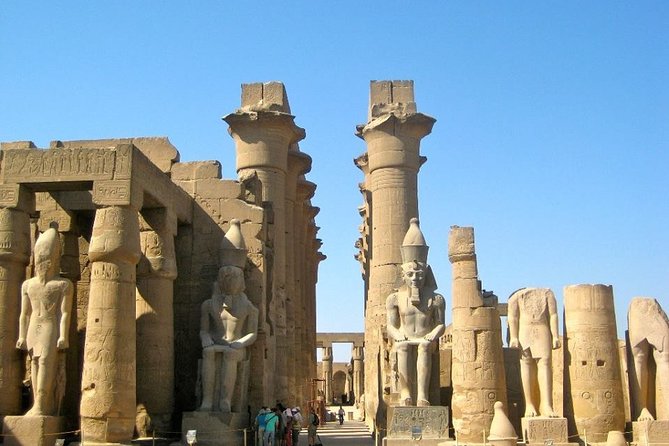
The final major stop is Luxor Temple on the East Bank. This complex was founded around 1400 BC and dedicated to Amun Ra, Mut, and Khonsu—theban trinity. It’s described as a large temple complex with major existing buildings from reigns including Amenhotep III and Ramses II, plus additional work connected to Thutmose III.
You have about 1 hour here, with entrance tickets not included. The big reason this stop matters is continuity. You’re not switching to a completely different world. Instead, you’re seeing another anchor point in the same ancient city, designed around major deities and royal projects that span dynasties.
If you’re thinking about how to experience Luxor in a way that feels connected, Luxor Temple helps you do that. It sits in a lived-in modern city, which can make the contrast sharper when you step back and consider how long these sacred spaces have been in the same general place.
Lunch and timing: how to make an eight-hour day feel manageable
Lunch is included, which is genuinely helpful. It’s one less item you have to hunt for mid-tour, and it keeps the schedule on track.
That said, the itinerary is still full: Valley of the Kings, Hatshepsut, Colossi of Memnon, Karnak, Luxor Temple. With a day this packed, your comfort comes down to pacing. In hot weather, slow down when you’re inside shaded tomb spaces, and keep water and sun protection in mind when you’re exposed outside. The guiding style matters here too; one recent review noted that the guide handled questions competently and adjusted the drive to match the group’s wishes, which is exactly what you want in a day like this.
Price and what you’ll likely pay on top
The tour is listed at $40 per person, and that base price is low for what you get: hotel (or airport) pickup and return, private air-conditioned transfers, an English-speaking Egyptologist, all mentioned sites, and lunch. Service charges and taxes are included, so you’re not hit with random line items for “administration” at the last minute.
But the big budget reality is entrance fees. The tour information clearly says entrance tickets are not included for several stops. Colossi of Memnon is free, but you’ll pay for Valley of the Kings, Temple of Hatshepsut, Karnak Temple Complex, and Luxor Temple.
One practical review detail worth noting: an extra €35 per person for entrance fees was mentioned. Since entrance costs can change over time, treat that as a useful planning ballpark rather than a promise.
Also remember tipping is not included. If you like having a guide who can explain what you’re seeing and answer questions, build tipping into your day plan.
What kind of traveler should choose this tour
This is a strong fit if you:
- want an efficient East and West Bank overview without doing the logistics yourself
- prefer a guide who can explain meaning, not just point at monuments
- like traveling with a small group rather than a big bus crowd
- appreciate having lunch and transfers handled
If you prefer total flexibility—like lingering longer in one tomb or skipping one stop entirely—you might find an eight-hour schedule a bit tight. In that case, you’d be happier with a more customizable private plan.
Final verdict: should you book it
I’d book this tour if you want maximum Luxor impact in one day with minimal stress. The combination of door-to-door transfers, an Egyptologist guide, and lunch included makes the $40 base price feel like good value, especially when you’re comparing it to the cost and headache of coordinating East and West Bank visits alone.
Just go in with your eyes open about extra entrance fees and tipping, and plan for heat. If you handle those realities, you’ll get a well-structured route through Luxor’s most iconic sites.
FAQ
How long is the Luxor East and West Banks day tour?
The tour runs about 8 hours (approx.).
What does the tour cost?
The price is listed at $40.00 per person.
Is hotel pickup and drop-off included?
Yes. Pickup is offered from your Luxor hotel or the airport, and you also get return transfers.
Do I need to pay entrance fees for the stops?
Entrance fees are not included for most sites on the itinerary. Admission is not included for the Valley of the Kings, Temple of Hatshepsut, Karnak Temple Complex, and Luxor Temple. Colossi of Memnon is free.
Is this a private tour?
It’s described as a private tour/activity where only your group participates. The Egyptologist guide is shared with a small group of 6 to 8.
Is lunch included?
Yes, lunch is included.
Is the guide English-speaking?
Yes, the tour includes a private English-speaking Egyptologist guide.
What is the cancellation policy?
You can cancel for a full refund up to 24 hours before the experience’s start time.