REVIEW · LUXOR
East Bank in Luxor Day Tour Karnak temple and Luxor Temple
Book on Viator →Operated by Adam's Tours · Bookable on Viator
A day at Luxor’s East Bank moves fast, but you still get the good stuff: Karnak and Luxor Temple in one smooth run. I like the private A/C car and hotel or Nile cruise pickup, which makes this easy even on a tight schedule. I also like that you get a guided focus on the Amun-Ra / Mut / Khonsu theme, so the sites feel connected instead of like random stones. One thing to plan for: entry tickets are not included, and the visit is short enough that you’ll want to choose what you want to linger on.
This is a 3-hour private tour with a driver, bottled water, and the option to add an Egyptology-focused guide speaking English. You’ll spend about 2 hours at Karnak Temple and about 1 hour at Luxor Temple, with transfers handled in a modern vehicle. If you’re traveling solo, as a couple, or with friends who want control over the pace, this format can be a smart way to see two major East Bank landmarks without burning your whole day.
In This Review
- Key highlights to look for
- East Bank temples in one tight 3-hour window
- Private A/C pickup and transfers that keep things calm
- Karnak Temple: Amun-Ra’s power center and the 134-column hypostyle hall
- Luxor Temple’s layered religions: ancient Egyptian, Greek, Roman, Christian, Islamic
- What you’re really paying for: value at $16 and what to budget for tickets
- How the optional Egyptology guide changes the experience
- Pacing and comfort: exactly how to plan your day around it
- Who this tour is for (and who might want a different plan)
- Should you book this East Bank Karnak and Luxor Temple tour?
- FAQ
- How long is the East Bank Karnak and Luxor Temple tour?
- Do you get hotel or Nile cruise pickup?
- Is entry to Karnak and Luxor Temple included in the price?
- Is a private car included?
- Do you get a guide?
- What’s included besides transport?
- Is this tour shared with other groups?
- What’s the cancellation policy?
Key highlights to look for
- Private A/C transfers with pickup and drop-off from your hotel or Nile cruise
- Karnak Temple essentials: the hypostyle hall with 134 columns and towering granite obelisks
- Luxor Temple’s multi-era story, mixing ancient Egyptian, Greek, Roman, Christian, and Islamic layers
- The Theban Trinity theme: Amun-Ra, Mut, and Khonsu tied together at both temples
- Optional Egyptology guide in English, plus the chance to ask questions as you go
- Service that feels personal, including praise for timely arrival and thoughtful drink options
East Bank temples in one tight 3-hour window
This tour is built for people who want a meaningful hit of Luxor archaeology without turning the day into a full marathon. You’re looking at roughly 2 hours at Karnak and 1 hour at Luxor, which is just enough time to understand what you’re seeing and walk through the key areas.
Karnak and Luxor Temple are both massive, so time management matters. With a fixed tour length, you’ll get a curated flow: major monuments first, then the parts that connect the dots historically and religiously. That’s the value here. Instead of wandering and guessing, you’ll follow an order that helps the sites make sense.
The 3-hour structure also fits real travel life. You avoid the “we’ll just see one temple” trap that turns into a long day and an exhausted evening. If your schedule includes river cruises, early departures, or dinner plans, this kind of compact plan is often the difference between enjoying Luxor and rushing through it.
You can also read our reviews of more tours and experiences in Luxor.


Private A/C pickup and transfers that keep things calm
Good logistics can make or break an antiquities day. This one starts with hotel or Nile cruise pickup in Luxor and returns you to the meeting point afterward. You ride in a private, modern air-conditioned vehicle, which is a big deal when you’re dealing with warm weather, lots of walking, and sunlight.
Another practical win: bottled water is included. That sounds basic, but on the ground it matters—especially when you’re moving between two temples and you don’t want to spend time hunting for refreshments.
The service quality comes through in the feedback too. One recent review highlighted a driver who arrived on time and brought a selection of drinks to choose from. Even if you only count the bottled water as guaranteed, the driver attitude is clearly part of what people are paying for here.
If you hate negotiating taxis or figuring out where to stand for the right route, you’ll probably appreciate the hands-on transport. It lets you focus on the temples instead of the process.
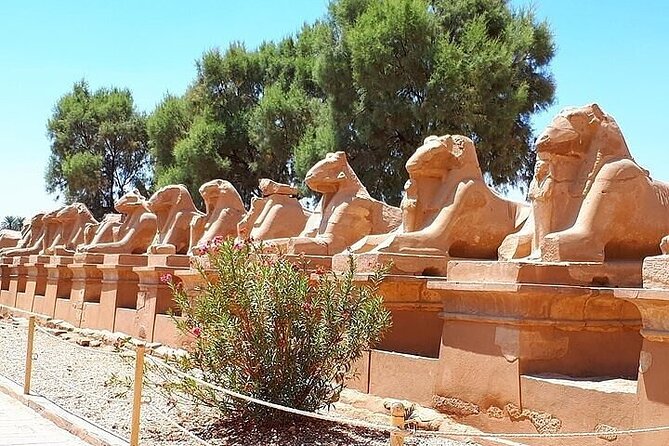
Karnak Temple: Amun-Ra’s power center and the 134-column hypostyle hall
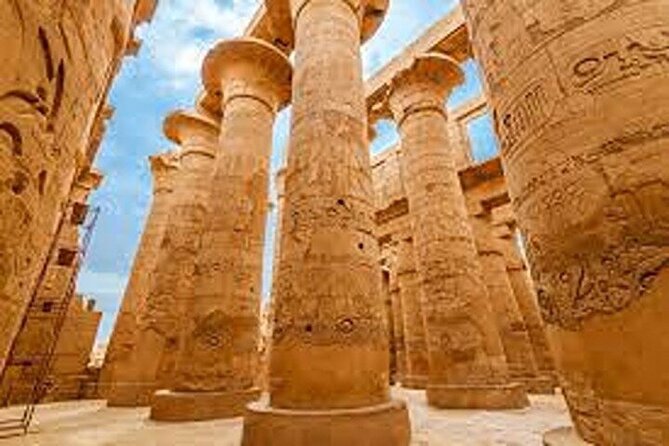
Karnak Temple is the kind of place that can swallow your day if you let it. So the smart move is to get the story straight early—and this tour does that. You’ll visit Karnak Temple, dedicated to Amun-Ra, his wife Mut, and their son Khonsu. That family connection is central to how the temple complex functioned.
The headline sights are exactly the ones that help you read Karnak from a visitor’s level:
- The hypostyle hall with 134 columns, which is famous for its scale and forest-like interior. Standing inside it, you can really feel how architecture was used to create awe.
- Towering edifices and granite obelisks, including tall monuments that are a signature of Karnak’s monumental style.
- The sense of a sacred center, including the Holy of Holies concept tied to the deeper religious purpose of the complex.
What I like about the way Karnak is framed here is that it’s not just about big objects. It’s about understanding why those objects were built where they were. When your guide keeps the focus on Amun-Ra and the Theban Trinity, the temple stops feeling like random giant chambers and starts feeling like a system.
Now, a balanced note: Karnak is huge. With only about 2 hours here, you won’t see every corner. You’ll get the major elements and the most meaningful highlights, but if you’re the type who wants to photograph every doorway detail or read every inscription at length, you might feel slightly time-compressed. That’s not a problem with this tour—it’s just the reality of Karnak’s size.
Luxor Temple’s layered religions: ancient Egyptian, Greek, Roman, Christian, Islamic
After Karnak, Luxor Temple feels different right away. It’s still ancient, but the experience is more about layers than pure scale. Luxor Temple is known for containing five civilizations represented in the complex: ancient Egyptian, Greek, Roman, Christian, and Islamic.
The construction story gives you a timeline anchor. Work began under King Amenhotep III in the 18th Dynasty (New Kingdom era, around 1500 BC) and was completed under Ramesses II in the 19th Dynasty. That long build span helps explain why you’ll see different styles and additions.
One of the most useful ideas to carry into Luxor Temple is that it’s tied again to Amun-Ra, Mut, and Khonsu—the Theban Trinity. You’ll hear it referenced as a dedication to that divine family, which links the site to Karnak conceptually. It’s the same myth-world, presented in different architectural chapters.
In the highlights, you’ll get:
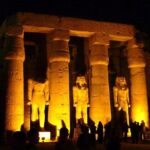
- The obelisk of Ramses II in front of the first edifice
- Roman columns and Greek inscriptions, which help show later cultural layers
- A sense of how the temple’s meaning shifted over centuries while still using sacred space
A fair consideration: you only have about 1 hour at Luxor Temple. In that time, you can see important exterior monuments and key interior areas, but you won’t have time to linger for slow museum-level reading. If you want deeper inscription study, consider pairing this with an extra solo visit later in the day or another tour segment that focuses only on Luxor Temple.
Still, for most visitors, 1 hour is the sweet spot to get the concept of layered worship and the main visual markers without rushing yourself.
What you’re really paying for: value at $16 and what to budget for tickets
At $16 per person, this tour is priced like a budget-friendly way to cover two major sites plus transport. The value isn’t just the low sticker price. The real value is that you’re buying three things at once:
1) Private A/C transport between temples
2) Pickup and drop-off from your hotel or Nile cruise
3) A structured guided visit with temple orientation and a clear narrative thread
That’s often where savings show up. If you tried to do the same day with taxis, you’d spend time coordinating and you’d lose the “guided order” that helps you understand what you’re seeing quickly.
What’s not included is entry tickets. The tour also states that entry tickets are optional, meaning you’ll likely pay on-site (or via the provider depending on your setup). I recommend you budget extra for tickets so there’s no surprise when you arrive.
Tipping is also not included. Even if you’re trying to keep costs low, plan a small amount for your driver and any optional guide.
There’s also an optional Egyptologist guide speaking English. That can be worth it if you want names, dates, and explanations tied directly to what you’re walking past. In the reviews, the guide’s knowledge was specifically praised, so this isn’t just a checkbox. If you’re someone who likes to ask questions and connect temple features to real Egyptian belief, opt in if the cost makes sense for your group.


How the optional Egyptology guide changes the experience
This tour offers an Egyptologist guide in English as an optional add-on. Whether it’s “worth it” depends on your travel style, but there’s a clear pattern in the feedback: people liked having explanations with details about ancient Egypt, not just directions.
With a guide, Karnak’s hypostyle hall stops being only dramatic architecture and becomes a piece of intentional religious staging. At Luxor Temple, the five-civilization layering becomes easier to understand as a sequence rather than a confusing mash of styles.
If you’re the type who reads inscriptions slowly and wants history that connects, the guide option is likely to make your hour at Luxor Temple feel longer and more rewarding. If you prefer a lighter, self-paced experience, you can still appreciate the main monuments without the add-on—just expect you’ll miss some of the “why” behind the “what.”
One practical tip: if you do book the Egyptology guide, come with 2-3 questions. Simple ones work well, like how Amun-Ra’s role connects to Karnak and why later civilizations left visible traces at Luxor Temple. That gets your guide talking in the direction you care about.
Pacing and comfort: exactly how to plan your day around it
The itinerary timing is straightforward: about 2 hours at Karnak, then about 1 hour at Luxor Temple. That pacing is designed to keep energy up and decision-making simple.
Here’s how I’d plan around it:
- Wear comfortable walking shoes. Karnak’s grounds involve uneven surfaces and lots of ground coverage.
- Bring sun protection. Even with shade here and there, you’ll still spend time outdoors.
- Use the water you’re given. Bottled water is included, and a praised driver service also included extra drink options for one group, but don’t assume that for every day.
- If you’re taking photos, decide which shots matter most. With limited time, you’ll get better results by prioritizing the hypostyle hall interior and key obelisks rather than trying to photograph everything.
You’ll also get a private setup, meaning your group stays together rather than mixing into another crowd flow. That’s helpful when you want time to ask your guide something without feeling rushed.
Who this tour is for (and who might want a different plan)
This East Bank combo works best for:
- First-time Luxor visitors who want two top sites in a single morning or afternoon block
- Couples and solo travelers who value private transport and a simple, low-stress schedule
- People who want a guided narrative (especially with the optional Egyptology guide)
- Anyone staying on a Nile cruise who needs reliable timing and transfer support
It may not fit as well if:
- You want to spend hours photographing, sketching, or reading inscriptions line-by-line
- You’re hoping for a full “see every major corner of Karnak” day
- You dislike the idea of paying separate entry tickets
Still, for most people, this is a strong format: short enough to keep you refreshed, structured enough to make the temples click.
Should you book this East Bank Karnak and Luxor Temple tour?
Yes, if you want a practical, no-drama way to see Luxor’s East Bank highlights with private A/C pickup and a guided storyline. The best reasons to book are the transport quality, the focused time at Karnak’s iconic spaces, and Luxor Temple’s role as a multi-era site you can actually grasp in one visit.
I’d say you should be especially happy with this if you care about understanding Amun-Ra and the Theban Trinity through both temples rather than just ticking off landmarks. The service feedback—on-time driver, air-conditioned car, and a guide with detailed Ancient Egypt knowledge—supports that this isn’t just a basic transfer.
If you’re the kind of traveler who wants to linger for hours at the deepest corners of Karnak or Luxor Temple, then you may feel the time limit. In that case, book this as your “orientation visit” and add extra independent time later.
FAQ
How long is the East Bank Karnak and Luxor Temple tour?
It runs for about 3 hours total, with around 2 hours at Karnak Temple and about 1 hour at Luxor Temple.
Do you get hotel or Nile cruise pickup?
Yes. Pickup and drop-off are included from your hotel or Nile cruise in Luxor, with the tour ending back at the meeting point.
Is entry to Karnak and Luxor Temple included in the price?
No. Admission tickets are not included. Entry tickets are optional per the tour details.
Is a private car included?
Yes. You’ll have private transfers in a modern air-conditioned vehicle for the tour.
Do you get a guide?
A tour guide is described as specialized in Egyptology as an optional add-on, and English is mentioned as an option. Without the optional guide, you still have a guided-style visit, but the Egyptology explanation may depend on the option you choose.
What’s included besides transport?
Bottle water is included, along with the pickup/drop-off and private tour arrangement.
Is this tour shared with other groups?
No. This is a private tour/activity, so only your group participates.
What’s the cancellation policy?
You can cancel for a full refund up to 24 hours before the experience’s start time, with no refund if you cancel less than 24 hours before.