REVIEW · CAIRO
Luxor Full Day Sightseeing Tour by Bus from Hurghada
Book on Viator →Operated by Egypt Joy Travel · Bookable on Viator
One day, four ancient stops, zero guesswork. This Luxor full-day bus tour from Hurghada is built for ticking off the big names fast, with a guide who keeps the story moving and points out great photo spots, plus admission tickets included.
I especially like the combination of major sites—Karnak and the Valley of the Kings—packed into a single plan. And I appreciate that the schedule also includes Hatshepsut and the Colossi, so you get a fuller picture of ancient Egypt instead of a one-temple day.
The main trade-off is time. You’re looking at a long 12–14 hour day with a 5:00 am start, so each place is a focused visit rather than a slow wander.
In This Review
- Key highlights at a glance
- A 12–14 Hour Luxor Hit From Hurghada: What You’re Really Buying
- Catching the 5:00 AM Pickup and the Desert Drive
- Karnak Temple: Amun-Ra Worship, Obelisks, and the Hypostyle Hall
- Valley of the Kings: Focused Tomb Time Without the Planning Stress
- Temple of Hatshepsut at Deir el-Bahari: A Female Pharaoh Moment
- Colossi of Memnon: A Quick, Free Photo Break
- Lunch at a Local Restaurant: The Part That Keeps the Day Human
- Price and Logistics: Does $200 Per Person Actually Make Sense?
- Your Guides and Drivers: Why Names Matter for This Day Trip
- Practical Tips to Get the Most From Every Stop
- Should You Book This Luxor Day Trip From Hurghada?
- FAQ
- What time does the tour start?
- How long is the Luxor full day sightseeing tour?
- Is pickup offered from Hurghada hotels?
- Are admission tickets included?
- Is lunch included?
- What sites will we visit in Luxor?
- What kind of vehicle is used?
- How many travelers are in the group?
- Do I get a mobile ticket?
- Is free cancellation available?
Key highlights at a glance
- 5:00 am pickup for a day built around early touring
- All admission tickets included for the main stops (Colossi is ticket-free)
- Air-conditioned modern vehicle with pickup and drop-off
- Lunch included at a local restaurant, catered to dietary requirements
- Maximum 10 travelers, which helps the day feel more personal
A 12–14 Hour Luxor Hit From Hurghada: What You’re Really Buying
This tour is for people who want Luxor now, not “someday.” The value here is the logistics: you get transport from Hurghada, a tight route of the classics, and the tickets handled so you can spend your energy looking up—at ceilings, columns, tomb entrances, and all the carved details.
You’re not going for a relaxed pace. You’re going for an efficient, story-driven day that hits multiple eras and temple styles. That matters if you’re short on time, or if you’re already doing other excursions while you’re based in the Red Sea.
For me, the best part is that the itinerary doesn’t only show monuments—it also explains what you’re seeing. Your guide will talk about the Pharaohs connected to each stop and show you where photos come out well.
The drawback is simple: after hours of driving and site time, you may feel like you blinked and somehow you’re back on the road again. If you love museum-style, unhurried exploration, you’ll feel the limits of a day trip. If you want “big first taste” Luxor, it’s a solid match.
A few more Cairo tours and experiences worth a look



Catching the 5:00 AM Pickup and the Desert Drive
The day begins early—start time is 5:00 am. That’s not just a quirky travel detail; it shapes the whole experience. The early start gives you a better shot at smoother touring before the day heats up and before crowds build.
From Hurghada, you’ll be traveling several hours by modern, air-conditioned vehicle. The desert drive can feel long, but it’s also part of the thrill: you’re leaving the coast behind and heading toward the Nile’s history-heavy zone. In practice, the route can involve busy traffic patterns, and the driver coordination is key.
The tour includes transport before, during, and after your sightseeing. That’s the big convenience factor. You don’t need to solve how to get between sites, find ticket counters, or figure out what time to be where.
If you tend to travel light and keep your mornings painless, you’ll enjoy this. If you’re not a morning person, plan on feeling it—just once—then enjoy the monuments.
Karnak Temple: Amun-Ra Worship, Obelisks, and the Hypostyle Hall
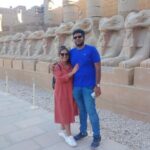
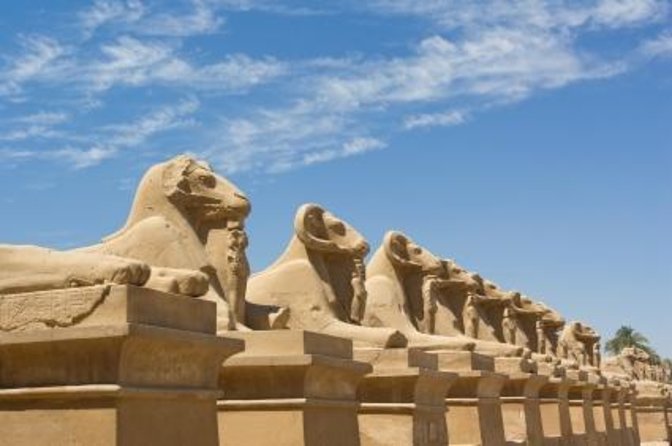
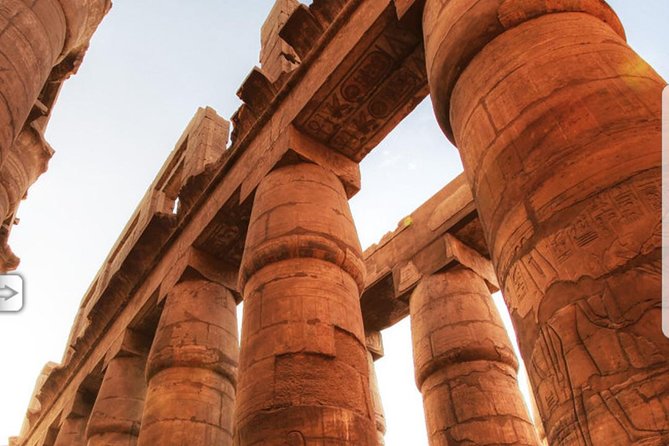
Karnak is where the scale hits you. You’ll spend about two hours here, exploring a massive complex where ancient pharaohs worshipped Amon-Ra. This isn’t one building—it’s a whole temple world layered with meaning, with stone work that’s meant to overwhelm you into paying attention.
What I like about this stop is the variety packed into that time window. You’ll see statues and obelisks, and you’ll get to experience the famous hypostyle hall—not just as a “wow, columns” photo moment, but as a sense of how temple spaces were designed to make power feel physical.
Karnak is also a place where a guide helps a lot. When someone explains what you’re looking at—what the carvings relate to, why certain spaces mattered—you move through faster and understand more. Your guide will also point out strong photo angles, which can make a big difference because Karnak can be confusing if you just wander.
Possible consideration: two hours goes fast in Karnak. If you’re the type who wants to read every inscription or inspect every relief, you may wish you had more time. Still, for a day trip, it’s a very smart first stop.
Valley of the Kings: Focused Tomb Time Without the Planning Stress

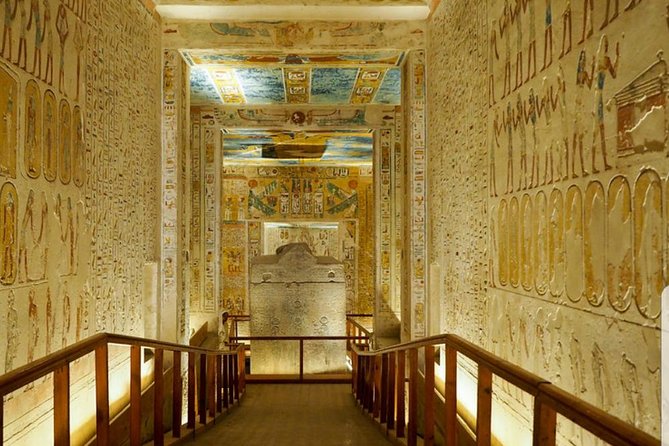
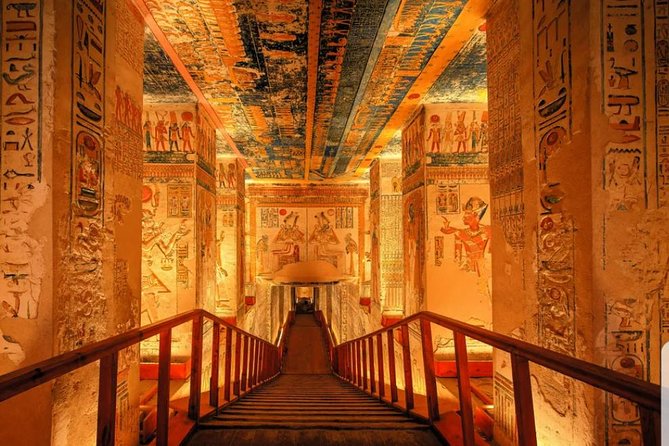
Next up is the Valley of the Kings, again about two hours. This is where the day’s “bucket list” feeling ramps up. You’re looking at tombs connected to pharaohs who ruled Ancient Egypt, and the whole setting is built around the idea of burial, protection, and eternal remembrance.
Here’s what makes this stop worth prioritizing: it connects you to the story of royal power and beliefs about the afterlife. Even if you only see a limited number of tomb entrances in a day, you still get a sense of how the pharaohs were memorialized and how tomb layouts worked.
Your guide’s job matters in a place like this. With the time you have, you want direction—what to notice, what details to look for, and how to understand the differences between tombs without getting lost in logistics.
Possible drawback: the Valley feels bigger than the clock suggests. If you’re hoping for a slow, long exploration, you won’t get it. But if you’re treating this as your Luxor highlight day, two hours is a practical amount to get a real feel for the site.
Temple of Hatshepsut at Deir el-Bahari: A Female Pharaoh Moment
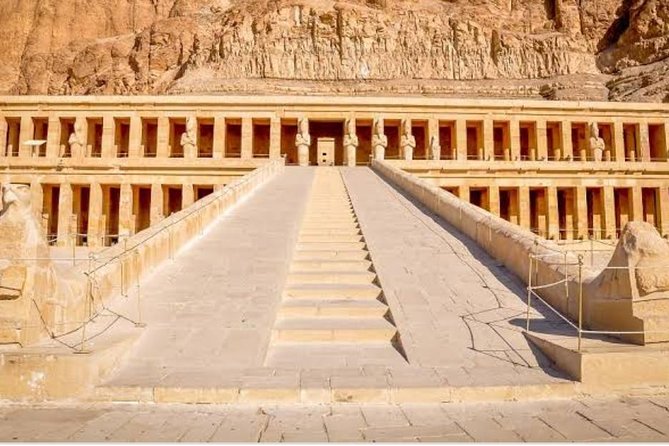
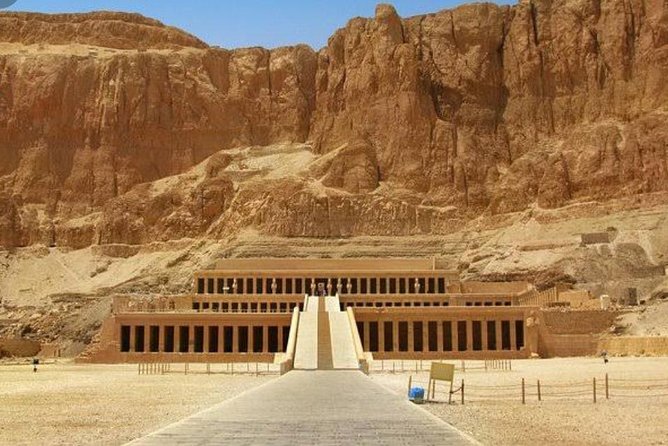
Deir el-Bahari is one of those stops that changes how you think about ancient Egypt. You’ll visit the temple of Hatshepsut, the female king of Egypt, for about one hour.
One hour sounds short, but Deir el-Bahari is visually dramatic. The temple is famous for its connection to Hatshepsut’s reign and for how the architecture and artwork communicate royal authority. It also gives your day a needed change of pace from the tomb setting and the huge temple scale of Karnak.
Why this stop adds value: it widens the “who was in power?” lens. Many people expect kings in the abstract. Seeing Hatshepsut’s story tied to her temple makes it more personal and concrete.
Possible consideration: if you arrive tired, you might not soak it in as well as you could. Plan to be ready to pay attention for this hour. A guide’s explanations can turn it from scenery into understanding, so listen closely when the story starts linking the architecture to Hatshepsut’s reign.



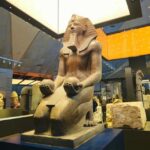

Colossi of Memnon: A Quick, Free Photo Break
The Colossi of Memnon are the light-speed ending act of the sightseeing loop. You’ll have about 15 minutes here, and the admission ticket is free.
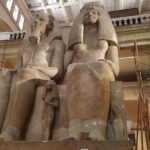
These are giant statues that remain from the time of Pharaoh Amenophis the third. They’re also famously known by the later name Memnon, connected to the legend about Aga Memnon.
In a day trip schedule, this stop plays a useful role. It gives you a chance to see something monumental and instantly readable in photos, without stealing too much time from the heavier sites.
Possible consideration: 15 minutes is exactly what it sounds like. If you want to linger for details, you may wish you could stay longer. Still, as a “snap the memory” moment before the long ride back, it’s a smart use of time.
Lunch at a Local Restaurant: The Part That Keeps the Day Human
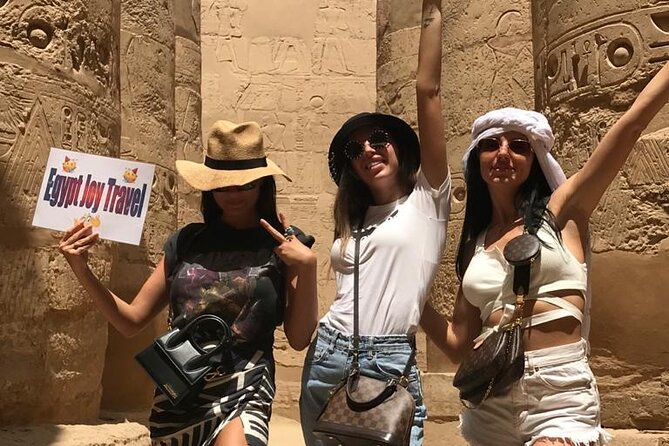
Lunch is included at a local restaurant, and it’s catered to your dietary requirements. That’s a big deal on a full-day tour because it prevents the most common day-trip problem: you end up hungry, searching for food, and wasting the afternoon feeling wrecked.
A local restaurant stop also helps keep the day from being only temples and tombs. You get a normal rhythm break—sit down, refuel, and reset.
One practical tip: since you’ll be on a schedule all day, eat at lunch even if you’re not starving. Then you can focus at the next stop without the “why am I dragging?” feeling.
Price and Logistics: Does $200 Per Person Actually Make Sense?
At $200 per person, this tour isn’t the cheapest option. But for what you’re getting—transport from Hurghada, a guided Luxor route, air-conditioned vehicle support, lunch, and admissions handled—it often pencils out better than trying to assemble the day yourself.
Here’s the real value logic:
- You’re paying for time and reduced stress. A long drive plus multiple sites plus tickets is a planning headache.
- Admissions included. You’re not adding extra costs site-by-site in Luxor, and you’re less likely to lose time at ticket counters.
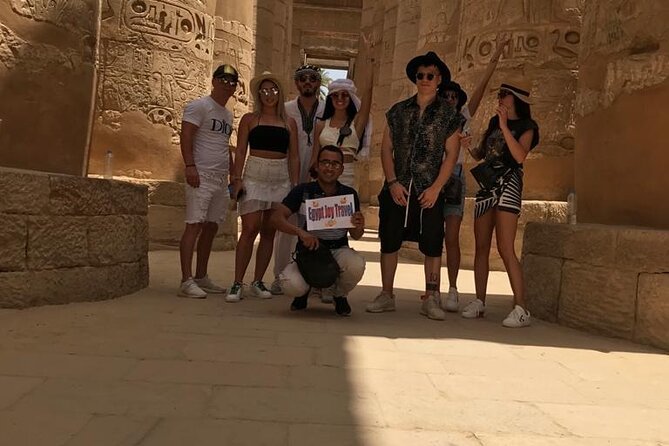
- A small group size (maximum 10). That typically makes the pace more manageable than larger bus tours.
Is it worth it? If your goal is a high-impact Luxor day with minimal coordination work, the structure justifies the price. If your goal is to spend half your day in one site, read everything, and take your time, then $200 might feel steep for the limited hours at each location.
My advice: treat this as your Luxor “greatest hits” day. If you already planned to do Luxor in depth with more time, you may prefer staying overnight or building a slower itinerary.
Your Guides and Drivers: Why Names Matter for This Day Trip
This kind of tour lives or dies on the guide and driver teamwork. Good guides keep you moving without rushing you, and they make each site intelligible in the time you have.
In the experience of people using this operator, names you might hear include Hatem (often associated with organizing and caring), and guides such as Radi, Waleed, and Machmed. Some days include an Egyptologist like Whalid in Luxor.
For driving, Mahmoud shows up in multiple accounts—known for ensuring passengers are comfortable and for handling the long desert crossing confidently. Another common theme is safe, organized transport even when local traffic can look intense.
You can use this information in your planning: when you book, ask the company which guide will lead your date and what language support you should expect. If you’re particular about explanations, that question is worth your time.
Practical Tips to Get the Most From Every Stop
A day this packed rewards smart preparation. Here are the things that make a real difference, without pretending the tour covers everything.
Bring:
- Comfortable shoes for uneven stone and lots of walking
- Sunscreen and a hat for the early-to-midday sun
- A light layer, because the timing can mean temperature swings
- A phone or small camera with charged batteries for photo stops your guide will set up
Do:
- Pay attention early at Karnak. Once you understand the temple idea, the rest of the day clicks faster.
- In the Valley of the Kings, keep your pace steady. Two hours disappears if you stop every few meters trying to decode everything.
- Use the Hatshepsut hour for focus. It’s short, but it’s the emotional and historical swing of the day.
Expect:
- A long ride back after the last stop. Plan your evening around recovery, not last-minute plans.
The tour’s format is meant for people who want big sights with minimal friction. If you match that mindset, you’ll have a day you can remember without needing a spreadsheet.
Should You Book This Luxor Day Trip From Hurghada?
Book it if:
- You’re short on time and want the Luxor classics in one shot
- You value included admissions, lunch, and a guided narrative
- You prefer a small group pace (maximum 10) over a huge crowd experience
Skip it or consider a slower option if:
- You hate early starts and long days
- You want to linger for deep reading in one site
- You’re already in Luxor for multiple days and can build your own route with less time pressure
My take: this is a strong choice for a first Luxor taste or a bucket-list day. The route makes sense, the included logistics matter, and the guide support turns “seeing monuments” into actually understanding what you’re looking at. If you’re willing to trade comfort of time for comfort of planning, it’s a very fair way to experience Luxor.
FAQ
What time does the tour start?
The tour start time is 5:00 am.
How long is the Luxor full day sightseeing tour?
It runs approximately 12 to 14 hours.
Is pickup offered from Hurghada hotels?
Yes, pickup is offered, and transport is provided before, during, and after the sightseeing.
Are admission tickets included?
Yes. Admission tickets are included for each destination. The Colossi of Memnon stop is listed as admission ticket free.
Is lunch included?
Lunch is included at a local restaurant, and it is catered to your dietary requirements.
What sites will we visit in Luxor?
You’ll visit Karnak Temple, the Valley of the Kings, the Temple of Hatshepsut at Deir el Bahari, and the Colossi of Memnon.
What kind of vehicle is used?
Transport is in a modern vehicle with air-conditioning.
How many travelers are in the group?
The tour has a maximum of 10 travelers.
Do I get a mobile ticket?
Yes, the tour includes a mobile ticket.
Is free cancellation available?
Yes. You can cancel for a full refund up to 24 hours in advance of the experience start time. If you cancel less than 24 hours before, the amount paid is not refunded.