REVIEW · LUXOR
Tour to Valley of the Kings and Hatshepsut Temple from Luxor
Book on Viator →Operated by Nile Holiday · Bookable on Viator
West Bank legends in one focused day. I love the private tour feel, where your group sets the pace, and I also like having an Egyptologist to help you make sense of what you’re seeing.
One thing to plan for: entrance tickets aren’t included, and the Tomb of Tutankhamun (if you want it) usually means an extra ticket you buy on the spot.
In This Review
- Key points to know before you go
- How the Luxor West Bank day works (and why it feels manageable)
- Valley of the Kings: three tombs, then your own pace inside
- The Tutankhamun add-on (extra ticket on the spot)
- Hatshepsut at Deir el-Bahari: terraces, Punt, and the story behind the stone
- Colossi of Memnon: a brief photo stop with a big backstory
- Price and value: what you’re paying for (and what’s extra)
- A simple budgeting approach
- Guide quality and timing tips that make the day better
- Heat strategy in summer
- Who should book this Luxor private day?
- Should you book this Valley of the Kings and Hatshepsut tour?
- FAQ
- How long is the Valley of the Kings and Hatshepsut tour?
- What’s included in the $23 price?
- Are entrance fees included?
- Is this a private tour?
- Will I be able to visit Tutankhamun’s tomb?
- How many tombs will we see in the Valley of the Kings?
- Can the Egyptologist guide go inside the tombs?
- Is there time to explore Hatshepsut independently?
- What’s the cancellation policy?
Key points to know before you go
- A true private schedule: Only your group, with pickup and drop-off from your Luxor hotel or Nile cruise
- Three tombs in the Valley of the Kings: You get enough time to compare walls, scenes, and layouts
- Egyptologist guidance where it matters: The guide helps you choose and understand, even though they can’t go inside tombs
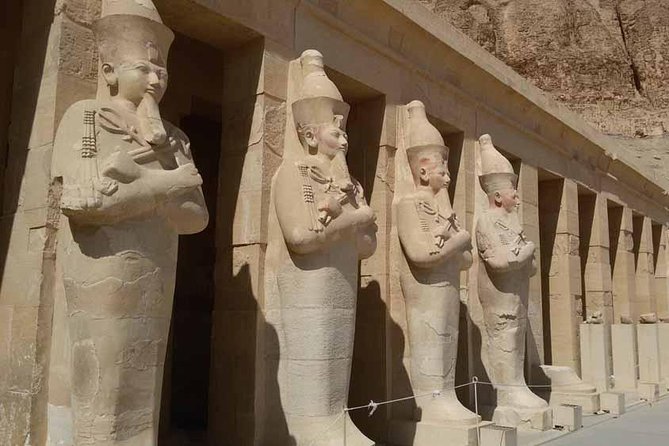
- Hatshepsut at Deir el-Bahari: Three terraces plus story context on Punt, divine birth, and godly claims
- A quick Colossi of Memnon stop: 15 minutes for a photo moment at Amenhotep III’s former temple site
- Good value with clear add-ons: The tour cost covers transport and guidance, while major site tickets are separate
How the Luxor West Bank day works (and why it feels manageable)
This is the kind of Luxor tour that keeps the day from turning into a stressful stampede. You’re in a private, air-conditioned vehicle with pickup and drop-off from where you’re staying in Luxor, and the tour runs about 5 to 6 hours total. Flexible departure times also help if you’re trying to dodge the hottest part of the day or line this up with your cruise schedule.
The biggest practical win is pace. You’re not herded through one site and whisked onward the second you slow down to read a caption. At each stop, you get time to look, think, and move at your own speed—especially in the tombs and at Hatshepsut.
The other side of that coin: the day is efficient, so you’re not spending all afternoon in just one place. If you love one tomb so much you want to linger, you’ll be happiest if you treat this as a “best-of” West Bank sampler rather than a single-site marathon.
You can also read our reviews of more tours and experiences in Luxor.

Valley of the Kings: three tombs, then your own pace inside
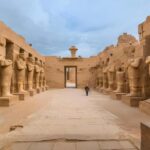
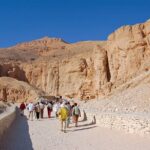
The Valley of the Kings is one of those places where the setting does half the storytelling. You’ll spend about 2 hours here, with your Egyptologist guide picking the flow and helping you choose which tombs are worth your time.
On this tour, you’re set up to visit three tombs from the New Kingdom period (1550–1080 BC). Depending on what’s available and what you decide, that can include famous royal names such as Ramses I, Ramses II, Ramses III, and Ramses IV, plus tombs tied to Merenptah, Thutmose III, and Queen Tawosret.
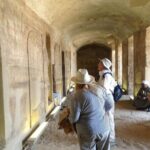
Here’s an important detail that affects the experience: guides aren’t permitted inside the tombs. That means you won’t have someone giving live commentary while you’re standing under the painted ceilings. Instead, the Egyptologist helps you before you go in—what to look for, which tombs will likely be most satisfying, and how to approach the walls once you’re inside. Then you enjoy the tombs on your own, taking your time to compare decorations and themes.
If you’re thinking, ok, does that mean you’ll be “on your own”? Not really—you’ll still get the context. It just changes the vibe. Inside, you can look without interruption, which is great if you like quiet time with ancient art.
The Tutankhamun add-on (extra ticket on the spot)
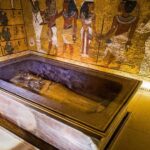
You’ll also have a chance to see the young king Tutankhamun tomb with an extra ticket purchased on the spot. This is the kind of option I like, because it gives you a decision at the right moment. If you’re energized after your first tombs, you can add it; if you’re feeling time-crunched, you’re not stuck.
Just remember: because it’s an add-on ticket, it can add a little time (and cost) depending on what’s required when you arrive.
Hatshepsut at Deir el-Bahari: terraces, Punt, and the story behind the stone
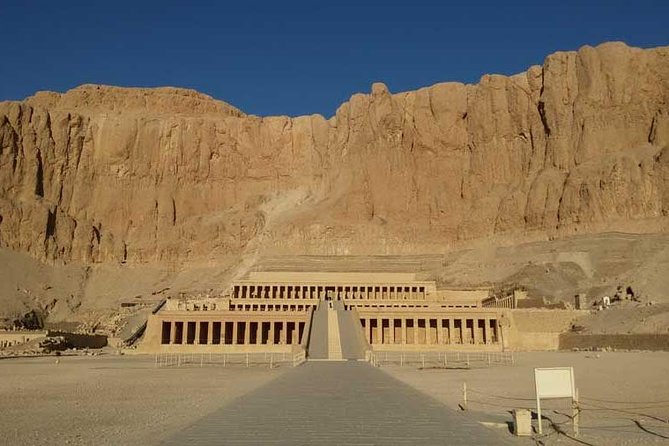
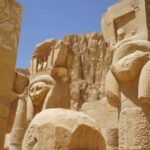
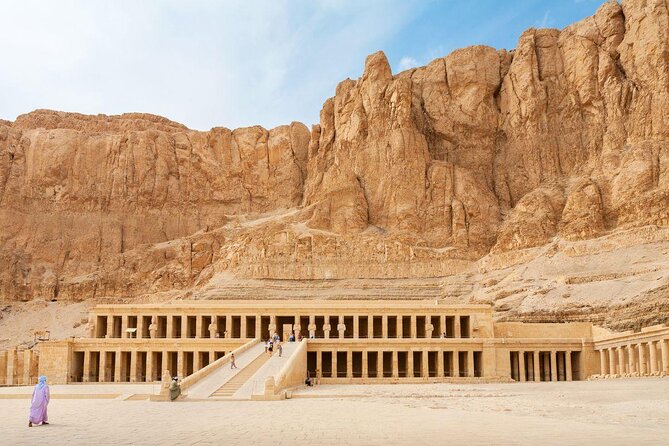
Next comes the Temple of Queen Hatshepsut at Deir el-Bahari. This is one of Egypt’s most cinematic temple settings, and the contrast with the tomb valley is big—in a good way. Instead of narrow corridors and guarded chambers, you get open views, terraces, and a place built to impress from the outside.
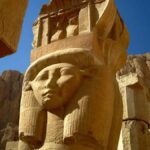
You’ll spend about 1 hour here, starting with guided context from your Egyptologist. The temple is known for its three terraces, and you’ll also hear the story points that make the statues and carvings feel less random. Pay attention to the account of a trading mission to Punt (Somalia), and the claims connected to Hatshepsut’s divine birth and other godly assertions. Even if you’re not a hardcore Egyptology person, these talking points give you a framework to read what you’re seeing.
After the explanation, you get free time to examine and wander the temple at leisure. This part matters because you can slow down to notice alignments, stairs, and the way the temple steps up across the slope. If you rush, you miss the design logic.
Practical tip: when you’re given time to wander, don’t try to see everything in straight lines. Pick a direction, go there slowly, then loop back. You’ll naturally spend your energy on what visually grabs you most.
Colossi of Memnon: a brief photo stop with a big backstory
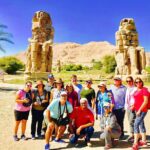
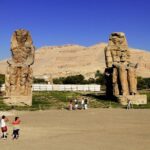
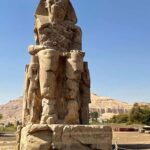
The final stop is the Colossi of Memnon—two massive standing statues that mark what’s left of Amenhotep III’s funerary temple on the West Bank. You’ll get a short 15-minute photo stop, so think of this as a quick hit at the end rather than a full third act.
The good news: the photo stop includes the site admission on this tour. With Colossi-style stops, that’s a nice bonus because it reduces decision-making late in the day.
Even in 15 minutes, you can appreciate the scale. These statues are what remain from a much larger complex, so your eye automatically starts asking, where did everything else go? That’s the fun part—standing there and imagining the temple around them.

Price and value: what you’re paying for (and what’s extra)
At $23 per person, this tour can feel like a bargain—because a lot is included. You get pickup and drop-off in Luxor, a private air-conditioned vehicle, bottled water during the tour, and all service charges and taxes are included in the base price.
What isn’t included is the key part you’ll probably care about most: entrance tickets for the tombs and the Hatshepsut temple. Also, the Tutankhamun tomb is an extra ticket purchased on the spot. So the real budget is the tour price plus site tickets plus any add-ons you choose.
One more small cost to be aware of: there’s a $7 supplement per person for pickup and drop-off from Luxor airport (one way). If your plans involve flying in or out, this is worth factoring in early.
A simple budgeting approach
If you want a smooth day, treat the $23 as your transportation + guide day fee, and then plan a separate amount for ticketed sites. That avoids the awkward moment when you’re standing at entrances and doing math in your head.
Guide quality and timing tips that make the day better
This tour lives and dies by the Egyptologist’s planning. And this is exactly where it can make a difference between a “saw it” day and a “understood it” day. The guide’s job here is to help you choose the best tombs for your time, and to explain what you’re going to see before you enter spaces where they can’t go in.
The best sign to look for is how calm and organized your guide is with time. On tours like this, timing matters because you’re moving between sites on a schedule, and tomb selection helps you avoid wasting precious minutes in a tomb that doesn’t fit your interests.
One guide named Hanny stands out in the feedback for being very informative and efficient with time, plus patient with a 4-year-old in the group. If you’re traveling with kids, that kind of focus is gold.
Heat strategy in summer
In May through August, the advice is simple: start the tour as early as possible. You’ll feel it on the drive and even more when you’re outside at Hatshepsut and when you’re deciding whether to add Tutankhamun.
Also, take advantage of bottled water during the tour and keep your own essentials ready (hat, sunscreen, and anything you like for sun protection). It’s an old place, but it’s still Egypt in the daytime.
Who should book this Luxor private day?
This tour fits best if you want the West Bank’s biggest icons in a single, organized day without turning it into a full-day logistics project. It’s especially good for first-timers who want structure (tomb choice, temple context) but still want room to look around.
I’d also recommend it if you like the idea of comparing tombs back-to-back. Visiting three tombs gives you enough variety to notice different artistic emphases and layouts, even with the fact that guides can’t go inside.
You might want a different style of tour if:
- you want to spend a long time in just one or two tombs (this one is time-efficient), or
- you’re mainly chasing Tutankhamun and prefer a day built around that specific ticket rather than an optional add-on.
Should you book this Valley of the Kings and Hatshepsut tour?
Yes, if you want a private, organized West Bank day that hits the Valley of the Kings, Hatshepsut, and the Colossi without wasting time. The value looks strong because transport, pickup, bottled water, and guidance are built into the base price, and your schedule stays flexible.
I’d book it with the expectation that tickets for tombs and temples are separate. If you plan that part in advance—plus keep an eye on the option for the Tutankhamun extra ticket on the spot—the day flows much easier.
If your goal is to see the highlights and learn enough to make the sites feel connected, this is a smart, practical choice.
FAQ
How long is the Valley of the Kings and Hatshepsut tour?
The tour lasts about 5 to 6 hours.
What’s included in the $23 price?
Pickup and return transfers in Luxor, a private air-conditioned vehicle, bottled water during the tour, and all service charges and taxes are included.
Are entrance fees included?
No. Entrance tickets are not included for the Valley of the Kings and the Temple of Hatshepsut. The Colossi of Memnon stop is admission free.
Is this a private tour?
Yes. It’s listed as a private tour/activity, meaning only your group participates.
Will I be able to visit Tutankhamun’s tomb?
You can visit the Tutankhamun tomb with an extra ticket bought on the spot.
How many tombs will we see in the Valley of the Kings?
The plan is to visit three tombs in the Valley of the Kings.
Can the Egyptologist guide go inside the tombs?
No. Guides are not permitted inside the tombs, so you’ll explore the tomb interiors on your own after your guide sets you up.
Is there time to explore Hatshepsut independently?
Yes. After the guided explanation, you’ll have free time to examine and wander the Temple of Hatshepsut.
What’s the cancellation policy?
You can cancel for a full refund up to 24 hours in advance of the experience’s start time.