REVIEW · LUXOR
Tour to The East & West Bank of the Nile
Book on Viator →Operated by Memphis Tours · Bookable on Viator
Two Nile banks, one high-impact day. I love that this is a truly private tour with your own Egyptologist, so the stories behind Karnak and the Valley of the Kings actually land. I also like the value: entrance fees and lunch are included, plus bottled water in the car. The trade-off is the day is packed, so you’ll need to be okay with a brisk pace between stops.
What makes it work is logistics. You get hotel-to-temple-to-hotel door-to-door transfers in an air-conditioned vehicle, and the guide keeps the focus on the big ideas without turning your day into a marching line. Expect around 8 hours total.
You’re hitting the signature Luxor highlights on both banks: the Valley of the Kings, Hatshepsut at Deir el Bahari, the Colossi of Memnon, then Karnak and Luxor Temple back on the East Bank. It’s the kind of day that’s ideal when you want the essential hits, without missing the historical connections across centuries.
In This Review
- Key things I’d zero in on before you go
- Private East & West Bank touring: what makes this day feel different
- Valley of the Kings: where the rock face hides royal secrets
- Deir el Bahari and Hatshepsut’s Temple: the architecture does half the talking
- Colossi of Memnon: the short stop that still hits hard
- Karnak Temple: the New Kingdom power center in stone
- Luxor Temple: the best-preserved finale by the Nile
- Price and value: what $169 buys you (and what it doesn’t)
- Guide quality matters more than you think
- Timing and pacing: how to stay comfortable in a packed 8 hours
- What to bring for a smooth East & West Bank day
- Should you book this Luxor East & West Bank tour?
- FAQ
- How long is the East & West Bank Nile tour in Luxor?
- What stops are included on the tour?
- Is pickup included?
- Are entrance fees included?
- Is lunch included?
- Is this tour private or shared?
- Does the tour provide bottled water?
- Do I need to tip?
- What if the weather is bad or I need to cancel?
Key things I’d zero in on before you go
- Private Egyptologist: You can ask questions and get explanations at your group’s pace.
- Entrance fees included: Fewer surprises, and you’re not hunting ticket lines during the day.
- Lunch in a good restaurant: A real break, not just snacks on the go.
- East and West Bank in one day: You’ll connect royal tombs with major temple power centers.
- Door-to-door private transfers: Much less hassle than figuring out transport between sites.
- A tight, highlight-focused route: Great for limited time; less ideal for slow sightseeing days.
Private East & West Bank touring: what makes this day feel different
Luxor can overwhelm you fast. Big temples, hot stone, long corridors, and signs that all start to look the same. This kind of private setup helps because your Egyptologist can point out what matters first, then help you read what you’re seeing.
You’re also not doing this with a random jumble of strangers in multiple pickup windows. The tour is for your group only, with private transfers. That matters more than it sounds—when you’re trying to cover both banks in one day, every transfer delay eats into the time you’ll want for photos and careful looking.
The other practical win is the included package. Admission fees for every named stop are covered, and lunch is included at a good-quality restaurant. You’ll still pay your own tips (those aren’t included), but you won’t be piecing together the budget hour by hour.
You can also read our reviews of more tours and experiences in Luxor.

Valley of the Kings: where the rock face hides royal secrets
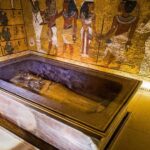
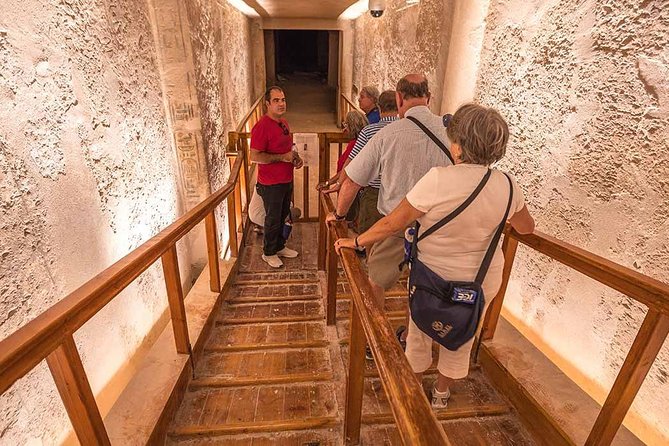
Your day starts on the West Bank with the Valley of the Kings, also known as the Valley of the Gates of the Kings. At first glance, it’s a sun-blasted gorge of red rock and dust. Then you step into the reality: this was burial ground for pharaohs over a span of roughly 500 years, from the 16th to the 11th century BC.
This valley held tombs of 63 major pharaohs. One name sits above many others when people talk about the site: Tutankhamun, famous for the extraordinary treasures found there. Another key detail that often reframes your visit is the modern discovery story—Howard Carter’s excavation work began in 1922, and his team changed global understanding of Egypt’s tombs.
You’ll have about 2 hours here with admission included. The value of the guided time is that it keeps you from getting lost in trivia. Even if you only see a small portion of what’s there, you’ll understand what the valley was designed to protect and why burial practices shifted over time.
One consideration: this is the West Bank, so plan for strong sun and exposed paths. I’d treat this stop as a footwear and water moment first, and a photos-after moment second.
Deir el Bahari and Hatshepsut’s Temple: the architecture does half the talking
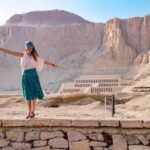
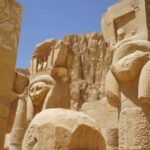
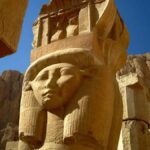
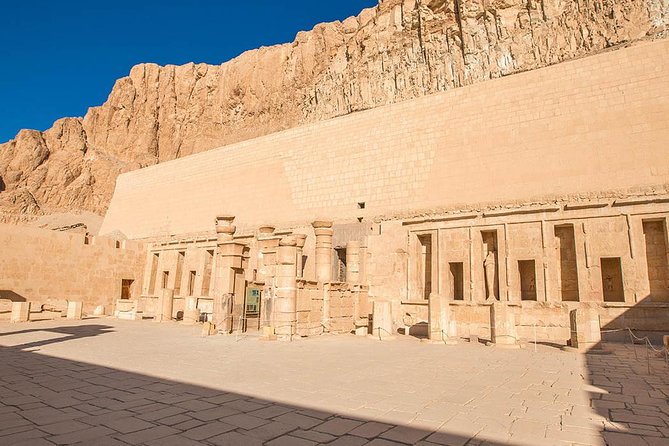
Next comes Temple of Hatshepsut at Deir el Bahari. This is one of those places where the view from a distance tells you the story before you even reach the details. The multi-tiered design rises against limestone cliffs, and it looks intentional from every angle.
Hatshepsut is the reason the temple has such a strong emotional pull. She was the only female pharaoh in Ancient Egypt. She took power after the death of her father, Tuthmose I, and during the time when her half-brother and husband, Tuthmose II, was the royal successor.
In about 1 hour, you’re not just looking at stone. You’re seeing how royal power was communicated through monumental building—especially when a ruler needed to be remembered as legitimate, powerful, and permanent.
Practical note: this stop is visually dramatic, so you’ll want a moment where you slow down and take in the tiers. If your group tends to race, ask your guide to cue you when the best angles open up.
Colossi of Memnon: the short stop that still hits hard
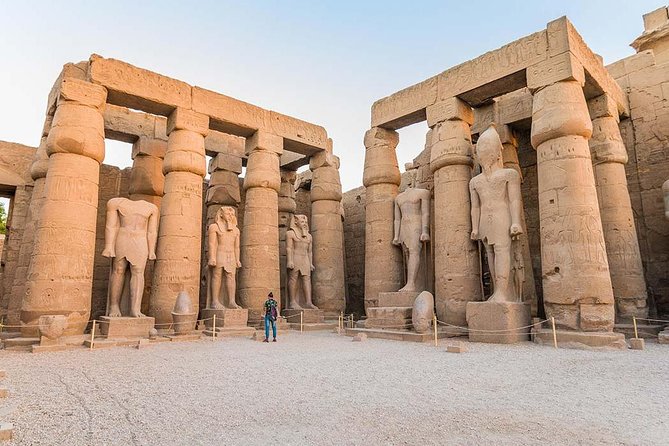
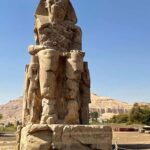
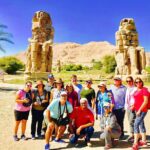
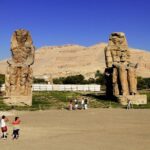
Then you’re at the Colossi of Memnon, a quick 15-minute stop that can still feel memorable. These are two massive twin statues tied to Pharaoh Amenhotep III, each standing around 60 feet tall.
The story behind the name is part of the magic. They became known as Colossi of Memnon after a phenomenon reported around an earthquake, when one statue was said to emit sounds at sunrise. Even if you don’t focus on the legend itself, the statues’ scale is what convinces you.
A detail I like here: between the big figures and the smaller figures near their bases, you get a sense of how the mortuary world was arranged. One of the smaller statues is his wife, and another is his mother.
Because the time here is brief, I’d set expectations. This isn’t where you’ll spend your whole attention. It’s where you get an immediate, iconic photo and a grounding in who these monuments belong to.
Karnak Temple: the New Kingdom power center in stone
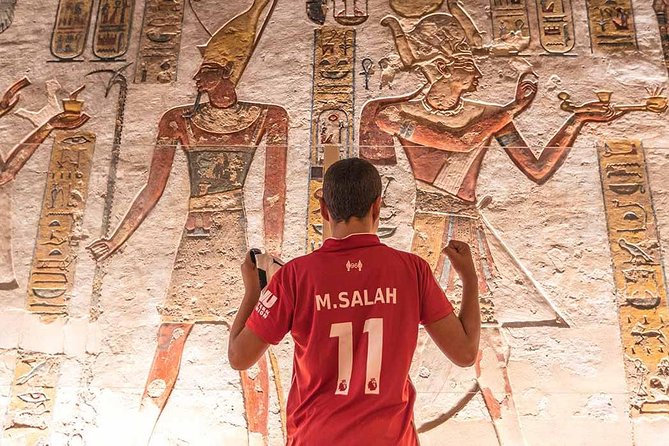
After the West Bank highlights, you shift back to the East Bank for Temple of Karnak. If Valley of the Kings is about burial and afterlife planning, Karnak is about lived power—religion, administration, and royal image all working together.
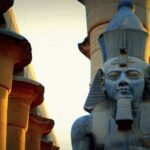
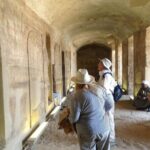
Karnak was the heart of Thebes’ faith during the New Kingdom. It served multiple roles too: a religious center, but also a treasury, administrative hub, and a space tied to the pharaohs’ power. It’s often described as the largest temple complex ever built anywhere, and the sense of scale is real once you’re inside.
What makes Karnak especially valuable with a guide is how it grew over time. It developed over about 1500 years, with generations of pharaohs adding temples, sanctuaries, pylons, and decorations. That means you’re not looking at one single project—you’re looking at a long-term statement.
You get about 2 hours here with admission included. That’s enough time to understand the layout and meaning, without the feeling that you have to see every corner. In the best-guided versions of this day, the Egyptologist helps you hit the key spaces first, then gives your group a chance to wander and absorb at a comfortable pace.
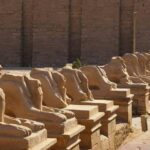
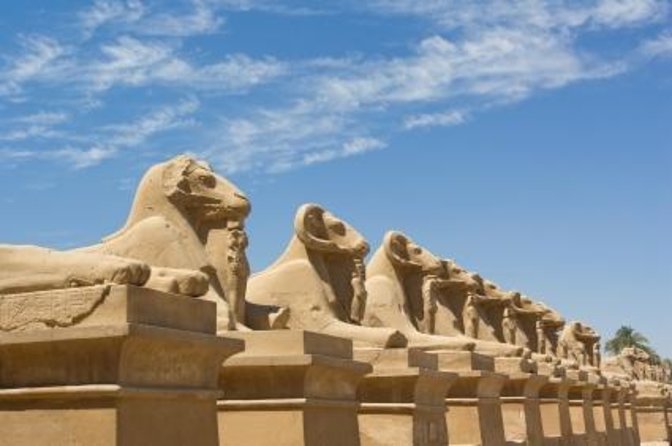
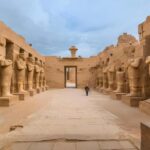
One nice extra for your mental picture: between Karnak and Luxor Temple, there’s an avenue of ram-headed sphinxes. It’s commonly cited as 2,400 sphinx statues, stretching about three miles. You might only walk a short section depending on timing, but even a brief look makes the connection between the two temple complexes feel physical.

Luxor Temple: the best-preserved finale by the Nile
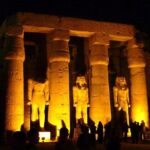
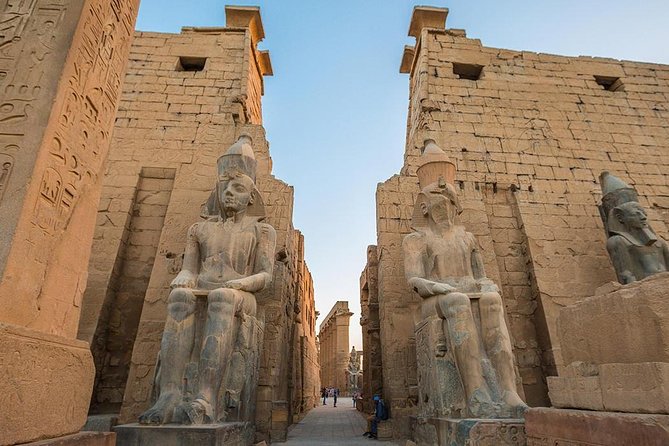
Your last major stop is Luxor Temple, close to the modern city and the river. This temple is a top pick for a closing visit because it’s among the best-preserved ancient monuments in the area. Statuary and relief carvings are still there in quantity, which gives you more to read and less to imagine.
Luxor Temple also hits a mood shift. You’re no longer in the expansive, site-wide feel of Karnak. You’re in a more approachable zone—still monumental, but easier to process in the late part of the day.
Your setting helps too. The modern city begins on one side, and the Nile drifts by on the other. It’s one of the fastest ways to make the length of Egyptian history feel real.
You’ll have about 1 hour here, included admission. If you’re timing your photos, this is often the part of the day that benefits from softer light and better visibility of details—especially if your schedule arrives with good daylight.
Price and value: what $169 buys you (and what it doesn’t)
The price is $169 per person for an 8-hour private day. For value, the key is what’s bundled:
- pickup and return from your hotel in Luxor
- private air-conditioned vehicle transfers
- a private English-speaking Egyptologist guide
- entrance fees to every stop on the route
- lunch at a good-quality restaurant
- bottled water in the vehicle
- service charges and taxes
If you tried to assemble the day yourself—guide time, entrance tickets, and transportation—it usually costs more and feels harder to manage. Here, the cost is doing the planning work for you.
What’s not included is tipping, and you’ll want to budget for any extra stops or personal purchases not mentioned in the plan.
My advice: if your goal is a high-impact highlights day, this package format is usually the smart way to do it—especially when you’re short on time.
Guide quality matters more than you think
When you cover multiple sites in one day, your Egyptologist can make the difference between seeing temples and actually understanding them.
From similar Luxor experiences, I’ve seen strong praise for guides who:
- explain in a way that helps you move faster through entrances without feeling rushed
- point out the most important facts first, then let you explore at your own rhythm
- answer questions clearly and stick to the group’s interests
Names that have come up in well-liked Luxor guiding experiences include Marwa Ali, Osha, Abdalla, Mansour, Hany Refaat, and Mustafa. If you notice one of these Egyptologists assigned to your day, that’s a reassuring sign.
Timing and pacing: how to stay comfortable in a packed 8 hours
This is built as a highlights circuit, so you should treat it like a guided sprint with breaks, not a slow museum day.
A good way to think about the timing:
- Valley of the Kings is your bigger time chunk (2 hours)
- Hatshepsut is visual and meaningful (1 hour)
- Colossi of Memnon is iconic but brief (15 minutes)
- Karnak is the big East Bank stop (2 hours)
- Luxor Temple finishes the arc (1 hour)
- lunch sits inside the middle of the day, plus transit time
Because Colossi is short, I wouldn’t spend your day trying to linger there. Put your energy into Karnak and the tomb-focused story at the Valley of the Kings, where the extra minutes actually add up.
Also: even with bottled water provided, you’ll feel the heat on exposed West Bank paths. I’d go with comfortable shoes you trust and sun protection you can actually tolerate.
What to bring for a smooth East & West Bank day
You don’t need a lot, but a few basics will make the day easier:
- Comfortable walking shoes for rocky, uneven paths
- Sun protection (hat or cap, sunscreen)
- A camera or phone with enough storage (you’ll take a lot at Karnak and Luxor Temple)
- A light layer for indoor/air-conditioned vehicle time
- Your own cash for tips and any extras, since tipping isn’t included
The tour includes bottled water in the vehicle, so you can travel lighter than you would on your own.
Should you book this Luxor East & West Bank tour?
Book it if you:
- have limited time in Luxor and want the main hits on both banks
- like your history explained by a guide instead of reading slowly on your own
- want a package where entrances and lunch are handled for you
- prefer door-to-door private transfers over managing logistics
Skip it or consider a slower pace if:
- you hate the feeling of moving site-to-site
- you want hours at a single monument instead of a full highlights loop
- your group needs long, unstructured downtime between stops
If you want a day that connects royal tombs on the West Bank to temple power on the East Bank—with fewer hassles and more context—this is a strong way to spend your time in Luxor.
FAQ
How long is the East & West Bank Nile tour in Luxor?
It runs for about 8 hours.
What stops are included on the tour?
You visit the Valley of the Kings, the Temple of Hatshepsut at Deir el Bahari, the Colossi of Memnon, Temple of Karnak, and Luxor Temple.
Is pickup included?
Yes. Pickup is offered from your ship or hotel in Luxor, with return transport included.
Are entrance fees included?
Yes. Entrance fees for all listed sites are included in the tour price.
Is lunch included?
Yes. Lunch is included at a good-quality restaurant.
Is this tour private or shared?
It’s private, and only your group participates.
Does the tour provide bottled water?
Yes. Bottled water is provided on board the vehicle during the tour.
Do I need to tip?
Tipping is not included.
What if the weather is bad or I need to cancel?
The experience requires good weather. If it’s canceled due to poor weather, you’ll be offered a different date or a full refund. You can cancel up to 24 hours in advance for a full refund.