REVIEW · LUXOR
Sunrise Hot Air Balloon Ridding in Luxor
Book on Viator →Operated by DrMo Tours Egypt · Bookable on Viator
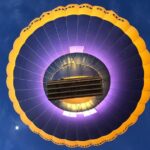
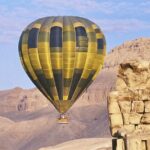
Luxor looks different when it’s floating above it. I like how this ride is built around big-name sights—Temple of Hatshepsut, the Valley of the Kings, and Luxor Temple—so you’re not just watching desert. I also like the “morning-ready” service: hotel pickup, transfers, snacks, and a flight certificate. One heads-up: if you book specifically for sunrise timing, know that wind and weather can shift takeoff, and the best light may happen a bit later than expected.
This balloon experience is designed for the way Luxor actually works. You’ll move from the Nile area over to the West Bank, then get airborne for aerial views that feel more like an archaeology map than a typical sightseeing day. And in the small details, you can see the operator’s focus on making it smooth—friendly staff, clear priorities, and people who keep safety front and center.
My other consideration is simply logistics on launch day. The ride depends on conditions, so you should expect early wake-ups and some waiting, plus a realistic chance that the “sunrise” moment isn’t perfectly timed to the minute you pictured when booking.
In This Review
- Key Highlights to Know Before You Go
- Why This Luxor Sunrise Balloon Ride Feels So Special
- Price and What You Really Get for About $49
- Getting to Launch: The Nile Crossing and Early-Morning Flow
- Flying Over Hatshepsut, Kings Valley, and Colossi of Memnon
- Nile River Valley (First Aerial Glimpse)
- Deir el Bahari and the Temple of Hatshepsut
- Valley of the Kings
- Colossi of Memnon
- Luxor Temple on the East Bank
- Medinat Habu (Short, But Memorable)
- The Sunrise Reality: When You Might Not See It Exactly
- Safety and How the Crew Runs the Balloon
- Practical Comfort: Group Size, Guides, and Pace
- Photo Tips That Match the Route (Not Generic Advice)
- Who This Luxor Balloon Ride Suits Best
- Should You Book This Tour?
- FAQ
- What’s the duration of the hot air balloon flight?
- Does the tour include hotel pickup and return?
- How do you get to the West Bank?
- What monuments will you fly over?
- Is food and drink included?
- What happens if poor weather cancels the flight?
Key Highlights to Know Before You Go
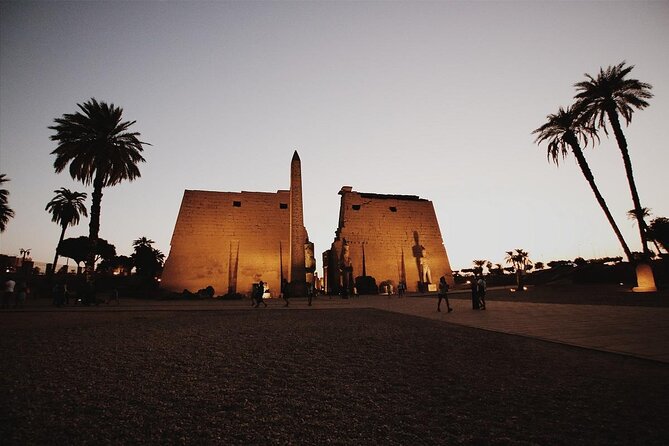
- Aerial flyovers of Luxor’s must-see sites: Hatshepsut, the Valley of the Kings, Colossi of Memnon, Luxor Temple, and Medinat Habu
- Hotel pickup and round-trip service so you don’t have to manage taxis at dawn
- Nile crossing included, with an air-conditioned transfer plus a motorboat move to the West Bank
- Safety-first crew approach, with an emphasis on how the balloon operation is run
- Included extras that add value: snacks, bottled water, coffee or tea, and a flight certificate
- Real-world sunrise timing flexibility, since takeoff can shift with weather
Why This Luxor Sunrise Balloon Ride Feels So Special
Luxor is packed with temples and tombs, but most visits happen at ground level. From the air, your brain finally gets the scale. You see how the Nile corridor shapes the whole area, and how the West Bank monuments sit in the desert like they were placed for a reason.
This is also a practical way to see multiple highlights without spending the entire morning driving between sites. Even though each “stop” is short, the order matters. It’s set up to carry you over the key zones people come to Luxor for—so you’re not hunting around for the best views once you’re already there.
A few more Luxor tours and experiences worth a look

Price and What You Really Get for About $49
At $49 per person, this sits in the “seriously worth considering” category—especially because the total package includes more than just a balloon ticket. You get:
- Pickup from your hotel and return
- Air-conditioned bus transfer
- Motorboat transfer for the West Bank move
- 45 to 75 minutes in the balloon
- Snacks, bottled water, plus coffee or tea
- A flight certificate
- All service charges and taxes listed as included
Balloon rides can be pricey when you add up the transport, morning coordination, and all the little extras that add up fast. Here, the value is that you’re paying for the whole early-morning machine—not just being handed a boarding time.
Getting to Launch: The Nile Crossing and Early-Morning Flow
Plan on an organized start. Pickup is included, and the route begins with an air-conditioned bus transfer. Then you’ll cross the Nile via motorboat as part of getting to the West Bank launch area.
That Nile crossing is more than a transfer step. It’s a moment where you can look at the city and river setup from a different angle. It also helps explain why the West Bank view matters so much in Luxor: once you’re on that side, the balloon flight is positioned to pass over the major monuments people picture when they think of Luxor’s ancient days.
Flying Over Hatshepsut, Kings Valley, and Colossi of Memnon
The flight route focuses on the air views that are easiest to appreciate from above. You’re not trying to read tiny details or fight for the perfect ground angle. Instead, you’re getting broad, clear “from-the-sky” recognition.
Nile River Valley (First Aerial Glimpse)
Right after the morning setup, the route brings you over the Nile River Valley area. This is where the view does its job: you see how the river acts like a spine through the desert. It also sets your bearings for the rest of the monuments you’ll pass over.
If you’re the type who wants the photo to show context, this is the part that gives it. A river-and-desert perspective tells the Luxor story faster than a single temple wall shot.

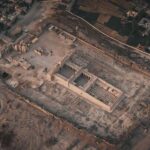
Deir el Bahari and the Temple of Hatshepsut
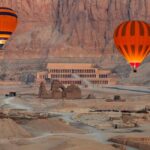
Next up is a flyover above Temple of Hatshepsut at Deir el Bahari. From the air, the temple’s layout becomes easier to spot as a set of terraces and carved structures rather than a collection of walls you have to walk between.
This is one of the strongest parts of the route because Deir el Bahari has a visual “shape.” When you’re high enough, you can understand why people photograph it the way they do.
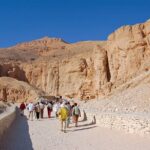
Valley of the Kings
Then you’ll fly over the Valley of the Kings. Even if you’ve never stood in that valley before, the aerial view gives you a sense of the long, hidden geography. You can see the valley system rather than only imagining it from a map.
This also helps if you’re visiting Luxor tomb sites later. The balloon gives you the big picture first, so your ground visit can feel more connected and less random.
Colossi of Memnon
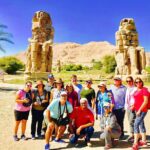
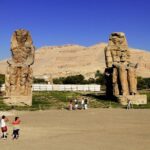
A stop over the Colossi of Memnon follows. From the air, those two massive statues are easy to recognize as anchor points. You can spot them as landmarks that break up the desert view and make navigation simple.
If you like photography, this part is often where the photos become instantly identifiable as Luxor, not just generic desert skies.
Luxor Temple on the East Bank
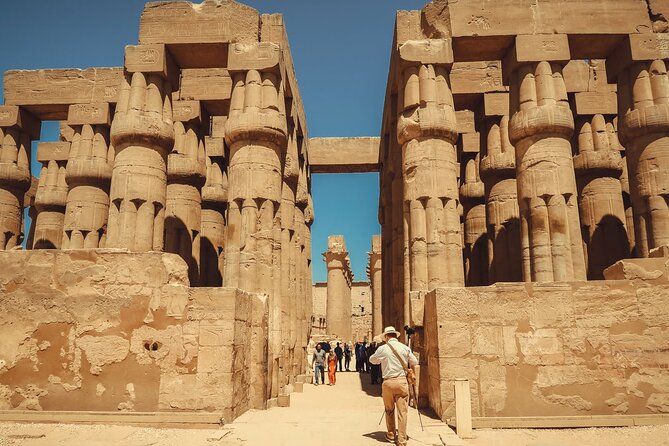
You’ll also fly over Luxor Temple on the east bank of the Nile. This is a nice contrast to the West Bank sections. Seeing Luxor Temple from above ties the river sides together, so the flight feels like it’s stitching together the whole city—river, east bank, and west bank monuments.
It’s also a good reminder that Luxor isn’t only about tomb valleys. The temples are equally part of what you came for.
Medinat Habu (Short, But Memorable)
The route includes a flyover of Temple of Medinat Habu for about 5 minutes. It’s shorter than some of the other segments, but short doesn’t have to mean disappointing. This kind of quick pass can be the most fun because it’s easy to miss—and then suddenly you have it on camera before it disappears.
The Sunrise Reality: When You Might Not See It Exactly
This tour is marketed as a sunrise experience, but sunrise is weather-dependent in a big way. Wind, temperature, and balloon scheduling can shift the actual takeoff time. In one case tied to a late change, pickup was moved later than the originally expected time, and sunrise wasn’t clearly visible when the flight finally rose.
So here’s the practical advice: if you book for the word sunrise, keep one flexible mindset. You’ll still get morning light, and the flight is scheduled to be in that early window, but the exact sunrise moment can slip.
This doesn’t ruin the value. Morning flights often still produce softer light and better visibility. Just don’t lock your expectations to a single timestamp.
Safety and How the Crew Runs the Balloon
Safety is a theme here, and it matters because balloons are a hands-on operation. The crew approach is described as professional, and safety is treated as the first priority in how the balloon is run.
One small note that made me smile: someone warned not to burn your hair, which is the kind of humor you only hear when people have actually seen the heat and flame involved during inflation. The takeaway for you is simple. During launch and balloon preparation, keep your head and hair out of the direct “hot zone,” and follow crew instructions without overthinking it.
If you’re worried about comfort, the tone from the experience reports is that passengers felt safe and comfortable, and that drivers and captains help keep everyone calm.
Practical Comfort: Group Size, Guides, and Pace
This is listed as a private tour/activity, meaning it’s arranged for only your group. That matters because balloon mornings can feel chaotic when you have dozens of people assembling at once. A smaller, controlled group can make check-in and timing easier to manage.
The operator is also linked with specific people who show up in the experience accounts. One captain named DrMo is praised for being funny and entertaining, while another team member, Hossam, is credited with arriving on time and staying with the group for the whole trip.
Even when the flight is the main event, it’s the ground support that shapes your morning. In Luxor at dawn, the difference between a smooth start and a stressed one often comes down to whether your pickup is on time and whether someone is managing the schedule in a calm way.
Photo Tips That Match the Route (Not Generic Advice)
I’m not going to promise perfect shots, but the flight route is set up to help you get good photos fast.
- Start with wide shots when you first get height. The river-and-desert view is your context.
- Use the monument anchors: Hatshepsut, Valley of the Kings, and Colossi of Memnon are easier to identify from above than many smaller details.
- Expect the light to change while you’re in the air. That’s normal. Morning light improves your contrast, especially over pale desert and darker temple structures.
Also, bring a practical mindset. You’re photographing from a balloon environment, so patience helps more than rapid-fire expectations. If you catch one clear aerial “oh wow, that’s the temple” shot per segment, you’ll be happy.
Who This Luxor Balloon Ride Suits Best
This is a great choice if you want one “big view” morning that ties together multiple attractions without spending your day bouncing between sites. It’s especially ideal for:
- First-time Luxor visitors who want an aerial overview
- People who care about photography and want recognizable landmarks
- Travelers who prefer a guided, organized start rather than managing transport independently
If your top goal is only the exact moment of sunrise, plan to be flexible. Weather can change timing, and the balloon can’t fly when the conditions aren’t right.
Should You Book This Tour?
I’d book it if you want a well-rounded package: pickup, Nile crossing, a proper in-air flight window, and included snacks and drinks—plus a flight certificate that gives the day a clean wrap-up. The price also feels fair for the amount of service built in.
I’d hesitate only if sunrise timing is non-negotiable for you down to a specific minute. In that case, treat sunrise as a bonus rather than a guarantee. If you can accept early-morning light even when takeoff shifts, this balloon ride becomes a strong Luxor “once-in-the-trip” experience.
FAQ
What’s the duration of the hot air balloon flight?
The ride in the sky is listed as about 45 to 75 minutes. The overall experience time is shown as approximately 40 minutes to 1 hour.
Does the tour include hotel pickup and return?
Yes. Pickup service from your hotel and return is included.
How do you get to the West Bank?
The trip includes transfer by air-conditioned bus and then a motorboat transfer to the West Bank.
What monuments will you fly over?
You’ll fly over Temple of Hatshepsut at Deir el Bahari, the Valley of the Kings, Colossi of Memnon, Luxor Temple (East Bank), and Temple of Medinat Habu.
Is food and drink included?
Yes. The tour includes snacks, bottled water, and coffee and/or tea.
What happens if poor weather cancels the flight?
This experience requires good weather. If it’s canceled due to poor weather, you’ll be offered a different date or a full refund.