REVIEW · LUXOR
Luxor East Bank – Karnak and Luxor Temples
Book on Viator →Operated by Nasco Tours · Bookable on Viator
Karnak becomes clear with expert help. This private East Bank tour trades crowded buses for a door-to-door visit led by an Egyptologist, with air-conditioned minivan transfers and time at two of Luxor’s biggest sites. I like the practical way the guide helps you read ancient religious symbols, and I also like the focus on how different reigns left their mark in the architecture. The main drawback: you’re concentrating only on the East Bank, so if you want tombs and the West Bank highlights, you’ll likely book another tour for those.
What makes it interesting is that the guide isn’t just reciting dates. You get guidance on how to spot the differences in style from the Middle Kingdom through later periods, plus explanations that turn the carvings from background decoration into something you can actually interpret. In past visits, guides such as Toni, Nermeen, Ahmed Abd El Hamid, and Mamdoo were highlighted for their teaching style and strong command of Egypt’s meaning behind the art—something you’ll feel in how the temples are described as you walk.
Logistics are refreshingly simple for Luxor. The tour runs about 3 hours 40 minutes, with pickup and drop-off, and it’s just your group in a private format. You’ll spend around 2 hours at Karnak and about 1 hour at Luxor Temple, so you can absorb the big ideas without feeling rushed into 20 stops.
In This Review
- Key things I’d watch for before you book
- Private East Bank Temples in 3h 40m: how the flow really works
- Karnak Temple and the Hypostyle Hall: where the explanations land
- Spotting eras in Egyptian architecture: from Middle Kingdom clues to later layers
- Luxor Temple complex: statues, obelisks, and the 14th century BC heart
- The Egyptologist guide: what great teaching looks like on the day
- Price and Logistics: is $65 per person good value?
- Who this tour suits best (and who should consider alternatives)
- Practical tips for choosing your time slot in Luxor
- Should you book Luxor East Bank: Karnak and Luxor Temples?
- FAQ
- How long is the Luxor East Bank tour?
- Is this tour private?
- What temples are included?
- Are admission tickets included?
- What are the tour’s operating hours?
- What happens if weather is poor?
Key things I’d watch for before you book
- Private Egyptologist time: you’re not competing with a crowd for questions or photo angles
- Karnak focus with real landmarks: Hypostyle Hall, Sacred Lake, and the Avenue of the Sphinxes are built into the visit
- Architecture by era: you’ll learn how to distinguish layers of building and style across periods
- Symbol interpretation, not memorization: religious imagery is explained in a way you can use while looking
- Air-conditioned, door-to-door transfers: hotel pickup and drop-off make the day easier to manage
- Value for a private tour: at $65 per person, the included temple admissions and private format often feel like a smart swap for group chaos
Private East Bank Temples in 3h 40m: how the flow really works
This is a half-day plan designed to keep you comfortable and focused. You get hotel pickup and drop-off, then travel in an air-conditioned vehicle straight between the key East Bank sites. The total time is about 3 hours 40 minutes, which matters in Luxor because the sun can be intense and your best energy goes fast.
Because it’s private, your guide can pace the visit to your group. That sounds small, but it changes everything when you’re trying to understand carved columns, ceremonial routes, and the “why” behind what you’re seeing. In practice, it means you spend time on the parts you’re ready for—like asking what a certain motif means—rather than having to sprint to stay in the bus schedule.
Your schedule is built around two big anchors:
- Karnak, with enough time to take in major spaces without feeling like you’re skimming
- Luxor Temple, where the setting and scale still hit hard even if you’re not a hardcore Egypt nerd
You can also read our reviews of more tours and experiences in Luxor.


Karnak Temple and the Hypostyle Hall: where the explanations land
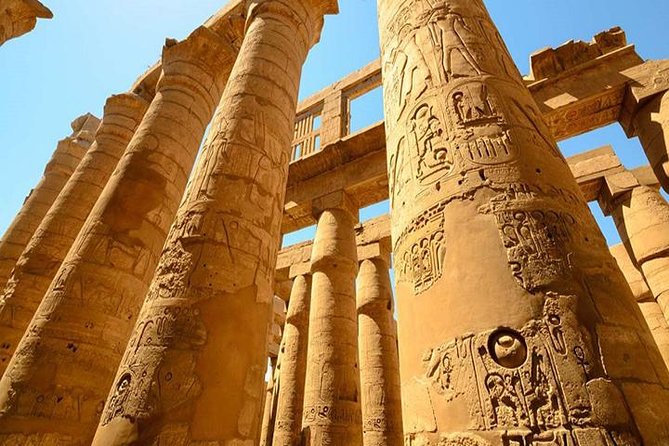
Karnak is the site that can either overwhelm you or make total sense. With this tour, you start with the major components that shape how Karnak functions as a whole: the Hypostyle Hall, the Sacred Lake, and the Avenue of the Sphinxes. When those are guided in sequence, the temple reads like a designed experience, not a random pile of stones.
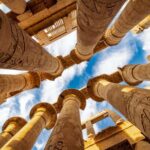
The Hypostyle Hall is the dramatic centerpiece. It’s the kind of place where you can stare up at the columns and feel tiny without knowing what you’re looking at. That’s where the Egyptologist-led commentary helps: you learn how to interpret the religious symbolism tied to the spaces and what the imagery is trying to communicate.
Then the route expands. The Sacred Lake isn’t just a scenic stop; it’s part of the temple’s story. The Avenue of the Sphinxes adds a sense of ceremonial movement—an axis that helps you understand why temples are built the way they are. You’re spending about 2 hours at Karnak, which is an unusually valuable amount of time for one complex, and it gives your brain room to connect the dots.
A practical note: Karnak is big, and you’ll be inside and moving through multiple sections. So I’d plan for a comfortable pace and expect some walking on uneven surfaces. If you’re traveling with anyone who gets tired fast, this private format is easier to manage than a tight group schedule.
Spotting eras in Egyptian architecture: from Middle Kingdom clues to later layers
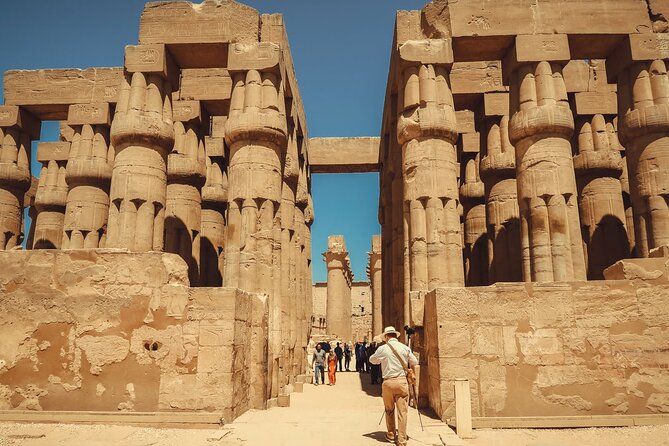
One of the strongest reasons to choose an Egyptologist-led visit here is the explicit goal of helping you distinguish eras in Egyptian architecture. Karnak and Luxor Temple weren’t built in a single moment and never stopped changing. Over time, different rulers expanded, remodeled, or added new elements, which means the temple you see is really a collection of layers.
In a guided format, you learn what to look for without needing a degree in art history. You get tools for noticing stylistic differences and architectural clues so you can connect features to the periods they belong to—from the Middle Kingdom through later phases such as the Ptolemaic period.
Why this matters: if you visit Karnak without that framework, you might end up with a memory made of impressions only—huge, crowded, impressive—but not much you can explain to yourself later. With the era-spotting approach, you leave with a mental checklist. You can stand in front of a wall or doorway and have a better sense of which “chapter” you’re looking at.
I also like that this isn’t taught as trivia. The goal is interpretation—understanding the symbols and the purpose behind the building choices—so the architecture feels like living evidence instead of museum labeling.
Luxor Temple complex: statues, obelisks, and the 14th century BC heart
After Karnak, you head to Luxor Temple, a complex known for dramatic statues and obelisks. The core dates back to around the 14th century BC, and even if you don’t know the names of every king involved, the site has a way of making the ancient world feel built for ceremony.
You’re there for about 1 hour, which is the sweet spot. Enough time to appreciate scale and details, but not so long that you start losing the thread. The guide’s job at this point is to connect Luxor Temple back to what you learned at Karnak—especially the logic behind religious imagery and the layout of spaces.
The best part of a guided Luxor Temple visit is that the carvings start to look purposeful. When the symbols are explained clearly, you stop seeing “pretty stone” and start seeing messages meant for specific beliefs, celebrations, and rituals. That’s exactly the kind of interpretive value you’re paying for with a private Egyptologist.
Timing can also change the mood. Your departure window runs between 8:00 AM and 1:00 PM, so most departures will be earlier rather than late-night. Still, some East Bank plans in Luxor schedules can line up with lower sun angles, and one well-liked option in past experiences involved a sunset or nighttime-style visit at Luxor Temple. If you’re picking a departure time, I’d choose the slot that fits your energy and your preferred lighting conditions.
The Egyptologist guide: what great teaching looks like on the day
A private tour lives or dies on the guide, and the pattern in the strong feedback around this experience is pretty clear. People repeatedly mention guides who don’t just know facts, but teach in a way that makes the site click.
Names that have come up include Toni, described as having a history background with a hieroglyphics focus, and Nermeen, praised for being exceptionally knowledgeable. There’s also Ahmed Abd El Hamid, who was called out for professionalism and depth of knowledge, plus Mamdoo and Abdhul, noted as being very good and informative. Others highlighted helpful coordination at their hotel through Viola at the Hilton Luxor.
You don’t need to pick your trip based on a specific name, but you can use this as a guide for what you want from your own experience:
- Clear, paced explanations that match what you can actually see
- A way to interpret religious symbols without turning the tour into a lecture
- Era context that helps you understand why features look different
If you show up ready to ask questions, this tour format supports that. You’re not stuck absorbing alone.


Price and Logistics: is $65 per person good value?
At $65 per person, this tour sits in the “serious value if it fits your priorities” zone. Private tours in Egypt can swing wildly in price, but here the structure works in your favor in two ways: you’re not paying extra for multiple separate tickets, and you get hotel pickup plus included admissions for the main temples.
Temple entry is included for Karnak Temple and Luxor Temple. That’s not a small detail. In Luxor, ticket costs can add up quickly if you start stacking sites on your own. Rolling admissions into the price helps you budget better and reduces friction at the entrance.
The private format is the other big part of the value equation. Even when private tours cost more than a standard group bus, the price can still feel fair if you factor in:
- real guide attention
- time to process what you’re seeing
- less waiting and fewer crowd bottlenecks
One consistent theme from the strong experiences I’ve seen is that the private visit felt totally worth it, sometimes even compared favorably to the cost of group touring. I can’t promise the price will always feel the same for every travel style, but the inclusions (pickup, private vehicle, expert-led content, and temple admissions) are exactly what usually makes $65 feel reasonable rather than steep.
Who this tour suits best (and who should consider alternatives)
This is best for you if you want to understand what you’re looking at. If you like context—religious symbolism, architectural era clues, and how to read temples beyond the obvious wow factor—this is a strong match.
It’s also a good fit if you’re traveling with a small group and want a calmer pace. The private format means your day doesn’t get dragged around by other people’s timing. If you’re a family with mixed ages, this can help keep everyone engaged instead of bored or overheated.
On the other hand, if you’re mainly chasing a hit list of photos and don’t care much about explanations, a cheaper group option could be enough. This tour’s value is in the guide-led meaning, not just access.
Also keep in mind the scope. This is an East Bank plan with Karnak and Luxor Temple. If you’re dreaming about Valley of the Kings or Valley of the Queens, that’s not part of this half-day, so plan for a separate West Bank day.
Practical tips for choosing your time slot in Luxor
You can book departures during 8:00 AM to 1:00 PM, Monday through Sunday, within the listed operating season. If you want a smoother experience—less fatigue, easier pacing—going earlier in that window can help.
The tour also notes that it requires good weather. If conditions are poor, the tour can be canceled and you’ll be offered a different date or a full refund. That’s important in Egypt, because even if the temples still stand, exterior travel and comfort depend heavily on conditions.
Finally, remember this is a private activity: it’s just your group. That’s great for comfort and attention, but it also means you’ll want to be on time for pickup. If your plans run late, the tour can’t easily stretch without breaking the schedule.
Should you book Luxor East Bank: Karnak and Luxor Temples?
Book it if you want the East Bank to feel understandable, not just impressive. The combo of Egyptologist-led interpretation, included temple admissions for Karnak and Luxor, and door-to-door air-conditioned transport is a strong way to get real value out of a half day.
I’d skip it only if you’re mainly photo-focused and want the cheapest possible option, or if you’re already set on a very packed multi-day plan where you’d rather sprinkle East Bank stops independently. In those cases, you might feel the private guide cost more than the benefit.
If you’re aiming to leave Luxor with the ability to explain what you saw—why Karnak is arranged like it is, what Luxor Temple is communicating, and how different periods shaped the architecture—this tour is one of the cleaner, more effective ways to do it.
FAQ
How long is the Luxor East Bank tour?
The tour runs for about 3 hours 40 minutes (approximately).
Is this tour private?
Yes. It’s a private tour/activity, and only your group participates.
What temples are included?
You visit Karnak Temple and the Luxor Temple complex.
Are admission tickets included?
Admission tickets are included for Karnak Temple and Luxor Temple.
What are the tour’s operating hours?
The tour operates Monday through Sunday from 8:00 AM to 1:00 PM.
What happens if weather is poor?
The tour requires good weather. If it’s canceled due to poor weather, you’ll be offered a different date or a full refund.