REVIEW · HURGHADA
Private Full-Day Tour of Monasteries St Paul and St Antonius
Book on Viator →Operated by Egypt travel guide · Bookable on Viator
Monastery mornings start before sunrise. This private full-day drive from Hurghada to Ras Gharib takes you to St Paul’s cave-built monastery and St Antonius’s hilltop complex, two of the most important places in Egyptian Orthodox Coptic tradition.
I love the St Paul crypt underground, with colorful frescoes plus surprising everyday objects like an old chain block and an olive press. I also love the quiet authority of St Antonius once you reach the hill and look out over the desert—peaceful, active, and unlike the usual Egypt tour stops.
One possible consideration: it’s not a sit-and-view day. The St Antonius climb is about 1,000 steps, and the tour asks for moderate physical fitness, so go in with realistic expectations.
In This Review
- Key things you should know before you go
- Ras Gharib’s Coptic Monasteries: why this trip feels different
- The 6:00 am start: pickup, ride comfort, and how long the day really is
- St Paul Monastery (دير الأنبا بولا): the cave story and the tomb crypt
- St Antonius Monastery (Deir Mar Antonios): 680 meters up and still a place of worship
- Timing and pacing: how to manage an 8 to 10 hour day
- Value and price: what $111.84 per person gets you (and what it doesn’t)
- Who this tour suits best
- Should you book the Monasteries of St Paul and St Antonius tour?
- FAQ
- How long is the private tour of Monasteries of St Paul and St Antonius?
- What time does the tour start?
- Is hotel pickup included?
- Are admission tickets included?
- Is the tour physically demanding?
- What’s included in the price, and what isn’t?
Key things you should know before you go
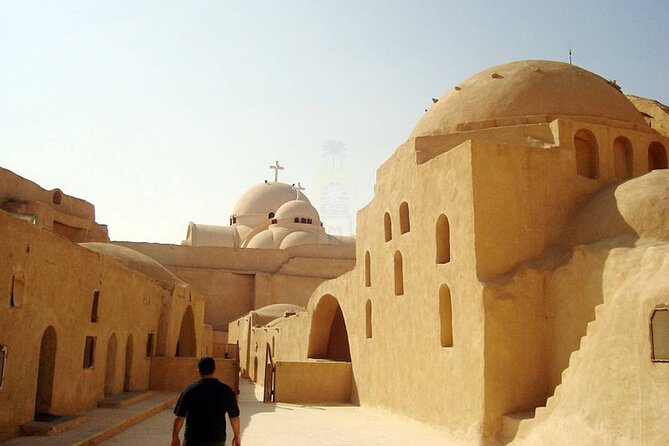
- Two monasteries, opposite sides of the hill: St Paul and St Antonius are close in distance but feel very different on the ground
- St Paul’s tomb crypt is the headliner: frescoes plus everyday historic tools, even a freshwater well
- St Antonius is a real climb: about 1,000 steps up to the cave cell at 680 meters elevation
- It’s a living religious site: St Antonius houses more than 100 monks and includes a Coptic church and tomb
- Private pace, early start: pickup is offered, the meeting time is 6:00 am, and the day runs about 8 to 10 hours
Ras Gharib’s Coptic Monasteries: why this trip feels different
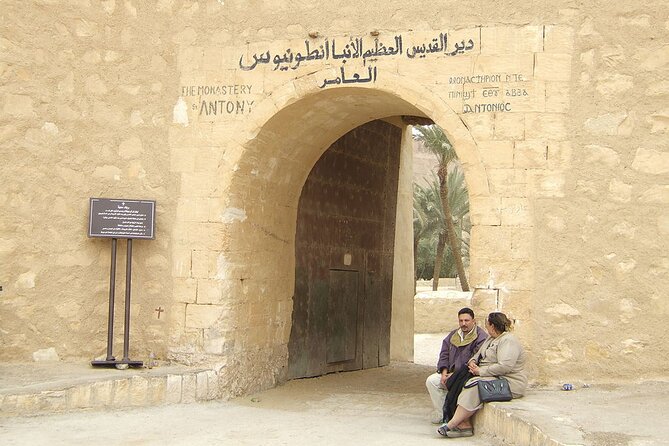
Ras Gharib isn’t where most day-trippers end up first. It’s a stretch of desert where Egypt’s oldest Christian monastic stories still matter, and where the setting adds something real: silence, heat shimmer, and a sense of distance from modern life.
You’ll visit two monasteries devoted to major figures in Egyptian Orthodox Coptic faith. St Antonius is considered the oldest Christian monastery in Egypt, tied to a hermit who lived in a cave and inspired monastic life that spread beyond this region. St Paul’s monastery sits across the hill, built over the cave where Saint Paul lived as a hermit in the 4th century.
What I like about this pairing is the contrast. St Paul’s stop leans toward the tomb and what’s preserved underground, while St Antonius asks you to climb into the story itself—steps, cave cell, views, and a complex that’s still functioning.
You can also read our reviews of more private tours in Hurghada


The 6:00 am start: pickup, ride comfort, and how long the day really is
This is a private full-day tour with pickup offered, and it starts at 6:00 am. Expect an 8 to 10 hour day once you add driving time in and out of Ras Gharib.
The ride is in an air-conditioned vehicle, which matters because you’ll be traveling early and then spending time on foot. The timing also means you’ll reach the monasteries before the hardest part of the day settles in.
One practical note: pickup surcharges apply depending on where you’re staying. There’s a 5 euros per person surcharge if you’re in Makadi hotels, and a 10 euros per person surcharge if you’re in Safaga. If you’re farther out, those extra euros can feel like a lot, but they’re part of what you’re paying for: a private transfer instead of squeezing into a shared bus plan.
You’ll also use a mobile ticket, which is handy for a smooth entry day. Facility fees are included, so you’re not stuck juggling extra payments on arrival.
And because this is a full-day plan, lunch is not included. Plan for a snack strategy or bring something simple so you’re not hungry while you’re walking and climbing.
St Paul Monastery (دير الأنبا بولا): the cave story and the tomb crypt
St Paul’s monastery is the first stop, built over the cave where Saint Paul lived as a hermit in the 4th century. This is the kind of location where the legends are part of the atmosphere. The story goes that God sent bread to Paul via ravens when he needed food, and after his death at age 105, lions supposedly dug his grave.
You’ll spend around 1 hour here, and the main experience isn’t just walking courtyards. It’s going deeper—down to the crypt under the tomb.
Inside the crypt, you’ll see colorful frescoes. What really makes this stop memorable is that it doesn’t feel like a museum holding still life behind glass. In addition to sacred items, the crypt area includes everyday historic objects, such as an old chain block and an olive press. It’s a small detail that adds a lot: it helps you picture how life and devotion coexisted in these monastery spaces.
The other surprise is the freshwater well located in the middle of the desert. Standing there, you get that wow moment that doesn’t come from a big headline view. It comes from the practical proof that people were sustained here, not just inspired by distant stories.
If you want one piece of advice for this stop: go slowly at the crypt. It’s easy to rush because it feels like the “cool part,” but take your time. The colors and the mix of sacred and practical objects reward careful attention.
St Antonius Monastery (Deir Mar Antonios): 680 meters up and still a place of worship
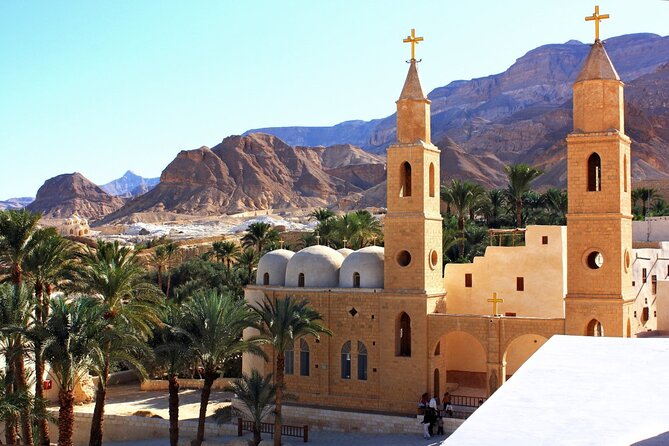
After St Paul, you’ll head to St Antonius’s monastery on the other side. This is built around the cave where the hermit Antonius lived more than 1,600 years ago.
Here’s what makes the physical setup stand out. The cave sits about 680 meters above sea level, and reaching it involves a staircase with around 1,000 steps. As you climb, you can see scriptures and drawings along the way. Then, when you step outside or pause at viewpoints, the mountains and desert open up in front of you.
This isn’t just scenic. It ties directly into why this place mattered. After Antonius died in 356 AD, Christian monks founded the monastery at the foot of the mountain. The tradition says this monastery became a model for monastic life, and it’s easy to feel that even if you don’t know every detail of the religious background.
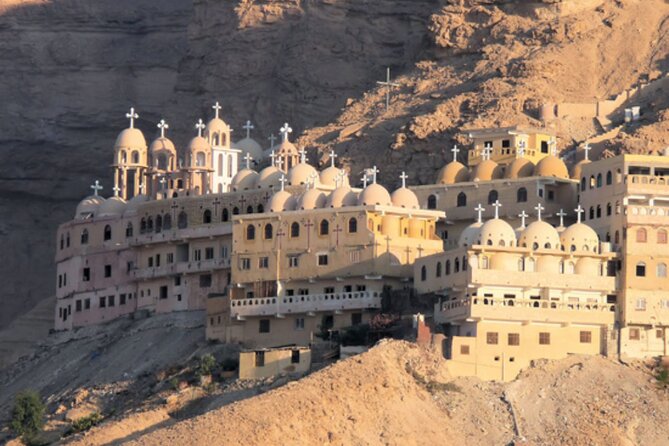
Once you’re up there, you’re visiting a monastery that’s still very much alive. St Antonius is described as home to more than 100 monks. You can also see an ancient Coptic church associated with the tomb of St Anthony, along with preserved medieval paintings and a library with ancient manuscripts.
The best feedback about this stop is the emotional feel: peace and beauty. The monastery grounds are described as fully functioning, with garden areas and spring water. That matters because it changes the vibe from “ancient ruins photo stop” to “active spiritual site you’re visiting respectfully.”
One consideration: cave access can be tight. If you’re used to spacious sightseeing, the interior areas you reach in this monastery complex may feel like a scramble because space is limited. Move carefully, keep your balance, and don’t force it if you’re uncomfortable in narrow areas.
Timing and pacing: how to manage an 8 to 10 hour day
This tour runs long enough that pacing becomes part of the experience, not just a logistical task. You’ll have about 1 hour at St Paul and about 2 hours at St Antonius, plus the driving time between them.
The climb at St Antonius is the biggest factor in your comfort. Even if you’re moderately fit, the steps stack up because you’ll be going up and down in a desert environment. Build in little breaks. Short pauses help your legs, and they also help you soak in what you’re seeing—scriptures along the steps, the view points, and the feeling of altitude.
It helps to wear shoes with solid grip and to dress in a way that fits a religious site. You don’t need fancy gear, but you do need comfort. If you’re carrying a day bag, keep it light. You’ll be moving through stairways and inside areas where extra bulk can make you clumsy.
Also, don’t forget that lunch isn’t included. This is exactly the kind of trip where hunger can drain the joy out of the day. Bring a snack you actually like, and consider water for your own comfort.
A few more Hurghada tours and experiences worth a look


Value and price: what $111.84 per person gets you (and what it doesn’t)
At $111.84 per person, this is priced for a private full-day experience with transportation and site entry. What makes it feel like good value is what’s bundled:
- Air-conditioned vehicle
- Landing and facility fees
- Admission tickets for both monasteries
That inclusion matters because it reduces the “small surprise costs” feeling you sometimes get on day tours.
What’s not included is lunch, so you’ll add your own food cost. And if you’re staying in Makadi or Safaga, the pickup surcharges (5 euros or 10 euros per person) will change your final total.
I’d also look at this as a budgeting decision based on how many people are in your group. Private means you’re not sharing a vehicle with strangers or getting rushed to match other schedules. If you’re traveling with a partner or small group, the per-person cost can feel easier to justify.
One more practical detail: the tour is commonly booked about 63 days in advance. If your dates are set, booking earlier helps you lock in the private plan.
Who this tour suits best
This is a strong fit for you if:
- you want one of the most spiritually significant Coptic Orthodox stops in Egypt’s Eastern Desert
- you like sites where stories aren’t just plaques, but part of how the place still works
- you’re happy with an early start and a day that mixes driving with walking and climbing
It may be a poor fit if:
- you need a mostly flat, low-step sightseeing day
- you’re uncomfortable with roughly 1,000 steps and possible tight interior spaces
If you do go, you’ll get what people seem to love most: the sense of calm beauty at St Antonius and the surprisingly detailed, tangible feel of St Paul’s underground crypt.
Should you book the Monasteries of St Paul and St Antonius tour?
Book it if you want something real and different from the typical Hurghada day trip. This is one of those rare experiences where you trade crowds for quiet, trade surface photos for tomb fresco detail, and trade short walks for a meaningful climb that connects directly to the story of the place.
Skip it if you want an easy day, or if stairs are a deal-breaker. The St Antonius climb is the deciding factor, and the tour’s pace reflects that.
One final scheduling note: the experience depends on good weather. If weather forces a change, you should expect alternatives or a refund. Also, you can cancel for a full refund if you do it more than 24 hours before the start time, which gives you some cushion if plans shift.
FAQ
How long is the private tour of Monasteries of St Paul and St Antonius?
The tour lasts about 8 to 10 hours.
What time does the tour start?
The meeting point start time is 6:00 am.
Is hotel pickup included?
Pickup is offered. There’s a 5 euros per person surcharge for Makadi hotels and a 10 euros surcharge for Safaga.
Are admission tickets included?
Yes. Admission tickets are included for both St Paul Monastery and St Antonius Monastery.
Is the tour physically demanding?
It requires moderate physical fitness. St Antonius involves a staircase with around 1,000 steps.
What’s included in the price, and what isn’t?
Included: an air-conditioned vehicle and landing/facility fees, plus admission tickets. Not included: lunch.