REVIEW · LUXOR
Private King Tut’s Tomb, Valley of the Kings & Queens, Hatshepsut
Book on Viator →Operated by Luxor Travels · Bookable on Viator
Tut’s tomb in the Valley of the Kings is the headline here. What makes this tour feel different is the full West Bank sweep packed into one smooth, private morning, with the temples and tombs that explain how ancient Egyptians pictured power and the afterlife.
I like that you’re not stuck doing one stop and sprinting to the next. You get a real Egyptologist guide who can connect the tomb art, the royal stories, and the symbolism so the visits make sense.
One possible drawback: entrance tickets aren’t included, and some tomb access can change (for example, conservation closures can affect certain tomb interiors). You’ll want to budget extra and be ready to adapt.
In This Review
- Key things I’d highlight before you book
- The West Bank route that actually fits in 5 hours
- Price and what you should budget for tickets
- Tutankhamun’s tomb: what it feels like to be that close
- Ramses III (KV11): the harpers’ tomb and the side-chamber stories
- Hatshepsut at Deir el-Bahari: your one full-hour pause
- Merneptah’s KV8 and Ptah: afterlife guidance through a craftsman god
- Colossi of Memnon: why these two statues still command attention
- Ramses IV (KV2): blue-and-white funerary scenes and a giant sarcophagus
- Valley of the Kings time: how the day keeps moving without feeling rushed
- Valley of the Queens: Queen Titi and the Nefertari factor
- Your Egyptologist guide: where the best tours win
- A balanced note about guide limits inside tombs
- Practical tips to make the most of your 5-hour plan
- Should you book this private Tut, Kings and Queens tour?
- FAQ
- What time does the tour start, and how long is it?
- Is this tour private?
- Are entrance tickets included?
- Which major sites are included?
- Will I be able to see King Tut’s mummy?
- Is a hot air balloon ride included?
Key things I’d highlight before you book
- Face-to-face King Tut experience: the itinerary is built around going inside Tutankhamun’s tomb and seeing his mummy in its resting place
- More than the usual Valley of the Kings hits: Ramses III (KV11), Merneptah (KV8), Ramses IV (KV2), plus additional royal tomb stops
- Hatshepsut at Deir el-Bahari is given real time: a full hour so you can take in the terraces and temple setting
- Valley of the Queens adds the other side of the royal story: including time for Queen-related burials such as Queen Titi and the Nefertari option
- Private pacing helps: you stay as a party, with time controlled around what you want to see most
- Hotel pickup and drop-off in an A/C vehicle: practical, since the West Bank day is mostly driving between sites
The West Bank route that actually fits in 5 hours
This is a morning tour designed for Luxor’s West Bank reality: you’re trading heat, traffic, and walking time for a focused hit list. Starting around 8:00 am, you’ll be out on the West Bank long enough to see major monuments without feeling like you’re gone all day.
The private format matters. Instead of being absorbed into a large group’s pace, you can slow down for questions when something catches your eye. And with hotel pickup and drop-off, you’re not trying to coordinate taxis while the clock is ticking.
You can also read our reviews of more private tours in Luxor
Price and what you should budget for tickets
The tour price is $55 per person, and that’s only half the story. The important catch is that entrance tickets are not included, which is where the real cost can land for top-name tombs.
In particular, the itinerary is built around the kind of sites that often require separate paid access. A lot of people feel the ticket portion is expensive, but the logic is simple: the tour gives you the guide time, the private route, and the structure to experience high-demand tombs in the right order.
If you’re cost-sensitive, do two things:
- Confirm what tickets you’ll need on your day for King Tut and the Valley of the Queens stops.
- Decide in advance what matters most (Tut’s tomb, Nefertari, or more tombs in the Kings valley). When you commit early, the day feels better.
Tutankhamun’s tomb: what it feels like to be that close
The day starts with Tutankhamun’s tomb (20 minutes). This is the moment people talk about because it’s the one everyone recognizes. The story is the famous one: the boy king rose to power at an extremely young age and died in his teens, and his tomb’s near-intact discovery is what turned him into a global icon.
What you’re going for is not a photo op from the entrance. The tour format is built for the rarer experience of being inside his tomb and seeing the royal mummy in its resting place.
A practical consideration: tomb space is limited and time is short. So if you want to look carefully, don’t try to do everything at once. Tell your guide what you want to focus on first, then let the remaining minutes be your second pass.
Ramses III (KV11): the harpers’ tomb and the side-chamber stories
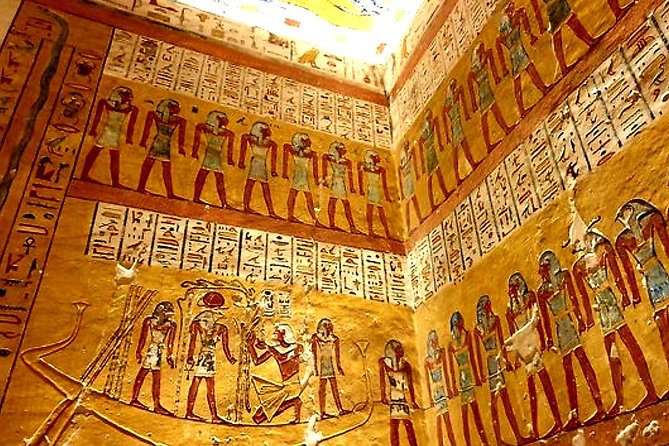
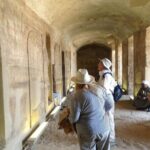
Next up is the Tomb of Ramses III (KV11), often called the Tomb of the Harpers. This one is compelling because it’s not just royal prayers on repeat. You’ll see a dense mix of New Kingdom funerary texts and scenes of Ramesses III standing before the gods.
The walls include painted sunken reliefs tied to classic religious themes, including the Litany of Ra and the Book of Gates. Then, near the entrance, there are the more surprising side-chamber scenes showing foreign tributes.
That matters because KV11 helps you see Egypt’s afterlife worldview as something connected to the wider world, not just Egypt’s own gods. In other words, you get myth and politics sharing the same walls.
Hatshepsut at Deir el-Bahari: your one full-hour pause
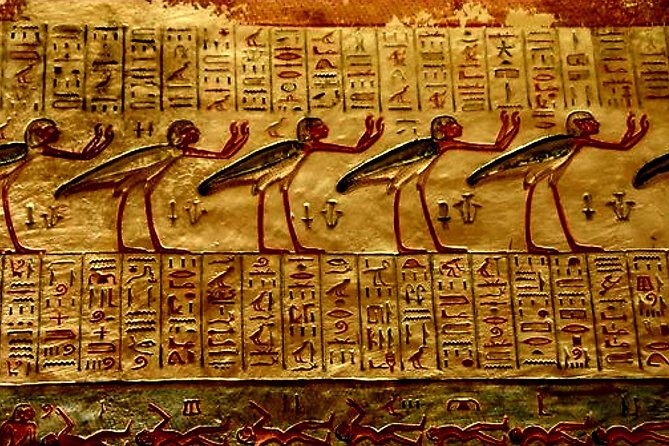
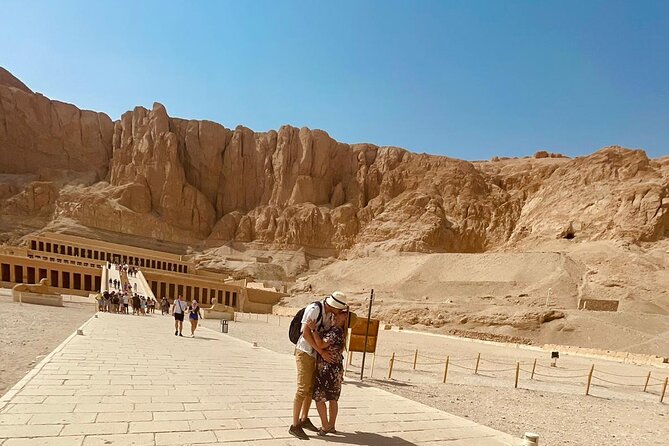
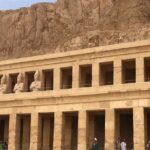
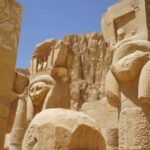
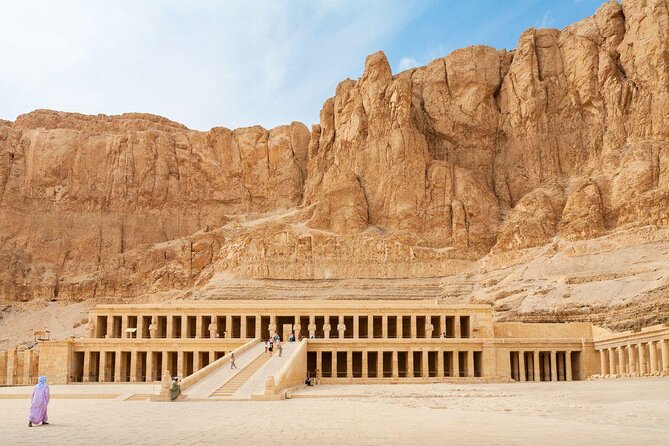
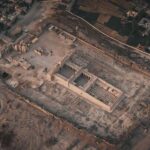
After multiple tomb interiors, the tour shifts to a temple where you can breathe: Hatshepsut’s Temple at Deir el-Bahari (1 hour). This isn’t a quick stop. You get enough time to register the setting beneath the cliffs of the Theban Mountain.
Hatshepsut’s story is central to why this place works. She was the only woman to rule Egypt as pharaoh in her period, and her reign is remembered for peace and monumental building. Her mortuary temple is designed as an architectural statement, with terraced levels and colonnades that make the temple feel like it’s staged for viewers.
If you’re the type who likes your photos and your facts to match, this is a high-return stop. The temple’s reliefs tell her divine birth and achievements, so you’re not just looking at stone—you’re following a curated narrative in architecture form.

Merneptah’s KV8 and Ptah: afterlife guidance through a craftsman god
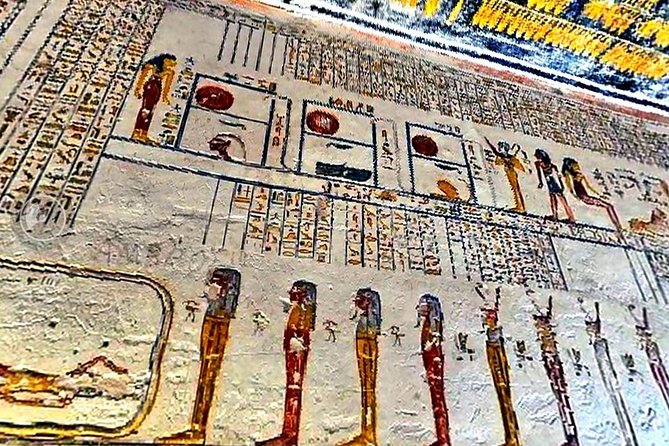
The tour then moves to Merneptah’s tomb (KV8) for about 25 minutes. Even if you don’t memorize Egyptian theology, KV8 can still click because the symbolism is paired with story.
The tour framing includes Ptah, the creator god associated with craftsmen and architects. Statues or images of Ptah were placed in tombs to guide and protect the deceased on the journey to the West of Luxor. In KV8, you’re essentially stepping into a belief system where the afterlife has logistics, not just vibes.
This is also one of those tomb stops where a good guide makes time feel useful. Ask questions. If you don’t, the walls can blur together because many tombs share the same basic funerary language.
Colossi of Memnon: why these two statues still command attention
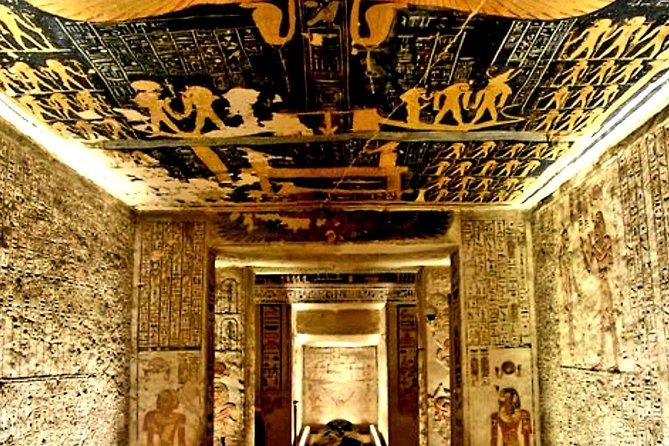
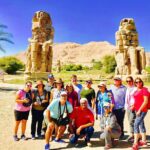
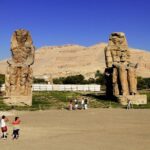
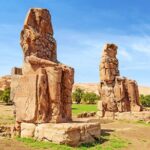
After tombs and temple terraces, there’s a quick, iconic breather: the Colossi of Memnon (about 15 minutes, admission free). These are two enormous stone statues, over 18 meters tall, tied to the reign of Amenhotep III.
They once guarded the entrance to Amenhotep III’s mortuary temple complex, most of which is lost to time now. The fun connection for your day is the family link: Amenhotep III is the father of Akhenaten and the grandfather of Tutankhamun.
This stop is short, but it resets your sense of scale. It also gives you a visual reference point, so later tomb interiors feel like part of a bigger system instead of isolated rooms in the sand.
Ramses IV (KV2): blue-and-white funerary scenes and a giant sarcophagus
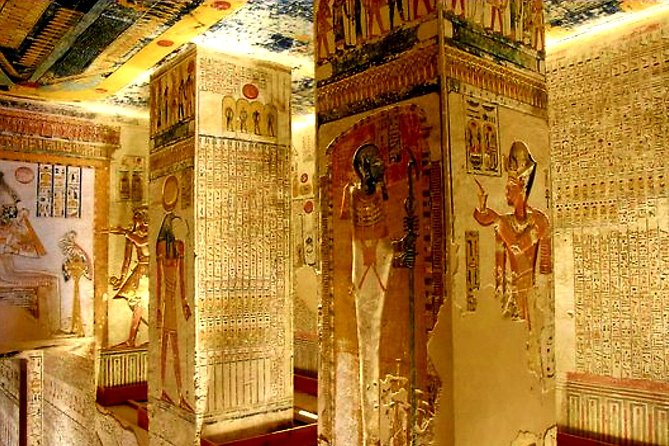
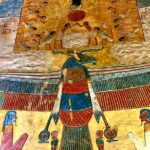
Next is Ramses IV’s tomb (KV2) for about 25 minutes. This tomb is visually powerful because of the combination of color and funerary content. The walls use striking blue and white imagery, and the ceiling includes Nut, the sky goddess, stretched across the vault.
The tour description emphasizes a long list of funerary texts shown in hieroglyphs, including:
- Litany of Ra
- Book of the Dead
- Book of Caverns
- Book of the Heavens
- Book of the Night
- Book of the Amduat
Inside, you’ll see the king’s rose-colored granite sarcophagus, described as one of the largest in the valley. If you like when art and architecture cooperate to make a point, KV2 is the kind of stop that rewards attention.
Valley of the Kings time: how the day keeps moving without feeling rushed
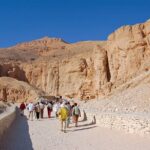
You’ll spend around 2 hours in the Valley of the Kings overall. The tour approach here is to stack several royal tombs so the Valley of the Kings becomes a story of changing dynasties, not just a list of famous names.
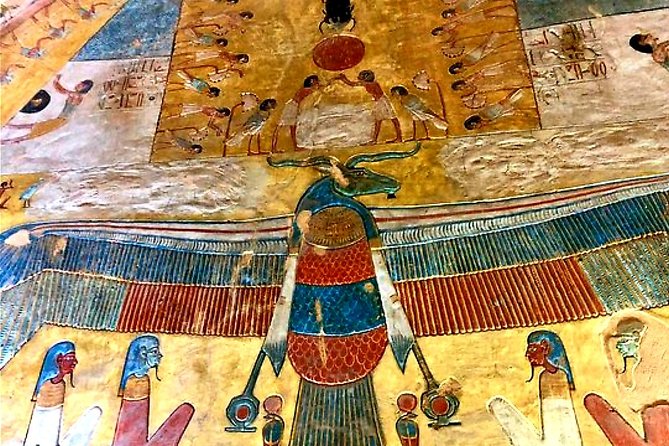
On your day, you can expect tomb visits including major royal burials such as Ramses and Horemheb along with Merneptah and Tutankhamun. In the later part of the sequence, the itinerary also includes Tomb of Ramses IX, where the visuals are especially eye-catching due to the rich coloring and a ceiling depiction of Nut swallowing and birthing the sun.
Here’s the key advantage of this structure: if Tut is your must-see, you still leave with the sense that Tut is part of a larger timeline. Without that context, Tut can feel like a standalone miracle. With the other tombs, you start to see the patterns.
Valley of the Queens: Queen Titi and the Nefertari factor
The tour continues to the Valley of the Queens, known in Arabic as Wādī al-Malekāt. It’s where queens, princes, princesses, and other high-ranking figures were buried—separate from the pharaohs’ necropolis in the Kings valley.
The tour highlights time at Queen Titi’s tomb, and also the Valley of the Queens area more broadly. Even if the tombs are smaller than the kings’ major sites, the energy is different: it can feel more like you’re exploring family and status rather than throne-centered mythology.
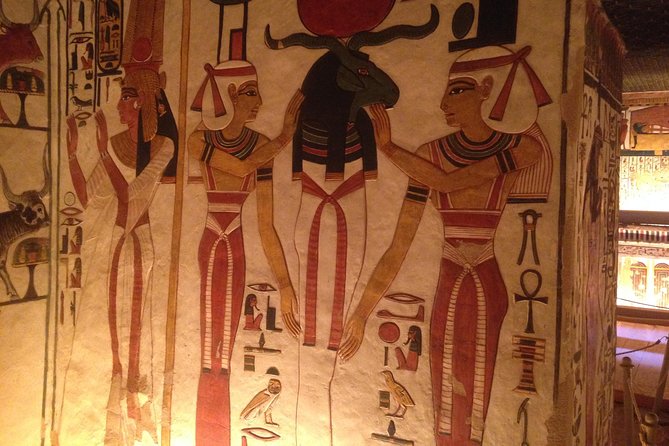
This tour is also associated with the big draw: Queen Nefertari’s tomb. People love it because the interior is famous for its color and finish. There’s an important heads-up though: conservation rules can cause the interior to be closed on the day you go, even if it was open the day before. So if Nefertari is your top priority, keep a flexible mindset and ask your guide what’s accessible that morning.
Your Egyptologist guide: where the best tours win
This is one of those tours where the guide makes or breaks the day. The tour includes a qualified, fully licensed Egyptologist guide, and many of the best moments come from how those guides explain what you’re seeing.
In the field, guides like Hassan and Ragab (with specialized education in Egyptology) are praised for strong English and story-driven explanations. Roshdy is mentioned as patient, giving tips on what to look for and why it matters. Abdul is described as professor-level on the tomb history, even adding a quiz at the end of the day.
That kind of approach matters because tomb walls are crowded with symbols. A strong guide helps you:
- spot the key scenes without getting lost,
- understand why certain texts appear where they do,
- and connect each tomb to the bigger “afterlife logic” of the West Bank.
A balanced note about guide limits inside tombs
There’s also a caution worth mentioning. One negative experience described an early cutoff after an argument, plus frustration that history wasn’t discussed inside with the group. The provider’s response adds context: guides may not be allowed to enter tomb interiors with guests to reduce carbon monoxide exposure.
So if you’re expecting the guide to narrate every second from inside every chamber, manage that expectation. Even with the best guide, there may be moments when explanation happens before or after you enter.
Practical tips to make the most of your 5-hour plan
This tour moves on purpose, with tomb visits timed around short windows like 10 to 25 minutes at many stops. That means you’ll enjoy the day more if you choose your priorities before you’re at the sites.
A few things that make a difference:
- Tell your guide what you want most: Tut, Nefertari, Ramses IV color work, or the Hatshepsut temple views.
- Ask where to spend extra time. Some guides will let you set the pace by focusing on what interests you most.
- Keep the day structured in your head: tomb interiors for story and symbolism, then temple and statues for scale and setting.
Also, remember that you’ll be buying separate entrance tickets for key tombs. Having that sorted in advance helps your morning stay smooth.
Should you book this private Tut, Kings and Queens tour?
Yes—if your goal is a high-impact West Bank experience with a guide who can connect the dots. The tour is built for people who want Tut’s tomb and also want more than the single headline stop, adding Hatshepsut, multiple royal tombs, and the Queens side of the story.
Skip it or go in with extra caution if:
- you hate ticket add-ons and your budget is tight,
- you’re only excited about one site and don’t care about the rest of the Valley of the Kings/Queens context,
- or you’re sensitive to the reality that tomb rules can affect how narration happens inside.
If you’re aiming for bucket-list value in one morning, this private format gives you the best chance to make the day feel personal, not rushed. And if you get a strong guide—like the ones repeatedly praised for English, patience, and story—you’ll walk away with the kind of understanding that turns photos into something you can actually explain.
FAQ
What time does the tour start, and how long is it?
It starts at 8:00 am and lasts about 5 hours 10 minutes.
Is this tour private?
Yes. It’s private, and only your group participates.
Are entrance tickets included?
No. Entrance tickets are not included, including the tombs highlighted on the itinerary.
Which major sites are included?
You’ll visit Tutankhamun’s tomb, the Valley of the Kings, Temple of Hatshepsut at Deir el-Bahari, and the Valley of the Queens (including Queen Titi’s tomb). The itinerary is also built around the tomb experience linked to Queen Nefertari.
Will I be able to see King Tut’s mummy?
The tour description says you can go inside Tutankhamun’s tomb and see the royal mummy in its resting place.
Is a hot air balloon ride included?
No. A hot air balloon ride is listed as an optional option before the tour, but it is not included.