REVIEW · GIZA
Private Guided Shopping Tour in Cairo
Book on Viator →Operated by Egypt Tourism and Travel · Bookable on Viator
Shopping in Cairo can be a lot to manage. This private tour turns it into a guided souvenir run through Giza and Cairo-area craft shops, with hotel pickup and drop-off that keeps you from wasting time. You also get a real shopping ally in the form of a qualified Egyptologist guide who helps you compare goods and shop with less stress.
The one thing to consider is that this is shopping-focused, not a history walkthrough—so if you want slow museum time only, you may find the shop stops move faster than you expect.
In This Review
- Key Things I’d Circle Before You Book
- A Shopping Plan That Actually Feels Organized in Cairo
- Pickup, Timing, and How the 5-Hour Flow Works
- Stop 1 in Giza: Papyrus, Perfume, Cotton, Carpets, and Cartouches
- Practical tip for this first stop
- Egypt Papyrus Museum: See Paper Made by Hand
- Mamluk Jewellery and Bazaar: Shopping in a Trust-Oriented Setting
- What to expect here
- Three Pyramids Bazaar and the Cotton Stop You’ll Actually Care About
- A quick reality check on “quality” shopping
- How the Guide Makes This Worth the Effort
- What you should tell your guide
- Price and Value: Why $10 Per Person Can Still Make Sense
- What you should still plan for
- What to Buy (and What to Skip) Without Getting Lost
- A simple buying strategy that works
- Who This Tour Suits Best
- Should You Book This Private Cairo Shopping Tour?
- FAQ
- What is the duration of the private guided shopping tour?
- Where does the tour take place?
- Is hotel pickup and drop-off included?
- What shopping stops are included during the tour?
- Are admission tickets included?
- What’s included in the price?
- Is food included?
- How far in advance should I book?
Key Things I’d Circle Before You Book
- Private, hotel-to-hotel pickup so you don’t have to plan Cairo traffic and exact meeting points
- Papyrus paper-making stop plus time to buy handmade art tied to the process
- Perfume factory visit aimed at long-lasting Egyptian scent products
- Egyptian cotton store time designed for buyers who care about fabric quality, not just souvenirs
- Bazaars for cartouches, jewelry, and gifts with guidance to keep shopping straightforward
- Coffee or tea included to soften the long, hands-on shopping stretch
A Shopping Plan That Actually Feels Organized in Cairo
Cairo shopping can go two ways: fun and memorable, or exhausting and confusing. What I like about this setup is the structure. You’re not wandering with no plan. Instead, you move through a sequence of craft stops—papyrus, perfume, cotton, and bazaar purchasing—guided start to finish.
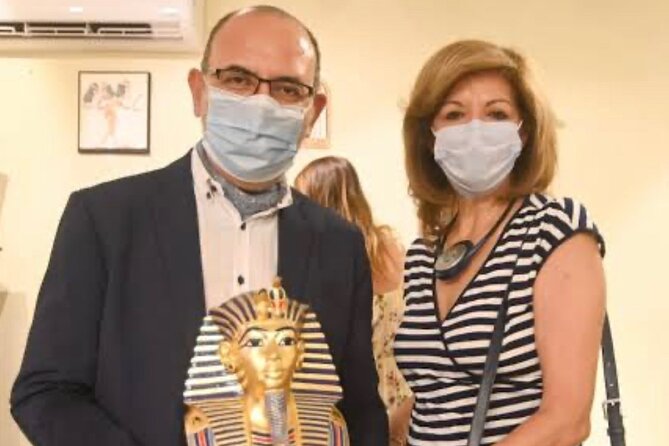
Another big plus is the tone: this is meant to be hassle-free. The guide’s job is not only to translate or explain, but to help you shop confidently. In the past, guides like Mohamed and Mariam have been praised for going above and beyond to match what shoppers want, including helping with exchanges when needed.
One note to keep your expectations realistic: the focus is shopping and product guidance. You will see how products are made at certain points, but you’re still on a buying route.
You can also read our reviews of more guided tours in Giza

Pickup, Timing, and How the 5-Hour Flow Works
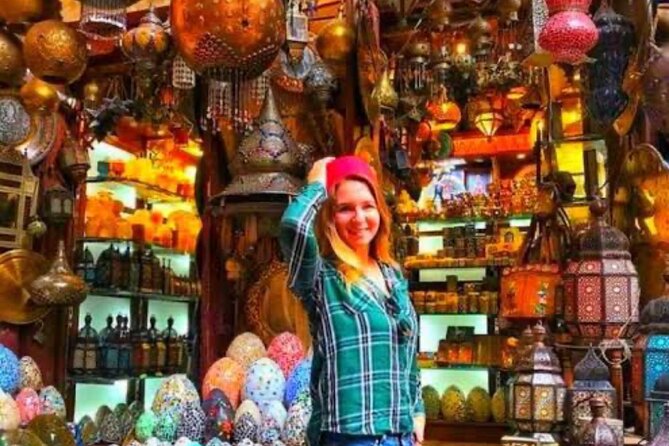
This is a private tour with a duration of about 5 hours. You’ll get pickup from your hotel in Cairo or Giza, and after you finish shopping, the private car brings you back to the same starting place. That matters more than it sounds. Cairo shopping can eat time fast—standing in lines, finding a shop you actually want, or trying to navigate without local support.
You’ll also see the tour is designed with flexible departure times during the day. That’s helpful if you’re trying to fit this around pyramids plans or other daytime priorities.
As for pacing: the stops include roughly:
- a longer first stretch in Giza (about 2 hours),
- then shorter, focused stops (about 1 hour each) for papyrus, jewelry/bazaar, and the cotton/bazaar segment,
- plus optional lunch time.
If you want to buy a lot, the schedule fits. If you want a slower, more casual browse with no pressure to decide, you’ll want to tell the guide early what pace you prefer.
Stop 1 in Giza: Papyrus, Perfume, Cotton, Carpets, and Cartouches
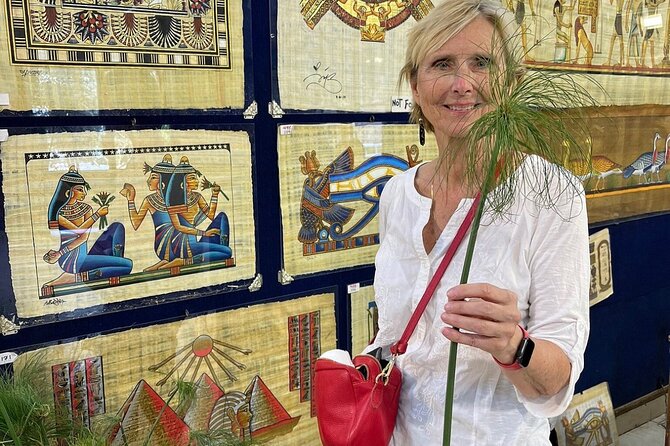
Your first major block is in Giza, where the day gets its shopping legs. This is where you’ll get a concentrated mix of Egyptian-made items—things people usually come to Cairo for.
Here’s what you’re set up to do in this segment:
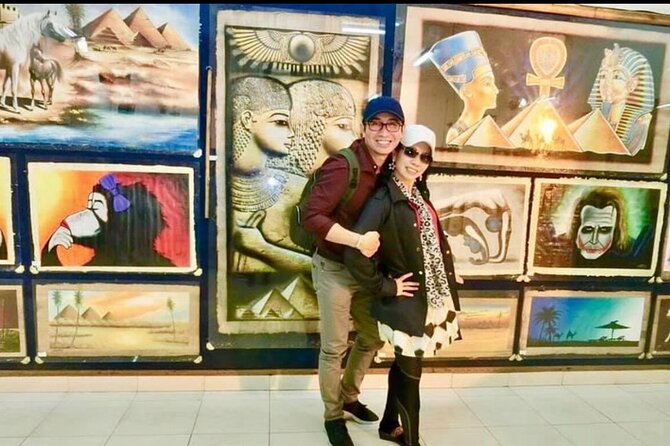
- Handmade papyrus shopping tied to real production (not just mass souvenirs)
- A perfume factory stop focused on Egyptian essence that’s meant to be long-lasting
- An Egyptian cotton store visit, positioned around premium quality
- A carpet school stop, where you can learn and shop in the same area rather than chasing carpet sellers later
- End at Meret Bazar to buy your own gold or silver cartouche (and related gift items)
This first stop is often the one where people either feel like they nailed the trip—or feel overwhelmed. With a guide, it’s easier to stay on track. You can steer the shopping: what you want, your preferred price range, and what’s worth your attention.
Practical tip for this first stop
Decide before you go: are you buying one “showpiece” gift (like a cartouche), or are you trying to collect several smaller items (cotton goods, perfume, art)? Having a clear target reduces decision fatigue. And it keeps your budget from getting quietly eaten by impulse buys.
Egypt Papyrus Museum: See Paper Made by Hand
After Giza, you move into the Egypt Papyrus Museum area and focus more on the craft itself. This stop includes the chance to start at the papyrus institute and see how paper is made by hand—something you can’t really fake through photos alone.
What makes this valuable is that it adds context to the shopping. You’re not just buying a papyrus souvenir because it looks good. You get to understand the material and the work behind it. You may also have the option to buy a handmade painting linked to the institute visit.
This is the most “learn something” part of the day, even though the overall experience remains a shopping tour.
You can also read our reviews of more private tours in Giza



Mamluk Jewellery and Bazaar: Shopping in a Trust-Oriented Setting
Next up is a segment focused on Mamluk jewellery and bazaar shopping. The idea here is straightforward: you’ll be guided to purchase souvenirs from bazaars that are described as government-trust oriented.
This is also one of the stops where having a competent guide pays off in real-world ways. For example, Mohamed has been highlighted for going out of his way to handle an exchange after a shopper realized items were not exactly what friends wanted. That kind of help is not flashy—but it can save you from the classic Cairo souvenir regret.
What to expect here
- Time to look at jewellery styles and gift items
- Guidance while you shop, so you’re not stuck figuring everything out alone
- A contained shopping window (about 1 hour) to keep the day moving
If you’re picky about what you want to buy—specific metal type, a particular style—tell the guide early so they can focus your time.
Three Pyramids Bazaar and the Cotton Stop You’ll Actually Care About

The last shopping push includes a Three Pyramids Bazaar stop, plus time at an Egyptian cotton store. This is where the tour leans into two popular buyer interests: textiles and personalized gifts.
At this point, you may find:
- cartouche options in silver or gold, alongside related statues and small gift items,
- cotton goods that are presented as important to Egypt’s exports,
- and an opportunity to add optional lunch before you head back.
A quick reality check on “quality” shopping
This tour is built around trust and guidance, but you still want to stay alert like any smart shopper. Ask what’s included, what it’s made of, and what you’re paying for. The guide can help you communicate, but you’re the one who decides what you feel good buying.
How the Guide Makes This Worth the Effort
The most praised parts of this experience are not just the places—it’s the way the tour is run. A private guide means:
- You can move faster without sacrificing time browsing the right shops
- You get help matching items to your tastes and budget
- You’re less likely to get derailed by confusing choices
In the past, Mohamed and Mariam have been specifically noted for friendly, high-effort service—helping shoppers find the right items and, in one case, contacting a store owner to arrange an exchange.
What you should tell your guide
If you want your trip to feel smooth, communicate early:
- What type of souvenirs you want (jewellery, cartouche, cotton items, perfume, papyrus art)
- Your price comfort zone
- Any non-negotiables (like metal preference for cartouches)
When you do that, the guide can steer you away from wasted browsing.
Price and Value: Why $10 Per Person Can Still Make Sense
The price listed is $10.00 per person, which is unusually low for a private guided shopping tour with transportation. The value comes from what’s included:
- All fees and taxes
- Qualified Egyptologist guide
- Private transport by car, with hotel pickup and return
- Coffee or tea
- Admission tickets where applicable (papyrus museum and other included stops)
Some parts are also framed as admission-free in the first Giza segment, while other stops clearly include admissions.
What you should still plan for
Food is not included, and there’s optional lunch during the day. So budget for a meal or snack time if you get hungry between stops.
If you’re in Cairo with only a short window and you want specific shopping results—plus someone to help you navigate—this kind of private, structured plan can feel like good value.
What to Buy (and What to Skip) Without Getting Lost
This tour is designed around several popular “Egypt gifts” that people actually use or display:
- Cartouches in silver or gold, available through bazaar purchasing
- Egyptian cotton items sold as high-quality goods
- Perfume essence from a perfume factory stop
- Papyrus art tied to the handmade process
- Handicrafts connected to carpets and textile education
But you shouldn’t buy just because something is available. Pick one or two hero items and fill in with smaller gifts.
A simple buying strategy that works
- Hero item: one meaningful purchase (cartouche or a larger cotton piece)
- Supporting items: two or three smaller souvenirs (perfume, papyrus art, small craft items)
- Bonus if you still feel excited: only then add extra gifts
This keeps your souvenirs tied to personal taste rather than panic-buying.
Who This Tour Suits Best
This experience is a strong fit if:
- you want a private guide to handle shopping decisions and navigation,
- you like the idea of seeing how some products are made (papyrus paper-making),
- you’re shopping for gifts and want a guided path that keeps you from wandering.
It may be less ideal if:
- you want a museum-heavy day with minimal shopping,
- you’re uncomfortable making purchases on a schedule,
- or you’re chasing a very specific bazaar that isn’t mentioned in the described route.
If you have a must-do target market in mind, ask before booking which stops you’ll include and where you’ll have time.
Should You Book This Private Cairo Shopping Tour?
If your goal is clear—buy Egyptian souvenirs with confidence, get help choosing items, and avoid the stress of shopping alone—this tour is an easy yes. The private hotel pickup and drop-off, the guided shopping focus, and the inclusion of key craft stops like papyrus and perfume make it feel efficient for a short stay.
Book it if you want:
- a structured shopping day in Giza and Cairo-area bazaars,
- help from a qualified Egyptologist guide,
- and time to shop for cartouches, cotton, papyrus art, and perfume without guessing your way through.
Skip it or choose another option if you’re not interested in shopping decisions and prefer more time in classic sightseeing spots instead.
One extra note for peace of mind: the experience includes free cancellation up to 24 hours before the start time, which gives you room to adjust if your Cairo schedule shifts.
FAQ
What is the duration of the private guided shopping tour?
It’s about 5 hours (approx.).
Where does the tour take place?
It’s based in Giza, Egypt, with hotel pickup and returns from Cairo or Giza hotels.
Is hotel pickup and drop-off included?
Yes. The private car picks you up from your hotel and brings you back after shopping.
What shopping stops are included during the tour?
You’ll visit craft and shopping stops including papyrus (handmade paper/papyrus institute), a perfume factory, an Egyptian cotton store, a carpet school, and bazaar shopping areas such as Meret Bazar and Three Pyramids Bazaar, plus a Mamluk jewellery and bazaar stop.
Are admission tickets included?
Admission tickets are included for some stops (for example, the papyrus museum and other included visits), while the first Giza segment is listed with admission ticket free.
What’s included in the price?
Included are all fees and taxes, coffee or tea, private tour service, transport by private vehicle, and a qualified Egyptologist guide.
Is food included?
No. Food is not included, and lunch is optional during the day.
How far in advance should I book?
On average, this tour is booked about 23 days in advance.
If you tell me your shopping priorities (cartouche vs cotton vs perfume vs papyrus art) and your travel dates, I can suggest how to spend your limited time so you leave with items you’ll actually be happy with.