REVIEW · GIZA
Private Guided Day Tour to Luxor from Cairo by Plane
Book on Viator →Operated by Here Egypt Tours · Bookable on Viator
Luxor in a single day is a big bet. It’s also a smart one, because the plan swaps long ground travel for morning flights and an early, guided route through the key sights. You’ll cover the West Bank first, including the Valley of the Kings, and then shift to the East Bank for Karnak.
What I like most is how much you get done without DIY stress. With a private Egyptologist guide (and drivers handling transfers), you’re not negotiating timing, tickets, or directions at 5 a.m. The other standout for me is the tomb-and-temple flow: the Valley of the Kings sets the tone, then Hatshepsut’s terraced mortuary temple adds variety, before you finish at Karnak.
The main drawback to plan around is timing. Pickup is very early (typically 4:30 a.m. to 6 a.m., sometimes earlier depending on flight schedules), and the whole day stretches about 12 to 14 hours, so jet-lagged energy and long airport waits can happen. Flight timing can also shape how late your day feels on the return.
In This Review
- Key takeaways before you go
- Why a Cairo-to-Luxor flight day trip actually works
- Morning reality check: hotel pickup and the flight rhythm
- West Bank: City of the Dead and the Valley of the Kings
- Valley of the Kings: tombs, ceilings, and context
- Hatshepsut’s Temple: a cliffside monument that changes the mood
- Crossing the Nile: lunch at a local house, not a tourist hall
- Karnak Temple complex: the size shock and why a guide matters
- East Bank add-on: Luxor Temple in the tour concept
- Return flight and the long evening transfer back to Cairo
- The real value: what you gain versus what you give up
- Price and logistics: what $540 really buys you
- Who this tour fits best
- Should you book this Cairo-to-Luxor plane day trip?
- FAQ
- FAQ
- How long is the private guided day tour from Cairo to Luxor by plane?
- What time is hotel pickup in Cairo or Giza?
- Does the tour include return flights?
- What’s included with the guide and transportation?
- Is lunch included?
- Are entrance fees included?
- Is this tour private?
- What is the cancellation policy?
Key takeaways before you go
- Private Egyptologist guidance that turns major monuments into a story you can follow
- West Bank to East Bank pacing: Valley of the Kings → Hatshepsut → Karnak-area time
- Early airport logistics handled for you with door-to-door hotel pickup and licensed drivers
- Lunch at a local house where you get a more personal taste of daily life
- Sugar cane juice included after touring Karnak
- Entry tickets extra, so budget for them on top of the tour price
Why a Cairo-to-Luxor flight day trip actually works
Luxor is one of those places where time matters. If you try to force it with complicated transport, you burn your limited hours on logistics instead of monuments. This tour’s whole idea is simple: you start early in Cairo or Giza, fly to Luxor, tour with a guide, eat lunch in the middle, then fly back.
The value isn’t only the flight. It’s the “chain of care” the tour provides: hotel pickup, airport transfers, a guide meeting you after arrival, then the return back to your hotel. Even the small extras like bottled water during the day help when your schedule is intense.
Price-wise, $540 per person is not cheap. But it’s not pretending you’re buying a budget day trip either. You’re paying for the private structure (private group, private guide, door-to-door transfers) plus round-trip domestic flights. The real cost can land higher once you add entry fees (not included) and whatever you plan to tip.
You can also read our reviews of more guided tours in Giza


Morning reality check: hotel pickup and the flight rhythm
Your day starts before the sun is polite. Pickup is usually between 4 a.m. and 6 a.m., and the standard window mentioned is 4–5:30 a.m. in an air-conditioned vehicle. This matters because you’ll likely be moving while it’s still dark, so plan your packing the night before.
Then you’ll drive to Cairo Airport for your morning flight to Luxor. The tour schedule is described as being subject to the flight timetable, which is normal for air travel but important for your expectations. The same goes for your meeting timing once you arrive: your guide meets you in Luxor according to your arrival.
One helpful practical note: the tour is private, so you’re not stuck waiting on a big group to come back from the restroom or swap seats. That can save time compared with larger shared tours, especially when everything is scheduled tightly around flight times.
West Bank: City of the Dead and the Valley of the Kings
Once you arrive in Luxor and your guide gets you moving, you go straight to the West Bank, the area often called the city of the dead. This is where you’ll feel the shift from modern Egypt to the mortuary landscape that shaped New Kingdom power.
Valley of the Kings: tombs, ceilings, and context
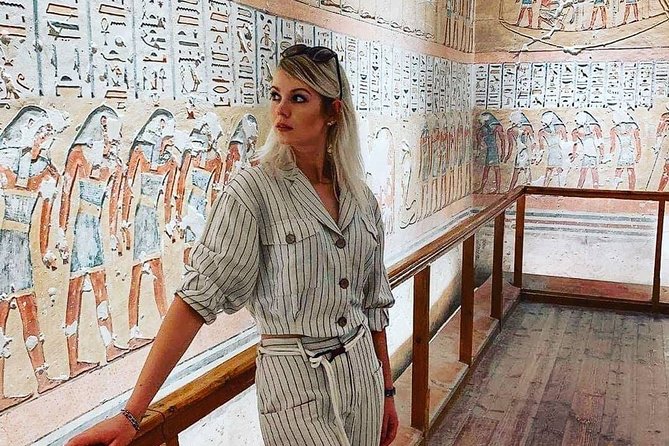
The centerpiece here is the Valley of the Kings, the famed royal cemetery in the Theban hills. The tour information describes the valley as containing 63 registered tombs, with three additional tombs recently discovered. Even if you don’t see every tomb in one day (nobody does), the guide’s job is to give you the map so the site makes sense.
What I like about touring this with a guide is that the Valley of the Kings can otherwise feel like a set of entrances and stairs. A good explanation turns it into a sequence—why it was built there, how it worked, and what the tombs were trying to achieve for kings and afterlife belief.
A practical tip for your comfort: wear shoes you trust on uneven paths. You’ll be moving on site floors and stairs, and that’s where early-morning fatigue can trip you up.
Hatshepsut’s Temple: a cliffside monument that changes the mood
After the Valley of the Kings, the route continues to Hatsheput Temple (described as a mortuary temple). This stop is a smart contrast because it’s not just “another tomb area.” The tour notes that it’s the only temple in Egypt built in terrace formation into the cliff face—so the architecture itself gives you something different to notice.
Hatshepsut also has a way of focusing the story for visitors. A guide can connect her reign to why this temple looks the way it does and why it mattered politically and religiously. In the reviews, guides were praised for making these sites feel understandable, with one guide named Harem highlighted for being very knowledgeable and giving time for exploration.
Even if you’re not chasing every fact, this is the kind of stop where it helps to have someone point out how terraces, stone, and positioning relate to the wider religious landscape.
You can also read our reviews of more private tours in Giza




Crossing the Nile: lunch at a local house, not a tourist hall
Next you cross to the East Bank for lunch. The tour includes lunch at a local Egyptian house in-between the major monuments. This is one of the best parts of the day if you care about real-life rhythm, not just monuments.
The description specifically frames lunch as a chance to meet an Egyptian family and see a more personal side of Egypt. One review also flagged the lunch as a place that can either surprise you positively or feel a little tricky depending on what you like to eat—so go in flexible.
Practically, it’s a welcome break in a long day. You’ve been on the move early, and lunch gives you a reset before the final temple highlight.
Karnak Temple complex: the size shock and why a guide matters
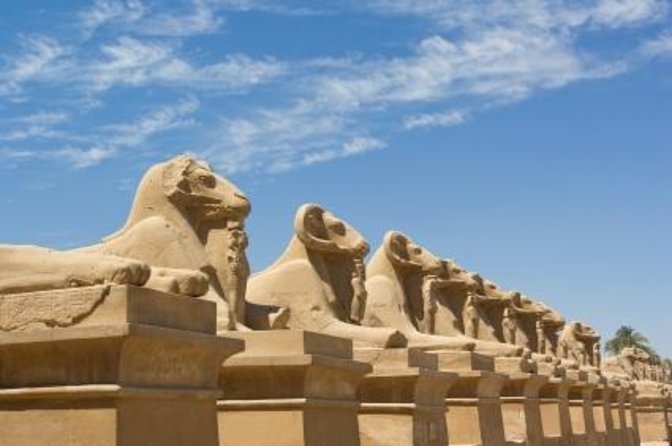
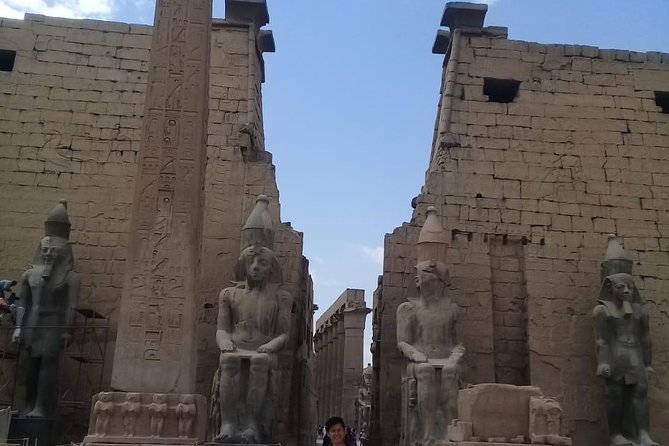
Your last major stop is Karnak Temples, described as the largest ancient temple complex in Egypt. If you’ve ever seen a photo, you might think you know it. In person, the scale is what hits first—courtyards, pillars, axes of sight, and layers of construction.
Karnak is also where Egyptology guidance becomes most valuable. Without it, you can end up walking through impressive stones that all look impressive—but you won’t necessarily know what you’re looking at. With a guide, the same space becomes organized: sacred purposes, major structures, and how the complex functioned over time.
This is also where the tour adds a small included treat: after touring Karnak, you drink fresh Egyptian juice, and the tour also lists sugar cane as the famous juice in Luxor included in the experience. It’s a simple end-of-tour ritual that helps you stay alert before the return flight.
East Bank add-on: Luxor Temple in the tour concept
The tour overview markets the East Bank experience as including Luxor Temple along with Karnak. Your day’s exact stop order is tied to flight scheduling, but the overall intent is clear: the East Bank portion is built around the core temple sights visitors come to Luxor for.
So even if your schedule feels tight, you’re not just doing a random “temples loop.” You’re following a recognizable first-time Luxor route: West Bank funerary sites, then the temple focus on the East Bank.
Return flight and the long evening transfer back to Cairo
After Karnak (and the included juice), you head back to Luxor Airport for the flight to Cairo. Arrival in Cairo is also subject to your flight schedule, and then you’ll transfer back to your hotel in Cairo or Giza.
This is the part where you should protect your energy earlier in the day. If you hate rush time and late evenings, consider how your own sleep schedule will handle an extended day that can easily run toward the evening. One mixed-feedback note mentioned flight timing causing stress, so it’s wise to treat this as a flight-day plan, not a relaxed stroll.
The real value: what you gain versus what you give up
For first-time Luxor visitors, this tour’s biggest strength is reducing friction. You’re buying time-saving automation: transfers, flights, an Egyptologist guide, and a set route from West Bank to East Bank.
You give up some freedom, though. Because it’s built around domestic flights and a fixed day plan, you’ll follow the schedule rather than wander slowly. Also, entry fees are not included, which means you’ll still need to handle that cost separately. And tipping is not built in; tipping is recommended.
The early pickup is another tradeoff. This is a “see Luxor fast” format. If you’re the type who likes to sleep late and show up at monuments at a calmer pace, you might feel rushed.
Price and logistics: what $540 really buys you
At $540 per person, you’re paying for a high-touch day. Here’s what that includes based on the tour details:
- Domestic flights Cairo/Luxor/Cairo
- Door-to-door transfers from and to your hotel (Cairo or Giza)
- Bottled water during the trip
- Lunch at a local Egyptian house
- Private qualified Egyptology guide
- Sugar cane and fresh juice after Karnak
- Licensed drivers and all taxes/service charges
What’s not included:
- Entrance fees
- Tipping (recommended)
There’s also the “book in advance” signal: it’s commonly booked about 31 days in advance on average, and group discounts are available. That suggests the operators expect limited capacity around popular flight windows.
My take on value: if you truly want Luxor and you only have a short window while staying in Cairo, this is one of the simplest ways to make it happen. If you have flexibility (and patience for long travel), you might find cheaper ways to see Luxor. But if you care about seeing the main sites with a guide and minimal hassle, the price starts to make sense.
Who this tour fits best
This tour is a strong match if:
- You’re staying in Cairo or Giza and want a full Luxor day without planning transport
- You want private Egyptologist guidance rather than scanning signs on your own
- You like a structured route that hits the headline monuments efficiently
It’s less ideal if:
- You strongly dislike early starts or long travel days
- You want long, unhurried time in only one tomb or one temple area
- You’re sensitive to schedule changes tied to flights
Should you book this Cairo-to-Luxor plane day trip?
I’d book it if you want Luxor’s biggest hits in one go and you value a guide to organize what you’re seeing—Valley of the Kings first, then Hatshepsut, lunch, and finally Karnak with sugar cane juice to end it. The private guide experience matters here, and the route is built for first-timers who don’t want to juggle airports.
I’d think twice if your ideal day includes slow mornings or if you’re the kind of traveler who gets stressed by flight-timed schedules. This is efficient, but it’s still a long day with an early pickup.
If you do book, pack for the start time, wear comfortable walking shoes, and budget for entrance fees and tipping so you’re not surprised.
FAQ
FAQ
How long is the private guided day tour from Cairo to Luxor by plane?
The tour runs about 12 to 14 hours, depending on your flight schedule.
What time is hotel pickup in Cairo or Giza?
Pickup is usually between 4:30 a.m. and 6 a.m., and the pickup window is described as 4–5:30 a.m. for Cairo or Giza hotels.
Does the tour include return flights?
Yes. It includes domestic flight tickets Cairo/Luxor/Cairo.
What’s included with the guide and transportation?
You get door-to-door transfers from and to your hotel in Cairo or Giza, a private qualified Egyptology guide, and bottled water during the trip.
Is lunch included?
Yes. Lunch is included at a local Egyptian house.
Are entrance fees included?
No. Entrance fees are not included.
Is this tour private?
Yes. It’s a private tour/activity, and only your group participates.
What is the cancellation policy?
The experience is non-refundable and cannot be changed for any reason. If you cancel or ask for an amendment, the amount you paid will not be refunded.