REVIEW · LUXOR
Luxor West & East Banks: Joyful Day Tour
Book on Viator →Operated by Eldeak Tours · Bookable on Viator
Luxor’s biggest temples in one long day. This Luxor West & East Banks Joyful Day Tour strings together several of the area’s most important monuments, with Karnak Temple as your early anchor and the West Bank sites doing the heavy lifting later.
I especially like that all fees and taxes are handled and bottled water plus an air-conditioned vehicle are part of the package. I also like the small size (up to 8), which keeps things moving without feeling chaotic, and the guides’ style—names like Ahmed, Hussain, and Edward show up in past bookings as dependable, English-friendly, and good at explaining what you’re actually looking at.
One thing to plan for: this is a long sightseeing day (about 6–8 hours) with limited time per stop, so you’ll want to come ready for heat, walking, and some time pressure—plus tipping is not included.
In This Review
- Key highlights you’ll care about
- Luxor in One Long Day: What the East/West Route Really Gives You
- Karnak Temple’s Great Hall and the Obelisks of Two Pharaohs
- Luxor Temple’s Ramses II Obelisk and the Alexander Chapel
- Hatshepsut’s Temple: Why a Female Pharaoh Still Matters
- Medinat Habu on the West Bank: Ramses III and the Best-Preserved Feel
- The Valley of the Kings and Colossi of Memnon: Likely Part of the Classic Luxor Mix
- Lunch Break Timing and Staying Comfortable in Luxor Heat
- Logistics That Matter: Pickup, AC Vehicle, Mobile Tickets, and a Small Group
- Price and Value at About $209: What You’re Really Paying For
- Who This Tour Suits Best (and Who Might Want a Different Plan)
- Should You Book This Luxor West & East Banks Joyful Day Tour?
- FAQ
- How long is the Luxor West & East Banks Joyful Day Tour?
- Is pickup included, and do I get comfortable transport?
- Are admission tickets included for the main monuments?
- Is there time for lunch?
- How many people are in the group?
- What happens if plans change or weather is poor?
Key highlights you’ll care about
- Karnak’s Great Hall with 134 columns plus obelisks of Queen Hatshepsut and King Thutmose I
- Sacred lake and scarab details at Karnak that help the temple feel less like ruins and more like a working religious space
- Luxor Temple’s Ramses II obelisk and a quick look at major dynasties shaping the complex
- Hatshepsut’s story—a rare case of a female ruler taking full pharaoh status
- Medinat Habu on the West Bank: large, one of the best preserved, with battle scenes tied to Ramses III
- Max 8 travelers with pickup, an AC vehicle, and bottled water
Luxor in One Long Day: What the East/West Route Really Gives You
If you’re short on time in Luxor, a one-day East-and-West plan can make your trip feel complete fast. You trade lots of hotel logistics and meal hopping for a set route through major sites, with a guide to connect the dots between dynasties, gods, and royal building projects.
The value here is efficiency without feeling like a rush job. You get a structured day across both banks, and you’re not scrambling to figure out tickets, transport, or where to start your photos. In Luxor, that matters—temple layouts can feel confusing even when the ruins are world-famous.
The group size (up to 8) is also a practical win. It usually means quicker question time, easier photo timing, and less time stuck behind slow walkers. You’ll still want comfortable shoes, though. Stone is stone, and you’ll be on your feet for hours.
You can also read our reviews of more tours and experiences in Luxor.

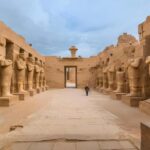

Karnak Temple’s Great Hall and the Obelisks of Two Pharaohs

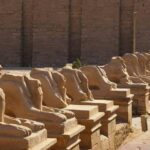
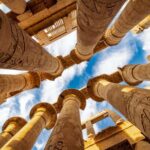
Your day starts at Karnak Temple through the main entrance area, beginning right at the first gate experience. Then you step into the Great Hall, famous for 134 columns, which is one of those sights that doesn’t work in photos. Up close, you feel how deliberate the scale is—this was designed to overwhelm.
What I like most at Karnak is how the obelisks give you a direct timeline. You’ll see an obelisk associated with Queen Hatshepsut and another linked to King Thutmose I. That pairing helps you read Karnak as a layered monument—different rulers leaving their mark inside the same sacred space.
The “how did people use this” details are also the payoff. The sacred lake and scarab are mentioned as part of what you can look for, and that’s the kind of detail that turns a list of ruins into something more understandable. Even when you’re not a specialist, it helps you imagine ceremony and daily meaning.
This stop is scheduled for about 2 hours, and that length is important. Karnak is huge. With only 20 minutes, you’d miss the internal logic. With a couple hours, you can get your bearings, read key sections, and still have time to absorb the vibe.
Luxor Temple’s Ramses II Obelisk and the Alexander Chapel
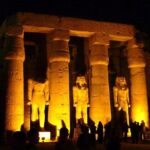
After Karnak’s scale, Luxor Temple feels a bit more approachable—still monumental, but easier to “read” in a shorter visit. You’ll look at the best preserved obelisk associated with King Ramses II, plus key areas tied to major reigns and large statuary programs.
One highlight is the focus on major architecture elements: the great hall and statues of Ramses II, and the columns connected to Amunhotep III. The tour also points out a family connection to Tutankhamun, using the idea of Tutankhamun’s grandfather (Amunhotep III) to keep the dynasty story from feeling like memorizing dates.
Luxor Temple also includes the chapel of Alexander the Great. That’s a helpful reminder that Luxor kept drawing attention long after the pharaoh age. You’ll be standing in a place where different eras left their fingerprints, even if the styles and purposes changed.
This stop runs about 1 hour, which is enough if you’re aiming for the main sights and photos rather than museum-level study. If you’re the type who likes to linger, you’ll feel the time limit—but that’s the tradeoff for covering multiple major temples in a single day.
Hatshepsut’s Temple: Why a Female Pharaoh Still Matters
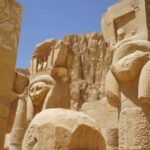
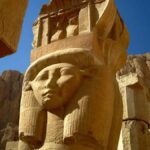
Next comes the Temple of Hatshepsut. This is the kind of stop that adds “human” shape to the monuments, even when everything is stone. Hatshepsut was a female king who ruled in her own right, and the tour frames her as someone who took on pharaoh-style regalia and titles, which was unusually bold for its time.
This matters for your understanding of Luxor because it challenges the simplistic idea that pharaoh history is only one kind of story. When a female ruler steps into full pharaoh authority, you see how power, politics, and religion all overlap in the building program.
You’ll spend about 1 hour here. That’s a good length for grasping the core idea and walking the key sections without feeling rushed through your “wow” moments. It’s also a solid buffer between your heavier temple segments—your brain gets a story-based stop, not just a scale-based one.
Medinat Habu on the West Bank: Ramses III and the Best-Preserved Feel
The West Bank is where Luxor turns dramatic. Your tour heads to Medinat Habu (often written as Medinet Habu), described as very important and one of the largest temples in the area.
What makes this stop especially interesting is the emphasis on the drawings and battle records tied to Ramses III. The idea is that the temple’s visual program immortalized important battles, and you’re not just seeing walls—you’re seeing a political message turned into stone visuals.
There’s also a preservation point in the way the site is presented: it’s considered one of the best preserved temples in Luxor for the last great pharaoh in old Egyptian history. In practical terms, that means you’re more likely to recognize structural sections and decorative intent as you walk than you would in more heavily eroded complexes.
You’ll spend about 1 hour here. Again, that’s short enough to keep the schedule under control, but long enough to walk, orient yourself, and take in the feeling of a temple that looks less like a broken set and more like a complete building project.

The Valley of the Kings and Colossi of Memnon: Likely Part of the Classic Luxor Mix
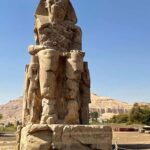
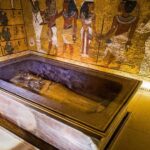
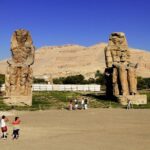
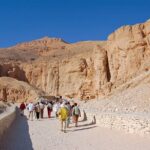
Even though your day is built around the major scheduled East-and-West stops, the overall framing of this tour is that it’s a classic Luxor sweep of royal sites. That includes the idea of reaching the Valley of the Kings and seeing the Colossi of Memnon as part of the broader “pharaoh capital” experience.
Here’s how to handle this realistically: ask your guide or operator before you go what your exact route covers on the day you book. Luxor itineraries can shift slightly depending on access, timing, and how the day flows. But if your plan includes the Valley area and Memnon, expect a strong contrast to temples—tombs and monumental statues carry a different kind of emotion.
If the day does include these extra West Bank sights, the benefit is you’ll leave with a more rounded view of how rulers were honored in different ways: temples for worship and legacy, and tomb spaces for the afterlife story.
Lunch Break Timing and Staying Comfortable in Luxor Heat
The day includes about 1 hour for lunch, which is a meaningful detail. In Luxor, meals aren’t just food. It’s also shade, a chance to reset your feet, and a moment to cool down before the next site.
Some past groups have highlighted lunch experiences that felt more local and family-based. That’s not guaranteed for every tour day, but it’s a clue that the operator may try to make this break feel real rather than just a quick stop.
Practical tip: even with an air-conditioned vehicle, you’ll still spend time walking outdoors. Bring sunscreen, a hat, and water beyond what’s provided if you’re the kind of person who feels heat fast. The tour includes bottled water, but Luxor sun can still surprise you.
Logistics That Matter: Pickup, AC Vehicle, Mobile Tickets, and a Small Group
Good Luxor tours manage stress, not just sights. This one includes pickup, an air-conditioned vehicle, and a mobile ticket approach, which helps when you’re moving quickly through a city where lines and signage can be tricky.
The vehicle portion is not just comfort—it protects your day. A lot of time in Luxor can be lost to traffic and waiting. Having AC on the ride means you arrive in a better mood and can focus on looking, not just surviving.
Your group size is capped at 8 travelers, which also changes the feel. You’re more likely to get quick answers, photo help, and tighter timing. In past bookings, guides like Ahmed, Hussain, and Edward have been described as dependable and communicative in English, which makes temple explanations click faster when you can actually understand them.
If you’re trying to plan with family or mixed ages, that small group structure is often a big plus. It tends to keep the pace flexible, as long as everyone is ready to walk.
Price and Value at About $209: What You’re Really Paying For
At $209.14 per person, the price sits in the “serious but not crazy” zone for Luxor. The biggest value move is that all fees and taxes are included, and the listed stops show admission ticket coverage for the sites on the route.
That matters because temple entry and guided movement in Luxor can add up fast when you book things separately. When the operator folds the costs in, you spend less time calculating and more time actually seeing.
The included basics are also practical: air-conditioned vehicle and bottled water. Those sound small until you’ve had a sweaty commute in Egypt.
What’s not included is tipping, plus any extras not mentioned in the day’s plan. Plan for that in your budget so you’re not scrambling at the end.
Who This Tour Suits Best (and Who Might Want a Different Plan)
This tour is a strong fit for you if you want a complete Luxor “greatest hits” day without managing transport, entry logistics, and timing yourself. It also works well if you like explanations that connect what you see to why it was built.
You’ll probably enjoy it if you’re traveling with kids or a range of ages too, because the stops are clearly paced and timed, with breaks built in. The structure helps younger travelers feel like there’s a rhythm to the day.
If you’re the type who wants to spend half a day in one temple and read every carving like a book, you might find the schedule a bit tight. This day is designed for breadth, not slow study.
Should You Book This Luxor West & East Banks Joyful Day Tour?
I’d book it if your goal is to see major East and West Bank monuments in one efficient day, with entry fees handled and a small group keeping things manageable. The combination of Karnak’s columns and obelisks, Luxor Temple’s Ramses-linked highlights, Hatshepsut’s powerful story stop, and Medinat Habu’s Ramses III battle imagery is a solid mix of scale and meaning.
I’d think twice if you hate time pressure. The day runs long and each stop is capped, so you need to be okay with “see the key things well” rather than “linger for hours on one wall carving.”
If you’re deciding between options, ask one simple question when you book: which West Bank additions are actually in your final route that day. If the plan includes places like the Valley of the Kings and the Colossi of Memnon, you’ll get an even more complete Luxor picture.
FAQ
How long is the Luxor West & East Banks Joyful Day Tour?
The tour runs about 6 to 8 hours.
Is pickup included, and do I get comfortable transport?
Yes, pickup is offered. You’ll travel in an air-conditioned vehicle.
Are admission tickets included for the main monuments?
All fees and taxes are included, and the listed stops show admission ticket coverage for those sites.
Is there time for lunch?
Yes, the schedule includes about 1 hour for lunch.
How many people are in the group?
The tour has a maximum of 8 travelers.
What happens if plans change or weather is poor?
You can cancel for free up to 24 hours in advance for a full refund. The experience requires good weather, and if it’s canceled due to poor weather, you’ll be offered a different date or a full refund.
If you want, tell me your travel dates and whether you prefer a faster checklist day or a slower, more photo-focused day—and I’ll help you decide if this route matches your style.