REVIEW · LUXOR
Luxor ,Tour to The East & West Bank of the Nile
Book on Viator →Operated by MyEgyTours · Bookable on Viator
Luxor can feel like a giant open-air museum, but this day tour turns it into a clean route. You’ll hit the West Bank tombs and the East Bank temples with an Egyptologist guide, plus an included lunch and round-trip pickup.
Two things I really like: the plan is tight (you cover the big sites without bouncing around on your own), and the guide focus matters—an English-speaking Egyptologist helps you connect what you’re seeing to the people who built it.
One thing to watch: the tour notes say admission ticket info, but it also lists that entrance fees are not included. Before you go, confirm what you’ll pay on arrival so there are no surprises.
In This Review
- Key highlights to know before you go
- Why Luxor’s East and West Bank in One Long Day Works
- Getting Pulled from Your Hotel: Transfers and Real-World Timing
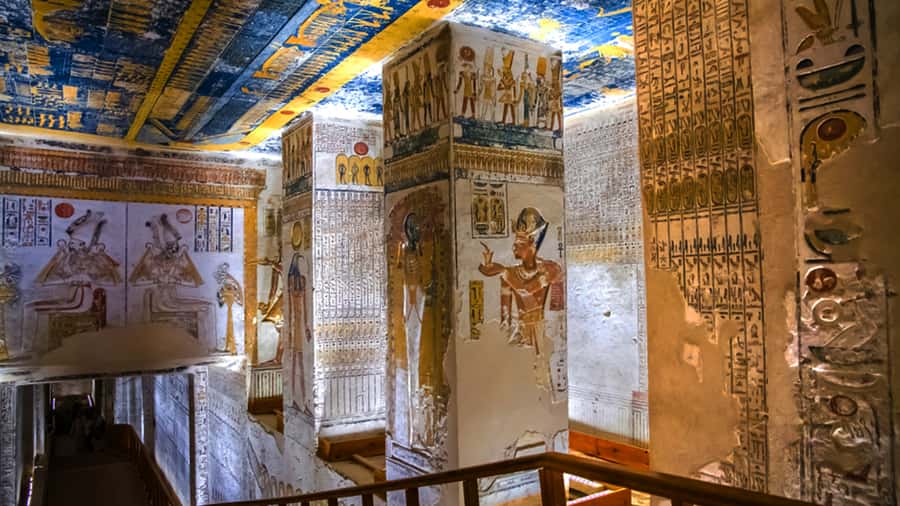
- Valley of the Kings Tombs: The Burial City That Still Feels Personal
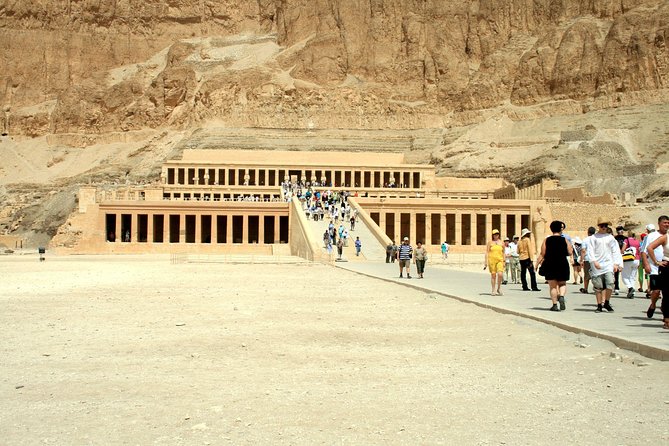
- Hatshepsut’s Temple and the Colossi of Memnon: West Bank Power in Stone
- Karnak Temple: Where Luxor’s Religious World Gets Loud
- Luxor Temple: The Day’s Finale on the East Bank
- Lunch and Comfort: What’s Included, and What You Still Need
- Guide Quality and That Private Feel (Even with a Group Cap)
- Price and Value: What $90 Buys You (and What to Confirm)
- Who This Tour Fits Best (And Who Might Want Something Else)
- Should You Book This Luxor East and West Bank Day Tour?
- FAQ
- How much does the Luxor East and West Bank tour cost?
- How long is the tour?
- Does the tour include hotel pickup and drop-off?
- Which sites are included in this day tour?
- Is lunch included?
- Are entrance fees included?
- What language is the guide?
- Is bottled water provided?
- Can I cancel for a full refund?
Key highlights to know before you go
- West Bank must-sees: Valley of the Kings tombs, the Temple of Queen Hatshepsut, and a pass by the Colossi of Memnon
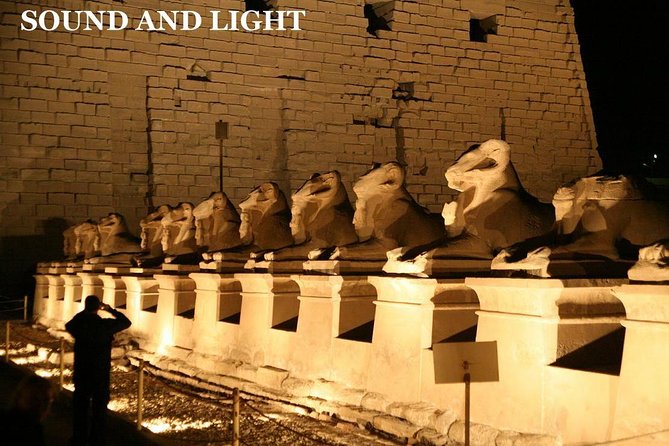
- East Bank heavy-hitters: time at Karnak Temple and Luxor Temple
- Hotel pickup + private vehicle: round-trip transfer in an air-conditioned car
- Included lunch: eaten at a local restaurant (and yes, it’s a real break in a long day)
- Guide matters here: many guides are singled out for strong explanations and smooth pacing
Why Luxor’s East and West Bank in One Long Day Works
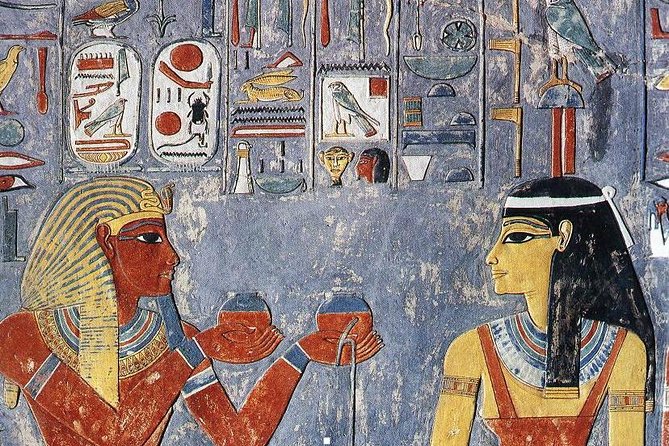
Luxor works best when you don’t try to do it in pieces. On the West Bank, you’re looking at burial architecture—places designed for eternity. On the East Bank, you’re in the world of temples and daily state religion, where power was displayed in stone and scale.
This tour gives you both halves in one 8 to 10 hour day. That’s ideal if you’re short on time, like many people are when they’re hopping between Luxor and other parts of Egypt.
The big value is not just the checklist of sites. It’s the way the West and East Bank stories connect. Once you understand the logic—tombs for the afterlife, temples for the living—you’ll start seeing patterns instead of isolated monuments.
You can also read our reviews of more tours and experiences in Luxor.

Getting Pulled from Your Hotel: Transfers and Real-World Timing
You’re picked up from your hotel in Luxor and returned after the tour. That sounds basic, but it’s huge in Luxor, where traffic and meeting points can eat up precious daylight.
The tour includes all transfers by a private air-conditioned vehicle, and bottled water is provided during the tour. In practice, that means you can focus on the ruins, not on logistics.
There’s also a timing detail that you’ll feel on-site: Luxor can get harsh in the middle of the day. In the feedback, guides are praised for starting early and finishing by about 10:00 to avoid the worst heat. That kind of pacing makes the difference between a tiring marathon and a day you can actually enjoy.
If your start time is flexible, go for the earliest slot you can get.
Valley of the Kings Tombs: The Burial City That Still Feels Personal
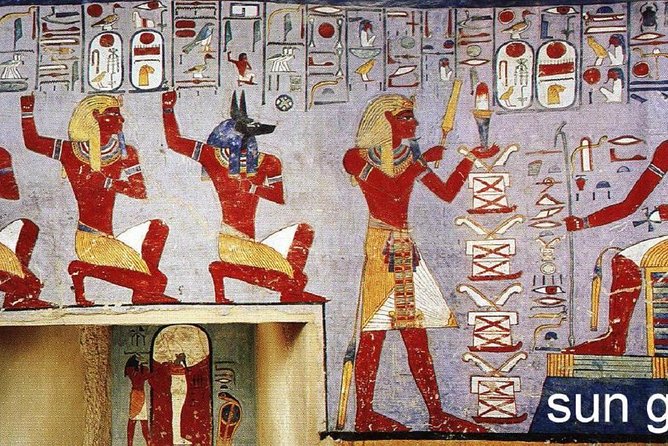
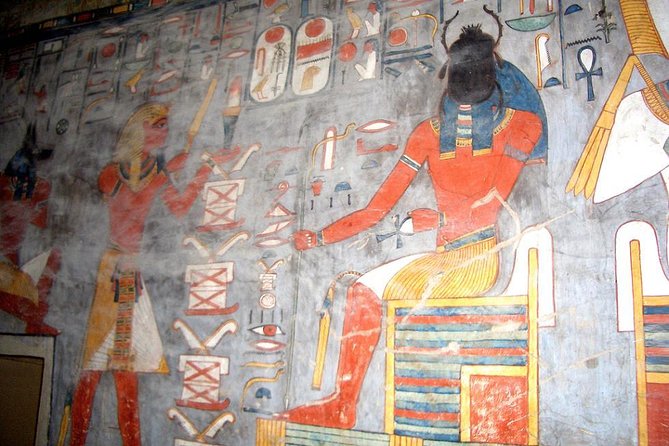
The Valley of the Kings is where you stop thinking about monuments and start thinking about people. Tombs in this valley were cut for rulers of Egypt’s New Kingdom—kings who believed the afterlife could be secured through ritual, art, and careful design.
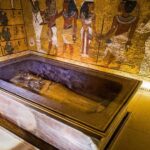
On this tour, you’ll visit tombs associated with famous names like Tutmosis I, Tutmosis III, Tut-Ankh-Amon, Ramsess VI, Mrenptah, and Amonhotep II. Even if you know only a few of those names, the Egyptologist guide helps you understand the differences in what each period emphasized and why the valley mattered.
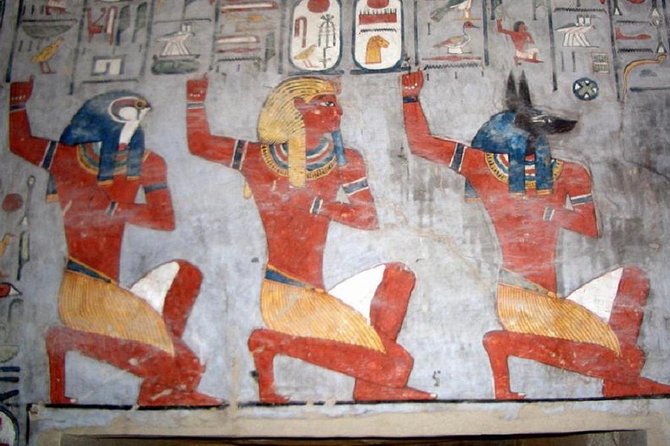
What you’ll notice as you move through is how architecture and decoration function like a message system. The walls aren’t just decoration. They’re part of a religious plan, a visual script meant to support the journey after death.
A practical note: tomb interiors can be dim and crowded depending on the day. Wear comfortable shoes and be ready for stairs and uneven ground.
Hatshepsut’s Temple and the Colossi of Memnon: West Bank Power in Stone
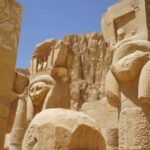
After the tombs, you head to the Temple of Queen Hatshepsut. This stop is one of the most interesting on the West Bank because it’s not only about what the Egyptians built—it’s about who built it and why.
Hatshepsut is described as a queen who ruled for about 20 years in the 18th Dynasty, roughly 1490–1469 B.C, and she’s noted as the only pharaonic woman who reigned ancient Egypt. Standing near the temple complex, you’ll get why her story matters: the temple isn’t shy about legitimacy. It’s big, formal, and built to project authority.
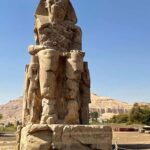
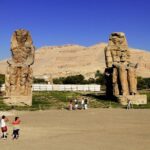
The tour also includes a pass by the Colossi of Memnon. These are the surviving remains of statues that people connect to ancient royal imagery and later cultural legends. Even from the outside, the scale hits you. They’re a reminder that ancient Luxor was once packed with monumental art, not just the pieces you see today.
If you care about ancient leadership and how power was communicated, this is the part where the day becomes more than sightseeing.
Karnak Temple: Where Luxor’s Religious World Gets Loud
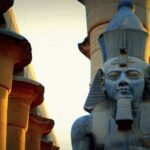
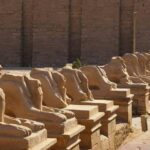
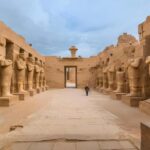
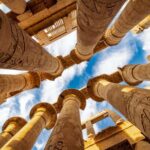
Karnak Temple is the place where Egypt’s temple system makes sense: it wasn’t one building. It was an evolving complex grown over time. That’s why it feels like a forest of stone—columns, walls, and sacred spaces built by different rulers across centuries.
You’ll spend time here as part of the East Bank portion of the day. The Egyptologist guide is the key to enjoying it, because Karnak can overwhelm you if you treat it like a simple photo stop. A guide helps you read the layout and understand why certain areas mattered for rituals.
What I’d aim for at Karnak is two things:
1) Slow down for the main axes and key rooms
2) Don’t rush the “why” parts—your guide’s explanations will make the walls feel less random
This is also a great spot for questions. Ask how the temple was used and what you’re looking at—your guide can usually connect the architecture to the belief system.


Luxor Temple: The Day’s Finale on the East Bank
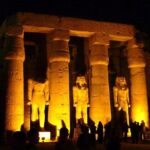
Luxor Temple is the calmer, more approachable bookend to Karnak. While Karnak is about sheer scale and layered history, Luxor Temple often feels more readable—like a temple you can start to understand as you walk.
You’ll also spend time at Luxor Temple as part of the East Bank schedule. If Karnak gave you the big picture, Luxor Temple is where you can absorb details without feeling totally swallowed by size.
This is a good time to focus on proportions and positioning. Don’t just take wide shots. Pause for close looks, especially around entrances and carved surfaces, then let your guide connect the design to ceremony and royal symbolism.
Lunch and Comfort: What’s Included, and What You Still Need
You get lunch at a good quality restaurant included in the tour price. That matters because Luxor days can otherwise turn into searching for food between stops. Here, you get a scheduled break.
Bottled water is included, which is another practical win for a long day. Still, I’d keep these basics in mind:
- Bring sun protection (hat or cap)
- Wear breathable layers; even early can warm up
- Keep a small amount of cash handy for any extra purchases at lunch or shop stops (not because the tour pushes it, just because Egypt is like that)
One more comfort tip: if you’re sensitive to heat or walking time, plan on using the guide’s pace. The tour is long enough that you’ll want to conserve energy for the moments that matter most to you.
Guide Quality and That Private Feel (Even with a Group Cap)
This tour is led by a private English-speaking Egyptologist guide. That’s the heart of why this works for serious history fans. An Egyptologist doesn’t just list facts; they explain meaning.
In the tour feedback you shared, several guide names come up in connection with Luxor tours—Mohammad, Ahmed, Ali (as a driver mentioned alongside Ahmed), Naeem, Sarah, Fathy, Eid, Omar, and Hazem. The praise patterns are consistent: guides are described as patient, good at answering questions, and strong at keeping the day moving well.
One detail you should take seriously: the experience lists a maximum of 35 travelers. That means the day may be “private guide” style with a small group, not necessarily a true one-family-only setup. If you want guaranteed one-on-one time, ask when you book how they handle group size in your specific departure.
Also, some guides are credited with helping visitors move faster through lines. I can’t promise that every guide will be able to do that, but it’s worth knowing that certain guides are recognized for efficient routing.
Price and Value: What $90 Buys You (and What to Confirm)
At $90 per person, this tour is priced for value if you want a full Luxor overview without self-driving or hiring separate guides.
Here’s what that price includes:
- Hotel pickup and drop-off
- Private air-conditioned vehicle transfers
- Private English-speaking Egyptologist guide
- Lunch at a local restaurant
- Bottled water during the tour
- Service charges and taxes
What’s not included:
- Tipping
- Any extras not mentioned
- Entrance fees
And here’s the catch: the tour summary says Admission Ticket Included, while the “not included” list says entrance fees are not included. That contradiction is exactly the kind of thing you should clear up before the day starts.
My practical advice: message the operator a day or two before and ask, in plain terms, what you will be paying at each site. If the answer is straightforward, you’re good. If it’s fuzzy, you’ll save yourself stress on a long day.
When you look at the full package—guide, transport, lunch—$90 makes sense for most visitors who don’t want to stitch together logistics on their own.
Who This Tour Fits Best (And Who Might Want Something Else)
This tour is a great fit if:
- You want a single-day overview of both banks
- You like having context while you walk (not just reading signs)
- You value hotel pickup and a scheduled lunch
- You’re comfortable with a long day of walking
You might consider another option if:
- You hate heat and want a slower pace
- You’re hoping for a very detailed deep study of fewer sites
- You want guaranteed one-on-one guide time, since group size is capped at 35
If you’re a history buff, the combination of Valley of the Kings and Hatshepsut gives you both burial and royal messaging. If you’re more of a “temples and atmosphere” person, Karnak and Luxor Temple will likely do the heavy lifting for you.
Should You Book This Luxor East and West Bank Day Tour?
Yes, I’d book it if your goal is a structured, efficient day that covers the most important Luxor landmarks without you dealing with transport headaches.
But do two smart things first:
1) Confirm how entrance fees are handled, because the info provided has a mismatch between ticket wording and the “not included” list.
2) Ask how group size works for your departure, given the 35 traveler cap.
Once those are clear, this is a strong way to get oriented fast in Luxor. The West Bank gives you the human story behind the monuments, and the East Bank brings it back to religion, power, and how the ancient city wanted to be remembered.
FAQ
How much does the Luxor East and West Bank tour cost?
The price is $90.00 per person.
How long is the tour?
It runs about 8 to 10 hours.
Does the tour include hotel pickup and drop-off?
Yes. The tour includes pickup services from your hotel in Luxor and return drop-off.
Which sites are included in this day tour?
You visit the Valley of the Kings and the Temple of Queen Hatshepsut on the West Bank, with a pass by the Colossi of Memnon, and you also spend time at Karnak and Luxor Temples on the East Bank.
Is lunch included?
Yes. Lunch at a local restaurant is included.
Are entrance fees included?
Entrance fees are listed as not included, so you should plan for site entry costs. The tour summary mentions admission tickets, so it’s worth confirming what you’ll pay for on the day.
What language is the guide?
The guide is an English-speaking Egyptologist.
Is bottled water provided?
Yes. Bottled water is included during the tour.
Can I cancel for a full refund?
Yes. You can cancel up to 24 hours in advance for a full refund. Canceling less than 24 hours before the start time isn’t refundable.