REVIEW · LUXOR
Adventure day Tour to the East Bank
Book on Viator →Operated by Ra Egypt Tour Guide · Bookable on Viator
This is one of those Luxor days where your photos start working. You’ll see the Karnak complex, the Luxor Temple, and the Luxor Museum with an Egyptologist guide who helps you make sense of what you’re looking at. You’ll love the smooth pickup-and-car setup and the way Ra (also known as Ragab) guides your attention toward the stories behind the stones; the main trade-off is that temple and museum entrance fees are not included, so you’ll want to budget for tickets on top of the tour price.
If you’re trying to plan one great East Bank outing without stress, this format makes it easy: you cover major landmarks in one block of time, and your guide keeps the day moving while still leaving space to stop, look up, and ask questions. One possible drawback: the total day runs about 5 to 7 hours, and you’ll be walking and standing in heat for parts of it, so plan for comfortable shoes and sun protection.
In This Review
- Key highlights worth putting on your Luxor calendar
- What makes this East Bank day work so well
- Meeting Ra and the easy transport setup
- Karnak Temple Complex: your first, best big moment
- Karnak tip that saves your photos
- Luxor Temple: the layered story you can walk through
- Luxor Museum: why the museum stop makes the day feel complete
- What I think you’ll like most here
- How the guide changes the experience (and your photo results)
- Price and value: is $32.52 per person a good deal?
- Who this tour is best for (and who might want something else)
- FAQ
- FAQ
- Are entrance fees included for Karnak and Luxor Temple?
- Is Luxor Museum admission included?
- Does the tour include pickup from my hotel?
- How long is the East Bank adventure day tour?
- Is this a private tour or a shared group?
- What’s included in the price besides the guide?
- What should I plan for if I have dietary needs during the day?
- Should you book Ra’s East Bank day tour?
Key highlights worth putting on your Luxor calendar
- Karnak’s big-history timeline, from Senusret I onward through later periods you can actually see in the layout
- Luxor Temple details that explain the layers, including the Abu Al-Haggag mosque built on older ruins
- Luxor Museum in-between the temples, with objects spanning pharaonic, Christian, and Islamic periods
- Ra’s photo-minded guidance, including where to stand for clearer angles and better context
- Private vehicle with a chauffeur, plus pickup, so you’re not juggling taxis mid-day
What makes this East Bank day work so well
Luxor on the East Bank can feel overwhelming fast. The problem isn’t just the scale of the temples. It’s that your brain needs a framework: who built what, why it matters, and what you’re supposed to notice first.
That’s where this tour earns its keep. You’re not just being dropped at gates. You’re guided through a sequence that makes each stop feel connected: a massive temple complex first, then a more compact but layered temple, and then a museum to anchor what you saw with artifacts and real context.
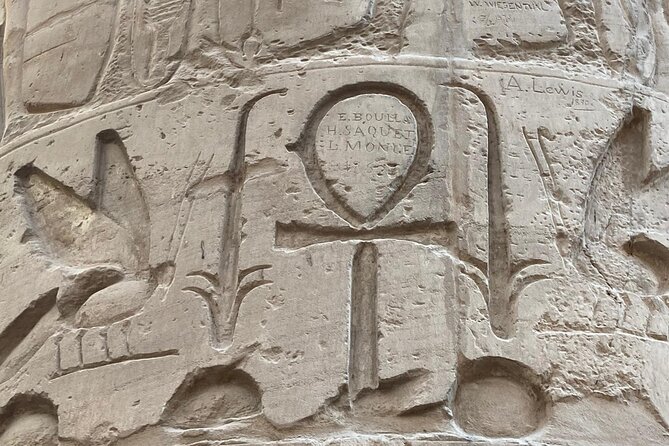
Ra also brings a practical style. In the past, he’s helped groups with questions on hieroglyphs basics and explained how reliefs and sculptures link to daily life and religious meaning. Even if you don’t remember every detail later, you’ll walk out with the sense that you finally understood what you were seeing.
You can also read our reviews of more tours and experiences in Luxor.
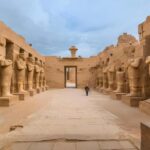

Meeting Ra and the easy transport setup
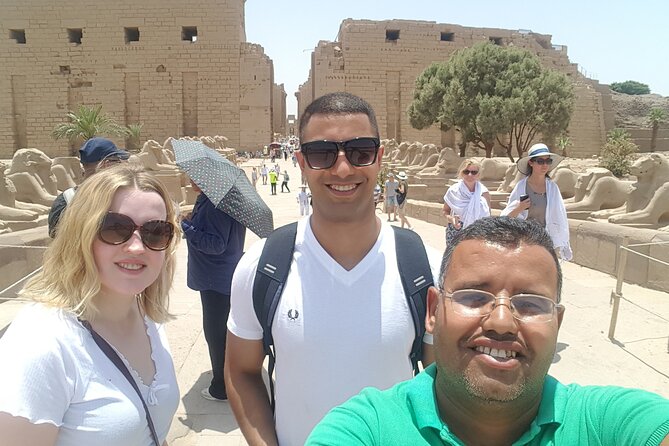
The experience is built around pickup offered and an air-conditioned private vehicle with chauffeur. For Luxor, that matters because heat and wait time can chew up your day. Instead of negotiating rides or timing your next move, you get transported between key stops and you stay focused on the sights.
It’s also a private tour/activity, meaning only your group participates. That helps a lot if you want to pause for photos, slow down for questions, or keep your pace. Bottled mineral water is included, which is a small thing that can save you from the mid-tour scramble.
One more inclusion that’s easy to overlook: tourism police permission. It’s the kind of behind-the-scenes support that can make your visit feel more straightforward.
Karnak Temple Complex: your first, best big moment
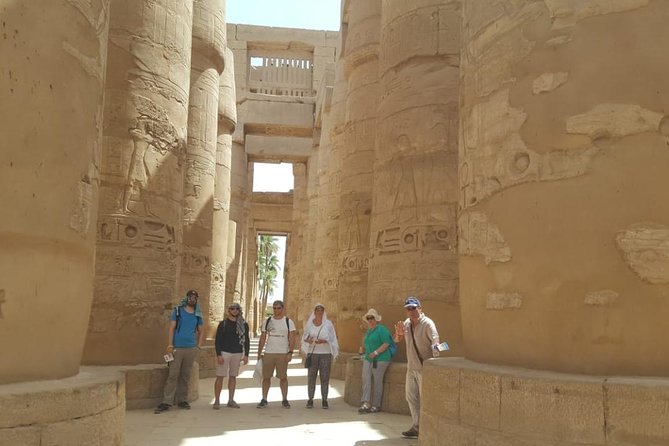
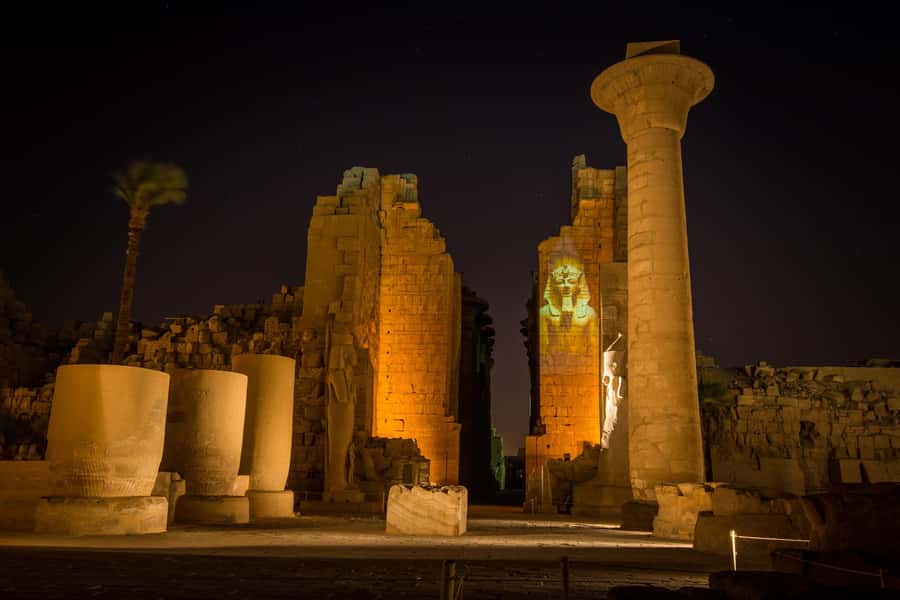
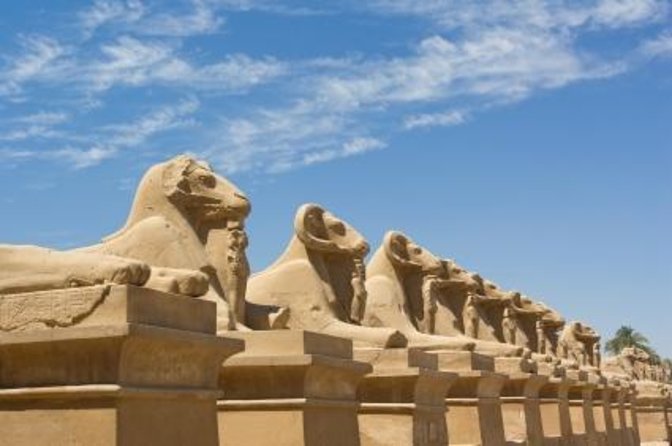
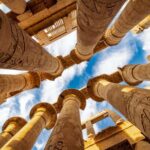
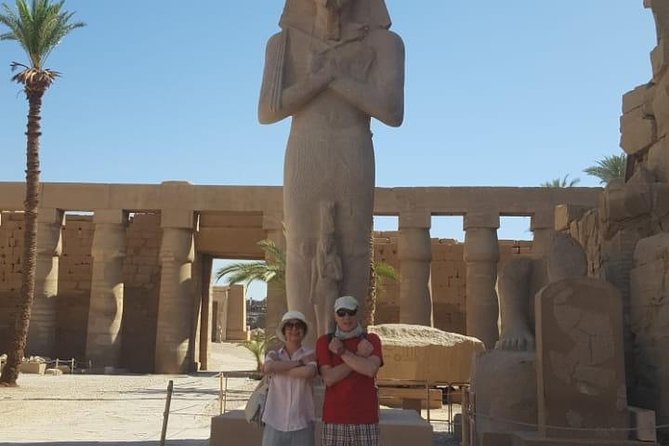
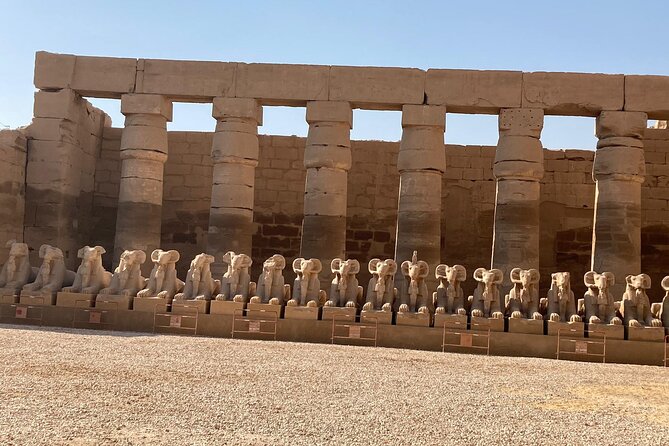
Karnak is not one temple. It’s a sprawling complex—decayed temples, chapels, pylons, and other buildings—like an open-air museum that keeps expanding in every direction. If you only visit one place on the East Bank, Karnak is the place that makes everything else click.
Here’s what makes this stop especially useful with a guide:
- Time period context: work at the complex began during the reign of Senusret I in Egypt’s Middle Kingdom and continued into later eras, including the Ptolemaic Period. That means you’re looking at layers, not a single snapshot.
- Religious focus: Karnak was tied to worship of the Theban triad—Amon, his consort Mut, and their son Khunso. When you understand that, carvings and temple roles stop looking random and start looking intentional.
- A clear “first stop” advantage: starting here helps you calibrate your eye. Karnak teaches you how to read the scale and symbolism, so Luxor Temple won’t feel like a separate planet.
Plan for about 2 hours here. Entrance tickets are not included, so you’ll want to handle that either by paying on-site or arranging ticket timing with the operator at booking.
Karnak tip that saves your photos
Ask Ra where to stand before you start shooting. He’s known for guiding photo angles, which is huge in a place where the best view is often not the most obvious one. With temples, small position changes can mean the difference between a cluttered frame and a clean composition.
Luxor Temple: the layered story you can walk through
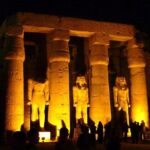
If Karnak is the massive canvas, Luxor Temple is the readable scene. It’s believed to be connected to ancient festivals—scenes on the walls represent celebrations of ipt rset, and walking through the temple makes those carved moments feel more alive.
What you’ll appreciate with a guide is how Luxor Temple is literally built in layers:
- Amenhotep III built the inner part, while Ramses II built the outer part. That’s a big clue for why the feel of different sections can vary.
- After entering, you’ll encounter a mosque called Abu Al-Haggag built on the ruins of older church structures that were inside the temple.
- In the rear area, there are chapels connected to Thutmosis III and even Alexander the Great.
This is the kind of place where the guide’s job is almost cultural translation. You’re not just seeing one religion’s architecture. You’re seeing how later eras reused, reinterpreted, and built on earlier sacred spaces.
One consideration: this is still an active archaeological site, so expect some walking, uneven areas in places, and waiting at checkpoints. Give yourself a little buffer inside the 5 to 7 hour day so you don’t feel rushed.

Luxor Museum: why the museum stop makes the day feel complete
Temples are awe-inspiring, but your brain can feel like it’s running on visual overload. The Luxor Museum is the reset button that turns memories into understanding.
The museum is described as having ancient Egyptian statues, tools, weapons, and other objects from multiple periods: pharaonic, Christian, and Islamic. That matters because it shows Luxor wasn’t only one civilization. It was a long sequence of eras layered on the same geography.
You’ll get about 1 hour here. Entrance tickets are not included, so budget for that as part of your total cost.
What I think you’ll like most here
If you like making connections between what you saw in stone and what existed as everyday objects—tools, weapon types, crafted items—this museum stop helps you connect the dots. You don’t have to read every label to benefit. Seeing material culture after the temples makes your photos feel more meaningful later.
How the guide changes the experience (and your photo results)
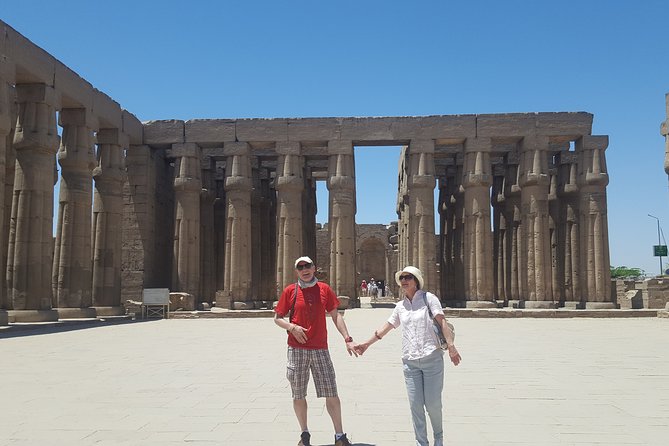
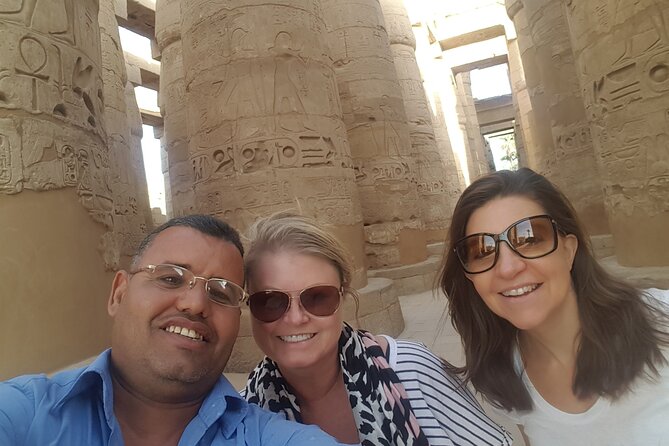
The biggest pattern in what people praise is the guide’s ability to explain. Ra’s style is practical and conversational: he helps with historical context, clarifies meanings of sculptures, and answers questions on the spot.
This matters because Luxor can easily become a checklist day—big temple, big photos, move on. With Ra, the day is more about comprehension:
- He’s guided people to understand the meaning of sculptures instead of just pointing at them.
- He’s helped with everyday-life context, which makes ancient scenes feel less abstract.
- He’s also been associated with tips that lead to better images, especially timing and angles inside temple spaces.
If you’re traveling with kids or friends who get bored by long lectures, this kind of guided explanation can actually keep things engaging. You’ll spend more time looking with purpose, not just staring.
Price and value: is $32.52 per person a good deal?
At $32.52 per person, this tour is positioned as an affordable way to hit major East Bank highlights with real guidance. The included value is solid:
- Egyptologist tour guide
- Air-conditioned private vehicle with chauffeur
- Bottled mineral water
- Tourism police permission
What’s not included is the part that can surprise people: entrance fees (tickets) and meals. So the real comparison is not just the tour price—it’s the tour price plus expected tickets.
In plain terms, you’re paying for the guide and the logistics. For many travelers, that’s worth it in Luxor because the temples are big, the site layout can be confusing without local context, and you’ll lose time if you’re figuring things out as you go.
One more note: it’s often booked about 10 days in advance on average. That suggests it runs regularly and is a common choice for people building a short Luxor itinerary.
Who this tour is best for (and who might want something else)
This is a strong match for you if you want a single, focused East Bank day with major stops: Karnak, Luxor Temple, and the Luxor Museum—without the headache of piecing transport and timing together.
It also fits travelers who:
- Want a private setup rather than a large group crowd dynamic
- Care about explanations and not just photos
- Prefer air-conditioned breaks during travel between sites
- Can manage moderate walking and standing
If you’re someone who hates museums, or you want only the temple experience with no extra stops, you might feel the day is packed. Also, since ticket entry fees are not included, if you prefer one all-in price with zero add-ons, this might feel annoying at checkout.
FAQ
FAQ
Are entrance fees included for Karnak and Luxor Temple?
No. Entrance tickets for the temple sites are not included, so you should plan to pay for admission separately.
Is Luxor Museum admission included?
No. The museum’s admission ticket is not included, so you’ll need to budget for that visit as well.
Does the tour include pickup from my hotel?
Yes. Pickup is offered, and you travel in an air-conditioned private vehicle with a chauffeur.
How long is the East Bank adventure day tour?
It runs about 5 to 7 hours (approx.).
Is this a private tour or a shared group?
It’s private. Only your group participates.
What’s included in the price besides the guide?
Included items are the Egyptologist tour guide, air-conditioned private vehicle with chauffeur, bottled mineral water, and tourism police permission.
What should I plan for if I have dietary needs during the day?
Meals or beverages during the tour are not included, so you’ll need to handle food separately.
Should you book Ra’s East Bank day tour?
If you want one efficient Luxor East Bank day that balances big temples with a museum stop to anchor what you see, I’d book it. The included guide, chauffeur-driven car, and water make it easier to enjoy the temples instead of managing logistics in the heat. Just don’t forget the ticket add-ons for Karnak, Luxor Temple, and the Luxor Museum—and wear shoes you can handle for several hours of walking and standing.