REVIEW · LUXOR
Shared Day Tour to Valley of the Kings &Hatshepsut Temple&Memnon
Book on Viator →Operated by Egypt Lovely Tours · Bookable on Viator
A day on Luxor’s West Bank has a pull. This shared tour is a smart way to see the big monuments without racing around, with pickup, an English-speaking Egyptologist, and a small group size of up to 15 people. I particularly like the good pacing—there’s enough time to actually look—and the Egyptologist guidance, which helps you connect tombs and temples to the people who built them. The one thing to consider is that time is tight, so if you want long, slow museum-style wandering inside multiple tombs, you may feel a bit rushed.
Here’s the core idea: you trade a full-day commitment for a focused 5 to 6 hour loop on the Nile’s West Bank, including the Valley of the Kings (with three tombs) and Hatshepsut’s Deir el-Bahari temple—then you wrap with the Colossi of Memnon, where two massive statues do most of the talking.
In This Review
- Key things to know before you go
- Why this West Bank route works in 5 to 6 hours
- Pickup, group size, and the “shared” part of the day
- Entering the Valley of the Kings: three tombs, smart focus
- Hatshepsut at Deir el-Bahari: why this temple feels so intentional
- Colossi of Memnon: a short stop with big scale
- Guide time: how to get the most from your Egyptologist
- Tickets and entry fees: the part you should double-check
- Value check: is $20 worth it for this route?
- Who should book this tour—and who might want something else
- Practical tips for an easier Luxor day on the West Bank
- Should you book this shared day tour?
- FAQ
- How long is the tour?
- What does the tour include?
- Which sites are visited?
- Are admission tickets included?
- How many tombs do we see in the Valley of the Kings?
- What’s the group size?
- What is the cancellation policy?
Key things to know before you go
- Small group (max 15 people) helps keep questions from getting swallowed.
- Three Valley of the Kings tombs focuses your time on the most memorable interiors.
- Hatshepsut at Deir el-Bahari is the standout if you like power, propaganda, and architecture.
- Colossi of Memnon is a short stop that still feels huge because the scale is unreal.
- Air-conditioned vehicle + bottled water makes the West Bank heat more manageable.
Why this West Bank route works in 5 to 6 hours
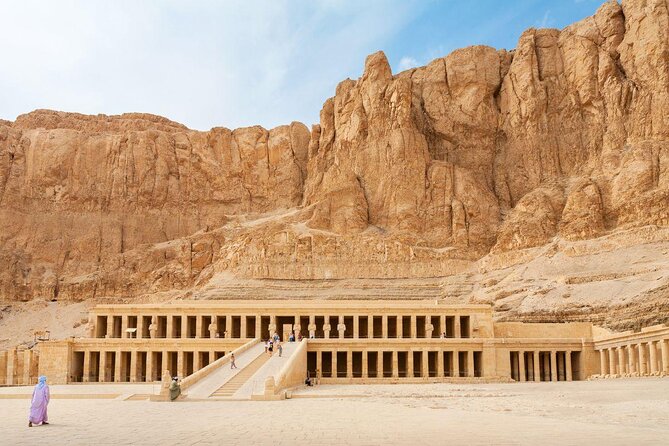
Luxor’s West Bank can be overwhelming fast. There are so many sights, and the logistics can eat up the day if you do it alone. This tour is built around a clean, high-impact route: Valley of the Kings first, then Hatshepsut at Deir el-Bahari, and finally the Colossi of Memnon.
What makes it work for real life is the balance between “see it” and “understand it.” The Valley of the Kings is impressive even from outside, but your experience improves a lot once you know what you’re looking at. That’s where the English-speaking Egyptologist guide earns their keep, turning stone and corridors into a story with names, dates, and purpose.
The Colossi stop is short—about 15 minutes—and that’s intentional. You get the visual hit without spending half your day on transportation or waiting. If you’re the kind of person who likes to end with a wow moment rather than a long checklist, this is a good fit.
You can also read our reviews of more tours and experiences in Luxor.

Pickup, group size, and the “shared” part of the day
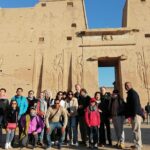
You’ll get pickup from your hotel in Luxor and be returned at the end. A Terre Des Pharaons representative handles pickup, and the rest of the day runs with transfers by air-conditioned vehicle plus bottled water during the tour.
The small-group cap matters. With a maximum of 15 people, you’re more likely to get real back-and-forth with the guide, and the bus/van rhythm is less chaotic than big-coach tours. You’re still sharing the day, so you might wait a little at each stop, but the schedule is built to keep that minimal.
One detail I like from the overall feedback: the timing feels respectful. The day is long enough to see everything planned, and you aren’t herded out the second you arrive. Add in a polite, patient driver, and the tour doesn’t feel like a timed sprint.
Entering the Valley of the Kings: three tombs, smart focus
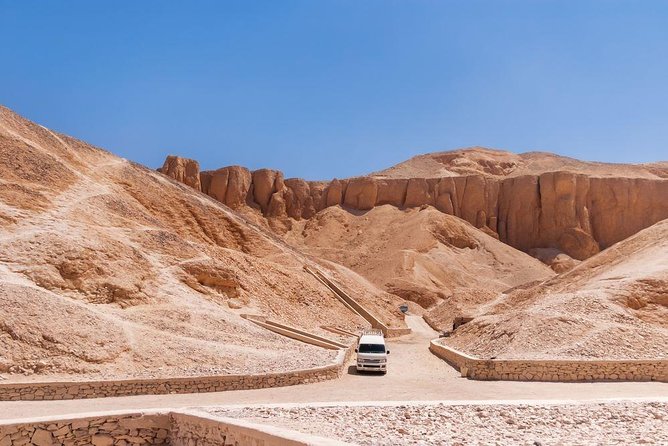
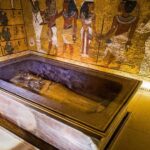
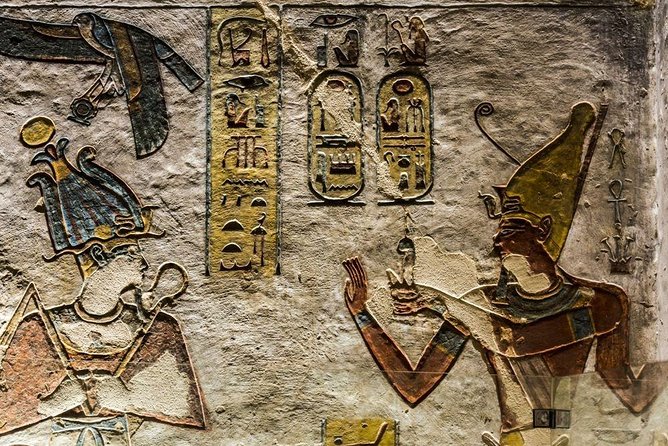
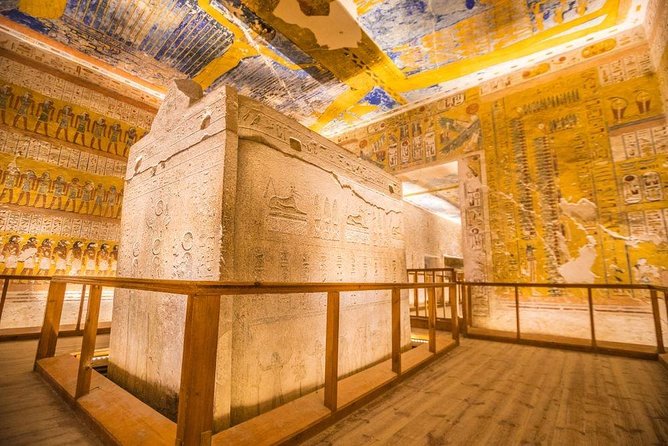
The Valley of the Kings is where Luxor’s funerary ambition becomes very real. This is the burial landscape for kings, cut into cliffs and shaped to protect what mattered most. It’s not just “pretty ruins.” It’s architecture designed for specific beliefs and specific futures.
On this tour, you visit three tombs. You also specifically skip the Tomb of King Tutankhamun, which can be a blessing in disguise depending on crowds and how much time you want for other tombs. That skip also helps the day stay within the 5 to 6 hour window without turning it into a queue marathon.
Practical way to get more out of those tombs:
- Go in with one question in mind: who is the tomb for, and why does it look the way it does?
- Watch for repeated themes. Egypt’s funerary art is full of pattern, but the details differ by period and person.
- Give the guide a chance to point out what’s actually worth your attention. With three tombs, you can’t memorize everything, but you can learn how to see.
Possible drawback: you’ll only see three tombs. If you’re a serious tomb-hunter who wants to compare lots of interiors in one day, this won’t satisfy that urge. But if you want a curated highlight route with explanations, it’s a good match.
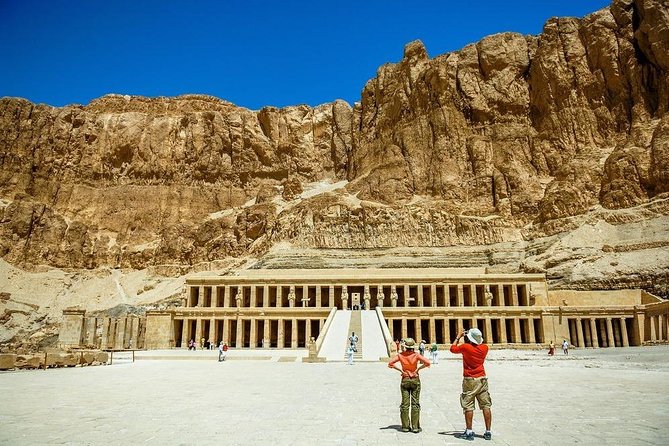
Hatshepsut at Deir el-Bahari: why this temple feels so intentional
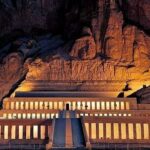
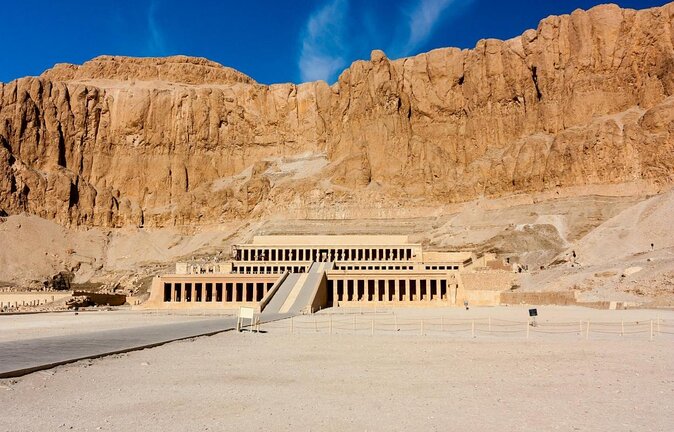
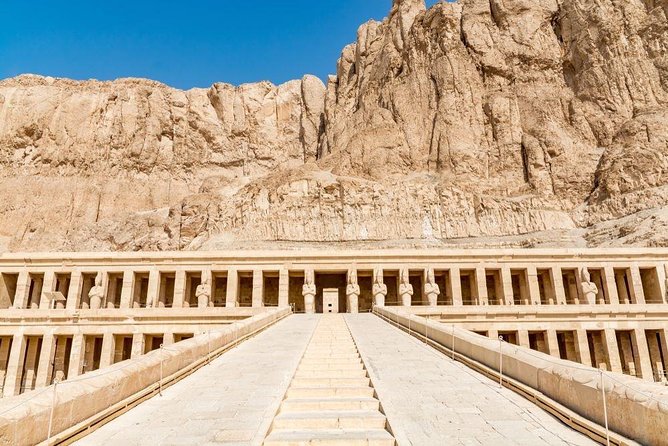
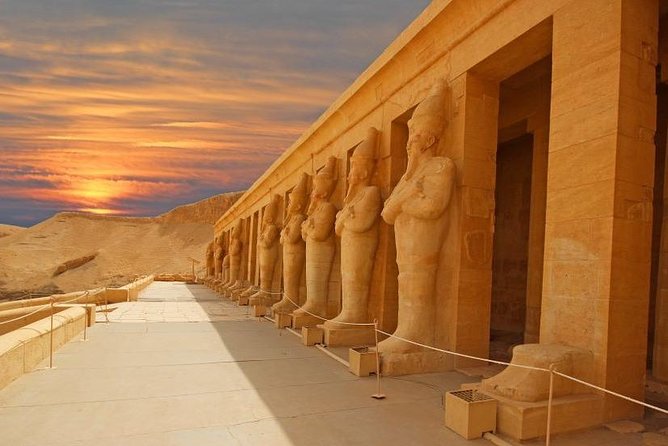
After the Valley of the Kings, the day shifts from hidden tomb corridors to an open-air statement. Deir el-Bahari is where Queen Hatshepsut’s power shows up in architecture.
Hatshepsut ruled Egypt for about 20 years in the 18th Dynasty, roughly 1490 to 1469 B.C. She was the daughter of Thutmosis I, and she’s remembered as the only pharaonic woman who reigned ancient Egypt. That’s the kind of fact that matters because it changes how you look at the temple: you’re not just admiring design; you’re reading political ambition in stone.
The tour includes the memorial temple area at the Temple of Hatshepsut at Deir el-Bahari, with around 1 hour 30 minutes allocated on-site. That’s enough time to appreciate the overall layout and not only the most photographed angles. You’ll also have the guide to connect what you see to why it was built there and why it was shaped the way it was.
What you’ll probably feel here is the contrast. The Valley of the Kings is about secrecy and protection. Deir el-Bahari is about presence—about making a claim that lasts beyond a lifetime. If you like big statements, strong symbolism, and architecture that carries meaning, this stop is the emotional center of the day.
Colossi of Memnon: a short stop with big scale
Then comes a quick breather: the Colossi of Memnon. This is essentially a pair of enormous statues, and even with only about 15 minutes allotted, the scale can still hit hard.
These are two giant statues of Amenhotep III, father of Akhenaten. In Roman times, the statues were given the name “Memnon.” The name carries through history, even though the figures themselves belong to an earlier Egyptian world.
The key advantage here is efficiency. You don’t lose the day to logistics or waiting. You get the moment, you take photos if that’s your thing, and you move on—without feeling like you skipped half your time.


Guide time: how to get the most from your Egyptologist
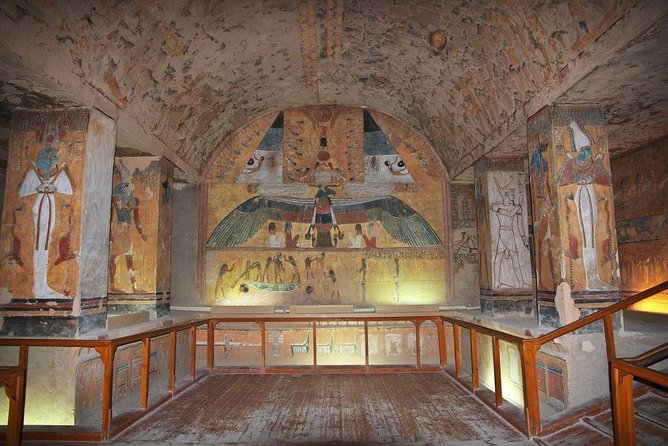
This tour includes an English-speaking Egyptologist guide, and that matters more than people expect. In Egypt, a lot of signage is limited and the sites can feel like they’re all “just stone” unless you’re given a map in your head.
Use the guide time to:
- Ask what each tomb/temple was meant to do (not only what it looks like).
- Listen for names and relationships (Hatshepsut to Thutmosis I; Amenhotep III to Akhenaten). Once you hear those connections, the day makes more sense.
- Get quick practical cues before you enter tombs—like where to focus your attention first.
If you’re traveling with limited time, this is one of the best ways to turn “I visited” into “I understood.” The guide doesn’t just narrate; they help you notice.
Tickets and entry fees: the part you should double-check
Here’s the one practical caution: the information provided for what’s included vs. what’s not included doesn’t perfectly line up.
- The itinerary notes admission tickets included for the Valley of the Kings (2 hours on-site allocation) and for Hatshepsut’s temple area (1 hour 30 minutes allocation).
- But the overall “Not Included” list says entry fees are not included.
Because of that inconsistency, I recommend you confirm at booking what you’ll pay on the spot (if anything). Ask whether site entry is covered for each stop, or if you should budget extra for tombs and temple admission.
What I can say confidently is that the tour includes transfers by air-conditioned vehicle, pickup and return, bottled water, and the Egyptologist guide—so you’re not missing the major pieces of the experience even if entry fees need clarification.
Value check: is $20 worth it for this route?
At $20 per person, the value is mainly in two places: time and interpretation.
Time: You’re compressing multiple major West Bank sights into a half-day format. That’s useful if you have only one day in Luxor or you don’t want to burn your entire energy budget on queues and transport.
Interpretation: A guide with Egyptology expertise turns tombs and temples into a coherent storyline. Without that, Valley of the Kings can feel like one hallway after another. With it, you get more meaning per minute.
Also, the tour is shared with a maximum of 15 people. That’s not a small “private tour” vibe, but it’s still intimate enough to feel like your day isn’t completely controlled by a large group schedule.
One more value angle: the Colossi of Memnon stop is free admission per the provided details, which can make the day feel more “balanced” against paid sites.
Who should book this tour—and who might want something else
This tour is a good fit if you:
- Want the West Bank highlights without a full-day commitment.
- Like having a guide explain what you see at tombs and temples.
- Prefer a schedule that gives you enough time to look, not just to pass by.
It may not be ideal if you:
- Want to see a long list of tombs beyond three in one go.
- Get frustrated by a shared format with fixed time slots at each site.
- Have a very strict focus on one specific tomb and want unlimited time inside it.
Practical tips for an easier Luxor day on the West Bank
A few small choices can make the day smoother:
- Wear comfortable shoes with grip. Tomb steps and uneven ground aren’t always friendly to slick soles.
- Bring sun protection. Even with an air-conditioned ride, the temple areas and open tomb entrances can be exposed.
- Keep your expectations realistic about interiors. Tomb spaces can be tight, and you’ll have more meaning if you focus on the guide’s points rather than trying to read everything word-for-word.
- Have your questions ready for the guide during transit. You’ll often get the best explanations when you have a few minutes before arriving at the next stop.
And based on the positive feedback about timing and driver behavior, it’s worth going with a calm pace yourself. If you treat it like a thoughtful sightseeing block rather than a checklist race, you’ll feel the benefit.
Should you book this shared day tour?
If you’re choosing between doing the West Bank solo (and figuring everything out on your own) versus a guided shared route, I’d lean toward booking this. The combination of pickup, air-conditioned transport, an English-speaking Egyptologist, and a tight highlight circuit makes it a solid “one day done right” option.
Book it especially if you want three Valley of the Kings tombs plus Hatshepsut at Deir el-Bahari, with a schedule that doesn’t feel like it’s rushing you out. The only real reason to skip is if you strongly need more time inside tombs or you want a deeper, pick-your-own-adventure style itinerary.
One last nudge: when you book, confirm how entry fees are handled for each site so there are no surprises.
FAQ
How long is the tour?
The tour runs about 5 to 6 hours.
What does the tour include?
It includes hotel pickup and return in Luxor, all transfers by air-conditioned vehicle, bottled water during the tour, and an English-speaking Egyptologist guide.
Which sites are visited?
You visit the Valley of the Kings (three tombs, excluding the Tomb of King Tutankhamun), the Temple of Hatshepsut at Deir el-Bahari, and the Colossi of Memnon.
Are admission tickets included?
The itinerary notes admission tickets included for the Valley of the Kings and the Hatshepsut temple. However, entry fees are listed as not included overall, so it’s smart to confirm what you’ll pay at booking.
How many tombs do we see in the Valley of the Kings?
You’ll visit three tombs, excluding the Tomb of King Tutankhamun.
What’s the group size?
This shared tour has a maximum of 15 people.
What is the cancellation policy?
You can cancel for a full refund up to 24 hours before the experience starts. If you cancel less than 24 hours in advance, the amount paid isn’t refunded. The experience may also be canceled due to poor weather, with a different date offered or a full refund.