REVIEW · GIZA
Half Day Giza Pyramids and Sphinx
Book on Viator →Operated by Lido Egypt Tours · Bookable on Viator
Giza hits different when someone shows you what to look for. On this half-day run through the plateau near the Great Pyramid and Sphinx, I like the hands-on guide style (often people highlight guides like Lido) and the fact that you get structured time at the best monuments, not just random wandering. You also have the option to add classic add-ons like camel rides or quad/ATV time, with a cafe stop along the way.
One thing to keep in mind: this is a fast-paced half-day. If you want to linger for long photo sessions and slow temple-stare time at every angle, you might feel slightly rushed.
In This Review
- Key highlights (what you’ll remember)
- The vibe: a tight half-day on the Giza Plateau
- Getting picked up, getting set: logistics that matter in Egypt
- The Great Pyramid of Cheops: where your attention should go
- Khafre and Menkaure viewpoints: seeing the plateau’s hierarchy
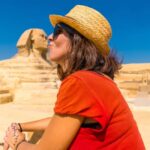
- The Sphinx: the guardian, the limestone, the scale
- Optional extras: camels, quad/ATV, and the cafe pause
- Your guide matters more than you think
- Price and value: what $12.50 really buys you
- Who this tour is for (and who should choose something else)
- Should you book it?
- FAQ
- How long is the Giza Pyramids and Sphinx half-day tour?
- Does the tour include hotel pickup?
- What’s included in the price?
- Are entry tickets included?
- Can I ride a camel or do a quad bike (ATV) during the tour?
- Is lunch included?
- Is it a private tour?
- What’s the cancellation window?
Key highlights (what you’ll remember)
- A guide-led route across the Giza Plateau so you understand what you’re seeing
- Great Pyramid time (about 45 minutes) focused on the main structure and key details
- Sphinx viewing with real measurements and context on why it matters
- Optional extras like camels and quad/ATV rides, plus a cafe break
- Photo-friendly hosting with helpful, attentive guidance from your guide
The vibe: a tight half-day on the Giza Plateau
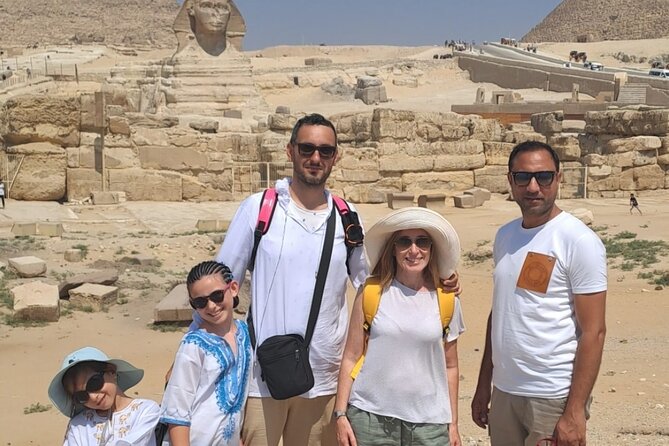
Let’s be honest: Giza can overwhelm you. The scale is unreal, the crowds can feel loud, and it’s easy to end up doing the tourist shuffle—look, snap, move, repeat. What I like about this kind of half-day tour is that it gives you structure. You’re not stuck trying to decode the site on your own. A guide keeps you moving at a sensible pace and helps you connect the sights to the people and building ideas behind them.
This also tends to work well for first-timers. You’ll get the headline monuments—Great Pyramid of Khufu (Cheops) and the Sphinx—plus the pyramid zone linked to Khafre and Menkaure. With only about five hours total, the tour is built for impact, not for an all-day “every stone” quest.
You can also read our reviews of more tours and experiences in Giza.

Getting picked up, getting set: logistics that matter in Egypt
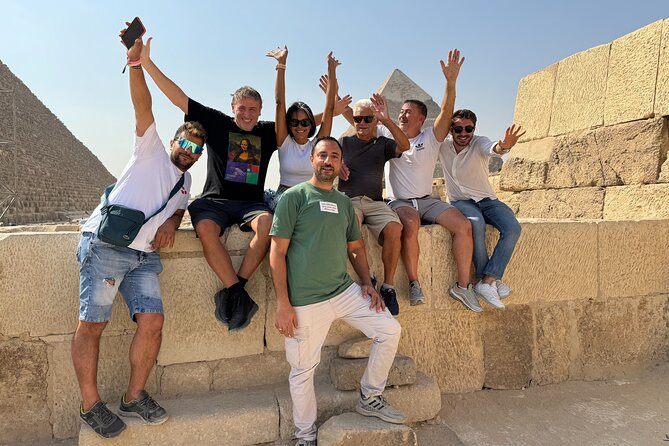
The tour includes transportation and bottled water, and pickup is offered. That matters because Giza isn’t a place where you want to burn time figuring out local logistics in the heat. You’ll also usually want your start time to be smooth; you can’t do much about sun and crowds once you’re on-site, so getting there efficiently helps.
You’ll also get a mobile ticket. In practical terms, this is one less thing to worry about on arrival. And because the experience is listed as private in the sense that it’s only your group participating, you’re less likely to feel lost in a big, mixed crowd.
That said, the tour price is low compared with many “half-day Egypt” options, so I’d treat it as a value-focused itinerary. That means you should read the confirmation carefully about what entry fees are covered for your exact route. Some parts note admission ticket details separately, and the information provided says the entry total is meant to cover the five attractions—so confirm in writing what you personally will pay at checkout.
The Great Pyramid of Cheops: where your attention should go
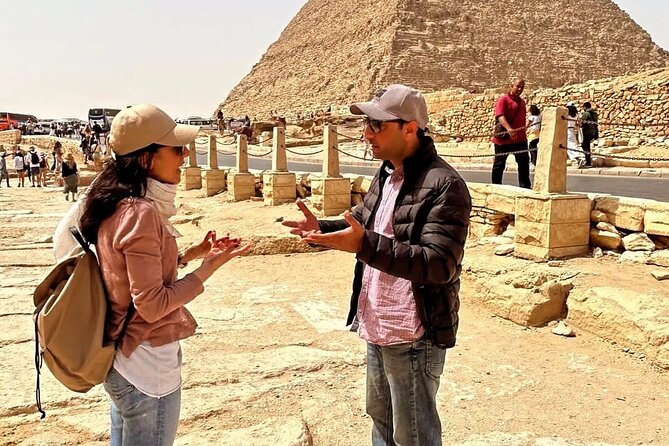
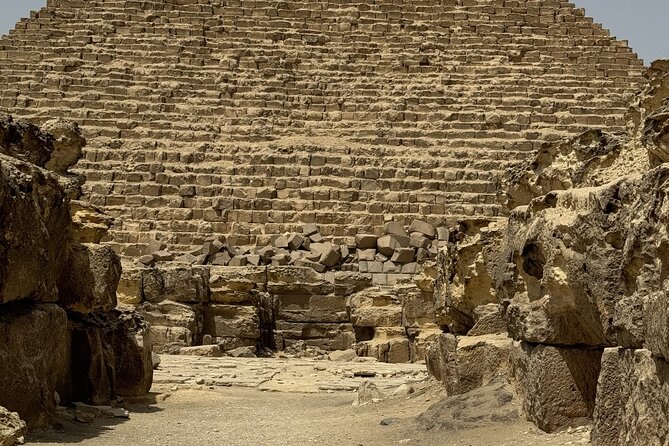
The Great Pyramid is the main event. You’re typically given about 45 minutes there, and the time is best used if you keep your eyes on three things.
First: the geometry and scale. The description you’ll hear includes details like the pyramid’s sharp angle of about 51 degrees and the height figure of around 149 meters. Even if you don’t measure anything, these facts help you stop seeing it as just a giant pile of stone. It becomes a designed machine.
Second: the build challenge. This isn’t just a fun fact—understanding that the builders had no modern cranes reframes how impressive this is. When your guide explains how enormous stone blocks were moved long before machines, you start to realize you’re looking at an engineering feat, not just a monument.
Third: the story of Khufu (Cheops). The Arabic name you’ll hear and its English form can be confusing at first, but a good guide ties it together. Your stop is explicitly connected to Khufu and includes the idea that this was commanded as an immortal tomb—so the pyramid becomes not only an object, but a statement of power and belief.
A small consideration: forty-five minutes is enough for orientation and photos, but it’s not enough for museum-level reading. If you love to study every inscription and want a lot of quiet, you might prefer a longer pyramid-focused tour. If you want the big wow factor with clear guidance, this timing makes sense.
Khafre and Menkaure viewpoints: seeing the plateau’s hierarchy
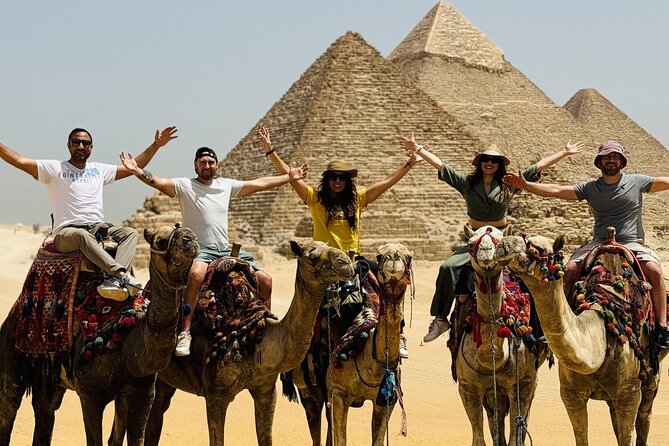
After Khufu, you’ll move through the pyramid zone tied to Khafre (Chefren) and Menkaure (Micrenus/Mankawraa). The site can feel like three big pyramids of the same type, but the guide context helps you notice the differences in how they’re presented and why those rulers matter.
One of the neat details included in your explanations is the way the ancient names connect to the sun god Raa. You’ll hear the repeated ending in Arabic-style transliterations—Khafraa and Mankawraa—linked to Raa. Even if you don’t memorize the spellings, it helps you understand why names and meanings show up repeatedly in Egyptian culture.
What I love about this part of the route is that it turns the plateau into a map. You stop looking at isolated monuments and start seeing a planned landscape: who had the influence, how the monuments relate, and how the builders’ beliefs shaped what they built where.
A practical note: this is still Giza. You’ll likely do some walking and be outside for much of it. If you’re sensitive to heat, plan to keep water handy even though bottled water is included. Sunscreen and a hat are not optional accessories here—they’re survival tools.
The Sphinx: the guardian, the limestone, the scale
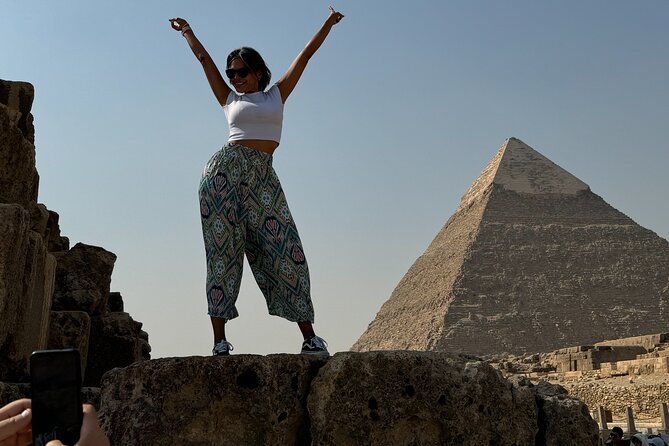
Then comes the Sphinx. It’s one of those sights where your brain wants to say yes to everything at once. That’s why I’m glad the guide gives you specifics, because the facts keep you from just staring blankly.
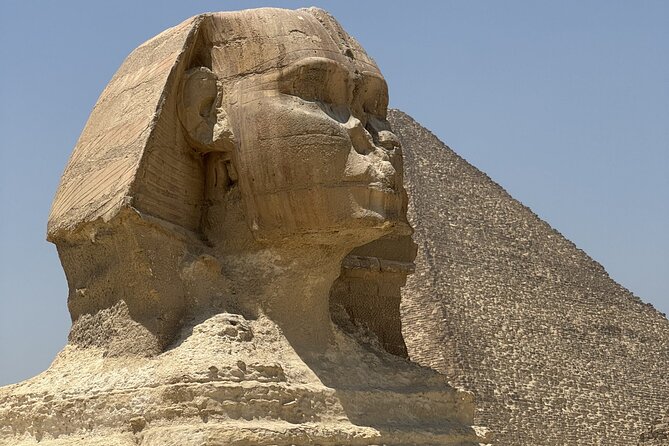
You’ll hear that the Sphinx is a mythical creature with the body of a lion and the head of a human, carved from limestone. It’s described as the plateau’s guardian and called the oldest known huge sculpture. Even more helpful are the measurements:
- about 73.5 meters long
- roughly 15 meters for the length of its front feet
- about 19.5 meters wide
- around 20 meters high to the top of the head
And you’ll get the traditional time anchor tied to the reign of Khafre (2558–2532 BC), who is also associated here with building the middle pyramid in Giza.
How to make this stop better: don’t only photograph the face. Ask yourself what angle shows the creature as a whole body, and what angle emphasizes its power as a guardian figure. If you follow your guide’s suggested viewing points, you’ll see how the Sphinx dominates even when it’s not the largest structure around.

Optional extras: camels, quad/ATV, and the cafe pause
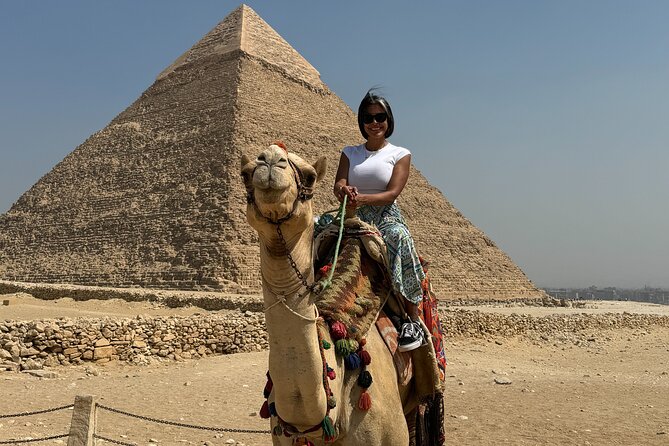
This experience is built around flexibility. You can ride camels and you can also have time for quad bike (ATV) style fun. It’s the kind of add-on that turns a “see the sights” trip into something you can brag about later with a smile.
Just keep your expectations realistic. Quad/ATV and camel rides are fun, but they can shift how long you spend purely sightseeing. If you’re the type who only wants the monument photos, you can skip the activities and keep your time focused on the pyramids and Sphinx.
You’ll also stop at a cafe. That’s not just a break from walking—it’s a chance to cool down, reset, and take in the plateau from a different rhythm. In the wider experience set, there’s also mention of shisha being part of the cafe vibe during pyramid viewing. If that sounds like your thing, it’s a reasonable moment to enjoy it while you watch the light change.
Your guide matters more than you think
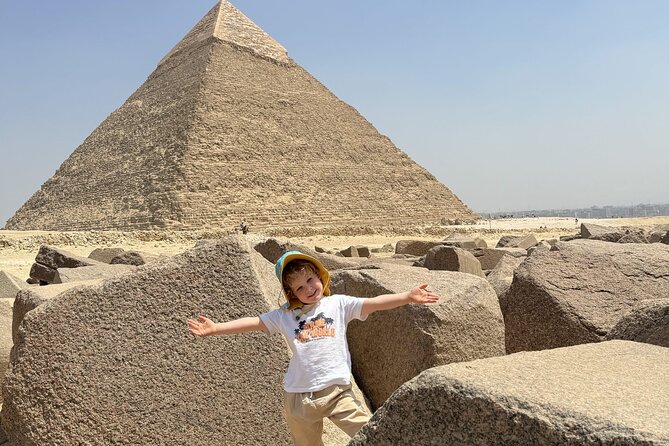
The reviews and tour notes consistently point toward one big theme: the guide experience makes the day. People describe guides as friendly, accommodating, and great at explaining history clearly, with a knack for making you feel comfortable. There’s also repeated praise for guides helping with photos—so it’s not just a history lecture. It’s practical on-the-ground support.
In particular, Lido shows up again and again as a guide name you might encounter, with comments about organization and photo help. Another name that comes up is Walid, especially in the context of Cairo and Giza planning. Since I can’t promise who you personally will meet, the takeaway for your planning is this: choose the tour because you want that human layer. It’s the difference between seeing pyramids and understanding pyramids.
Also, think about language. Some guides are reported to handle languages like Spanish and Italian and English. If you have a preference, ask when you book. Even a basic shared language helps you get more out of the stop-by-stop explanations.
Price and value: what $12.50 really buys you
At $12.50 per person, this is priced in the “value tour” category. That price point usually means you’re paying for the essentials: transportation, bottled water, and a tour guide, plus the structure of a half-day route.
The biggest question for value is what’s included in the entry fees. The information here says ticket pricing is estimated and that entry ticket costs cover the total for all five attractions. But one specific note says admission ticket isn’t included at the Great Pyramid stop. So treat this as a “confirm in the confirmation message” situation, not as a guess.
If the entry fees are effectively covered for the attractions on your day, then the value is excellent because you’re getting a guided route for a very low cost. If entry isn’t covered on your exact booking, your total cost will rise. Either way, the biggest value driver is still the guide’s ability to focus your time. On a tight schedule, that matters more than small differences in itinerary.
Who this tour is for (and who should choose something else)
I’d recommend this style of half-day Giza tour if you:
- are short on time in Cairo and want the pyramid highlights
- like guided explanations that give meaning to what you’re seeing
- want the option to add camel or quad/ATV time without booking separate tours
- prefer a structured visit instead of DIY navigating in a big, busy site
I’d choose a different option if you:
- want long, slow exploration at each pyramid with lots of quiet space
- plan to spend a lot of time buying souvenirs inside the complex
- get overwhelmed by heat and would rather do a longer route with more built-in breaks
This half-day format is the sweet spot for “I need to see Giza and I want to understand it.”
Should you book it?
If you want a focused Giza overview—Great Pyramid, Khafre and Menkaure pyramid zone stops, and the Sphinx, handled with a guide and efficient transport—then yes, it’s a solid booking. The combination of low cost, guide support, and the chance to add camels or quad/ATV makes it feel like more than just a basic sightseeing drive.
My only caution is practical: confirm what’s covered for entry fees for your specific booking, and pack for the outdoors. Once you do that, you’re set up for a day where you get real context with your photos—not just a checklist.
FAQ
How long is the Giza Pyramids and Sphinx half-day tour?
It’s listed as about 5 hours (approx.).
Does the tour include hotel pickup?
Yes, pickup is offered.
What’s included in the price?
The tour includes transportation, bottled water, and a tour guide.
Are entry tickets included?
Ticket pricing is described as estimated and can change. The information also states that entry ticket amounts cover the total cost for all five attractions, but there is also a note that an admission ticket is not included for the Great Pyramid stop. Check your confirmation message to see what applies to your booking.
Can I ride a camel or do a quad bike (ATV) during the tour?
The description says you can ride a quad bike (ATV) and ride camels as part of the experience, along with other activities.
Is lunch included?
No—lunch is not included.
Is it a private tour?
Yes, it’s described as a private tour/activity, meaning only your group participates.
What’s the cancellation window?
You can cancel for a full refund up to 24 hours before the experience starts. If you cancel within 24 hours, the amount paid is not refunded.