REVIEW · GIZA
Full Day Trip to El-Fayoum Oasis & Wadi El-Hitan from Cairo
Book on Viator →Operated by Egypt Tours World · Bookable on Viator
Whale fossils in the desert? That is the hook. This full-day ride from Giza turns evolution and scenery into one packed, efficient outing, starting with the UNESCO-listed Wadi Al-Hitan and rolling through the Fayoum area. It is a long day, but the mix of ancient fossils, desert lakes, and real waterfalls keeps it from feeling like a checklist.
What I really like is the practicality: pickup and drop-off in Cairo and Giza, plus round-trip transport handled for you. I also like that the package is built to reduce hassle—lunch, tickets, and mineral bottled water are included, so you spend your time looking at the sights instead of hunting for them.
One consideration: this is the kind of trip where timing and access details matter. You may run into situations like language mix-ups or extra local access questions at certain stops, so go in with a calm mindset and make sure you understand what fees are already covered.
In This Review
- Key highlights you will actually care about
- A 4WD day through the Fayoum: what 8–10 hours really means
- Entering the UNESCO Wadi Al-Hitan Whale Valley
- Wadi El-Rayan: waterfalls, two lakes, and that desert-water contrast
- The Fayoum Oasis area: Qarun Lake, Mudawara Mountain, and more desert life
- Lunch, bottled water, and the real value of what’s included
- Pick-up, gates, and why your meeting point matters
- Guides on the ground: how much they shape your day
- Safety and operator questions to ask before you commit
- Who this trip fits best (and who should skip it)
- Should you book this El-Fayoum and Wadi El-Hitan day trip from Cairo?
- FAQ
- How long is the El-Fayoum and Wadi El-Hitan day trip?
- Does the tour include hotel pickup and drop-off?
- What are the main stops on the itinerary?
- How long do you spend at the Valley of the Whales?
- Is lunch included?
- Are admission tickets included for the stops?
- What does the price include and what doesn’t?
- Is this a group tour?
- What if the weather is bad?
- Can service animals join the tour?
Key highlights you will actually care about
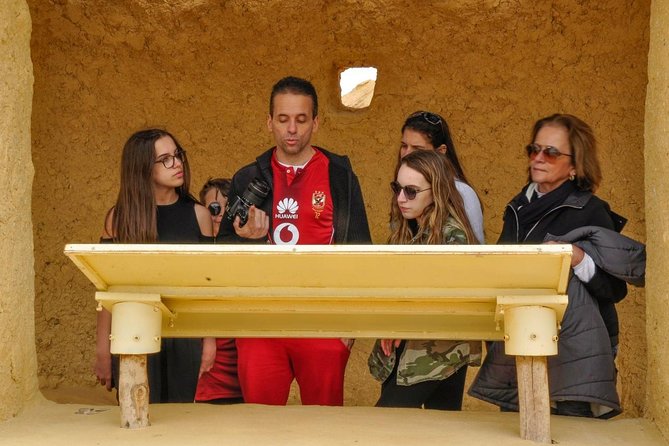
- Wadi Al-Hitan (Valley of the Whales): hundreds of whale fossils from some of the earliest whale ancestors, plus an on-site museum
- Wadi El-Rayan waterfalls: Egypt’s largest waterfalls, created by the drop between the area’s two lakes
- Fayoum focus: Qarun Lake and the surrounding oasis basin give you context for why this desert region supports life
- Long but structured day: about 8–10 hours with set stop times, including around 4 hours at Wadi Al-Hitan
- Value bundle: lunch, bottled water, and ticketed entries included—plus transfers and all fees and taxes
- Private format: it is a private activity (your group), though the operator advertises group discounts
A 4WD day through the Fayoum: what 8–10 hours really means
This is an all-day excursion, roughly 8 to 10 hours, built around door-to-door convenience. You leave Cairo/Giza in the morning, transfer by private vehicle (4WD safari style), and spend your time moving between fossil ground, lake views, and waterfall stops.
I like that the schedule has a clear “anchor” at the first site. You get about 4 hours at Wadi Al-Hitan, which matters because this is not a quick photo stop. You want time to walk, read, and actually look at the fossil context—not just glance at a label and move on.
Expect the drive distance to feel real. Wadi Al-Hitan is about 150 km southwest of Cairo, and later you head farther into the Fayoum region. The upside is that you get a big “Egypt in one day” feeling without needing to plan separate tickets or transport.
A few more Giza tours and experiences worth a look



Entering the UNESCO Wadi Al-Hitan Whale Valley

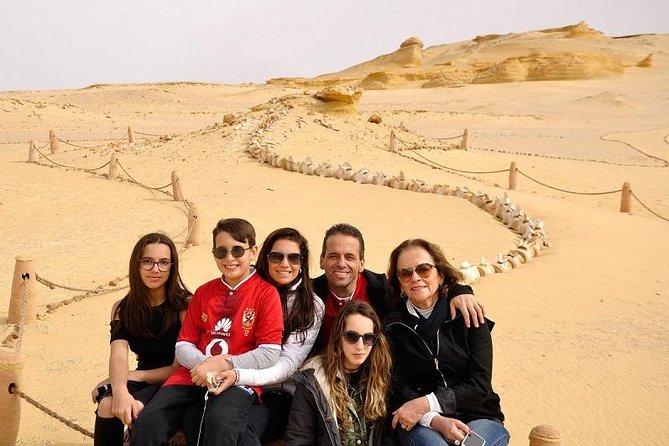
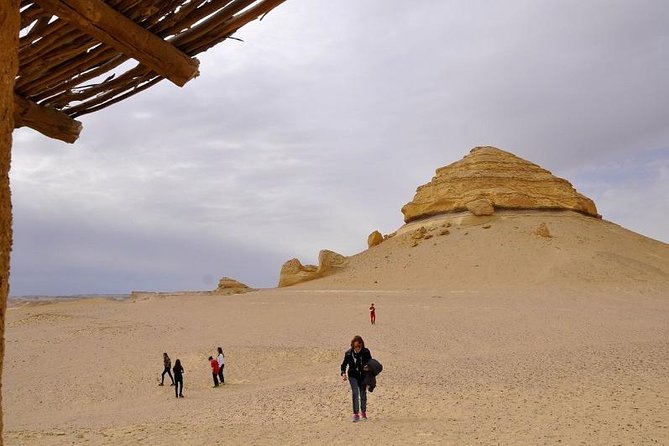
Wadi Al-Hitan, also called the Valley of the Whales, is a paleontological site in the Fayoum Governorate about 150 km southwest of Cairo. It became a UNESCO World Heritage Site in July 2005, mainly because of the sheer number and quality of fossils—hundreds of specimens tied to early whale evolution (the archaeoceti).
This is where the science angle becomes emotional, even if you are not a fossil fan. Whale evolution is not just a textbook idea here. You see fossils in a setting that helps explain how marine mammals emerged from an earlier land-based life. That is the mystery the site helps answer—why and how whales shifted to ocean life.
What you should do at this stop:
- Take your time with the museum. The fossils make more sense once you understand what you are looking at.
- Walk slowly through the fossil areas and keep an eye on how the pieces are presented in situ (you want the context, not just the biggest skeleton).
- Bring water and plan for sun. Desert light is relentless, and you will likely be outside for much of your 4-hour block.
If you care about interpretation, you are in good hands. In at least one instance, a guide named Mohamed was described as friendly, efficient, and helpful at making the time there worthwhile. A good guide can turn “wow fossils” into “I get why this matters.”
Wadi El-Rayan: waterfalls, two lakes, and that desert-water contrast
After the fossil focus, the trip shifts to something more alive: Wadi El-Rayan. This area covers about 1,759 km², and it includes a reserve formed around man-made lakes created from agricultural drainage. The idea matters because it explains why you get water here at all—this is not a natural river valley type of scene.
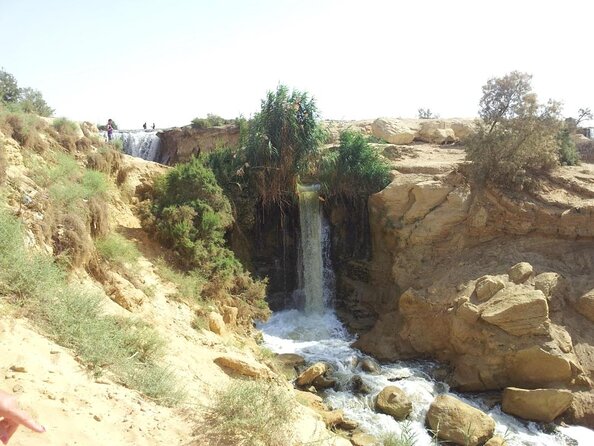
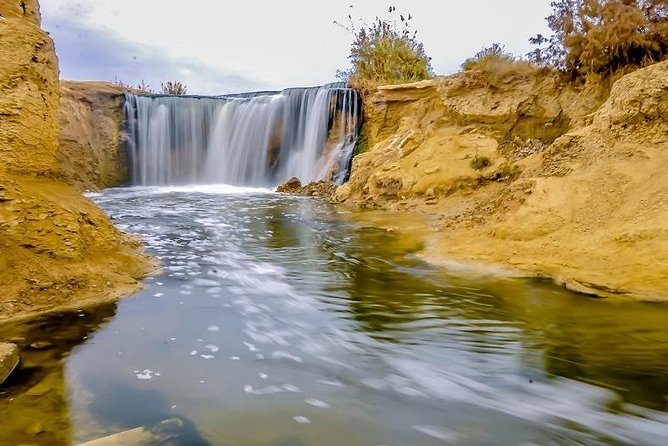
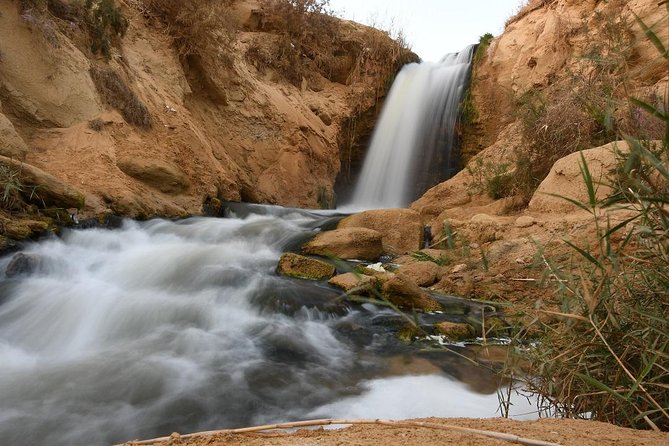
You have two lakes: an upper and a lower lake, separated by waterfalls. The waterfalls are described as the largest waterfalls in Egypt, with water moving between the two lake levels. If you have been expecting a tiny cascade, you will probably be pleasantly surprised.
What to look for in your one-hour window:
- The waterfall viewpoints between the two lake areas. Even if you are not a scenery person, the physical drop changes the mood of the place.
- The surroundings around the springs. The area includes three sulphur springs on the southern side of the lower lake, plus mobile sand dunes nearby.
- Keep an eye out for other paleontological clues mentioned for the region. The broader area also links to marine fossil finds, which helps tie this stop back to the whale theme.
Also, Wadi El-Rayan has a built-in “timing lesson.” Because the main highlight is the waterfalls and lake transition, your best photos come when you are positioned well and water flow is visible, not when you are halfway done eating snacks or chatting.
The Fayoum Oasis area: Qarun Lake, Mudawara Mountain, and more desert life
The tour doesn’t stop at just one dramatic theme. You also get time in the Fayoum basin area (Waḥet El Fayyum), a desert depression west of the Nile south of Cairo. This is one of those places where the Nile’s influence is indirect but powerful.
Here is the core geography you should keep in mind:
- The basin receives water through channels connected to Nile drainage, including the Bahr Yussef.
- Water historically shaped the basin and fed what is now a saltwater lake system, linked to Lake Moeris / Birket Qarun (today’s Qarun Lake area).
That context makes the “oasis” idea feel more real. You are not just seeing green patches. You are seeing how a desert basin became a place where agriculture and water storage work.
Within this broader stop window, the highlights include Qarun Lake and Mudawara Mountain. Mudawara Mountain is worth paying attention to because it gives you a third dimension—height and a change in perspective—so the day does not become only horizontal desert-lake views.
In one of the guide-led versions of the route, the day also included scenic spots such as Magic Lake. If that is on your plan, treat it as a “camera break” that still fits the Fayoum theme.
Lunch, bottled water, and the real value of what’s included
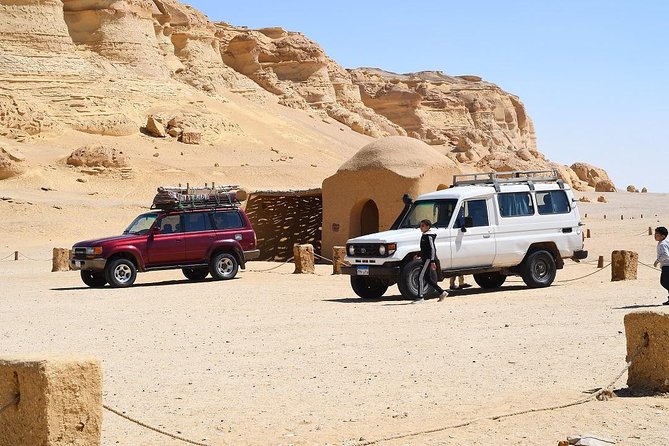
At $95 for a full day, the value hinges on what you would otherwise pay for on your own. Here, you get:
- Lunch and mineral bottled water
- All fees and taxes
- Tickets included
- Private transportation
That combination matters. In Egypt, tickets and local access fees can quietly add up fast, especially on days where you are moving between multiple ticketed sights. If your goal is to avoid friction, this package helps.
Also, the lunch being included is not just about comfort. When you are driving long distances through desert regions, stopping for food can add time. I like trips where lunch is handled, because it keeps your fossil-and-waterfall rhythm intact.
One small practical tip: since bottled water is included, use it early. Desert days feel cooler than they are at first, then the heat stacks.
A few more Giza tours and experiences worth a look



Pick-up, gates, and why your meeting point matters
Door-to-door pickup is one of the biggest reasons these trips feel easy on paper. In practice, it comes down to meeting the driver at the right spot.
In at least one experience, pickup was described as prompt, with the driver texting on arrival. The snag was that the hotel setup did not allow the car all the way to the door due to a gated entrance. The solution was simple: the driver stayed close and was easy to find.
My advice:
- Have your phone ready on arrival day.
- If your address has multiple entrances, confirm which one the driver should use.
- Wear something easy to spot if you are going to walk to the vehicle.
This kind of smooth pickup can make or break a long day. When it works, you lose less time and energy before the first big stop.
Guides on the ground: how much they shape your day
The tour is designed as a private experience, so your guide experience can matter more than on a big-group bus tour. Names that came up include Mohamed and Raafat, both described as friendly and effective.
Here is what a good guide tends to do on a day like this:
- Clarify what you are seeing at Wadi Al-Hitan so you don’t miss the point of the fossils.
- Keep the timing realistic so you fit in both the long fossil stop and the shorter waterfall stop.
- Help you understand what to prioritize when you are in bright sun and walking on uneven ground.
Not every situation is perfect, though. One low-rated case described an English-language gap with the driver, even though the driver was said to be a good driver. If language support is important to you, I suggest you message ahead and confirm the language level you expect for the day.
Safety and operator questions to ask before you commit
I want to be blunt here: the day trip involves long drives and remote areas. One serious negative experience in the provided information involved safety concerns and issues with being returned when the guest wanted to stop the day early. That is the kind of red flag you should take seriously, even if it seems like an exception.
So, before you book, I would ask yourself:
- Do they clearly explain the tour flow and where you will stop?
- Is there a clear plan if weather or comfort becomes an issue?
- If access fees come up, how are they handled and what is already included?
Also keep in mind that one experience mentioned initial problems tied to access fees to a protected area and paying out of pocket for that part. Even if your package says tickets are included, it is smart to confirm what each ticket covers for your specific route on your booking.
On the practical side: wear sun protection, plan for desert walking, and take breaks. You do not need to be dramatic. Just be prepared.
Who this trip fits best (and who should skip it)
This day trip is ideal if you want:
- One day with big variety: fossil site, museum, desert lakes, and waterfalls
- A hassle-free format with transport and tickets handled
- A place to spend real time at Wadi Al-Hitan rather than sprinting through
You might want to choose something else if:
- You hate long drives and want a shorter loop
- You need very reliable bilingual support every minute (one scenario showed a language mismatch)
- You are highly risk-averse and want maximum control over the itinerary rather than relying on a fixed plan
If you are the kind of traveler who likes learning while walking, this fits neatly.
Should you book this El-Fayoum and Wadi El-Hitan day trip from Cairo?
If your priority is Wadi Al-Hitan and you want the rest of the Fayoum area as bonus value, I think this is a strong option—especially because lunch, bottled water, tickets, and transfers are bundled. The first stop is long enough to matter, and the rest of the day adds variety without turning into a marathon of tiny stops.
Before you lock it in, do a quick reality check:
- Confirm the guide language you expect.
- Ask whether any local access fees could still apply at your exact route.
- Make sure you know where pickup happens for your hotel or address, because gated entry can slow things down.
Overall, with a rating of 4.4 out of 5 based on 13 ratings, the balance looks good—just go in informed, not naïve.
FAQ
How long is the El-Fayoum and Wadi El-Hitan day trip?
It runs about 8 to 10 hours.
Does the tour include hotel pickup and drop-off?
Yes. Pickup and drop-off are offered for hotels or other addresses in both Cairo and Giza.
What are the main stops on the itinerary?
The highlights include the Valley of the Whales (Wadi Al-Hitan), Wadi El-Rayan, and additional Fayoum area sights such as Qarun Lake and Mudawara Mountain.
How long do you spend at the Valley of the Whales?
You get about 4 hours at Wadi Al-Hitan, and the admission ticket is included.
Is lunch included?
Yes. Lunch and mineral bottled water are included.
Are admission tickets included for the stops?
Yes. Admission tickets are listed as included for Wadi Al-Hitan and Wadi El-Rayan.
What does the price include and what doesn’t?
The price includes lunch, bottled water, all fees and taxes, and private transportation. Gratuities are not included.
Is this a group tour?
It is described as a private activity, meaning only your group participates. The listing also mentions group discounts, if applicable to your booking.
What if the weather is bad?
The experience requires good weather. If it is canceled due to poor weather, you will be offered a different date or a full refund.
Can service animals join the tour?
Yes. Service animals are allowed.